Booking today in New York(929) 429-2429Open six days a weekFree estimateGuaranteed work
On Point Garage Doors
Open 24 hours Sun-Thu, Fri 7-5 Free estimate Springs, openers, cables We come to you
Call same-day(929) 429-2429
New York, NY - open six days a week

Garage door maintenance that catches problems early

Most garage doors only get attention after something snaps. A maintenance visit from On Point Garage Doors, anywhere in Brooklyn, Queens and Long Island, goes over the whole door while it still works, so a tired spring or a fraying cable is found on a quiet afternoon rather than the morning the car is stuck inside. The estimate is free.

Free estimateBalance tested firstSprings, cables, rollersSafety reverse proven

Put it on the schedule for your garage door

Tell us what the door is doing. The estimate is free either way.

Or just call (929) 429-2429 and talk it through.

Home › Garage Door Maintenance

Why the balance test comes first

A garage door weighs far more than it feels, because its springs carry nearly all of that weight. When the springs are healthy, the door stays put wherever it stops on its way up. When they have lost their strength, the door sinks, or shoots up, and the opener quietly takes over the work the springs used to do.

So the visit starts with the technician taking the opener out of the loop and checking how the door hangs at different heights. That one test says more about the state of the springs than anything else, and it explains a lot of the noise and strain people notice long before anything breaks.

What the technician goes over

After the balance, the visit works through the parts that wear: the springs and the cones at their ends, the lift cables and the drums they wind on, the bearings at each end of the spring shaft, every roller and hinge, and the tracks and the brackets that hold them to the wall.

Then the opener: its force setting, the points where it stops at the top and the bottom, the photo eyes near the floor, and the auto-reverse, which is proven with the door closing on an object. The bottom seal and the weatherstrip along the sides are checked for gaps, and the moving metal parts get the right lubricant from the technician, not a general-purpose spray.

Older detached garages often still run on extension springs, the long coils stretched above each track, with cables looped over pulleys near the front. Those doors get the same visit, plus a look at the pulleys and at whether a safety cable runs through each spring, because a stretched spring without one can whip loose when it lets go.

Anything worn is shown to you and written into a free estimate. Nothing is replaced on the spot unless you say yes.

A maintenance visit, start to finish

The order is the same on every door, from a single-car garage to a building's parking entrance.

  1. Tell us about the doorIts age if you know it, what it sounds like, and anything that has changed lately.
  2. Balance and springs firstThe opener set aside and the door's weight checked by hand, then springs and cables looked over.
  3. Every moving partRollers, hinges, tracks, bearings, seals, and the opener's settings and safety devices.
  4. What we found, in writingWorn parts listed in a free estimate; the door is left working smoothly either way.
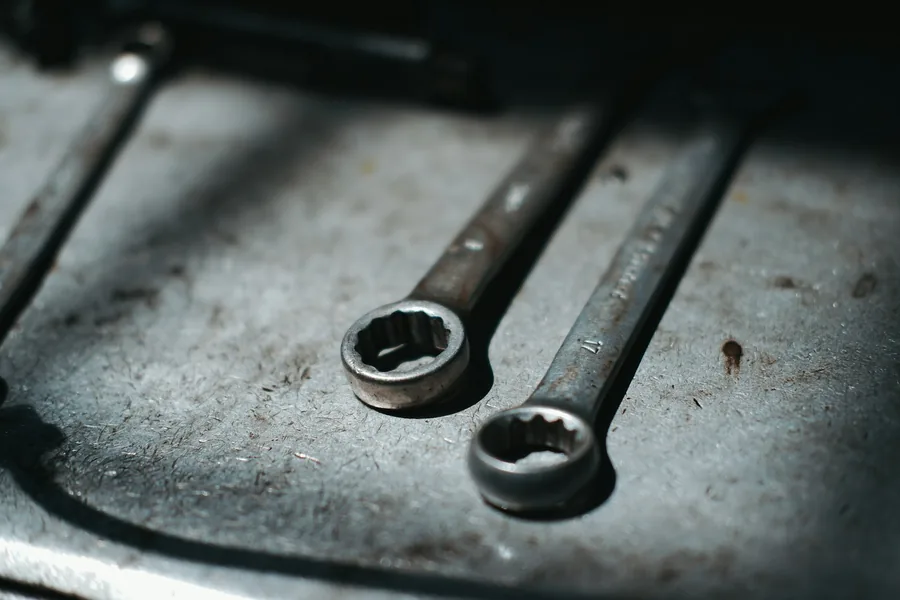
Tools On Point Garage Doors carries for garage door repair in New York, NY

Sounds and signs that say it's time

Doors tend to warn you. A grinding or scraping sound as the door rolls, a bang or a pop at the start of a lift, a jerk halfway up, or a door that seems slower than it used to be are all signs that something is wearing. So is a door that reverses for no clear reason, or one that leaves a gap of daylight along one side when it's shut.

None of those means the door is about to fail, but each one is far easier to deal with now than after a part gives way. If the door has stopped moving altogether, that is a repair rather than maintenance, and our technicians treat it as one.

What the seasons do to a door here

Winter stiffens the grease in the opener and on the moving parts, freezes the bottom seal to the concrete overnight, and puts the springs under the most strain of the year on the first cold mornings. Road salt comes into the garage on the tires and settles on the bottom section and the lower track brackets.

Summer brings the opposite problem: heat on a south-facing door, sun shining into the photo eyes late in the day, and wood doors that swell and drag. A door close to the water deals with salt air all year. A maintenance visit before the worst of either season is when those things get found.

After a bump, a storm or a move

Some moments call for a look even if the door seems fine. A car that tapped the door, a heavy storm that pushed against it, one spring replaced while the other was left alone, or a door that came with a house you just bought and know nothing about.

Garages shared by several households in a building get more use than any house door, and they tend to get looked at only when someone complains. A visit after any of these sets a baseline, so the next problem is caught early.

For a house you have just bought, the visit also answers the questions nobody at the closing could: how old the springs are likely to be, whether the opener's safety devices still work, and whether the door was ever repaired with mismatched parts.

What maintenance can and can't do

A tune-up keeps a sound door running smoothly and quietly, and it finds the parts that are wearing out. It can't bring back a spring that has reached the end of its life or straighten a section that has been creased, and pretending otherwise would only push the repair down the road.

When the visit finds something like that, you get a straight answer about what it means and how soon it matters, plus a free estimate, and the decision about when to deal with it stays with you.

Questions we get asked

How often should a garage door be serviced?

It depends on how hard the door works. A door that opens many times a day wears faster than one used at weekends. The technician tells you what they see on your door, rather than a fixed schedule.

What does a garage door tune-up include?

The balance and springs, the cables, drums and bearings, rollers and hinges, tracks and brackets, the opener's force and limit settings, the photo eyes and auto-reverse, and the seals.

My door is noisy but works fine. Is that worth a visit?

Usually, yes. Noise is often the first sign of worn rollers, dry hinges or a spring losing strength, and those are easier to deal with before they fail.

Can maintenance stop a spring from breaking?

It can't make a spring last forever, but it finds one that is near the end so it can be replaced on your schedule instead of after a bang.

Do you service garage doors in apartment buildings?

Yes. Shared garage doors and building parking entrances work much harder than a house door and benefit from regular looks.

Can you service an old door with extension springs?

Yes. Doors with extension springs get the same visit, with the pulleys and the safety cables through the springs checked as well.

Will you replace parts during the visit?

Only if you agree. Worn parts are shown to you and listed in a free estimate first.

Do you check the opener too?

Yes. Its force and stop settings, the photo eyes and the auto-reverse are all checked on every maintenance visit.

Is the estimate free?

Yes. Anything the visit turns up comes with a free estimate before any work.

Door getting louder or slower? Book a look

Describe the fault and we'll give you an honest arrival time. The visit and the estimate is free, anywhere in Kings County.

Easier to explain by phone? Call (929) 429-2429.

Two minutes to a free estimate on any garage door

Tell us what the door is doing. The estimate is free either way.

Or just call (929) 429-2429 and talk it through.

The other six things that go wrong