Takes 30 seconds. We call you back to set a time.
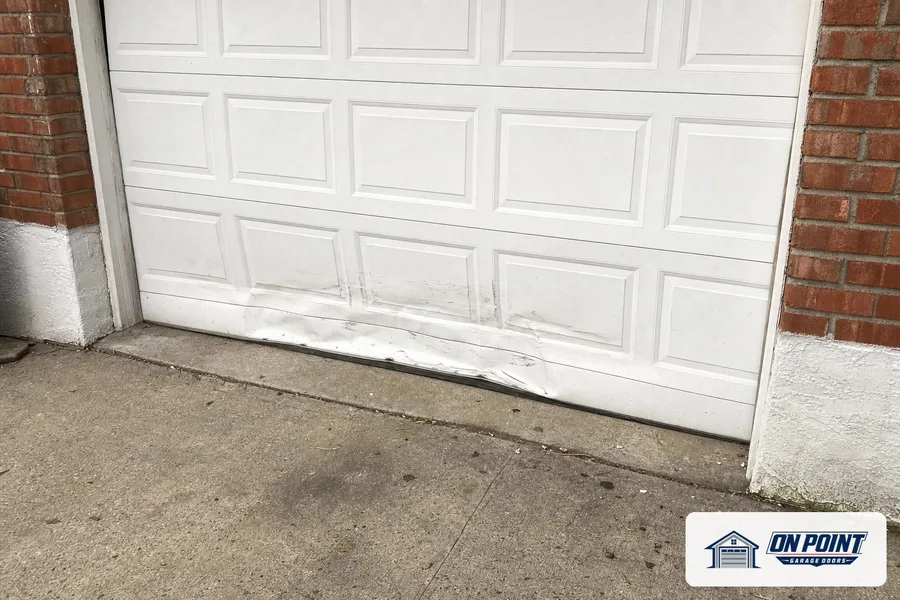
Finding that someone got into your garage is upsetting, and the door is often left in a state that makes things worse: bent at the bottom, off the track, with a broken lock or an opener that no longer works. Before anything else, call the police and take photos of the damage. Then the door needs to be made safe and secure again. This page explains what usually gets damaged, why a forced door should be checked before it is used, and the changes that make the same entry much harder next time. Free estimate at (929) 429-2429.
By Sean Cohen, owner, On Point Garage Doors · Updated
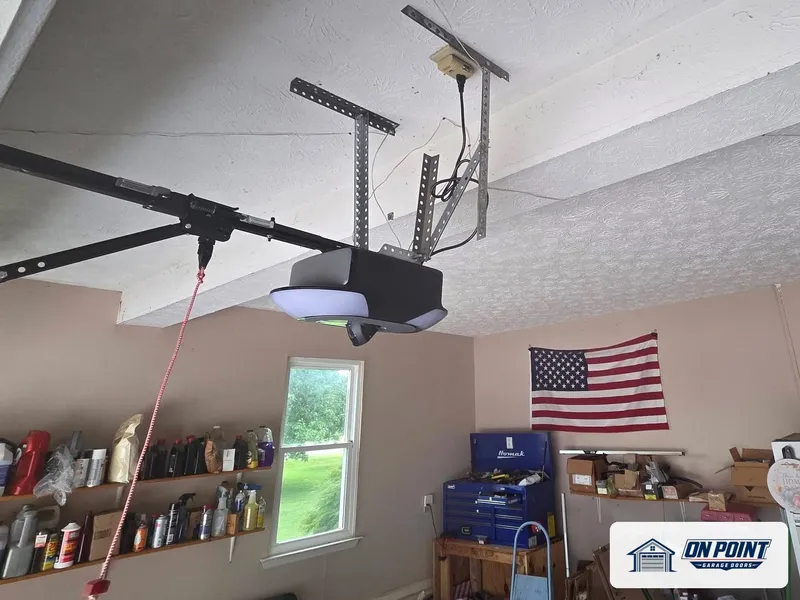
These photos are from our own jobs, with our logo on them.


Most break-ins through a garage door are not clever. Someone pries the bottom of the door up, bends a corner of the bottom section, hooks the emergency release through the gap at the top, or simply uses a remote taken from a car parked in the driveway. Older manual doors are sometimes forced at the lock. Knowing how your door was opened tells us what to check and what to change.
A door that was pried up at one corner can have a cable off its drum or a roller out of the track without it being obvious. Running the opener on a door like that can make it jam, twist or come down crooked. The springs still hold a lot of stored energy, and a loose cable under that tension is dangerous. If the door is open and will not close, or closed and will not open, leave it as it is and call us.
If the door cannot be closed and locked, the first job on our visit is to make it secure: get it down, on its track and held shut, even before the full repair. If the door from the garage into the house was also forced, keep that door locked and blocked until it is fixed. A garage that leads into the home is the bigger worry, and it is worth treating that way.
Bent bottom sections, brackets, rollers, hinges, cables and seals can usually be repaired or swapped for new parts. A bottom section that is badly creased can be replaced on its own on many doors, matched to the rest. If more than one section is damaged or the door is old and worn, a new door can be the better choice. We show you the damage and give you both options in writing.
One common trick is to push a wire hook through the top of the door and pull the emergency release, which lets the door be lifted by hand. A shield over the release, a release that needs a firm sideways pull, or an opener with an automatic lock closes that gap. The release must still work from inside for safety, so we choose the fix with that in mind. Our page on the emergency release explains how it works.
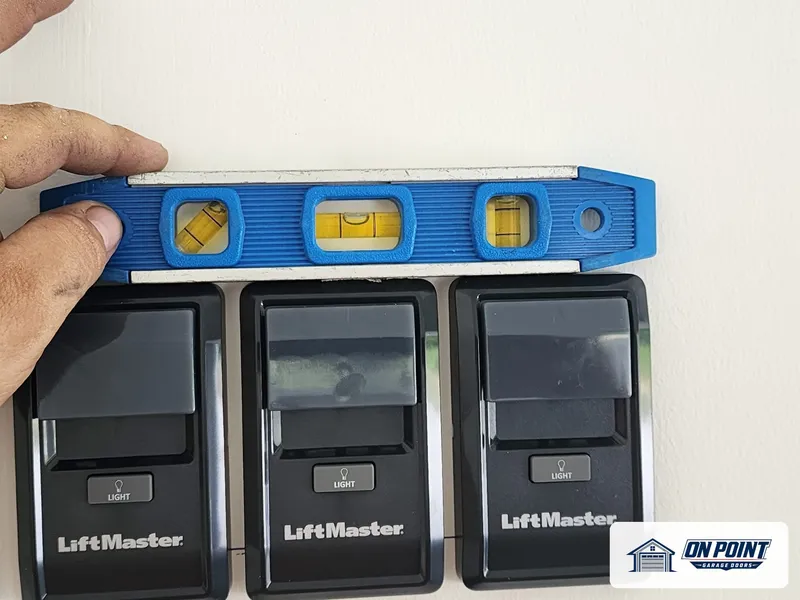
If a remote was stolen from a car, assume whoever took it can open the door. The opener's memory should be cleared and every remote, keypad and car button set up again, so the stolen one stops working. If the car registration or a piece of mail with your address was taken too, this matters even more. Our page on a lost garage door opener remote covers this step.
A door with an opener is held closed by the opener itself. Extra protection can come from a side lock, a slide bolt used when you are away, or a wall-mount opener with an automatic deadbolt. Smart openers can send an alert every time the door moves and let you close it from your phone if it was left open. A camera opener records who came and went. Our guide on how to secure a garage door goes through each option.
Clear windows on a garage door let people see what is inside and whether the car is there. Frosted or tinted glass, or solid sections, take that view away. If your garage holds bikes, tools or anything of value, this is a simple change that removes a reason to try the door.
Photos of the damage before the repair help. You get a written estimate and a written description of the damage and the work. We repair the door; we do not handle insurance claims.
The technician checks the door, the tracks, the cables, the springs, the lock and the opener, makes the door secure first, and explains what was damaged. You get a written estimate for the repair and any security changes before work starts, and the door is run, locked and tested before we leave.
Not until it is checked. A cable off its drum or a roller out of the track can make the door jam or come down crooked.
Have the opener's memory cleared and every remote and keypad set up again, so the stolen remote stops working.
Most often by prying the bottom, hooking the emergency release through the top gap, or using a remote taken from a car.
Yes. We check the door and make it secure before any repair starts.
Across Brooklyn, Queens and Long Island, tell us what the door is doing and we set a visit that fits your day.
Free estimate, call (929) 429-2429.
Tell us what the door is doing and we will give you an honest arrival time. The estimate is free.
Easier to explain by phone? Call (929) 429-2429.
Tell us what the door is doing. The estimate is free either way.