Booking today in New York(929) 429-2429Open six days a weekFree estimateGuaranteed work
On Point Garage Doors
Open 24 hours Sun-Thu, Fri 7-5 Free estimate Springs, openers, cables We come to you
Emergency?Call nowBook free estimate
New York, NY - open six days a week

Garage door weather seal replacement in Brooklyn, Queens and Long Island

Free estimateBottom, side and top sealsSame day whenever possibleDoor checked for a level close
  • Free estimate
  • Bottom, side and top seals
  • Same day whenever possible
Emergency garage door repair★★★★★ 5.0 on Google · 36 reviews

Book your free estimate

Takes 30 seconds. We call you back to set a time.

Or just call (929) 429-2429 and talk it through.

Home › Garage Door Weather Seal Replacement

Real jobs. Real photos.

Every photo here is from our own work, with our logo on it.

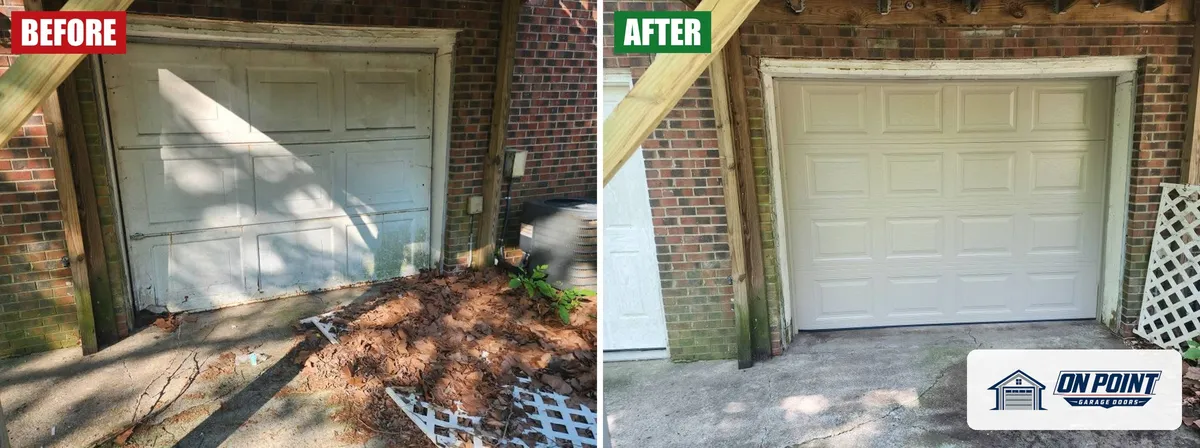
Old door out, new door in: before and after photo from one of our jobs
Old door out, new door in
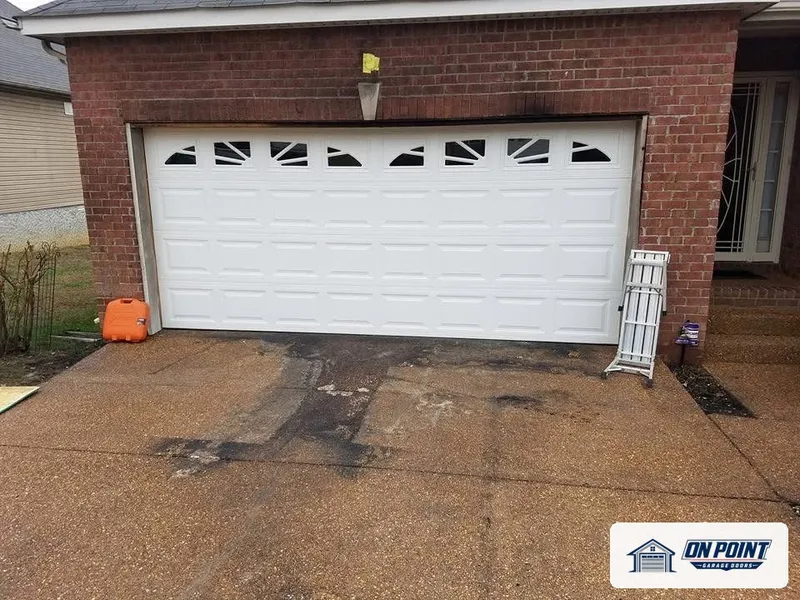
New double door, arched windows, photo from one of our jobs
New double door, arched windows
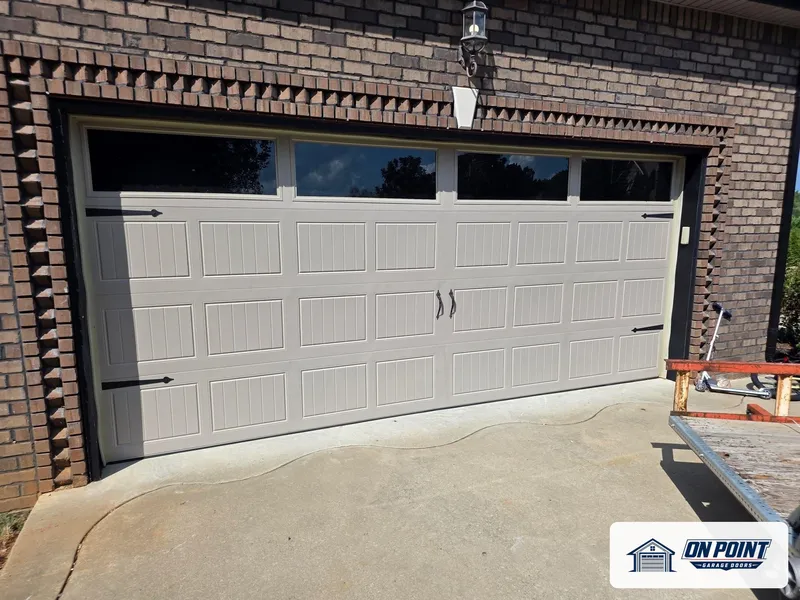
New door, black hardware, photo from one of our jobs
New door, black hardware

If you can see daylight around a closed garage door, water, cold air and pests can get in too. On Point Garage Doors replaces bottom seals, side stops and top seals across Brooklyn, Queens and Long Island, and the estimate is free.

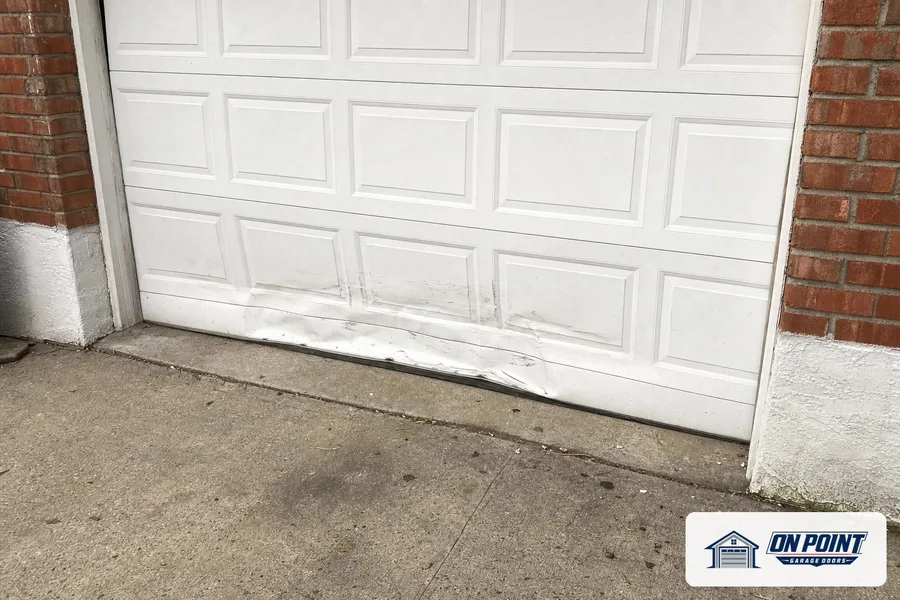
White garage door with a dented, scraped bottom panel

Signs the seal has gone

Stand inside the garage with the door shut and the light off. A line of daylight along the floor or up the sides is the simplest test there is. After that, look at what the garage is telling you: a wet patch inside the door after rain, leaves blown into the corners, a chill in the room above, or mouse droppings along the wall.

The rubber itself usually shows its age. A bottom seal goes hard and cracks, flattens out, or tears away from the door and hangs in a loop. A side stop turns brittle, curls away from the door or falls off in pieces. On older doors, the bottom edge of the door may have rusted or rotted around the seal so there is no longer anything sound to hold it.

Cracks are easy to miss because the seal still looks like it is there. Rubber that has gone stiff no longer presses against the floor, so it stops doing the job long before it falls off.

The seals on a garage door, and what each one does

The bottom seal is the strip of rubber along the lower edge of the door. It closes the gap against the floor, and it is the one that wears fastest, because it gets pressed down every time the door shuts and sits in whatever is on the floor.

Side and top stops are the long strips on the frame around the door. They press against the face of the door to close the gaps at the sides and across the top. These are often what let in the draft you feel, even when the bottom seal is fine.

Between the sections of the door, some insulated doors have their own joint seals, and some garages have a threshold fixed to the floor. Each one solves a different gap, so we look at where the air and the water are actually getting in before anything gets ordered.

What happens if you leave it

Water does the most damage. It sits against the bottom of the door and starts rust from the inside on a steel door, or rot on a wood one. On a garage where the driveway slopes down toward the door, that happens fast. Replacing a seal is a much smaller job than replacing the bottom section of a door.

Then there is everything stored in the garage. Boxes on the floor soak up water, and tools and bikes rust in damp air. Mice and insects only need a small gap, and a torn seal gives them one.

If there is a room above the garage or a shared wall, cold air coming in under the door works against your heat all winter. A new seal is not a replacement for an insulated garage door, but it is often the first gap worth closing.

What we do on a seal job

First the technician closes the door and checks how it meets the floor. A gap on one side often means the door is out of level, or that the floor has settled, and no seal will hide that for long. So the door gets checked too: springs, cables, and how it sits when closed.

Then the right seal gets matched to your door. Steel doors usually hold the bottom seal in a metal retainer, and the rubber has to match that retainer. If the retainer is rusted or bent, that gets replaced too. Wood doors usually take a seal fastened directly to the bottom edge, and that edge has to be sound first.

Side and top stops are cut to the frame and set so they touch the door without dragging on it. Set too tight, they make the door stick and the opener work harder. Afterward, the opener's close setting gets checked, because a thicker seal can change where the door stops, and the safety reverse gets tested before we leave.

When a seal will not solve it

Sometimes the gap is not the seal's fault. A floor that has cracked or sunk, a door that closes crooked because of a slack cable or a weak spring, or a frame that has rotted will all leave a gap that new rubber can't close. If that is what we find, you hear it on the visit, along with what would actually fix it.

The same goes for a door with a rusted-out bottom edge. If there is nothing sound to fasten a seal to, the honest answer may be a new bottom section, covered on our garage door panel replacement page.

Book it with your other door work

A seal is a good job to catch while someone is already looking at the door. If you have a noisy opener, a slow spring or a tune-up coming, mention it and everything gets looked at on one visit. Our garage door maintenance visit looks at the seals along with the rest of the door.

Call (929) 429-2429 and tell us where the water or the air is getting in. A photo of the gap helps. You get an honest arrival time, a free estimate on site, and no work starts until you say yes.

Questions we get asked

How do I know my garage door seal needs replacing?

Look for daylight around the closed door, water inside after rain, leaves blown in, or rubber that has gone hard, cracked or torn. If you see any of those, the seal has likely stopped doing its job.

Why is water coming in under my garage door?

A worn bottom seal is the most common reason. A door that closes out of level, a settled floor or a driveway that slopes toward the door can add to it. The technician checks which one it is before anything gets ordered.

Can you replace the bottom seal on any door?

Most of them. Steel doors usually use a seal in a metal retainer, and wood doors usually use one fastened to the bottom edge. If the edge of the door has rusted or rotted, that has to be dealt with first, and you hear that on the visit.

Will a new seal stop mice from getting in?

It closes the most common gap, along the floor. Mice can also use other gaps around the frame, so the side and top stops get looked at too.

Will a new seal make my garage warmer?

It stops drafts around the door, which is often the easiest gain. How warm the garage gets also depends on the door itself and on whether it is insulated.

Is the estimate free?

Yes. The door and the seals get looked at, you hear what is letting the weather in, and the estimate is free.

Water or drafts getting in? Tell us where

Describe the fault and we'll give you an honest arrival time. The visit and the estimate is free, anywhere in Brooklyn, Queens and Long Island.

Easier to explain by phone? Call (929) 429-2429.

Two minutes to a free estimate on any garage door

Tell us what the door is doing. The estimate is free either way.

Or just call (929) 429-2429 and talk it through.

The other six things that go wrong