Takes 30 seconds. We call you back to set a time.
Owners with a dog that spends the day in the garage, or a cat that comes and goes, often ask whether a pet door can be cut into the garage door. It can be done on some doors, but it is not as simple as cutting a hole in a house door. A garage door is a moving, balanced system, and every panel carries part of the load. A pet door changes the weight, weakens the section it sits in, lets in cold air and can interfere with the safety sensors. This page explains what works, what to avoid and the alternatives we usually suggest. Free estimate at (929) 429-2429.
By Sean Cohen, owner, On Point Garage Doors · Updated
These photos are from our own jobs, with our logo on them.


A house door stays in its frame. A garage door rolls up on tracks, bends at the hinges between sections and is held in balance by springs set for its exact weight. Cutting an opening into one section changes that section's strength and the weight of the whole door. On a light door the change may be small, but it is never nothing, and the door should be checked for balance after any cut.
A plain single-layer steel door or an older wood door can sometimes take a small pet door in the bottom section, framed properly so the cut edge is supported. Insulated doors with a foam core are harder, because cutting through the core breaks the bond that makes the section stiff. Doors with a steel back skin, doors with struts across the bottom section and full-view glass doors are poor candidates.
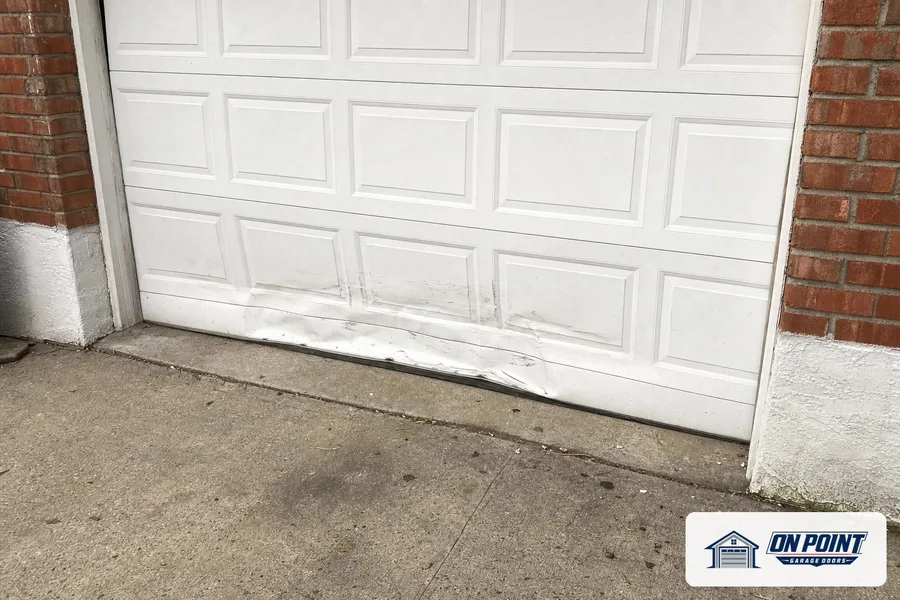
Most garage door sections get their strength from the steel skin and the ribs that run along them. Cutting through those weakens the section, and a bottom section with a hole in it can bow or crease when the opener pushes down on it or when a car bumps it. A dented bottom section around a pet door is a common sight on these jobs.
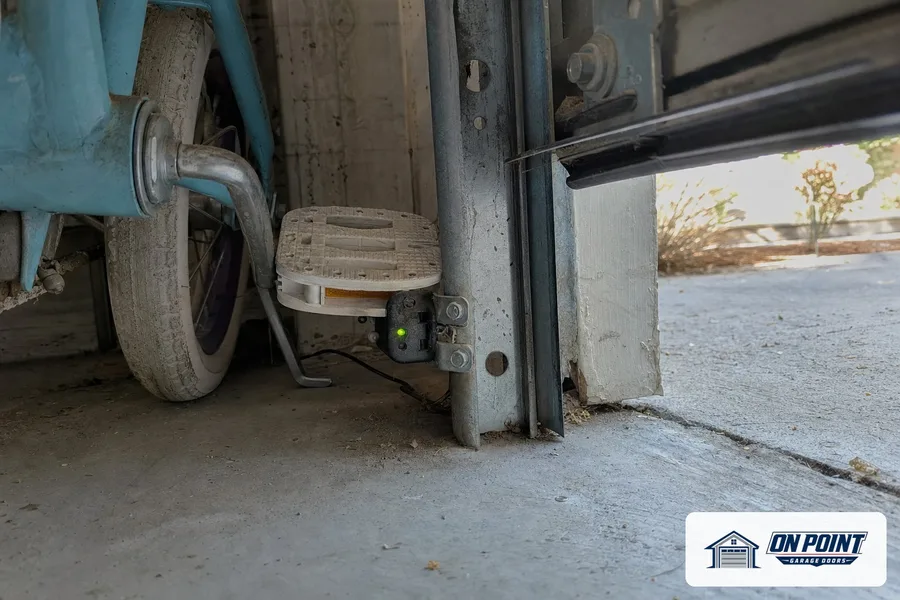
The photo eyes on each side of the door sit low, right where a pet door goes. A pet coming through or lying in the doorway breaks the beam and stops the door from closing, which is the sensors doing their job. A flap that swings in the wind can also trip them. Before any pet door goes in, it is worth thinking about where the sensors are and whether the pet will be in their path.
A pet flap rarely seals as well as the door around it. In winter cold air comes in at the bottom of the garage, and if there is a living space above or beside it, that room feels it. On an insulated door, a pet door undoes some of what the insulation was there to do.
A pet door in the garage door is an opening at ground level into a space that often leads straight into the house. Large flaps can let a person reach in, and some animals besides your own will find their way through. If the garage connects to the home, the door from the garage into the house needs a good lock.
If the opener has timer-to-close or the door is closed from a phone, a pet in the doorway matters even more, because nobody is watching the door come down. The safety sensors will reverse it, but a pet that is used to the garage may not move away. Owners with pets in the garage often keep auto-close off for that reason.
A pet door in a wall or in a side door does not touch the garage door at all, so the panels, the balance and the sensors stay as they are. Garage walls are usually easier to frame for a pet door than a garage door section is. We work on garage doors, not walls, but we can tell you where the safer place for the opening is when we visit.
If you bought a house with a pet door in the garage door, we can look at the section it sits in, check whether the door is still in balance and see whether the sensors are affected. If the section has bent or cracked around the opening, it can usually be replaced on its own with a solid section that matches the rest of the door.
The technician looks at the door, the sections, the springs and the sensors, and talks through where a pet opening would and would not work. If a damaged section needs replacing, you get a written estimate before anything is ordered.
On some plain steel or wood doors it can be done in the bottom section, but it weakens the panel and changes the balance. Insulated doors and glass doors are poor candidates.
It can. The sensors sit low beside the opening, so a pet coming through or lying in the doorway will stop the door from closing.
Usually yes. A wall of the garage, a side door or the house door into the garage leaves the garage door, its balance and its sensors untouched.
Often yes. A section that has bent or cracked around a pet door can usually be replaced with a solid one that matches the rest of the door.
Yes. We look at the door and the sensors before suggesting anything.
Across Brooklyn, Queens and Long Island, tell us what the door is doing and we set a visit that fits your day.
Free estimate, call (929) 429-2429.
Tell us what the door is doing and we will give you an honest arrival time. The estimate is free.
Easier to explain by phone? Call (929) 429-2429.
Tell us what the door is doing. The estimate is free either way.