On Point Garage Doors installs and repairs real wood doors, steel and composite doors that only look like wood, and carriage-style doors across Brooklyn, Queens and Long Island. The samples come to the house, and the measure and the estimate are free.
Tell us what the door is doing. The estimate is free either way.
A real wood door is built from boards or panels of species such as cedar, redwood or hemlock, and nothing else looks quite like it in late afternoon light. It is also the heaviest kind of door you can hang, and it asks for a finish that is kept up.
Wood-look doors put a grained finish over a steel or composite skin. From the sidewalk most people can't tell the difference, and they shrug off rain and sun with far less upkeep. Some carry insulation inside, which a solid wood door usually doesn't. Which one fits depends on how close the door sits to the street, how much care you want to give it, and how warm the garage needs to stay.

Carriage-house doors borrow the look of old swing-open barn and stable doors: vertical boards, a crossbuck or Z brace, a row of windows across the top, and dark handles and strap hinges.
Almost all of them today are sectional doors that roll up overhead like any other. The hinges and handles are there for the look, so the door needs no room to swing open in front of the garage, which matters on a short driveway.
The style comes in real wood, in wood-look steel or composite, and in painted steel, so a carriage door is a look rather than a material. Window shapes, panel layouts and hardware vary enough that two houses on the same block can both have carriage doors and still look nothing alike.
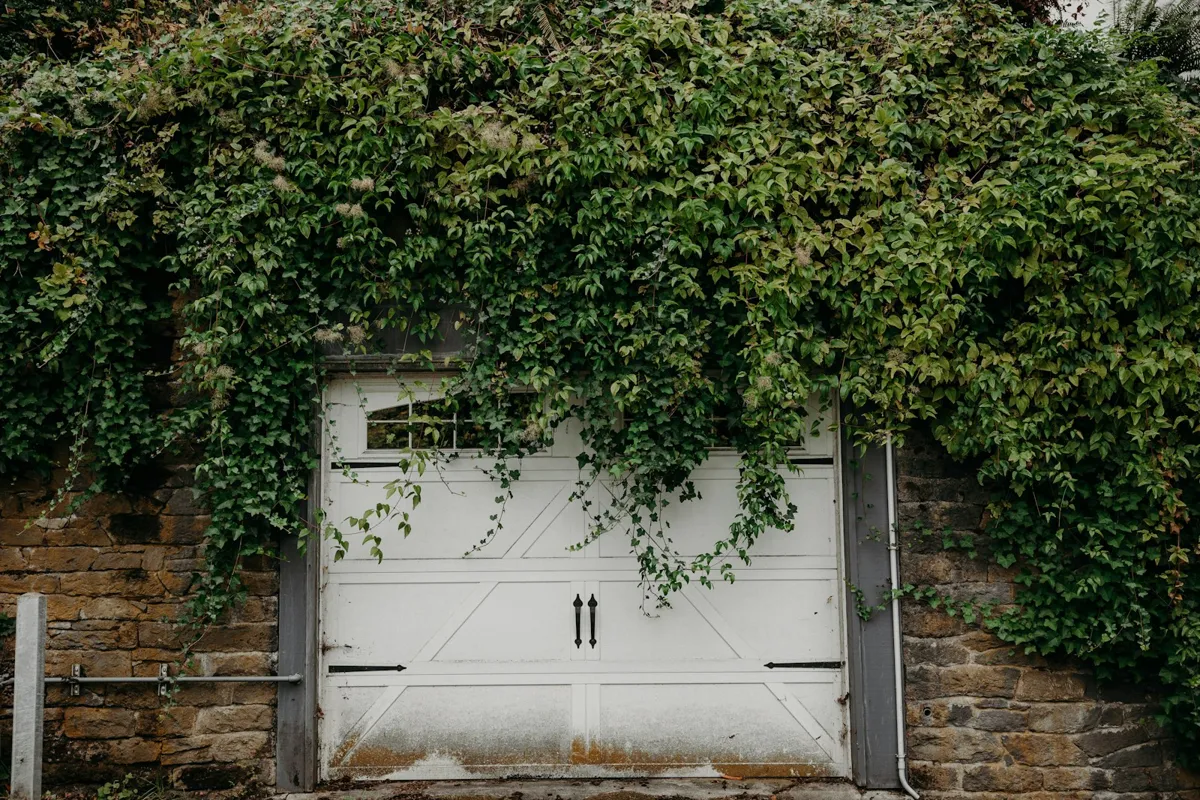
Wood moves with the weather. It swells when it is damp and shrinks as it dries, and the stain or paint protecting it breaks down fastest on a door that faces south or west. Once water gets past the finish, the bottom section usually goes first, because that is where rain splashes and snow sits.
So a wood door is a commitment to refinishing every few years, with every face sealed, the edges and the inside included. We describe that upkeep honestly at the measure, and when a door's bottom rail has started to soften, you will hear whether it can be repaired or whether the section has to be replaced.
A solid wood door can weigh a good deal more than a steel door of the same size. The springs carry that weight, and they are sized once the door is hung, so the door balances and the opener only has to guide it.
Older wood doors often still run on extension springs stretched along the tracks. When a heavy door is replaced or rebuilt, it is usually moved to torsion springs on a shaft above the opening, which handle the load more smoothly and more safely. The opener is looked at as well, because a heavy door on a tired opener is how motors burn out.
Reinforcing struts across the wider sections keep a two-car wood door from sagging in the middle over the years, and new rollers and hinges are matched to the heavier sections rather than reused from the old door.
On older brick houses, and on many streets of detached homes, a carriage door with a few top windows tends to look as though it was always there. A clean flush wood-look door suits a newer house better, and a stained cedar door can carry the front of a modern home on its own.
Color and finish are picked outside, next to the brick, siding and trim, because a stain swatch looks one way on a phone screen and another against a real wall. If the house sits in a historic district, the front may need approval before it changes, so that question deserves an answer before an order goes in.
Two visits in most cases, with the decisions made at the first one.
Wood and carriage doors come to us with the same faults as any door, such as broken springs, frayed cables and openers that gave up, and with a few of their own: a bottom rail softened by water, a panel split along the grain, decorative hardware working loose, or a cracked window in the top section.
Many of those can be repaired without a new door. Where a wood section is too far gone, a matching section can sometimes be ordered, and where it can't, you get the honest comparison between rebuilding the old door and replacing it. The free estimate covers both options. Either way, the springs and cables are checked against the door's weight, since a wood door that has soaked up water or gained a few coats of paint is heavier than the day it went up.
They need more care than steel. A real wood door has to be refinished every few years, sealed on every face, and kept free of standing water along the bottom. Wood-look steel and composite give the same look with far less upkeep.
Almost never today. Most carriage-style doors are sectional doors that roll up overhead, and the hinges and handles are there for the look. True swing-out doors exist, but they need room in front of the garage that most driveways don't have.
No. It suits older brick and frame houses especially well, but simpler carriage layouts in painted steel look right on plenty of newer homes. Holding samples up against the house usually settles it.
A solid wood door gives some natural insulation but usually has no foam core. If the garage sits under a bedroom or a living room, an insulated wood-look steel or composite door will keep that room warmer.
Sometimes. If the rot is limited to the bottom rail or one section, that part can often be repaired or replaced. If it has spread through the door, a new door is usually the better choice.
It depends on the opener. The springs carry the weight of a balanced door, but an older or light-duty opener can still struggle with heavy wood. The estimate says plainly whether yours stays.
Both. Springs, cables, rollers, split panels, loose hardware and openers on wood doors are all repaired, and the door is balanced again afterwards.
Yes. The samples come to the house, the opening is measured, and the free estimate comes before anything is ordered.
Describe the fault and we'll give you an honest arrival time. The visit and the estimate is free, anywhere in Kings County.
Easier to explain by phone? Call (929) 429-2429.
Tell us what the door is doing. The estimate is free either way.