Takes 30 seconds. We call you back to set a time.
HomeLink is the name on many of the garage buttons built into mirrors, visors and dashboard screens. When it quits, the awkward part is that two different companies made the two halves of the problem. The dealer looks at the car, the garage door company looks at the opener, and the fault can sit in either or in the handshake between them. The way through is to work out which half is silent before replacing anything. Free estimate at (929) 429-2429.
By Sean Cohen, owner, On Point Garage Doors · Updated
These photos are from our own jobs, with our logo on them.


Try an ordinary remote from the same seat. If the remote opens the door and the car does not, the opener's receiver is alive and attention turns to the car or the pairing. If neither works, the car is innocent and the opener, its power or its receiver is the place to look. If another car opens the door happily, that narrows it to one vehicle.
A button that worked for years usually stops because something erased a memory. On the opener's side that can be a deliberate clearing after a lost remote, a new logic board or a new opener. On the car's side it can be a dealer reset, a software update, a repair to the mirror or an erasing of personal settings. Ask what changed that week. The answer is often the whole diagnosis.
A fresh pairing on a modern opener has two stages. The car first copies the signal format, then the opener has to accept the car as a trusted device, because rolling codes cannot simply be copied. People often finish the first stage, see the indicator behave as if all is well, and stop. The car is transmitting correctly to an opener that has no idea who it is.
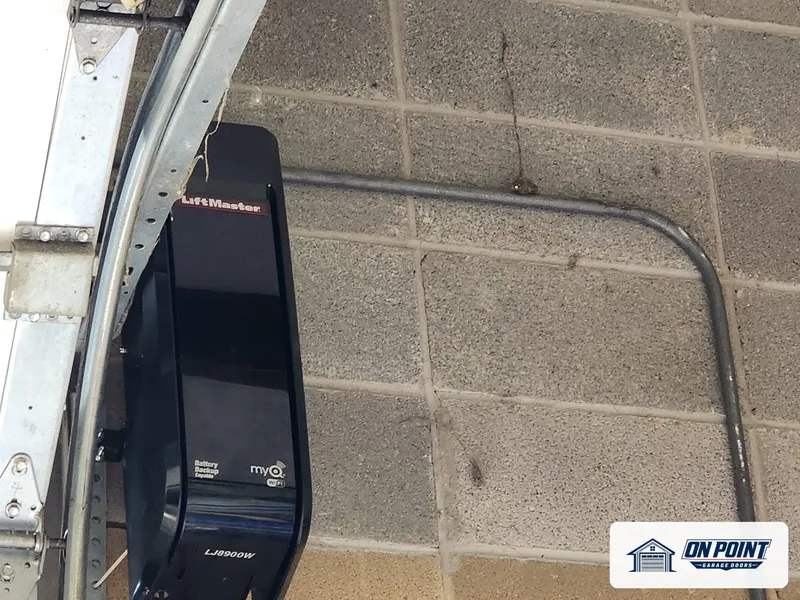
Opener makers have introduced new encrypted formats over time, and a car built before a format existed may not understand it. Chamberlain and LiftMaster openers are a common example. For many of these pairings a small plug-in repeater translates between car and opener. For some of the newest radio systems there may be no bridge yet, and it is better to hear that early than to spend an afternoon trying.
The opposite mismatch happens too. Very old openers use fixed switches, tones or frequencies that some recent cars have dropped. An external receiver gives the opener a current radio while leaving the motor alone. If the opener also lacks photo eyes or has worn gears, a new unit is the more sensible move, since safety matters more than the convenience of a button.
Some vehicles use a different supplier's transmitter, some use an app connection through the dashboard screen, and some sell the garage button as an option that a particular car simply does not have. A blank space on the visor or a menu item that asks for a subscription or a purchase is a question for the car's maker. The owner's manual names the system, and that name is useful to us when you book.
Short range is a different fault from no response. Metallic window tint, a dash camera wired near the mirror, LED bulbs in the opener and a drooping or broken antenna wire can all shrink the distance. So can a steel door between car and receiver. When the remote has the same short reach, the interference is in the garage. When only the car is short, it travels with the vehicle.
An intermittent button points toward noise or a weak connection. Radio interference can come and go with lights, chargers, networking gear or equipment nearby. A repeater that has lost power behaves the same way, and so does a tired connection inside an older mirror. Note the pattern: time of day, weather, whether the garage lights were on. A pattern beats a guess.
Sometimes the signal arrives and the door still stays put. Lock mode on the wall control ignores every transmitter. A full memory can push out an older device when a new one is added. A door with a broken spring makes the motor strain and stop, and a blocked photo eye lets the door open but not close from the car. Each of these looks like a button fault from the driver's seat.
Buttons in a car you bought may still open a stranger's garage, and a car you sold may still open yours. The car's memory should be cleared before it changes hands, and the opener's memory cleared afterward if you are in any doubt. The same applies after a vehicle is stolen. Clearing the opener removes every device, so plan to pair the household's remotes again in one sitting.
Faults inside the mirror or the car's electronics belong to the dealer, and we will say so when the testing points that way.
The light only shows that the car is transmitting. It does not mean the opener recognizes the signal, has power or is able to move the door.
Usually it should not, as many systems keep their memory without power. Some resets and dealer procedures do erase them, so if the timing matches, pairing again is a fair first suspicion.
Only when the car predates the opener's radio format. The model of the opener and the year of the car decide it, and we check both before suggesting a part.
Start with the remote test. If no remote works, call us. If remotes and other cars work and one car does not after a proper pairing, the dealer is more likely to find it.
Yes. Have the car, a working remote and access to the motor unit available, and the testing can be done on one visit.

Across Brooklyn, Queens and Long Island, tell us what the door is doing and we set a visit that fits your day.
Free estimate, call (929) 429-2429.
Tell us what the door is doing and we will give you an honest arrival time. The estimate is free.
Easier to explain by phone? Call (929) 429-2429.
Tell us what the door is doing. The estimate is free either way.