Serving Brooklyn, Queens and Long Island(929) 429-2429Open six days a weekFree estimateGuaranteed work
On Point Garage Doors
Open 24 hours Sun-Thu, Fri until 5 pm Free estimate Springs, openers, cables We come to you
Emergency?Call nowBook free estimate
New York, NY - open six days a week

Clopay garage doors and repair in Brooklyn, Queens and Long Island

Free estimateSame-day serviceCommon parts on board
  • Free estimate
  • Same-day service
  • Common parts on board
Emergency garage door repair★★★★★ 5.0 on Google · 42 reviews

Book your free estimate

Takes 30 seconds. We call you back to set a time.

Or just call (929) 429-2429 and talk it through.

Home › Clopay Garage Door Repair

Real jobs. Real photos.

These photos are from our own jobs, with our logo on them.

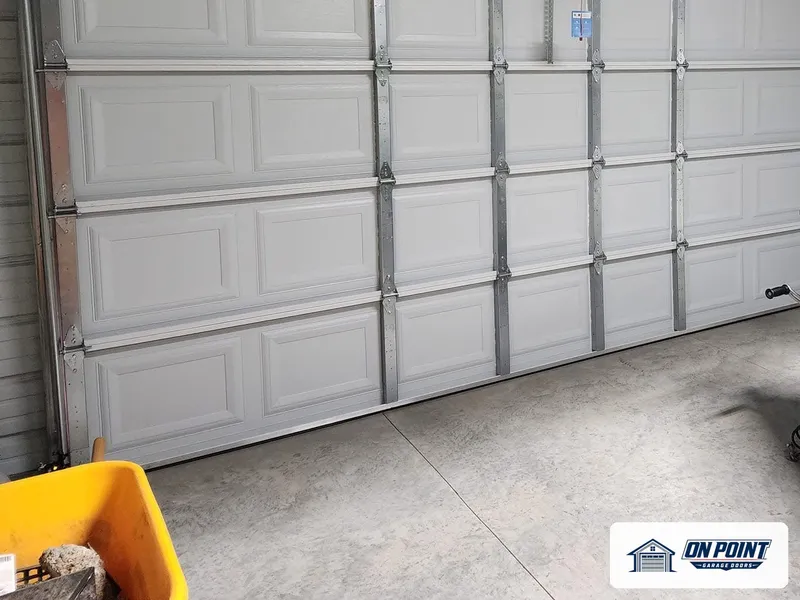
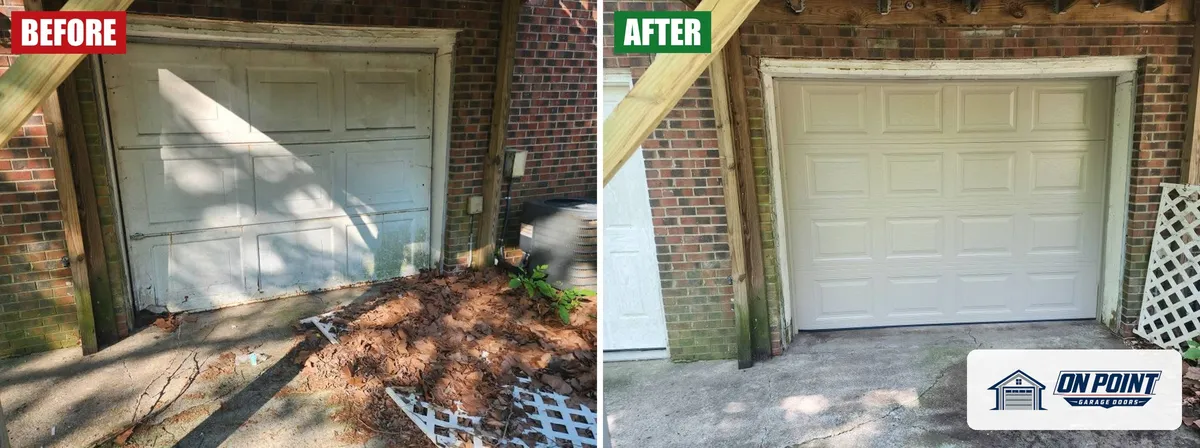
Old door out, new door in: before and after photo from one of our jobs
Old door out, new door in
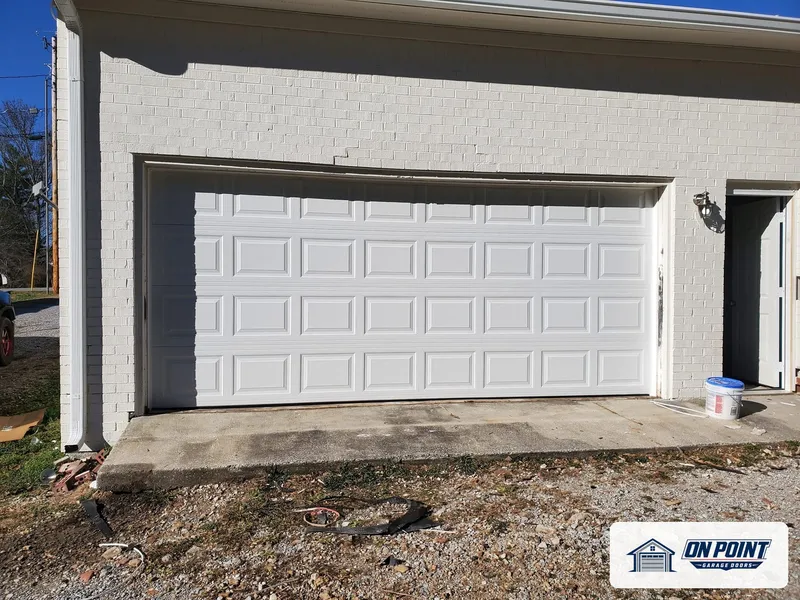
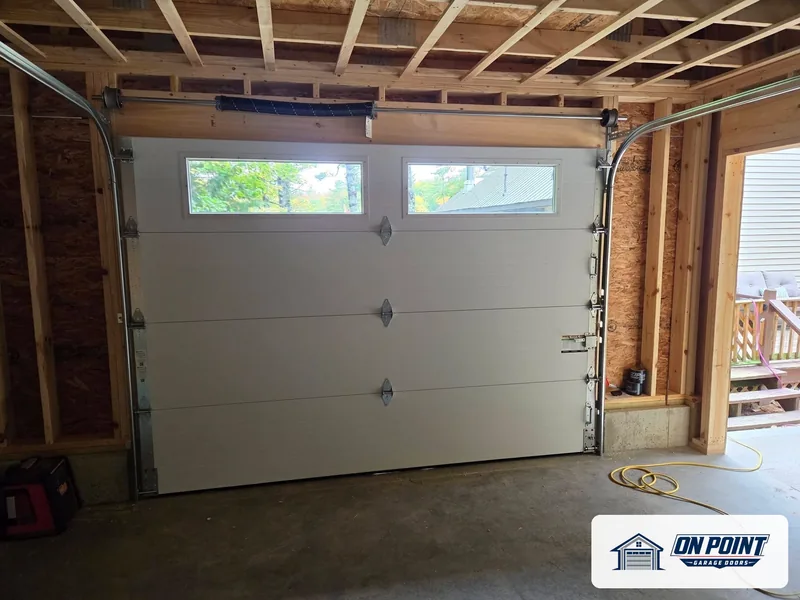
New door, steel building, photo from one of our jobs
New door, steel building
New double door, photo from one of our jobs
New double door

On Point Garage Doors installs and repairs Clopay garage doors across Brooklyn, Queens and Long Island, and the parts that wear out are the same few every time. The estimate is free.

By Sean Cohen, owner, On Point Garage Doors · Updated

Clopay has been the default door on new construction for years, so a lot of what we open on a morning round is a Clopay. That helps, because the parts that give out are predictable. Hinges crack at the same knuckle. Rollers go loud at about the same age. The bottom seal splits where the driveway holds water.

None of that means the door is finished. Once a technician is standing in front of it the brand matters less than the series, because the series decides the section and the hardware, and that can be read off the door in a minute.

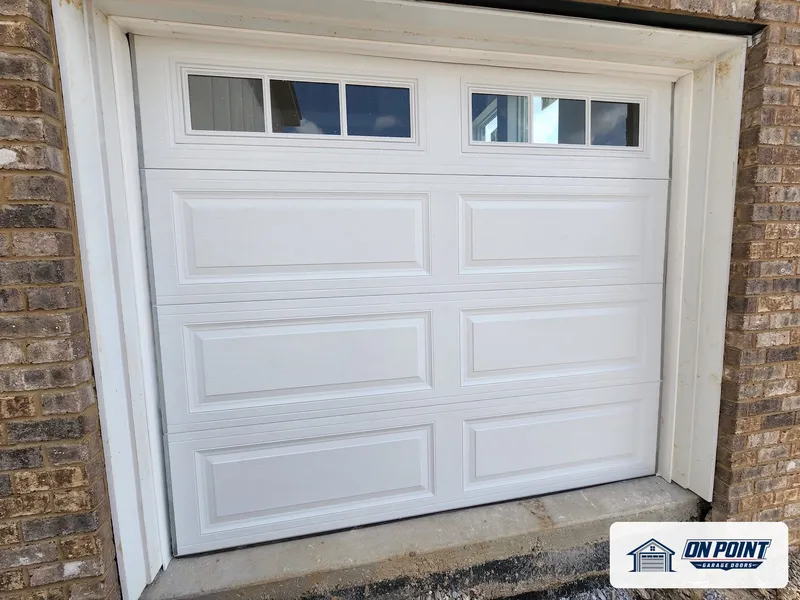
New garage door with windows on a brick house, installed by On Point Garage Doors

How to tell which one you have

  • A sticker inside, usually on the top section or the end stile, with the series and the build date.
  • The number of panel rows, which is four on most double doors and three on a single.
  • Window inserts, and whether they sit in the top row or the second.
  • Smooth steel, or steel stamped to read as wood grain.
  • Whether the struts across the back are steel or the door has none.

You don't have to work any of this out before you call. Photograph the inside of the top section, and the sticker if it's still there, and the technician brings what matches. If the sticker has gone, that's normal on a door past ten years, and it changes nothing about the visit.

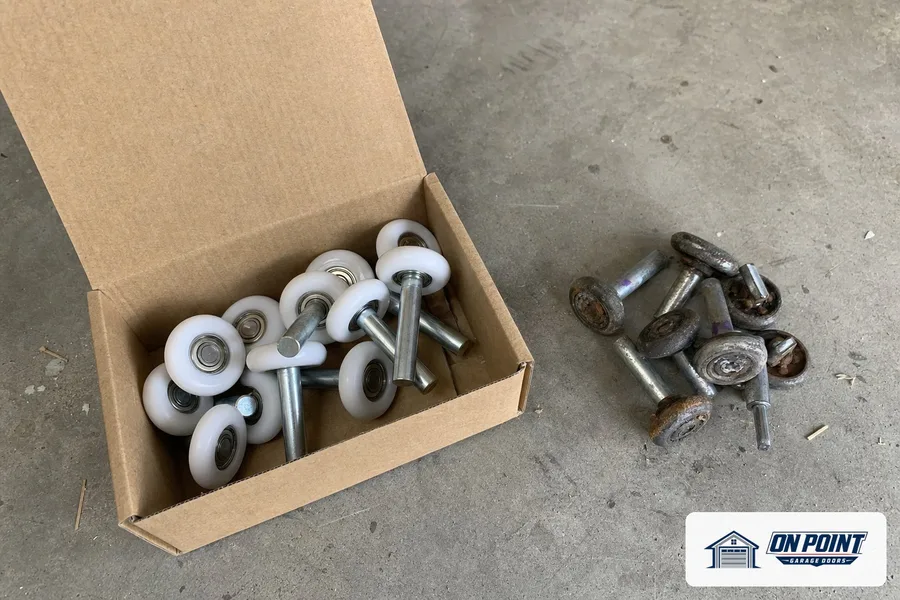
New garage door rollers next to the worn ones they replaced
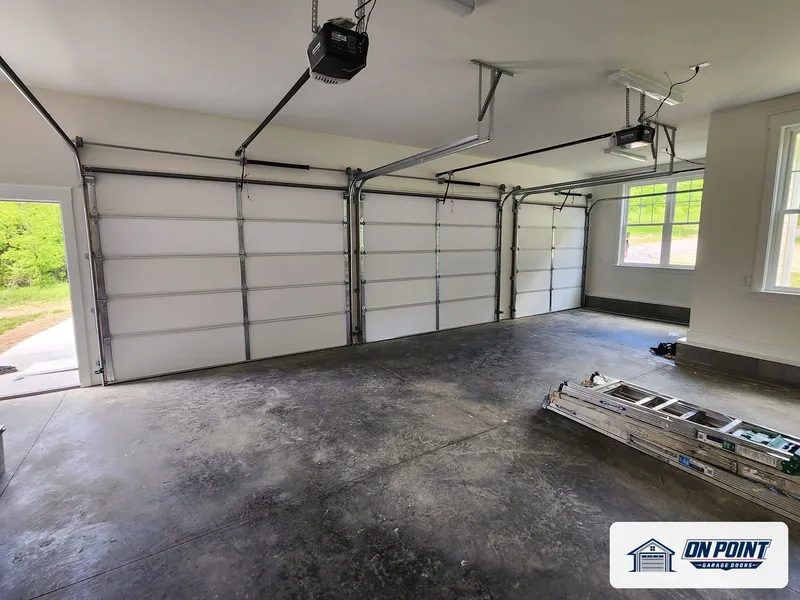
Two new garage doors and openers seen from inside, an On Point Garage Doors job
Garage door tracks and rollers seen from inside the garage, an On Point Garage Doors job

What actually goes wrong on them

Four things, in roughly the order we get called about them.

  1. HingesThe stamped hinge between sections carries the roller, and after a decade of cycles the knuckle wears oval. You hear it as a knock at the same point in the travel, every single time.
  2. RollersNylon rollers stay quiet for years and then get loud in one season. Steel ones without a bearing chew the track while they do it.
  3. The springClopay fits a torsion spring above the opening on almost everything residential. It's a consumable rated in cycles, and it doesn't care whose name is on the door.
  4. The bottom sealThe rubber splits and the door stops sealing at the floor. On a Brooklyn driveway that shows up as water inside after heavy rain, long before anybody looks at the seal.
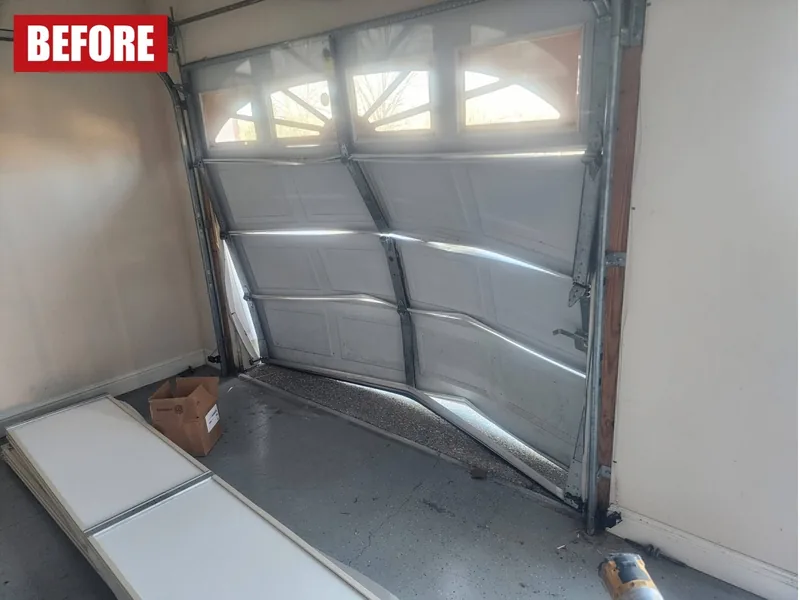
Caved-in garage door panels before On Point Garage Doors replaced the door

A dent is not a new door

Steel dents. A car backing out, a basketball, a branch in a nor'easter. The reflex is to assume the whole door goes, and on a Clopay that is usually wrong, because sections are sold on their own.

Two things decide it. Whether the series is still made, and whether a new section will match a finish that has had ten summers on it. We look at both on site and tell you which way it falls. Sometimes the honest answer is that a replacement section will read as new next to the rest, and you would rather live with the dent. That's a fine outcome too.

The one part to leave alone

Everything above is ordinary work. The spring is not. A broken torsion spring is still a loaded spring, the intact half holds its tension, and there's very little holding it there. It's the job on a home garage door that puts people in the hospital.

If the door has stopped a few inches up and won't lift by hand, leave it down and don't force it. That is the whole safety brief.

What people are told, and what's real

You have to go back to the dealer. Not for repair. A dealer sells and installs doors; the hinges, rollers, seals and springs on a residential Clopay are standard parts that ride on the truck.

The parts are proprietary. The section is specific to the series. Almost nothing else is.

A noisy door needs replacing. A noisy door needs the thing making the noise looked at, which is nearly always a hinge or a roller, and both are a short visit while they're still only noisy.

Clopay lines as they look on a repair call

The series on the label decides the section, the weight and much of the hardware, so it is the first thing the technician reads. Here is what each of the common Clopay lines means once the door is in front of us.

Classic Collection

The plain steel doors found on a great many attached garages. Some are a single layer of steel, some have insulation behind a steel back. The lighter versions flex more as they travel, so hinges and the top section around the opener bracket see more wear, and a hard bump from a bumper leaves a crease rather than a dent.

Gallery Collection

Steel doors made to look like carriage doors, often with window inserts across the top row. They are usually insulated, which makes them heavier than they look. When springs are replaced, they are sized for that real weight, not for a plain steel door of the same width.

Premium Series

Insulated steel doors built for garages that share a wall or a ceiling with living space. The insulated core makes them stiff and quiet, and it also adds weight, so the springs, cables and drums carry more load. When one of these doors starts to feel heavy by hand, the springs are usually the cause.

Coachman and Canyon Ridge

Carriage-house doors with trim overlays on the face, and in Canyon Ridge a wood-look composite skin over steel. The overlays add weight and depth, and the decorative handles and hinges on the face are for looks only. The real hinges and rollers sit on the back like on any other sectional door.

Modern Steel

Smooth or grooved steel with a clean face, often in darker colors. Dark doors take more heat in summer, so the bottom seal and the paint near the floor are worth a look on older ones.

Avante

Aluminum frames with glass panels. These doors are lighter than they look, so the springs must not be oversized, and the frame relies on struts to keep it straight across a wide opening. A cracked panel can usually be replaced without changing the whole section.

Reserve

Real wood doors. They are among the heaviest doors we work on, they need their finish kept up, and the bottom section is where rot starts if water sits against it. Hardware and springs for these doors are chosen for that weight.

Where the door came from changes the visit

Clopay sells through independent dealers and through home improvement stores, so the door on your house may have been hung by any one of many installers. Some were set up with great care. Others went up with springs that were close enough, track bolted to whatever framing was handy, or an opener bracket screwed straight into the top section with nothing behind it.

That is why the technician looks past the brand to how this particular door was installed. A door that has been loud or heavy since the day it went up usually has an install problem, not a worn part, and it gets fixed at the root so the same complaint does not come back.

The enclosed spring system on some Clopay doors

Not every Clopay door has the open torsion spring most people picture on a bar above the opening. Some, often ones bought through a home improvement store, came with an enclosed spring system, where the spring sits inside a tube along the header. It does the same job, but its parts are not the same as a standard torsion spring, and they are not always on hand.

When one of these fails, we explain the two choices: replace the enclosed system like for like, or convert the door to a standard torsion spring setup with parts that are easy to find later. Either way the new springs are matched to the door's weight, and both sides are balanced before the door goes back on the opener.

Extension springs on lighter Clopay doors

Some lighter Clopay doors, especially on older and smaller garages, lift on extension springs that stretch along the tracks above the door instead of a torsion spring over the opening. Each spring should have a safety cable running through it, so that if it snaps it cannot whip across the garage. When we find extension springs without those cables, we add them, and we replace both springs as a pair so the door rises evenly. Our page on converting extension springs to torsion explains when changing the system makes sense.

What the technician checks first on a Clopay

Each worn part is shown to you and put on a free written estimate before anything is changed.

Signs a Clopay door needs a look

Each of these is an early warning, and each is a smaller job while the door is still running than after a part gives out.

The top section and the opener bracket

On many doors, the opener arm bolts to a bracket on the top section. Every time the door starts to open or close, that bracket pulls and pushes on the steel. On lighter doors without a brace behind it, the steel slowly bows and then creases, and the opener starts reversing or making a popping sound as the door begins to move.

Caught early, the fix is a strut or brace across the top section and an opener set to the right force. Once the steel has torn around the bolts, the top section may need to be replaced. If you notice the top of the door flexing when the opener starts, that is the moment to have it looked at.

Window inserts and glass

Many Clopay doors have decorative window inserts held in a frame from the inside of the section. A ball, a tool on a shelf or a hard freeze can crack one, and older plastic inserts can turn cloudy with sun. In most cases the insert can be replaced on its own, matched to the pattern of the others, without taking the section off the door.

On full-glass doors, a broken panel is a bigger job, and the technician checks the frame around it at the same time, since whatever broke the glass may have bent the aluminum as well.

Overlay trim and decorative hardware

On carriage-style Clopay doors, the trim on the face is part of the look, and the handles and strap hinges on the outside are usually decorative. When a piece of trim cracks or comes loose, it can often be reattached or replaced. The decorative hardware can work free as well and rattle as the door moves. None of it holds the door up, but a rattle that sounds like a broken hinge often turns out to be a loose decorative piece, which is good news.

Ordering a matching section

When a section is damaged beyond a simple repair, the label on the door tells us the series, design and color to order. While the section is on order, the door stays in service if it is safe to run, or is secured if it is not. When the section arrives, it goes in with new hinges where they bolt on, and the springs are checked, since a new section can weigh a little differently from the old one.

The finish is the part to think about. A new section beside panels that have faded for years can stand out at first. We tell you honestly how close the match is likely to be, and whether painting the whole door afterward is worth considering. Our dented garage door page goes through the choices when the damage is a dent rather than a tear.

Clopay doors on shops and other buildings

Clopay also makes commercial sectional doors for shops, auto bays and small warehouses. These doors cycle far more often than a home door, so springs, rollers and hinges wear sooner, and the operator, safety edge and track are checked at the same visit. Heavier springs built for frequent use are offered where a door rarely sits still.

Seeing a new Clopay before you choose

Clopay sells through dealers and stores, and we do not run a showroom. If you are thinking about a new door, the technician can talk through the lines that suit your house and garage during the free estimate, measure the opening, and explain how each choice affects the springs and the opener. Our Clopay garage door installation page covers the styles, insulation choices and what an install includes.

The opener above a Clopay door

Clopay is known for its doors, so the opener on the ceiling is almost always another make, such as LiftMaster, Chamberlain or Genie, and we repair all of them. A good share of opener complaints on a Clopay are really door complaints. A tired spring or a worn hinge makes the door harder to move, and the opener strains, reverses or stops partway. The door is balanced first, so a good motor is never replaced for a problem that lives in the door.

Insulation added after the door went up

Owners sometimes add an insulation kit to the back of a plain steel Clopay to warm up the garage. It helps, but it adds weight the springs were never set for. The door starts to feel heavy, drifts down when left halfway, and the opener works harder on every trip. When we see foam panels pressed into the back of a door, we check the balance and size the springs to the door as it is now.

Rust along the bottom section

The bottom section takes the water, the snow piled against it and the salt carried in on tires. On steel doors, rust usually shows first as small blisters along the lower edge and around the bottom brackets. The bracket holds the lift cable, so rust there is a safety matter, not only a looks matter. Depending on how far it has gone, the fix may be a new bottom bracket and seal, or a new bottom section with fresh cable ends.

When a Clopay comes off its track

A bumper clipping the door, a roller that has worn through or a cable that let go on one side can pull a door out of its track. A door hanging crooked is under strain from the springs and can fall, so it should be left alone until a technician is there. We take the load off the springs, bring the door back into the track, replace any bent track or broken rollers, and check the hinges and the section where the impact landed, since a crease there often follows a bump.

Rows of matching Clopay doors

On townhouse rows and in buildings with several garages, the doors were often hung together, from the same series and in the same color. That means they also wear out together. When one door on the row breaks a spring or cracks a hinge, the others are usually close behind. We can look at several doors on one visit and tell a board, a manager or neighbors which ones need work now and which can wait.

Garages under bedrooms and kitchens

When living space sits over or beside the garage, a loud door is heard in the house. On a Clopay, the knock usually comes from hinges and rollers, and the hum from the opener. Sealed bearing rollers, new hinges where the old ones have worn and, if the opener is due, a belt drive or a wall mount unit bring the noise down. An insulated door helps too, since it does not ring the way a thin steel door does.

Clopay doors in winter

In a hard freeze, the bottom seal can stick to the slab, and the opener may strain or reverse as it tries to pull the door free. Springs also tend to break in the cold, because the steel is under the most stress then. A door that sounds different on a cold morning, or a seal that has torn where it froze, is worth a look before the next storm.

What helps when you call about a Clopay

A few details let the technician arrive with the right parts. Tell us whether the door is a single or a double, whether it has windows, and whether the back is bare steel or covered by insulation. A photo of the label inside the door helps most of all, along with one of the spring above the opening. Say what the door does, too: a bang and a door that will not lift points to a spring, a crooked door to a cable, and a knock on every trip to a hinge or roller. If the door is stuck open, or a car is trapped inside, say so first, and leave the door where it is until the technician has seen it.

When a new door makes more sense

If only springs, cables, hinges or rollers are worn, the door stays. A sound Clopay with new hardware can run for many more years, and we will say so.

Questions we get asked

Do I need a Clopay dealer to fix a Clopay door?

No. The hardware on a residential Clopay is standard: torsion springs, stamped hinges, nylon rollers, a rubber bottom seal. We carry all of it on the truck. A dealer matters when you're buying a whole door, not when a hinge has worn oval.

Can one damaged panel be swapped instead of the whole door?

Usually, yes. Clopay sells sections on their own, and on a door that is otherwise sound a single section is the sensible repair. What decides it is whether the series is still made and whether the finish will match after ten years on a south-facing driveway.

How do I find out which Clopay I have?

There's a sticker inside, normally on the top section or the end stile, with the series and the build date on it. If it has peeled off, the door still tells you: the number of rows, the window inserts, and whether the steel is smooth or stamped to look like wood.

My Clopay is noisy but it still works. Is that urgent?

Not urgent, but it is early. Noise on these doors is nearly always hinges or rollers, and both are small jobs while they're still noisy. Left alone they take the track with them, and that is a different afternoon.

My Clopay has a spring inside a tube, not an open spring. Can you fix it?

Yes. Some Clopay doors came with an enclosed spring system. We can replace it like for like, or convert the door to a standard torsion spring with parts that are easier to find later, and we explain both before any work starts.

Why did my Clopay get heavy after I insulated it?

An insulation kit adds weight the original springs were not set for. The door drifts down, feels heavy by hand and makes the opener strain. New springs sized to the door as it is now put it back in balance.

Is the estimate really free?

Free, across Brooklyn, Queens and Long Island. The visit tells you what has failed and what it takes to put right, and no is a complete answer.

What if the door will not shut?

Tell us when you call. A garage that cannot be closed, or a car stuck inside, is handled ahead of routine visits, and the door should be left where it is until the technician has seen it.

Booking takes a minute

Around Brooklyn and Queens, call once and you get a two-hour slot and a heads-up call before the truck moves. We don't buy leads, we don't bid on them, and nobody on a phone judges a door they can't see.

Free estimate, across Brooklyn, Queens and Long Island.

Say what the door does when you press the button, what it sounds like, and roughly how old it is. That's enough for the technician to load the right parts before setting off.

Get the Clopay looked at today

Describe the fault and we'll give you an honest arrival time. The visit and the estimate is free, anywhere in Brooklyn, Queens and Long Island.

Easier to explain by phone? Call (929) 429-2429.

Two minutes to a free estimate on your Clopay

Tell us what the door is doing. The estimate is free either way.

Or just call (929) 429-2429 and talk it through.

The other six things that go wrong