Takes 30 seconds. We call you back to set a time.
Wood garage doors look beautiful, and many homes in our area still have them, from carriage doors on Brooklyn brownstone garages to old raised panel doors on Long Island ranches. But wood soaks up water, and water leads to rot. It almost always starts at the bottom, where rain splashes and snow sits against the door. Rot is not just a looks problem. The bottom brackets that hold the lift cables are fastened into that wood. This page explains how to spot rot, why it matters and what can be done. Free estimate at (929) 429-2429.
By Sean Cohen, owner, On Point Garage Doors · Updated
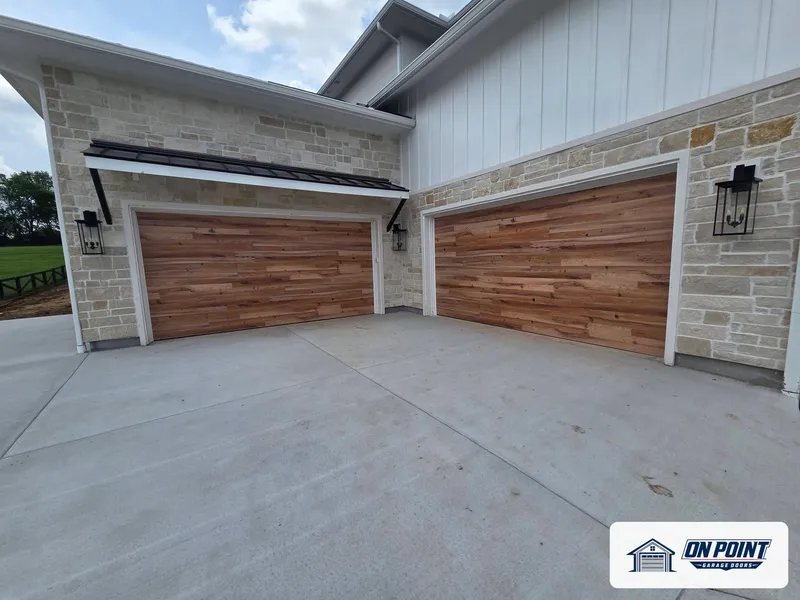
These photos are from our own jobs, with our logo on them.


The bottom edge and the bottom section take the most water. Rain bounces off the driveway, snow piles against the door, and puddles sit under the seal. Paint wears off the bottom edge first, and once bare wood is exposed, it soaks up water like a sponge. Joints between panels and the end grain at the corners are the next weak points.
The lift cables are tied to bottom brackets screwed into the bottom section. Those brackets carry the full pull of the springs. When the wood around the screws rots, the brackets can pull loose, and the door can drop or hang crooked with a cable flailing. Hinges on rotted wood can tear out too. If a bottom bracket looks loose or the wood around it is soft, stop using the door and call.
Wood that has soaked up water is heavier than when it was new. The springs were set for the dry door, so a waterlogged door may feel heavy and make the opener strain. When the wood dries in summer, the balance changes again. A door that feels different from season to season may be taking on water.
On many wood doors, the bottom section can be replaced on its own. For a stock door, the maker may still offer the section. For a custom or old door, a matching section may need to be built. Either way, the bottom brackets, hinges and seal go on new, and the springs are checked for the new weight. Our page on panel replacement covers the process.
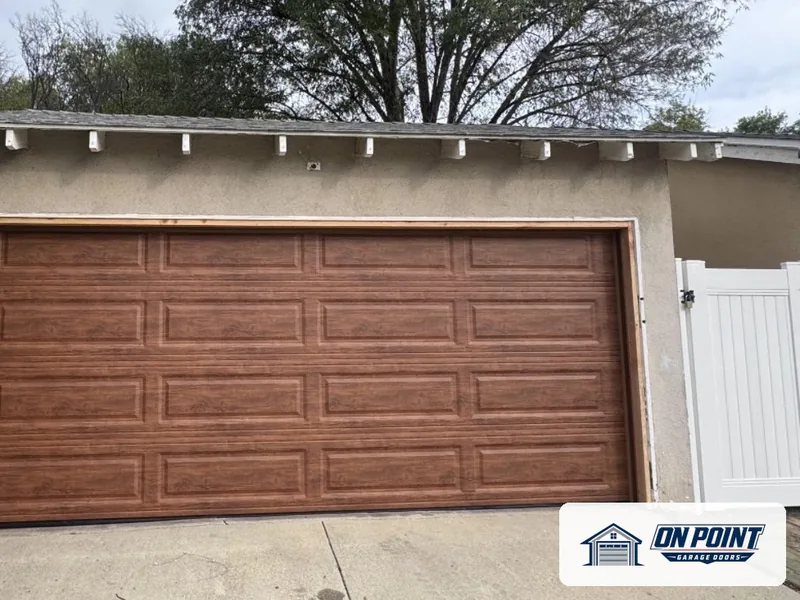
If rot has spread up the door, if the frame of each section is coming apart, or if the door is very old, a new door is often the better choice. Many owners who love the wood look choose a steel door with a wood-grain finish, which keeps the look without the upkeep. Our page on faux wood garage doors explains that option.
The wood jambs and header around the door can rot as well, especially at the bottom of the side jambs. The vertical tracks are fastened into those jambs, so soft wood there lets the tracks shift. When we see rot in the frame, we tell you, and point you to a carpenter if it needs more than we do. Our frame repair page explains what we look for.
Many of the wood doors we see were hung decades ago on detached garages and on garages under row houses. Some have been painted so many times that the paint hides soft wood underneath. Pressing gently along the bottom edge and around the brackets is often the first sign of how far the damage goes.
The best defense is paint or stain kept in good shape, especially on the bottom edge. A good bottom seal keeps standing water off the wood. Keeping snow from piling against the door and making sure the driveway does not slope water toward the garage help too. Having the door checked when you notice peeling paint catches rot while it is still small.
The technician checks the wood, the bottom brackets, the hinges, the cables and the springs, explains how far the rot has gone, and tells you whether a section or a new door makes more sense. You get a free estimate before any work starts.
Peeling paint near the bottom, dark stains, soft wood and cracks between panels are the common signs.
It can be. The cable brackets are screwed into the bottom section, and rot can let them pull loose.
Often yes, if a matching section is available or can be built.
A new wood door, or a steel door with a wood-grain finish that keeps the look with less upkeep.
Yes. We check the door and the frame before any work starts.
Across Brooklyn, Queens and Long Island, tell us what the door is doing and we set a visit that fits your day.
Free estimate, call (929) 429-2429.
Tell us what the door is doing and we will give you an honest arrival time. The estimate is free.
Easier to explain by phone? Call (929) 429-2429.
Tell us what the door is doing. The estimate is free either way.