Takes 30 seconds. We call you back to set a time.
A garage conversion turns the garage into a room you live in: a home office, a gym, a playroom, a studio or a space for a family member. The biggest question in the project is what to do with the big opening at the front. Some owners keep a working garage door so the room can open up again, some put in a better insulated door, and some have the opening framed in and closed for good. Each path changes how warm, quiet and secure the room feels, and each one involves the door in a different way. Free estimate at (929) 429-2429.
By Sean Cohen, owner, On Point Garage Doors · Updated
These photos are from our own jobs, with our logo on them.


A room that can open to the driveway is useful. A gym can roll up the door on a warm morning, a workshop can carry in lumber, and a family can park a car inside again if the room is no longer needed. Keeping a door also leaves the house looking the way it did from the street, which some owners prefer on a block of matching homes.
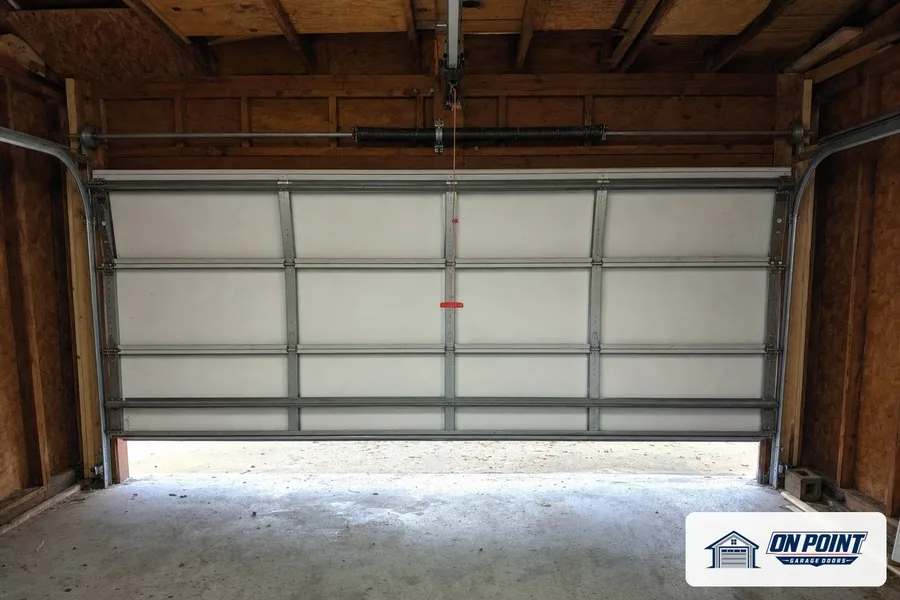
An insulated door has foam between steel skins, tight joints between the sections and seals at the top, sides and bottom. It blocks drafts, cuts street noise and holds heat far better than a single layer of steel. For a room people sit in every day, this is usually the difference between a space you use and one you avoid in January. Our page on insulated garage doors explains the build in more detail.
A great door with worn seals still leaks air. In a converted room we look closely at the bottom seal against the floor, the weather stripping on the frame and the seal between the sections. If the floor is uneven, the bottom of the door has to be set so it closes flat without a gap at one corner.
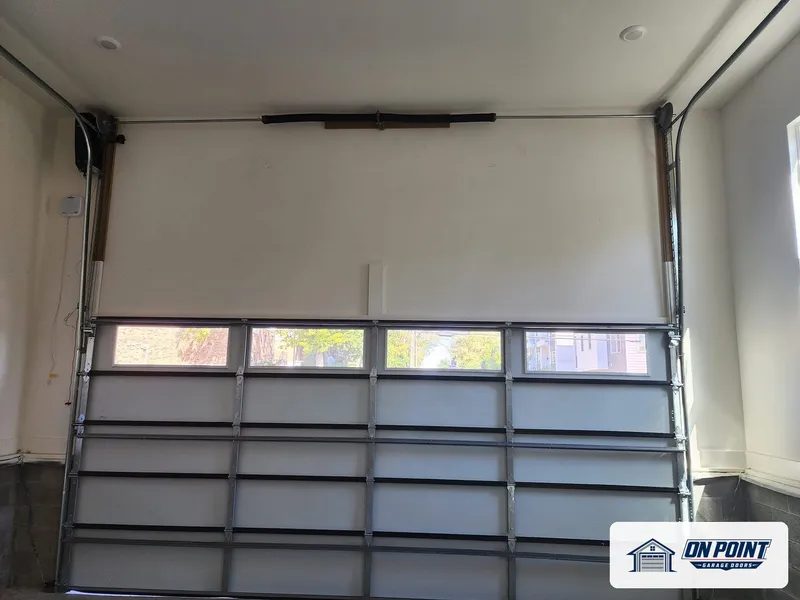
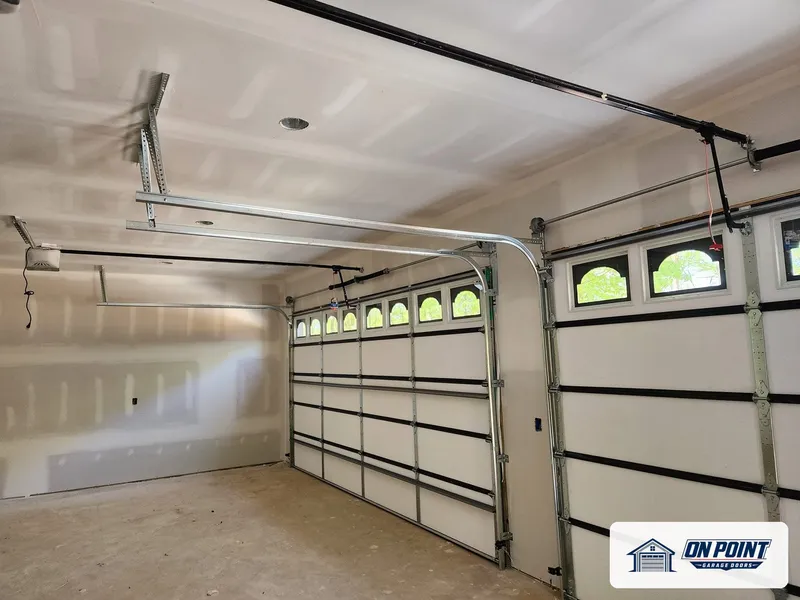
Many garages have no windows, so the door is the only possible source of daylight. A door with a row of windows near the top brings light in while keeping the room private from the street. Frosted or textured glass is a common choice for offices and gyms.
An opener mounted on the ceiling can be loud in a room that is now used for work or sleep. A belt drive is much quieter than a chain, and a wall mount opener sits beside the door instead of over the middle of the ceiling, which frees up head room for lights and fans. If the door will rarely open, some owners skip the opener and keep a sturdy lock instead.
When the opening is framed in, the builder handles the wall. We remove the old door, the tracks, the springs and the opener so the framing can start on a clean opening. Springs on a garage door hold a lot of tension, so taking them down is a job for a door technician, not part of general demolition.
A converted garage often holds computers, gym equipment or a bedroom, so the door should lock well. Many owners choose an opener with rolling codes and a lock feature, a side lock on the door, or a smart opener that shows when the door is open. Our page on securing a garage door covers the common options.
Conversions often involve permits and rules that depend on the town and the building. We do not handle those, but we work alongside the builder or the owner so the door choice fits the plan for walls, floors and heating. It is easier to decide on the door before the floor is raised or the walls are finished.
The technician looks at the opening, the floor, the ceiling and how you plan to use the room, then explains which door or removal fits the project. You get a free estimate before any work starts.
Yes. Many owners keep a working door, often replacing it with an insulated one so the room stays comfortable.
An insulated steel door with good seals all around, often with a row of windows near the top for daylight.
A door technician should take down the door and springs, since the springs are under tension. The builder then frames the wall.
Chain drives can be. A belt drive or a wall mount opener is much quieter.
Yes. We look at the opening and your plans before any work starts.
Across Brooklyn, Queens and Long Island, tell us what the door is doing and we set a visit that fits your day.
Free estimate, call (929) 429-2429.
Tell us what the door is doing and we will give you an honest arrival time. The estimate is free.
Easier to explain by phone? Call (929) 429-2429.
Tell us what the door is doing. The estimate is free either way.