Serving Brooklyn, Queens and Long Island(929) 429-2429Open six days a weekFree estimateGuaranteed work
On Point Garage Doors
Open 24 hours Sun-Thu, Fri until 5 pm Free estimate Springs, openers, cables We come to you
Emergency?Call nowBook free estimate
New York, NY - open six days a week

Why garage doors break, and how to keep yours working

Free estimateSame-day serviceCommon parts on board
  • Free estimate
  • Same-day service
  • Common parts on board
Emergency garage door repair★★★★★ 5.0 on Google · 42 reviews

Book your free estimate

Takes 30 seconds. We call you back to set a time.

Or just call (929) 429-2429 and talk it through.

Home › Why Garage Doors Break

A garage door is the largest moving thing in most homes. It goes up and down through every season, carries a lot of weight on a few small parts, and usually gets attention only when it stops working. Doors rarely fail out of nowhere. Almost every breakdown we see traces back to the same few causes, and most of them give warning signs first. Free estimate at (929) 429-2429.

By Sean Cohen, owner, On Point Garage Doors · Updated

Real jobs. Real photos.

These photos are from our own jobs, with our logo on them.

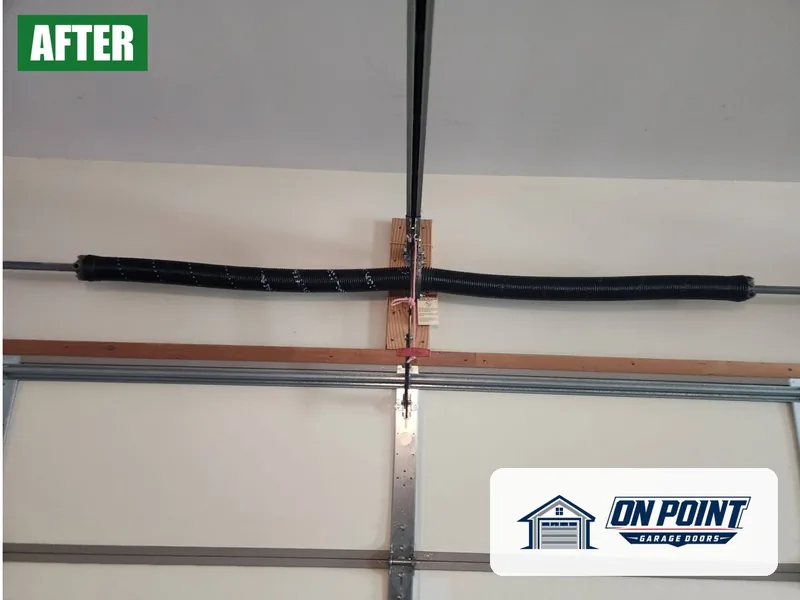
New garage door spring installed by On Point Garage Doors
Springs and cables
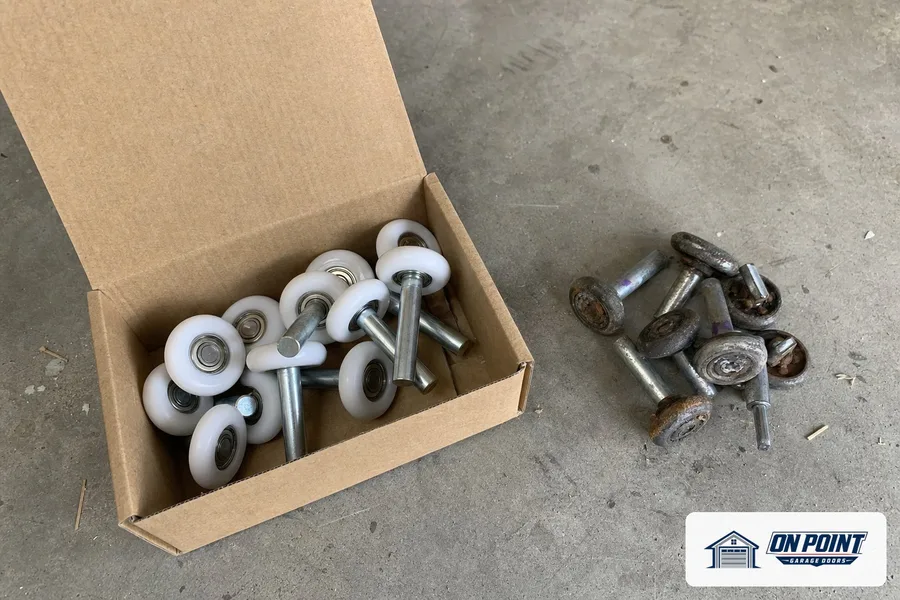
New and worn rollers, from one of our jobs
New and worn rollers
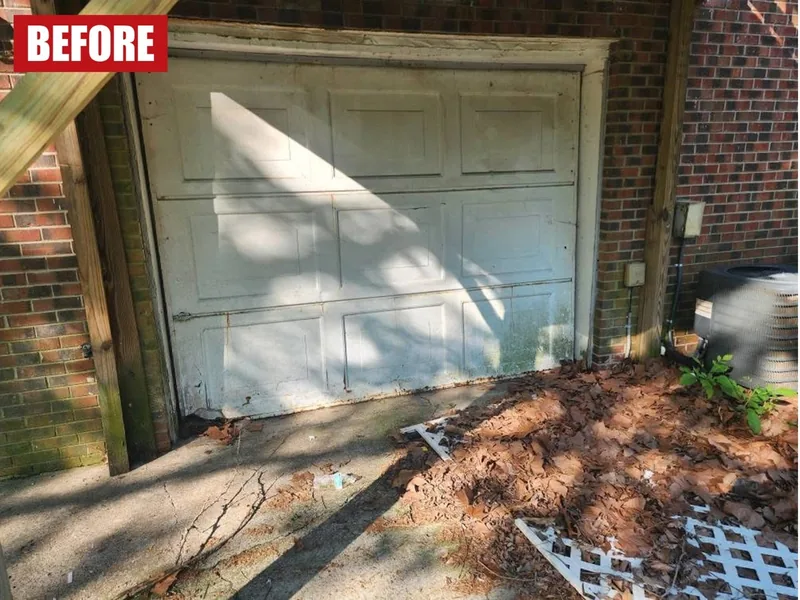
Old worn garage door before On Point Garage Doors replaced it
Rust at the bottom of a door

Springs wear out first

Springs do the heavy lifting. Each time the door opens and closes, the spring twists or stretches and then relaxes. Steel can only do that so many times before it fatigues and snaps. A busy household that uses the garage as its front door wears springs out far sooner than one that opens it a few times a week.

A broken spring is the single most common reason a door stops working. Often there is a loud bang, then a door that will not lift.

Rollers and hinges

Rollers carry the door along the tracks. Old steel rollers lose their bearings, wobble and grind; nylon rollers crack. Hinges between the sections wear at their pins and holes. Worn rollers and hinges make the door noisy and shaky, and eventually let it jump off track.

Cables fray and snap

Lift cables run from the bottom of the door up to the drums above. Road salt, damp and age make them rust and fray at the bottom bracket. A snapped cable drops one side of the door, which is how many crooked, jammed doors begin.

Tracks bend and come loose

A car that taps the door or the track, a bike leaned against it, or brackets that slowly work loose can bend a track out of line. A door running in a bent track rubs, binds and can come off the track completely.

The opener fights a door that is out of balance

When springs weaken, the door gets heavier, and the opener has to work harder every day. That wears its gears and motor, and eventually it stops, hums or reverses. Many opener failures are really spring problems that went unnoticed.

Weather does its share

Cold winters stiffen the parts and make tired springs more likely to snap. Salt and slush attack the bottom section, the bottom seal and the cables. Summer heat and humidity swell wood doors. Near the water, salt air speeds up rust on every steel part.

Everyday bumps and habits

A door that gets hit by a bumper, a door closed on a bin, or a garage used as a gym with weights leaned against the door all add stress. So does running the opener against a door that is already struggling.

Warning signs worth a call

How a tune-up prevents most breakdowns

Once a year, a technician checks the springs, cables, rollers, hinges, tracks and opener, sets the balance of the door and tests the safety reverse. Worn parts are pointed out before they fail, so you choose the timing instead of the door choosing it for you.

A balanced door with good rollers is quieter, kinder to the opener and far less likely to leave you stuck.

When it is time for a new door

Sometimes the parts are fine but the door itself is tired: rotted wood, rusted-through steel, cracked sections or a door far too heavy for modern springs. Then a new door makes more sense than another round of repairs. We give you a free estimate on both so you can decide.

The parts that rarely get noticed

Bearings at the ends of the spring bar, the drums that wind the cables, the center bracket bolted above the door and the bottom bracket holding each cable all wear quietly. A worn bearing makes the spring bar wobble; a cracked drum lets a cable slip; a rusted bottom bracket can let go under the full force of the spring.

These parts are checked on every tune-up because they fail without much warning and take other parts with them.

Doors that were installed wrong

Some breakdowns trace back to the day the door went in: springs sized for a lighter door, tracks set out of line, a header too weak to hold the spring bracket, or an opener mounted to a single thin board. Those doors wear out faster no matter how gently they are used.

When we find an installation problem, we explain it and fix the cause, not just the part that broke.

Questions we get asked

What is the most common reason a garage door breaks?

A broken spring. Springs wear out with use and are the part that fails most often.

Why did my garage door break in the winter?

Cold makes steel parts stiffer and puts more stress on tired springs, so many springs that were close to the end snap in cold weather.

Can a broken door damage the opener?

Yes. An opener that keeps lifting a door with weak or broken springs wears its gears and motor quickly.

How can I prevent garage door problems?

A yearly tune-up, keeping the door balanced, and calling when you notice new noises or uneven movement prevent most breakdowns.

Is the estimate free?

Yes. You get a clear explanation and a free estimate before any work starts.

Booking takes a minute

Across Brooklyn, Queens and Long Island, tell us what the door is doing and we set a visit that fits your day.

Free estimate, call (929) 429-2429.

Not sure what is wrong? We will come and look

Tell us what the door is doing and we will give you an honest arrival time. The estimate is free.

Easier to explain by phone? Call (929) 429-2429.

Two minutes to a free estimate

Tell us what the door is doing. The estimate is free either way.

Or just call (929) 429-2429 and talk it through.

The other six things that go wrong