Booking today in New York(929) 429-2429Open six days a weekFree estimateGuaranteed work
On Point Garage Doors
Open 24 hours Sun-Thu, Fri 7-5 Free estimate Springs, openers, cables We come to you
Call same-day(929) 429-2429
New York, NY - open six days a week

Garage door panel replacement, one section at a time

A bumper, a basketball, or years of salt water sitting along the bottom of the door: when one section of a garage door is damaged, On Point Garage Doors replaces that section across Brooklyn, Queens and Long Island whenever the maker still builds it, and says so plainly when it doesn't. The estimate is free.

Free estimateOne section or the whole doorColor and texture matchedSprings rebalanced after

Put it on the schedule for your garage door

Tell us what the door is doing. The estimate is free either way.

Or just call (929) 429-2429 and talk it through.

Home › Garage Door Panel Replacement
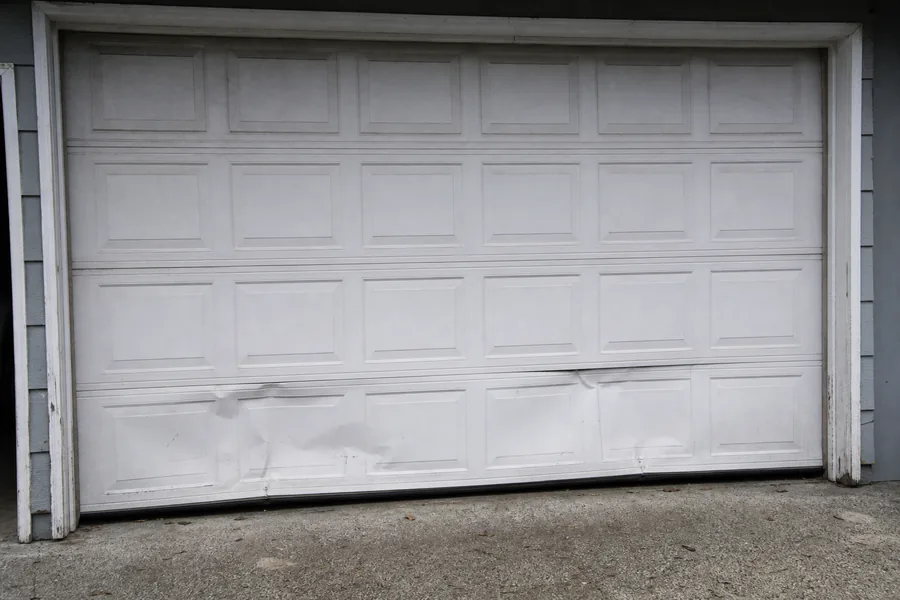
Dented panel sections on an older garage door in New York, NY

Where the damage usually lands

The bottom section takes the most punishment. It sits in rainwater and slush, it gets the salt that comes in on the tires all winter, and on a garage under the house it is the first thing plowed snow gets pushed against. Rust starts at its lower edge and works up from the inside, often long before it shows on the face.

The second section up is where cars and kids leave their marks: a bumper that rolled a little too far, a ball that hit the same spot all summer, a bicycle handlebar on the way out. The top sections are rarely hit, but on a wide door they can crease if the door was ever forced while it was stuck.

Doors on garages tucked under a house, where the driveway slopes down toward the opening, see more of this than most. Rainwater runs to the door and pools against it, so the bottom edge of that first section stays wet for days at a time. By the time the paint starts to bubble on the outside, the steel behind it has often thinned, and that section is the one to replace.

When one section can be swapped

A garage door is a stack of separate sections joined by hinges, so a single damaged one can usually come out on its own. The catch is the match. The new section has to be the same width, height, thickness and panel design as the rest, and it has to come from the maker of the door, because sections from different makers don't line up at the joints.

Most doors carry a label on the inside of a section with the maker's details on it, which is where the technician starts. If that design is still made, a single section is the clean answer. If it was discontinued years ago, you hear that up front, along with what a new door would involve, so the decision is made with the facts on the table.

A new section next to an older door

Paint and finishes fade in the sun, so a factory-fresh section can look brighter than the ones that have faced the street for a decade. On a white or almond door the difference is often hard to spot by the following year. On darker colors and wood-grain finishes it stays more visible.

That's talked through before anything is ordered. Sometimes the answer is to put the new section at the bottom where it draws the least attention, sometimes it is to paint the whole door after the swap, and on a door that is already tired it can be a reason to look at a new one instead.

How a section is replaced

The door stays safe the whole way through, because the springs are holding its weight.

  1. The door is identifiedMaker, design, size and construction read from the door itself, and the damaged section measured.
  2. The section is orderedOnly after you approve the free estimate, in the matching design and finish.
  3. Tension off, section outSpring tension released before the hinges come off, then the old section lifted out and the new one set in its place.
  4. Balanced and testedSprings reset for the door's new weight, the door run on the opener, and the safety reverse proven.

Struts, windows and insulated sections

Wide two-car doors often have steel struts bolted across some sections to keep them from bowing. If the damaged section carried one, the strut goes back on the new section, or is replaced if it was bent along with it.

Window sections, insulated sections and plain single-skin sections are all made differently, and a replacement has to match the one it replaces. An insulated door with one hollow section flexes unevenly and loses the quiet, solid feel the rest of the door has, so the construction is checked as carefully as the color.

Older doors sometimes had a section patched with a plate or filled at some point. Those repairs are looked at too, because a patched section next to a new one can bind at the joint, and it is usually better to know about it before the new part arrives.

The springs have to know about it

Springs are set for the weight of the door as it was. A new section rarely weighs exactly what the old one did, especially if the old one had been patched or had water inside it, so after the swap the door can feel heavier or lighter than before.

That's why every panel job ends with the balance checked and the springs reset if they need it, and with the opener's force and travel set again. Skipping that step is how a door with a perfect new section ends up straining its opener a month later.

When a new door is the better call

One damaged section is a repair. Three damaged sections, rust that has spread through the bottom two, or a design nobody has made in years usually point the other way. So does a door whose springs and opener are near the end of their life anyway, because a new section on top of tired parts only fixes part of the problem.

You get both options laid out side by side, with what each one involves, and the choice stays yours. If a new door makes more sense, the measure can happen on the same visit, and the details are on our garage door installation page.

Questions we get asked

Can you replace just one panel of my garage door?

Usually, yes. If the maker still builds that design and size, the damaged section comes out and a matching one goes in. If the design was discontinued, you hear that on the first visit.

How do you know which panel to order?

Most doors have a label on the inside of a section with the maker's details. The technician reads it, measures the section, and checks its construction before anything is ordered.

Will the new section match the rest of the door?

The design and color will match. On an older door the old sections may have faded in the sun, so the new one can look brighter for a while. That's discussed before ordering.

My bottom section is rusting. Can that be fixed?

If the rust is in the bottom section only and the design is still made, that section can be replaced. Rust that has spread into the sections above is usually a sign the door is due.

Does a new panel change how the door works?

It can change the door's weight, so the springs are checked and reset if needed, and the opener's settings are set again before the job is done.

Can a dented panel be straightened instead?

Small dents are cosmetic and can often be left. A crease that bends the section, or damage near a hinge or the end stiles, weakens the door, and that section should be replaced.

Do you replace window sections?

Yes. Window sections are ordered to match the existing ones, and a single cracked pane can sometimes be replaced on its own.

Is the estimate free?

Yes. The door is identified, the damage looked at, and you get a free estimate with both options before any work.

Dented or cracked section? Send us the door

Describe the fault and we'll give you an honest arrival time. The visit and the estimate is free, anywhere in Kings County.

Easier to explain by phone? Call (929) 429-2429.

Two minutes to a free estimate on any garage door

Tell us what the door is doing. The estimate is free either way.

Or just call (929) 429-2429 and talk it through.

The other six things that go wrong