Serving Brooklyn, Queens and Long Island(929) 429-2429Open six days a weekFree estimateGuaranteed work
On Point Garage Doors
Open 24 hours Sun-Thu, Fri until 5 pm Free estimate Springs, openers, cables We come to you
Emergency?Call nowBook free estimate
New York, NY - open six days a week

Garage doors in brick and block openings

Free estimateSame-day serviceCommon parts on board
  • Free estimate
  • Same-day service
  • Common parts on board
Emergency garage door repair★★★★★ 5.0 on Google · 42 reviews

Book your free estimate

Takes 30 seconds. We call you back to set a time.

Or just call (929) 429-2429 and talk it through.

Home › Garage Doors in Masonry Openings

A great many garages in Brooklyn and Queens are built of brick, block or poured concrete, from the garages under the stoops of row houses to the detached block garages at the back of a lot. A garage door does not bolt straight onto masonry the way it does onto a wood frame. It needs wood bucks and jambs fixed to the masonry, a sound header for the springs and solid anchors for the track. This page explains how a door goes into a masonry opening, what goes wrong with older ones and what we look at before a new door goes in. Free estimate at (929) 429-2429.

By Sean Cohen, owner, On Point Garage Doors · Updated

Real jobs. Real photos.

These photos are from our own jobs, with our logo on them.

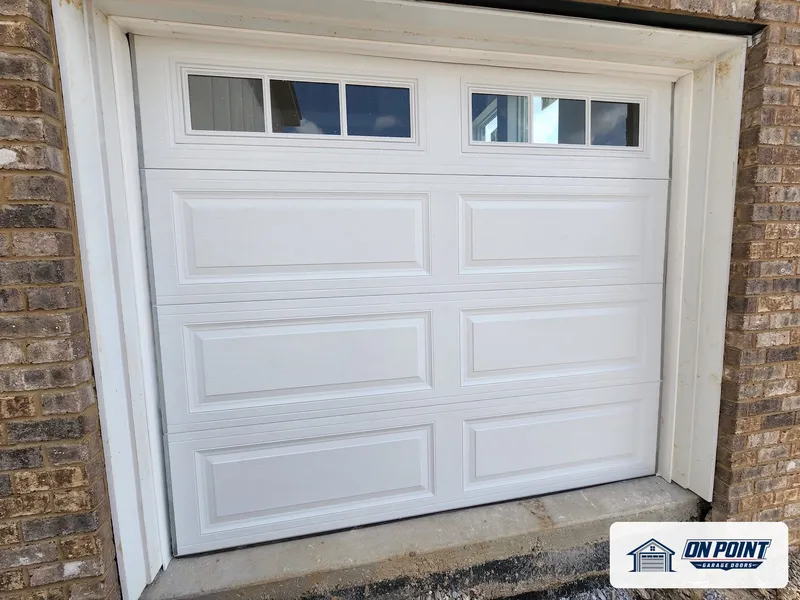
New door in a brick opening, from one of our jobs
New door in a brick opening
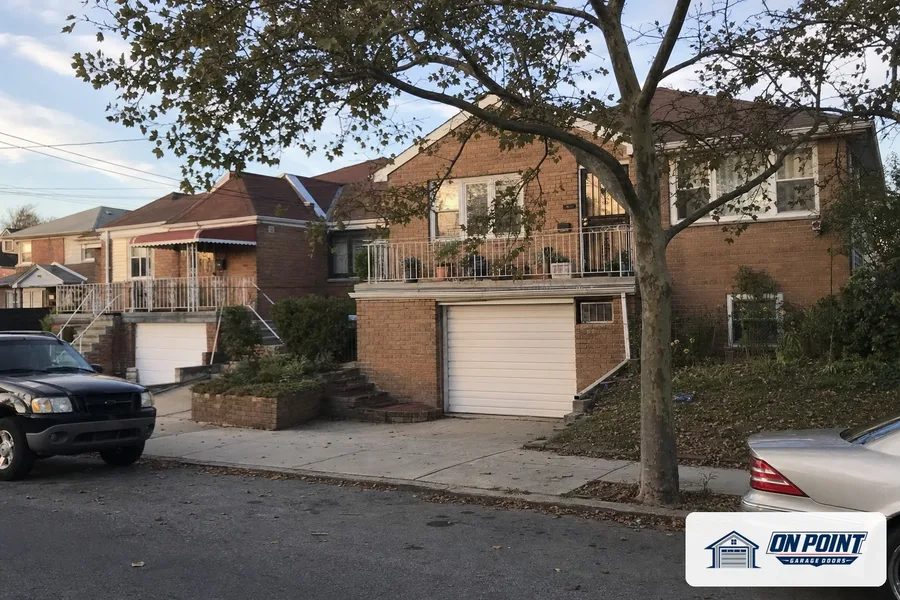
Garage under a stoop, from one of our jobs
Garage under a stoop
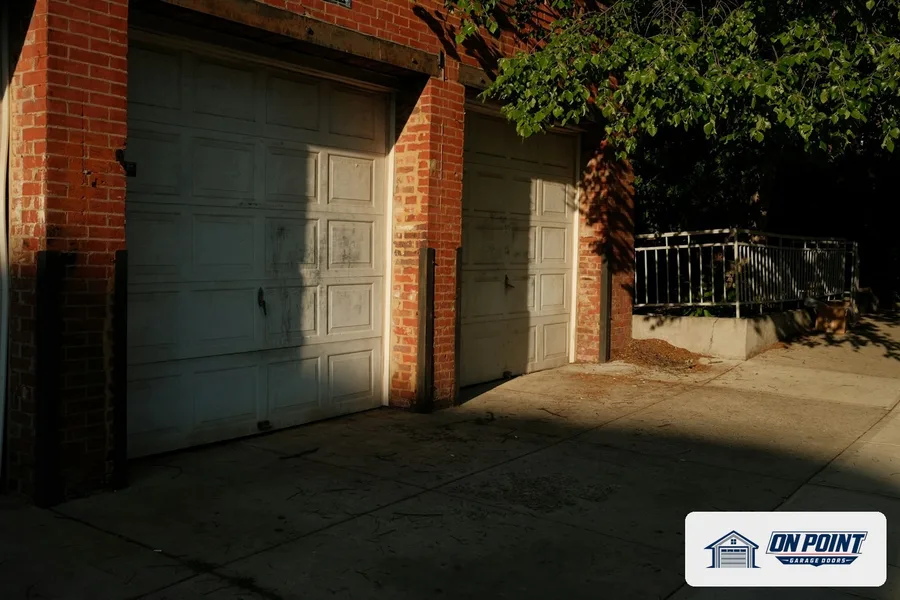
Two garage doors set in brick, from one of our jobs
Carriage doors in brick

Why masonry needs wood first

Garage door hardware is designed to screw into wood. The jambs on each side carry the weather seal and often the track brackets, and the header above the door carries the spring. In a masonry garage, those pieces are wood bucks fastened to the brick or block with masonry anchors. The door then mounts to the wood, not to the masonry.

The side jambs

The side bucks run up both edges of the opening. They need to be plumb, flat and wide enough for the track brackets and the trim. On many old garages, the jambs are thin boards set against uneven brick, shimmed with whatever was at hand. When those boards split or rot, the track brackets lose their grip and the door starts to rub, bind or lean.

The header and the spring

The header above the opening is where the torsion spring's center bracket is fixed. That bracket holds the full force of the spring, so the wood behind it has to be solid and firmly fixed to the masonry or the steel lintel. A header that is soft, cracked or loose is one of the main things we check, because it is not safe to hang a spring on it.

Steel lintels over the opening

Many brick garages have a steel angle or beam above the opening carrying the brick. Over the years it rusts, swells and pushes the brick above it. A rusted lintel is a masonry issue, and a mason should look at it. For the door, it matters because the header buck often sits right under it, and the anchors need sound material to bite into.

Openings that are not square

Brick openings settle. One side may be taller than the other, the floor may slope toward the street, and the sides may lean in or out. A new door can only be as square as the jambs it hangs on. Setting new bucks plumb and level, even when the brick behind them is not, is what lets a new door close evenly and seal along the floor.

Track anchors on brick and block

The horizontal tracks run back into the garage and hang from the ceiling or the walls. In a masonry garage with a concrete or plank ceiling, those hangers need masonry anchors, not wood screws. In a garage under a stoop, the ceiling may be low and the side walls close, so the hanger layout is planned for the space.

Garages under the stoop

The small garages tucked under the front steps of Brooklyn and Queens row houses are some of the tightest openings we work on. Headroom is short, side room is narrow and the walls are usually brick. Low headroom track, a carefully placed spring and a wall mount opener are common answers. Our page on tuck-under garage doors covers those garages in more detail.

Signs the masonry opening needs work

Water at the base of the jambs

In masonry garages, water tends to sit where the jamb meets the floor. Rain runs down the face of the brick and into the bottom of the wood, and the bottom of the buck rots first. When bucks are replaced, we keep the bottom end off the slab where we can, and seal the joint so the new wood lasts.

When a new door goes in

A door replacement in a masonry opening often starts with new bucks, a new header board and new trim, so the door has a solid frame to hang on. Doing this while the old door is out is far easier than trying to fix it later. Our page on garage door frame repair covers jamb and header work on doors that are staying.

What a visit includes

The technician measures the opening, checks the jambs, the header, the lintel line, the ceiling and the floor, and looks at the headroom and side room. You get a written estimate for the door and any frame work it needs before anything is ordered.

Questions we get asked

Can a garage door be installed directly on brick?

No. Wood bucks and a header are fixed to the brick first, and the door and spring mount to the wood.

Why does my door rub on one side in a brick garage?

Often the jamb has split or moved, or the opening has settled out of square.

Is a rusted steel lintel a garage door problem?

It is a masonry problem for a mason, but it affects how the header and spring are mounted.

Can you put a door in a garage under a stoop?

Yes. Low headroom track and a wall mount opener are common in those tight brick garages.

Is the estimate free?

Yes. We measure the opening and check the frame before anything is ordered.

Booking takes a minute

Across Brooklyn, Queens and Long Island, tell us what the door is doing and we set a visit that fits your day.

Free estimate, call (929) 429-2429.

Brick or block garage? We will look at the opening

Tell us what the door is doing and we will give you an honest arrival time. The estimate is free.

Easier to explain by phone? Call (929) 429-2429.

Two minutes to a free estimate

Tell us what the door is doing. The estimate is free either way.

Or just call (929) 429-2429 and talk it through.

The other six things that go wrong