Serving Brooklyn, Queens and Long Island(929) 429-2429Open six days a weekFree estimateGuaranteed work
On Point Garage Doors
Open 24 hours Sun-Thu, Fri until 5 pm Free estimate Springs, openers, cables We come to you
Emergency?Call nowBook free estimate
New York, NY - open six days a week

Garage door sizes: what size is a standard garage door?

Free estimateSame-day serviceCommon parts on board
  • Free estimate
  • Same-day service
  • Common parts on board
Emergency garage door repair★★★★★ 5.0 on Google · 42 reviews

Book your free estimate

Takes 30 seconds. We call you back to set a time.

Or just call (929) 429-2429 and talk it through.

Home › Garage Door Sizes

A standard garage door for one car is 9 feet wide by 7 feet tall, and a standard door for two cars is 16 feet wide by 7 feet tall. Those two sizes cover most homes, but 8x7, 10x7, 9x8 and 16x8 doors are common too, and older garages often need something in between. The right size comes from measuring your opening, not from a chart. Free estimate at (929) 429-2429.

By Sean Cohen, owner, On Point Garage Doors · Updated

Real jobs. Real photos.

These photos are from our own jobs, with our logo on them.

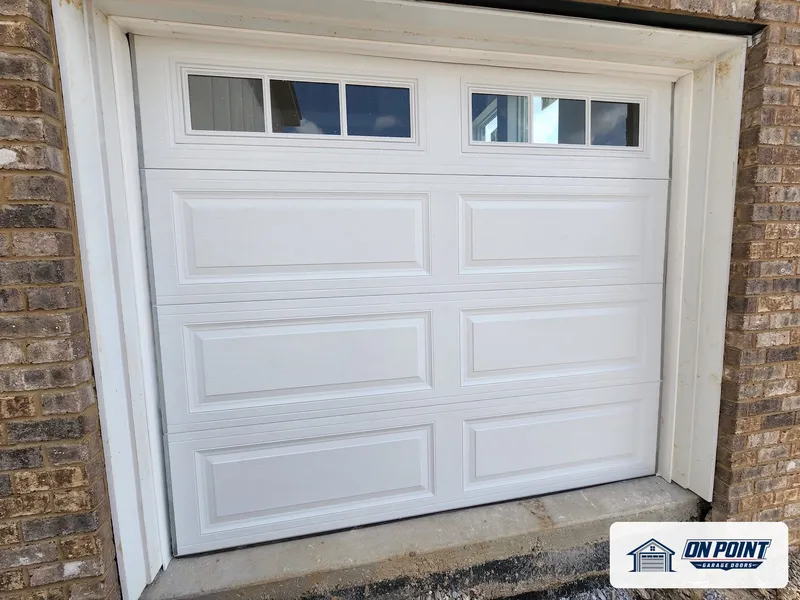
New single garage door with a row of windows in a brick opening, from one of our jobs
A single door, fitted to its opening
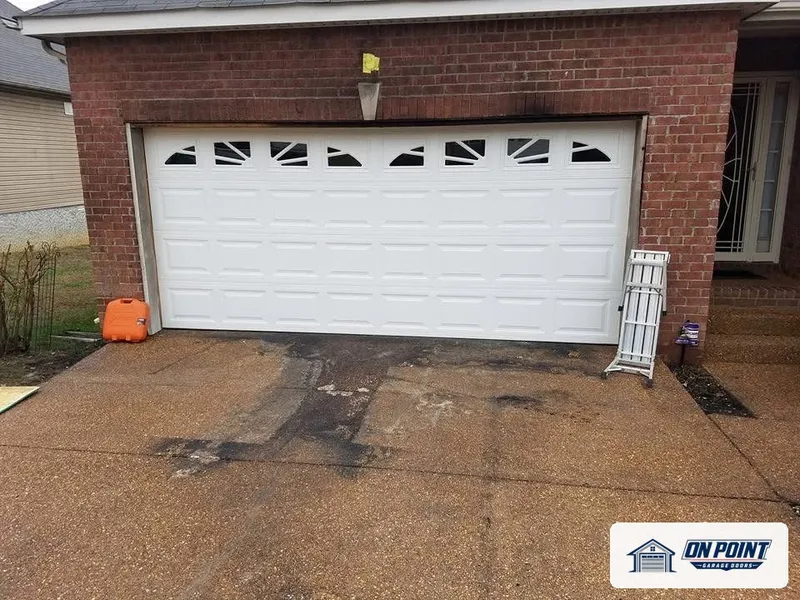
New white double garage door with arched windows on a brick house, from one of our jobs
A double door for a two-car garage
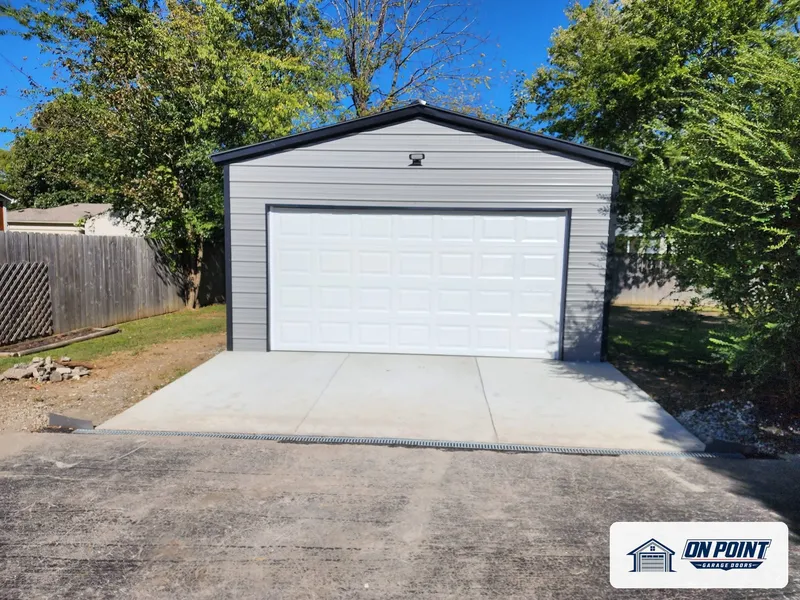
New white garage door on a gray detached garage with a fresh concrete apron, from one of our jobs
New door on a detached garage

How garage door sizes are written

A garage door size is always width first, then height, in feet. A 9x7 door is 9 feet wide and 7 feet tall. A 16x8 door is 16 feet wide and 8 feet tall.

People mix the order up all the time. A search for a 7x8 door almost always means a door 8 feet wide and 7 feet tall, because a door taller than it is wide is rare on a home. When in doubt, the opening gets measured and the numbers are read back to you.

The size is the size of the opening, not of the door panel itself. The door is made to overlap the opening slightly so it seals at the sides and top.

Single white garage door with a window row, set in a brick wall, from one of our jobs

Common single garage door sizes

  • 8x7: the older standard. Common on garages built decades ago and on narrow lots. Fine for a small car, tight for a wide one.
  • 9x7: the most common single door today. Room for a midsize car or SUV with the mirrors out.
  • 10x7: a little more room on each side. A good fit for a full-size SUV or a pickup.
  • 9x8 and 10x8: the same widths, one foot taller. The usual answer for vans, lifted trucks and roof boxes.

A 12-foot-wide door, such as a 12x7, is less common. It shows up on wide single bays and on some older two-car garages. See single garage doors for styles and windows.

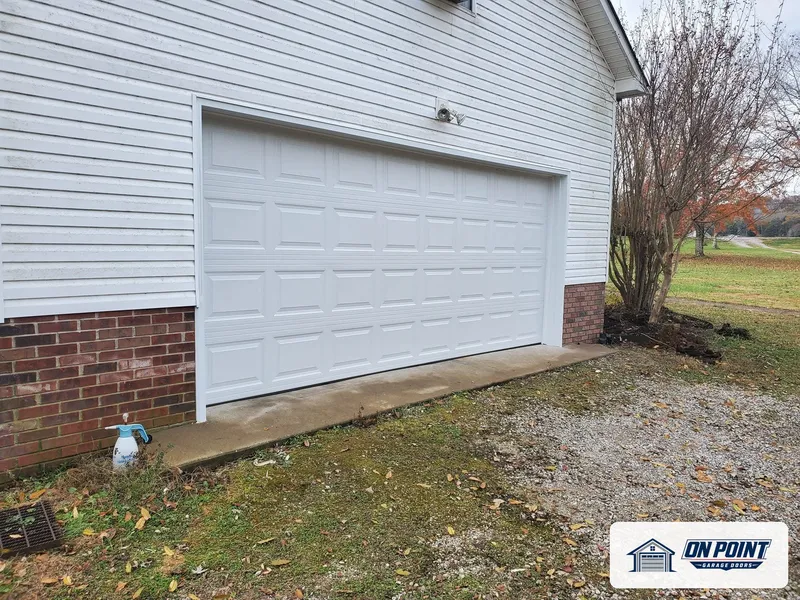
New white double garage door on a vinyl-sided house, from one of our jobs

Common double garage door sizes

  • 16x7: the standard two-car door. It fits most double garages built in the last few decades.
  • 16x8: the same width, one foot taller, for a tall vehicle in one of the two spots.
  • 18x7 and 18x8: two more feet of width. Easier parking for two large vehicles side by side.

Some homes have two single doors with a post between them instead of one double door. Which one makes sense depends on the opening and how you park. See one double door or two single doors.

Tall and oversized doors: 10x10, 12x12, 14x14

Square sizes like 10x10, 12x12 and 14x14 are mostly for RVs, boats, work trucks, barns and commercial bays. They need a garage built for them: a tall opening, a high ceiling and framing that can carry a heavy door.

A taller door on a garage that was not built for it is not a simple swap. The opening, the header and the track layout all change. See oversized garage doors and doors for tall vehicles.

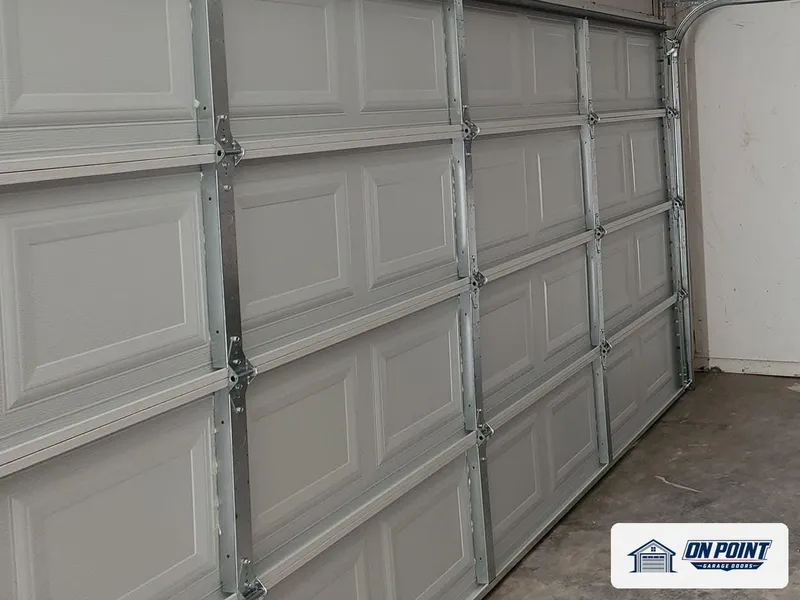
Inside of a new sectional door: hinges, struts and the vertical track, from one of our jobs
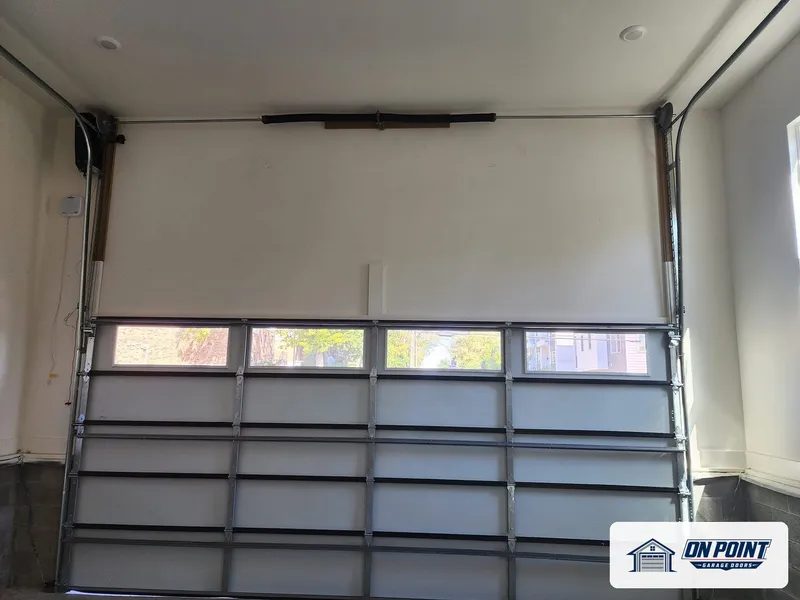
New garage door with a glass row seen from inside the garage, from one of our jobs
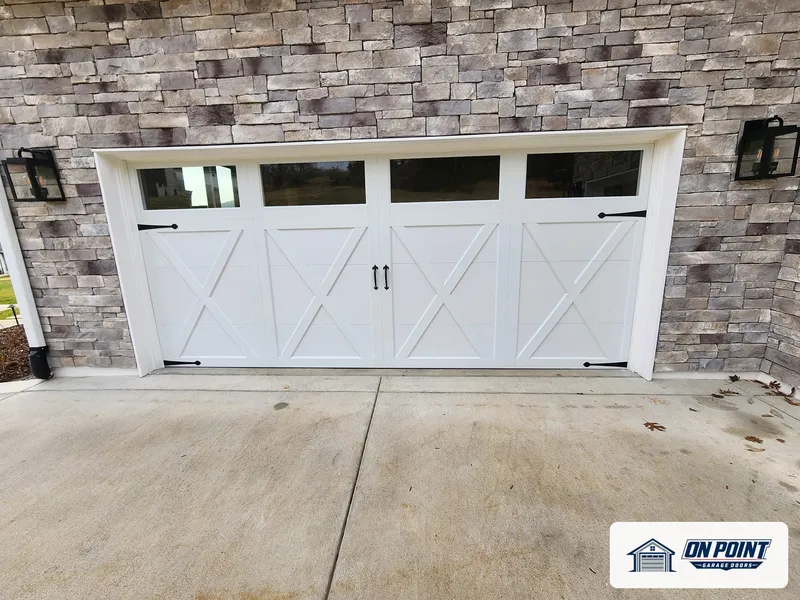
New carriage-style garage door with windows, from one of our jobs

What decides the right size for your garage

  1. The finished openingThe width and height of the opening, measured between the finished jambs and from the floor to the header. Older garages are often a few inches off any standard size.
  2. Headroom above the openingThe track and springs need room between the top of the opening and the ceiling. Too little headroom means a low-headroom track or a different spring setup.
  3. Side room and depthThere has to be wall space beside the opening for the vertical tracks, and enough depth inside for the door to roll back when it opens.
  4. What you park and howA wide SUV, a van with a ladder rack or a car with a roof box may need a wider or taller door than the one the garage came with.
  5. A level floorA sloped or cracked floor changes how the bottom of the door seals. It gets checked so the new door closes tight on both sides.
  6. The house around itOn attached garages and row houses, the opening is part of the wall. Making it bigger is a framing job, so most new doors are fitted to the opening that is there.

Odd sizes in older garages

Many older garages in Brooklyn and Queens were built before today's standard sizes. An opening a few inches narrower or shorter than a standard door is common. A standard door will not fit it without help.

There are two clean ways to handle it. The door can be ordered to the exact size, which most makers offer. Or the opening can be framed to the nearest standard size with new jambs and trim. Which one is better depends on the opening, the look you want and the lead time. See custom garage doors for doors made to size.

Why the measuring is not a tape-and-go job

A door ordered from one measurement often comes up short. Openings are rarely square, the floor is rarely level and the headroom is easy to misread when an opener rail is in the way. A door that is an inch off can mean gaps at the sides, a bottom seal that does not touch the floor or a track that will not fit.

The old door also has to come out. It hangs on springs and cables under a few hundred pounds of tension. Taking it down is a job for a technician, not a weekend project, because a spring or cable let go the wrong way can seriously hurt you.

What the technician checks

The technician measures the finished opening at several points, the headroom, the side room on both sides, the depth back into the garage and the slope of the floor. The jambs and header are checked for rot or damage, since a new door needs solid wood to mount to.

Then you hear which sizes fit, whether a standard door works or a made-to-size one is better, and how the door will open. The estimate is free before any work starts.

For a new door, see new garage door installation. If only one or two sections are damaged and the door is the right size, see garage door panel replacement. To understand the room a door needs around it, see garage door clearance.

Questions we get asked

What is the standard size of a garage door?

For one car, the most common size is 9 feet wide by 7 feet tall, with 8x7 and 10x7 close behind. For two cars, it is 16 feet wide by 7 feet tall. Many newer homes use 8-foot-tall versions of both.

What size is a double garage door?

Most double doors are 16 feet wide, in 7-foot or 8-foot heights. Wider garages take 18-foot doors. Some homes use two single doors instead of one double, which is a choice about the opening, not the car count alone.

Is a garage door size written width by height?

Yes. The first number is the width and the second is the height, so a 9x7 door is 9 feet wide and 7 feet tall. A search for a 7x8 door almost always means 8 feet wide by 7 feet tall, so the opening gets measured to be sure.

Do I need an 8-foot-tall garage door?

If you drive a tall van, a pickup with a rack or a car with a roof box, an 8-foot height often makes the difference. It only works if the opening and the headroom above it allow it, which is part of what gets measured.

Can a new door fit an odd-sized opening?

Yes. Doors can be ordered in sizes between the standard ones, and many older garages in the city have odd openings. Sometimes the opening is framed to a standard size instead. You hear both options before anything is ordered.

Is the estimate free?

Yes. The opening, headroom, side room and depth are measured on site, you hear which door sizes fit, and the estimate is free before any work starts.

Booking takes a minute

Around Brooklyn, Queens and Long Island, one call gets you a two-hour slot and a heads-up call before the technician sets off.

Free estimate, call (929) 429-2429.

Not sure which size fits? We'll come and measure

Tell us about the garage and what you park in it, and we'll give you an honest arrival time. The measuring and the estimate are free.

Easier to explain by phone? Call (929) 429-2429.

Two minutes to a free estimate on a new door

Tell us what the door is doing. The estimate is free either way.

Or just call (929) 429-2429 and talk it through.

The other six things that go wrong