On Point Garage Doors measures and installs full-view glass garage doors across Brooklyn, Queens and Long Island, and looks after the ones already up: a cracked panel, springs that no longer match the weight, worn seals, an opener that labors. The measure and the estimate are free.
Tell us what the door is doing. The estimate is free either way.
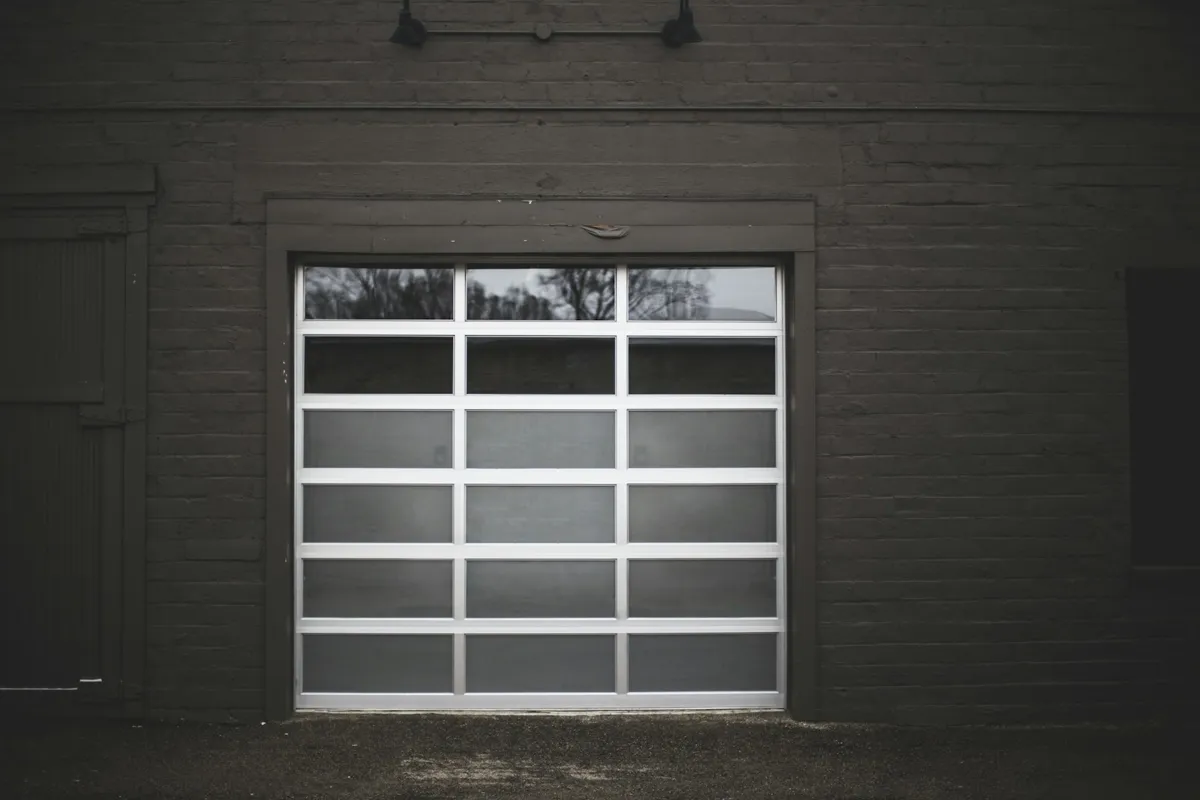
A full-view door trades the steel panels of an ordinary sectional door for a grid of aluminum rails and stiles holding glass. It still rolls up overhead on tracks and springs like any sectional door, but when it is shut it reads as a wall of windows, and it fills the garage with daylight.
That is why people choose one for more than parking. A garage that has become a home gym, a workshop or a studio gets light without the door being open, a modern house gets a front that matches its windows, and a garage at the back of the lot turns into a room that opens onto the yard. Shops and restaurants use the same doors to open a whole wall to the sidewalk when the weather is good.

The frame comes in a handful of finishes. Clear anodized aluminum, black, bronze and white are the common ones, and the right one usually follows the window frames on the rest of the house.
The glass is the bigger choice. Clear glass shows everything. Frosted, satin-etched and other obscure glass lets light in while turning whatever is inside into soft shapes. Tinted glass cuts glare and heat on a door that faces the afternoon sun. Tempered glass breaks into small, blunt pieces rather than shards, and laminated glass holds together when it cracks. Insulated double-pane units help an attached garage, and polycarbonate panels are the lighter, tougher option where knocks matter more than a perfectly clear view.
Many doors mix the two: solid aluminum panels in the lower sections, where bikes, bumpers and balls do their damage, and glass above them.

In daylight, clear glass mostly reflects the street, and the garage stays fairly private. At night that flips. With the lights on inside, a clear door puts everything on display, from the car to the tools on the wall.
If the garage holds anything you would rather not advertise, frosted or obscure glass is the usual answer, at least for the sections at eye level. That decision is worth making at the measure, because changing the glass later means new panels.
Here is the honest part: glass holds heat less well than an insulated steel door, and an aluminum frame carries cold straight through to the inside. For a detached garage that rarely matters. For a garage under a bedroom or beside a living room, it does.
Insulated glass, good perimeter seals and a tight bottom seal close much of the gap, and they make the door quieter as well. Where a room upstairs has to stay warm through January, you will hear plainly whether a glass door makes sense there, or whether glass in the top sections only is the better compromise.
A glass door is heavier than a steel door of the same size, and the springs carry that weight, not the opener. Springs are chosen for the door's real weight once the sections are hung, and the door is balanced so it stays put when it is stopped halfway.
The opener gets the same scrutiny. A light-duty opener that coped with a hollow steel door can strain under glass, and a wall-mount opener beside the door is often the quieter choice when someone sleeps above it. Reinforcing struts keep a wide door from bowing, and the tracks are looked at for the extra load before anything goes up.
A wide glass door catches wind like a sail, so doors that face open water or an open lot get reinforcing struts across their sections, and houses near the shore are better served by hardware with a corrosion-resistant finish.
Winter brings its own test. A bottom seal that freezes to the ground can tear as the door lifts, and the opener's force setting decides whether the door stops or strains. Both are set at the install, and both deserve a look on an older glass door before the first hard freeze.
A new full-view door usually takes two visits: one to measure, and one to install.
Glass doors break the way other doors do, plus one way of their own. A ball, a bumper or a bike handlebar can crack a single panel, and on most frames that panel is replaced on its own, without a new section.
The rest is familiar: springs that have tired under the weight, frayed cables, worn rollers that make the door shudder, and bottom seals that have shrunk and let rain in. Tell us what the door does, and the free estimate comes before any work.
Yes. The glass in these doors is tempered or laminated, so a break leaves small blunt pieces or a cracked panel that stays in its frame, not sharp shards. The door also has the same safety sensors and auto-reverse as any other garage door.
Through clear glass, yes, whenever the lights are on inside. Frosted or obscure glass keeps the view to soft shapes, and many owners choose it for the sections at eye level.
Less than an insulated steel door. Insulated glass and good seals help a lot, and for a detached garage the difference rarely matters. For a garage under a living space, we talk it through at the measure.
Sometimes. A glass door is heavier, and although the springs carry most of it, a light-duty opener can still strain. The opener is looked at during the measure, and the estimate says whether it stays.
Usually not. Most frames allow a single panel to be replaced on its own, and the rest of the door keeps working as before.
Often, with a low-headroom track setup. The space above the opening is measured first, so you know what is possible before anything is ordered.
Yes. Storefront and patio openings use the same kind of full-view door, and their springs, cables, rollers and openers are serviced the same way.
Yes. The opening is measured, the frame and glass options are laid out, and the free estimate comes before anything is ordered.
Describe the fault and we'll give you an honest arrival time. The visit and the estimate is free, anywhere in Kings County.
Easier to explain by phone? Call (929) 429-2429.
Tell us what the door is doing. The estimate is free either way.