Takes 30 seconds. We call you back to set a time.
Droppings along the wall, chewed bags of birdseed, a nest in a box of old clothes: many pest problems in a house start in the garage, and the garage door is often how they got in. A mouse can slip through a gap far smaller than most people expect, and a garage door that does not seal at the bottom corners is an open invitation. Sealing the door will not replace a pest control service, but it closes one of the biggest openings into the house. Free estimate at (929) 429-2429.
By Sean Cohen, owner, On Point Garage Doors · Updated
These photos are from our own jobs, with our logo on them.


Garages are quiet, dark and full of things animals want: pet food, bird seed, grass seed, trash and recycling bins, cardboard boxes and old fabric for nests. In the cold months the garage is also warmer than outside. Once mice find a way in, the door into the house and the gaps around pipes give them a path further inside.
Even a door with a new bottom seal can leave a small gap where the seal meets the track and the jamb at each corner. That is where most mice enter. Corner seals and pads made for this spot close the gap between the end of the bottom seal and the frame, and they are one of the most effective small fixes on a garage door.
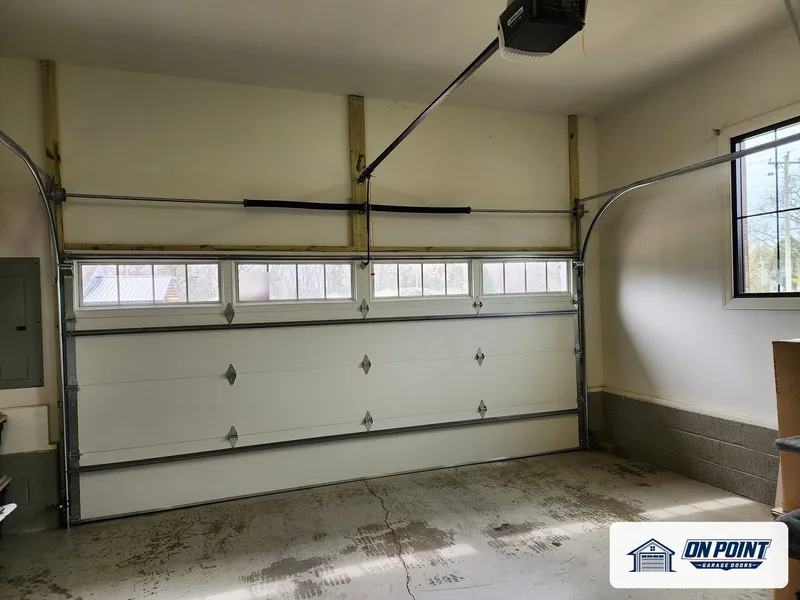
We check both corners from the inside with the door closed, which is where these gaps show up best.
Concrete garage floors are rarely perfectly flat, especially in older homes. If the floor dips in the middle or at one side, a thin seal cannot close the gap. A taller bulb seal, a seal with a wider profile or a threshold on the floor gives the door something to close against all the way across.
Mice and other rodents chew through soft vinyl and rubber to widen a gap. A seal that has been gnawed will keep getting worse. Replacing it with a tougher seal, closing the corners and fixing the frame removes the easy entry point so they have no reason to keep chewing there.
Wooden jambs that sit in water at the bottom go soft over the years, and soft wood is easy to chew. On many older garages we find small holes at the base of the frame that nobody noticed. Replacing the rotten part of the jamb with sound material, and using vinyl stop molding along the sides, takes away a common entry point.
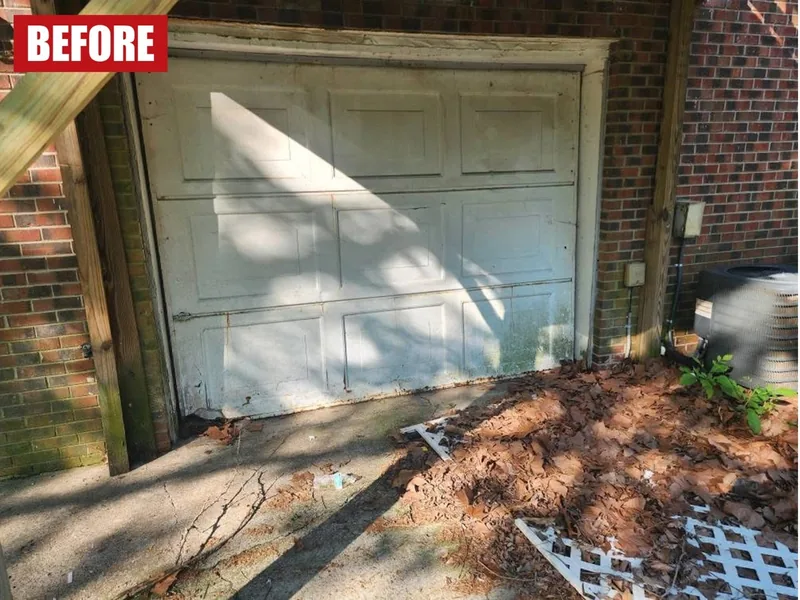
Some older doors, especially wood doors and one-piece doors on detached garages, have little or no weather sealing. They often have gaps at the bottom, the sides and the top. On those doors, new seals can help, but a new insulated door with a full set of seals is often the cleanest way to close every gap at once, and it makes the garage warmer as well.
The garage door is only one way in. Gaps around pipes, vents, dryer lines and the sill plate of the garage walls also let pests in, and food left out keeps drawing them. We seal the door and its frame; for an active infestation, a pest control service is the right call. Working together, the two close the problem for good.
The technician closes the door and checks the bottom seal, both corners, the sides and the top from inside the garage, looks at the jambs for rot and chew holes, and checks that the door sits level and closes fully. You get a clear explanation and a free estimate before any work starts.
Yes. Worn bottom seals and small gaps at the corners are among the most common ways mice get into a garage.
A seal that reaches the floor all the way across, corner seals at each end, tight side seals and a sound frame.
They can chew soft rubber to widen a gap. Tougher seals and closing the corners take away the easy entry.
A new insulated door with a full set of seals closes gaps an older door leaves open.
Yes. You see where the gaps are and the options before any work starts.
Across Brooklyn, Queens and Long Island, tell us what the door is doing and we set a visit that fits your day.
Free estimate, call (929) 429-2429.
Tell us what the door is doing and we will give you an honest arrival time. The estimate is free.
Easier to explain by phone? Call (929) 429-2429.
Tell us what the door is doing. The estimate is free either way.