Takes 30 seconds. We call you back to set a time.
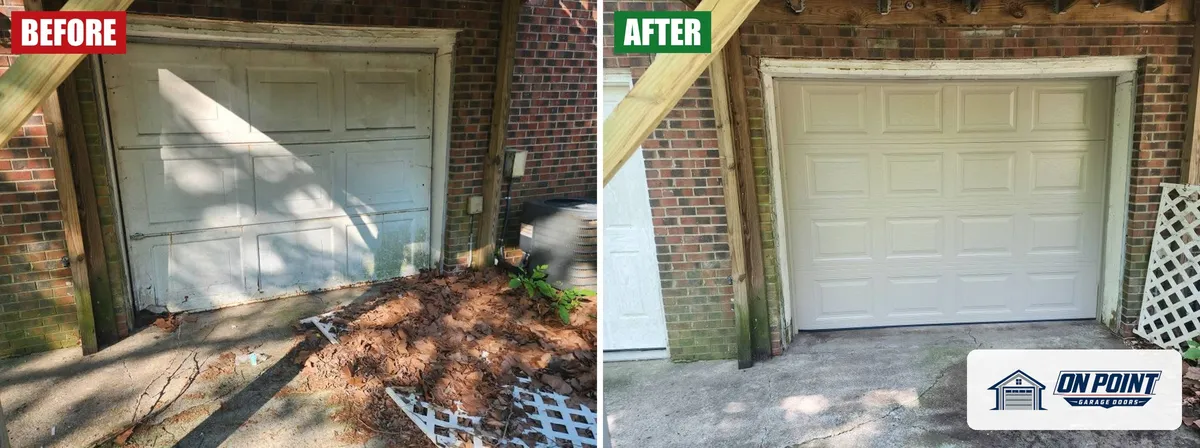
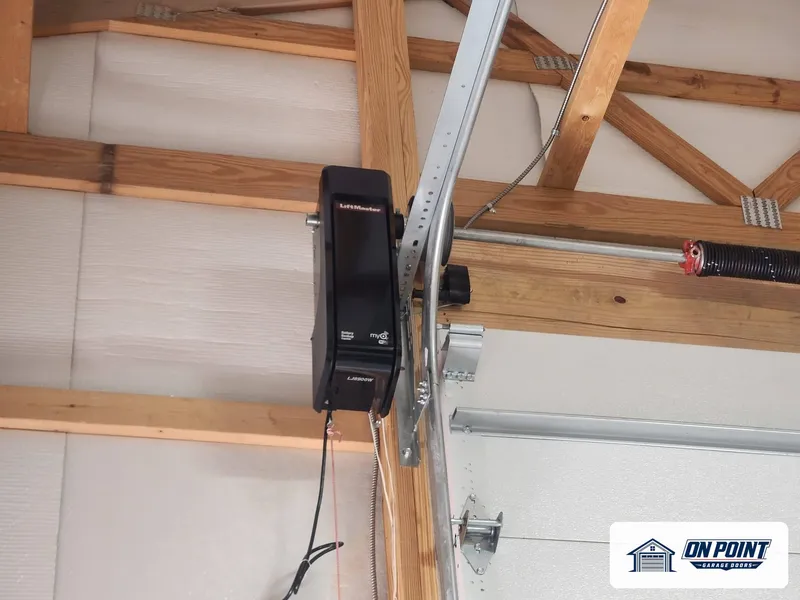
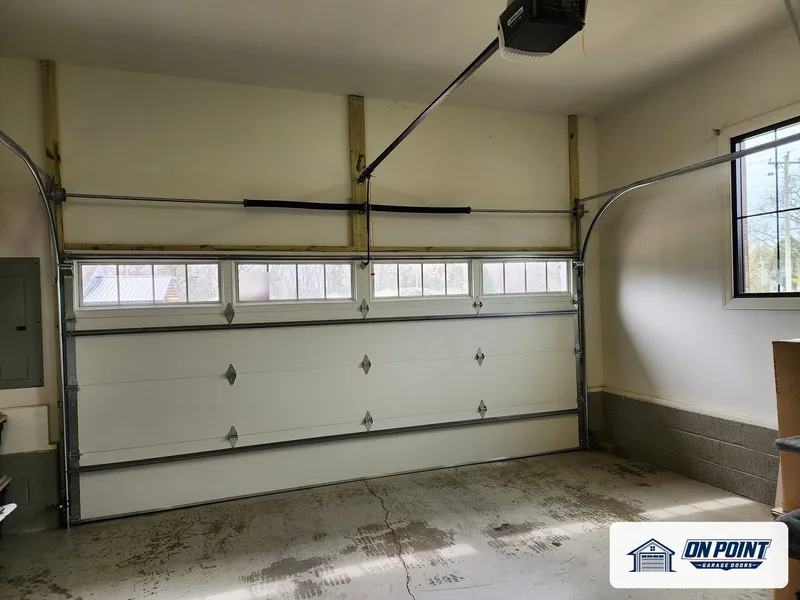
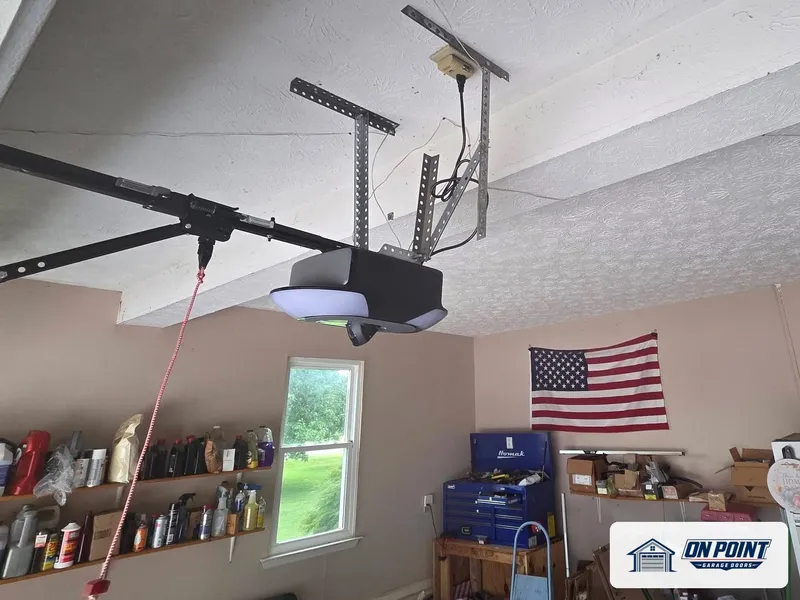
These photos are from our own jobs, with our logo on them.


The borough holds almost every kind of house a garage door can hang on: early detached homes and Tudors in the middle neighborhoods, attached rows and small apartment buildings near the river, post-war capes and colonials toward the north shore, and single-family streets running south to the bay and the beaches. The full list of what we fix is on our garage door repair page.
Every neighborhood brings its own kind of garage. A row house near the river may have a narrow garage under the stoop with almost no headroom. A cape near the north shore usually has an attached one-car garage beside the kitchen. A house near the bay may have a garage that took water in a storm. Each of these wears out in its own way, so the technician looks at the house as well as the door.

The same core repairs we do everywhere, with the springs, cables and opener parts these doors use most carried along.


Springs are the most common failure. A spring is wound steel that carries most of the door's weight, and it is rated for a set number of trips up and down. When it reaches the end of that life it snaps, usually with one loud bang, and the door is suddenly too heavy to lift safely. Leave the door closed and do not run the opener against it. Springs are replaced as a pair, matched to the weight of the door, so it sits balanced again: spring replacement.
Cables are the next most common failure. The lift cables run from the bottom corners of the door up to drums on the spring bar and carry the door's weight as it moves. They stretch and fray over the years, faster when a spring was undersized or when only one of a pair was ever replaced, which throws the door out of balance. Both cables are replaced together, never just the broken one.
Off-track doors happen when a roller jumps out of its track, often after a car bump, a broken cable or uneven cable tension. A door that is off its track should not be run at all: it can fall, damage a car or tear the track off the wall. Leave it where it is and call, and you get a free estimate once the technician has seen whether any sections were damaged.
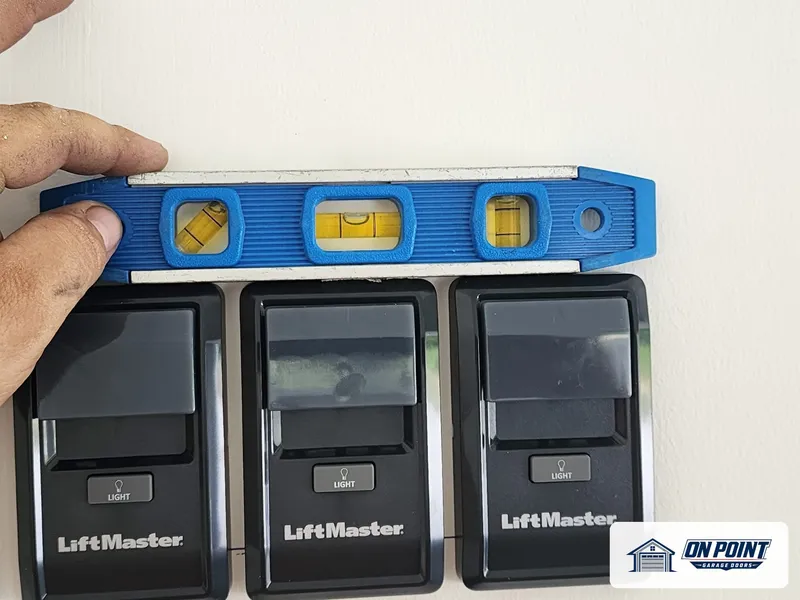
Opener motors wear out after many years of service. Older chain-drive openers often grind before they quit, which usually means the drive gear inside the motor head is stripping. When an opener is past fixing, a belt drive is the usual replacement, because it runs quieter and has fewer parts to wear. LiftMaster belt-drive models are the ones we install most often in homes here.
Garage door trouble here follows patterns once you have worked the neighborhoods for a while: the same brands, the same weak parts and the same seasonal problems. Cold winters freeze bottom seals and snap tired springs, humid summers swell wood doors and dry out rubber, and storms near the bay push water under doors. The technician arrives knowing which of those to look for on your block.
Homes around Citi Field and the big park beside it are on our regular routes, and so are the quiet streets of detached houses farther east toward the Nassau line.
These are the openers and doors we are called to most often here. Each one has its own page with how it tends to fail and what we do about it.
If your brand is not listed, call anyway; we work on nearly every garage door and opener maker still found in local garages.
Summer. Heat and humidity wear out rubber seals, and a bottom seal that came through several winters can crack in one hot season. When the seal starts to crumble, it is time to have it replaced before rain and leaves get in.
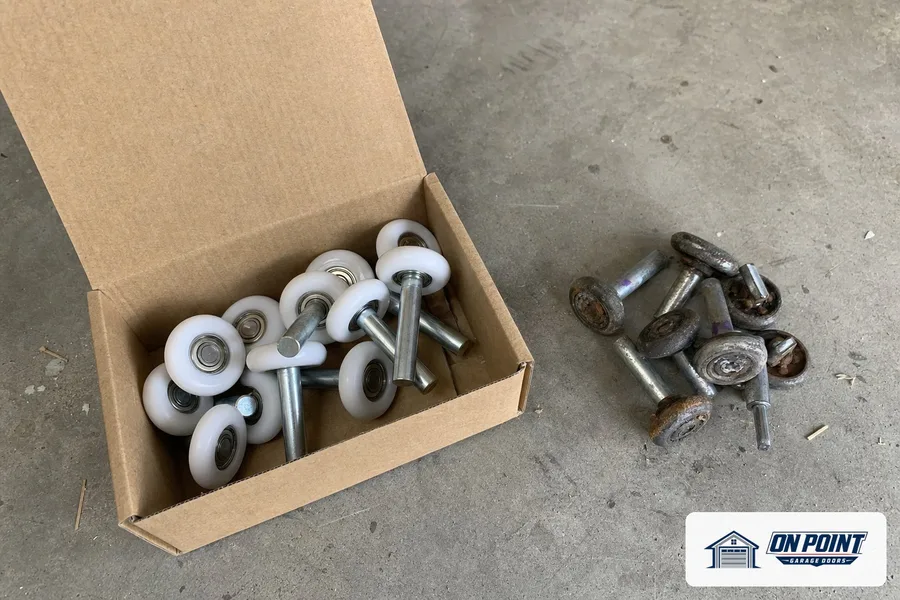
Fall. A good season for a tune-up before winter. The technician checks the cables for rust, tests the spring tension, changes rollers that are starting to grind and confirms that the safety reverse works.
Spring. Pollen, seeds and leaves collect in the tracks and around the photo eyes, and a door that will not close in spring often has something blocking a sensor. Winter damage to the bottom seal shows up now too.
Winter. The main problem is a frozen bottom seal. Snow melts by day and refreezes at night, bonding the rubber to the concrete. Running the opener against a frozen door tears the seal and strains the gears, so let it thaw and call if it stays stuck.
Local routes. Our technicians work in these neighborhoods all the time, so the drive to your door is usually short and they already know the kind of houses on your street.
You see the problem first. Before any part is changed, the technician shows you what failed and what it takes to put it right, and you get the free estimate then. Nothing is replaced until you say go.
Testing the reverse. Every modern household opener has to reverse when the door touches something and when the photo-eye beam is broken. Before a job is finished the door is closed on an object to prove it reverses, and the beam is broken to prove the eyes work, whether or not you called about safety.
Showing you the door. Before he leaves, you run the door with the remote and the wall button while he watches. After a new opener you are also shown how the remotes, the wall button and the emergency release work.
Leaving it clean. Everything that came off the door, from old springs, cables and opener heads to the boxes from new parts, leaves with the technician, and the garage is left the way he found it.
If something seems off later. You reach the same team that did the job, not a call center.

Garage door repair and installation in every part of the borough. Technicians carry springs, cables, rollers, hinges and common opener parts, so many repairs are finished on the first visit without waiting for an order.
Snapped torsion or extension spring? New high-cycle galvanized springs, replaced in pairs so the door stays balanced. Spring replacement details →
Logic boards, belts, gears, photo eyes and capacitors. Every opener brand is diagnosed on one visit. Opener repair details →
Clopay, Amarr, Wayne Dalton and CHI doors, with help choosing a style and a careful install. New door installation →
Each neighborhood below has its own page with the doors, openers and problems we see on those blocks.
The weather, the housing and the way garages get used change from one end of the borough to the other, and that shapes how a door is diagnosed and fixed. We are a local company with local crews who know these streets, not a national franchise routing calls from far away.
We also work in Jamaica and Rockaway Beach and every other part of the borough.
More Queens neighborhoods we cover: Glen Oaks · Kew Gardens Hills · Rockaway Park
Often, yes. If the door is fairly new and its panel style is still made, a damaged section can be swapped, and you get a free estimate for it first. Older or discontinued doors may need a full replacement to look right.
Once a year for most homes, and more often for busy commercial doors. A tune-up finds worn rollers, tired springs, loose hinges and tracks out of line before they fail.
We work on all the common brands: LiftMaster, Genie, Chamberlain, Craftsman, Wayne Dalton, Amarr, Marantec, Linear, Clopay and many more, and the technicians carry the tools and parts most of them need.
A spring breaking sounds like one loud bang, often compared to a gunshot, and it carries through the house. Afterward the door is very heavy, because the spring was holding most of its weight. Do not try to lift it; leave it closed and call us.
The usual causes are a weak remote battery, a failed wall button, an opener with no power or photo eyes knocked out of line. If the wall button does not work either, the logic board, a stripped gear or a broken trolley may be to blame. The technician tests each of these at the visit.
Yes. We install Clopay, Amarr, Wayne Dalton and CHI doors throughout the borough. The old door is removed and taken away, and you see samples and styles at a free in-home visit before anything is ordered.
Yes. We repair commercial roll-up steel doors, commercial sectional doors and high-cycle operators for auto shops, warehouses and fleet garages, and you get a written estimate first.
All the common opener brands, LiftMaster, Chamberlain, Genie, Craftsman, Linear, Sommer and Marantec, and doors from Clopay, Amarr, Wayne Dalton, CHI, Haas, Raynor and Garaga. Parts for the most common ones travel with the technician.
Springs are rated in cycles, and one cycle is one trip up and down. A household door that opens several times a day uses up a standard spring in some years. Cold, rust from damp garages, springs that were undersized from the start and skipped tune-ups all shorten that life. Both springs are replaced together.
Booking takes one call or a short form. You get an honest arrival window and a call before the technician sets off, and nobody guesses at a door they have not seen.
Free estimate, wherever you are in the borough or anywhere else we work.
Describe what the door is doing and we will give you an honest arrival time. The visit and the estimate are free.
Easier to explain by phone? Call (929) 429-2429.
Say what the door is doing, and the estimate is free whatever you decide.