Garage door repair across Suffolk County, from the busy western towns out to the farms and summer houses of the East End: springs, cables, openers, off-track doors and new doors, with a free estimate before any work.
Tell us what the door is doing. The estimate is free either way.
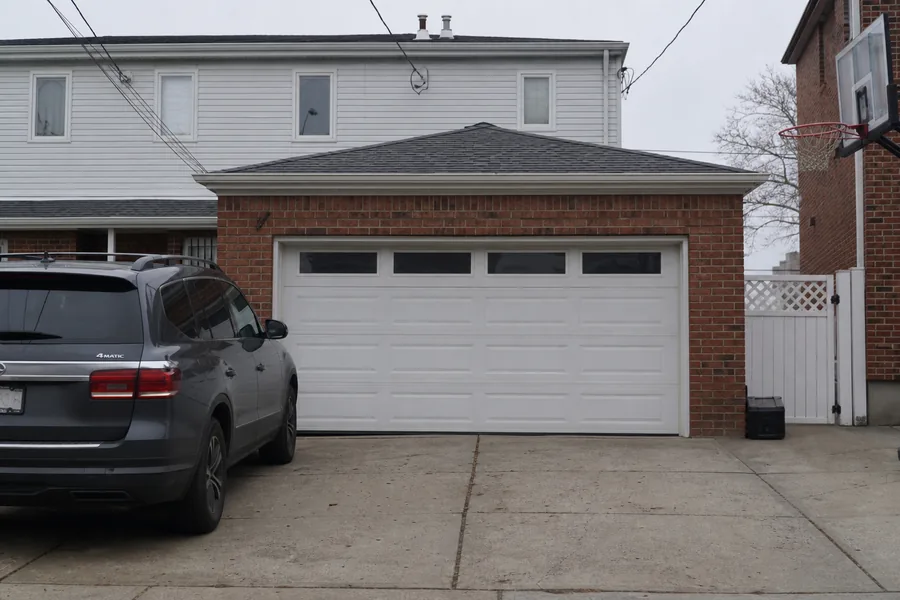
The western towns, Huntington, Smithtown, Babylon and Islip, are built-up suburbs where most houses have an attached two-car garage on torsion springs. Brookhaven and the central towns are full of post-war and newer developments with much the same doors. Farther east, around Riverhead and the Hamptons, the houses spread out, garages get bigger and are often detached, and summer homes near the water deal with salt air that is hard on springs and hardware.
ZIP codes our visits reach: 11722, 11743, 11746, 11747, 11754, 11755, 11757, 11763, 11764, 11766, 11767, 11772, 11776, 11777, 11778, 11779, 11784, 11787, 11788, 11789, 11792, 11794, 11795, 11796, 11901, 11930, 11932, 11933, 11934, 11935, 11937, 11939, 11940, 11941, 11942, 11944, 11946, 11948, 11949, 11950, 11951, 11952, 11953, 11954, 11955, 11957, 11958, 11959, 11960, 11961, 11962, 11963, 11964, 11965, 11967, 11968, 11969, 11970, 11971, 11972, 11973, 11975, 11976, 11977, 11978, 11980.

Whatever part of the county the call comes from, it is one of these six jobs, and the parts most doors here need come on the visit.


Cables do the actual lifting at the door's bottom corners, with the springs supplying the force through the drums. Rust from damp or sea air, and springs of the wrong size, wear them through. A frayed cable lets one side drop behind the other, so both cables are renewed at once and the door is set level again.
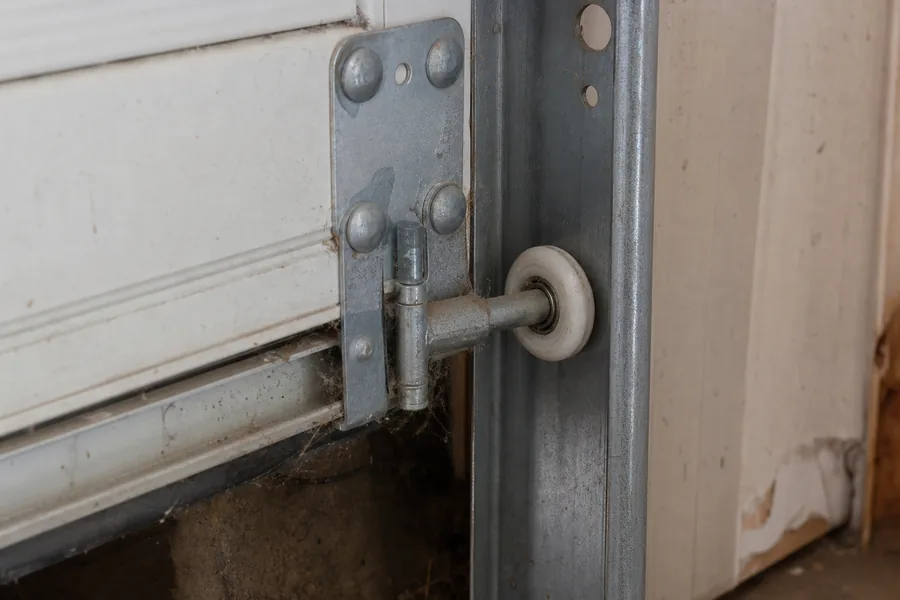
Off-track doors happen when a roller slips out of its track after a knock from a car, a cable failure or an uneven lift. The opener must not be used on a door like that, since it can fall or wrench the track from the framing; the door is reset and the sections checked for damage.
Opener motors run for many years, and a chain drive near its end usually announces it with a grinding noise from a wearing gear. Depending on the opener's age, the gear is renewed or a quieter belt drive takes its place, and you see the estimate for both.
Garage doors in this county range from beach-cottage single doors to three- and four-bay garages on large lots, and from doors installed last year to ones that have been running for decades. A technician who covers these roads sees that whole range, and brings springs, cables, openers and panels for the kinds of doors found on the island's eastern half rather than one standard kit.
The weather here is a full four seasons, with heavier snow inland and steady salt air along both forks and the South Shore bays. That shows up on a garage door as frozen seals in midwinter, swollen wood in the humid months, rusted springs near the water and a corroded bottom section where snow banks against the door. Each visit looks for those signs as well as the fault you called about.
Towns visited most: Babylon, Bay Shore, Brentwood, Smithtown, Huntington, Commack, Patchogue, Sayville and everything around them.
Farther out east? Houses past Riverhead and on both forks are covered too. Call with the address and you will hear when a visit can be scheduled.
Across the county the list barely changes from town to town: springs that snap, cables that fray, doors that jump their tracks, sensors that stop the door from closing, and openers that finally wear out. The difference is mostly how hard the weather and the salt have worked on the door, and how many trips the door makes each day.
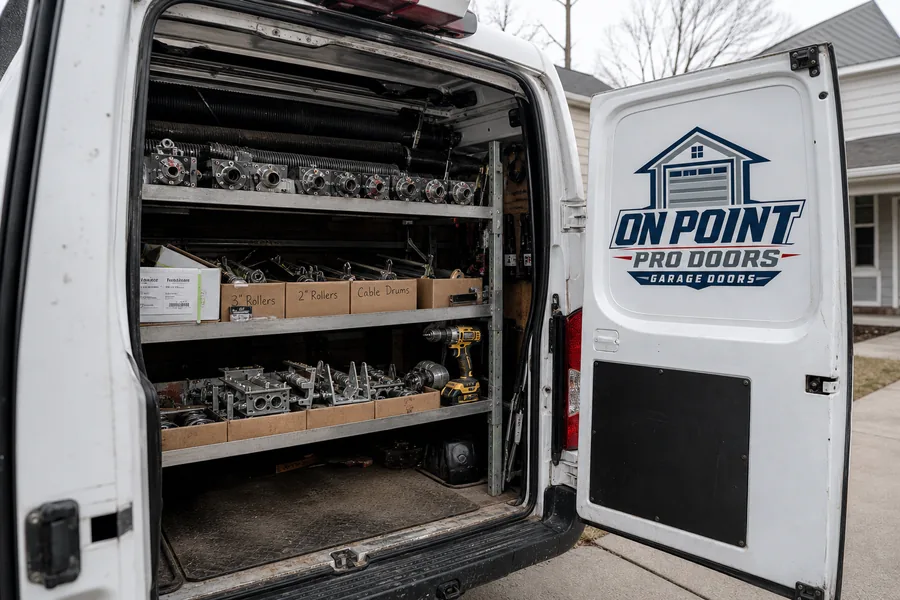
A door gets fixed on the first trip when three things are in place: the likely fault is known before the technician leaves, the part is on board, and the person arriving has worked on that kind of door before. That is how a long drive out east still ends with a working door.
A short conversation first. On the call you are asked what the door is doing, whether you heard a bang or a grind, and the opener's make if the label is visible. That narrows the fault down and decides what goes on the truck.
Brands are not a problem. LiftMaster, Genie, Chamberlain, Craftsman, Wayne Dalton, Amarr, Marantec, Linear, Clopay and plenty of others are worked on every week.
After a spring snaps: leave the opener switched off and do not lift the door by hand until the spring has been replaced.
One cable, two replaced. Cables wear as a pair, so a broken one means its partner is close behind and both are changed.
Very likely. LiftMaster, Genie, Chamberlain, Craftsman, Wayne Dalton, Amarr, Marantec, Linear, Clopay and many others are repaired, and the technician has diagnostic tools and the parts that fail most on each. Rare or old units are looked at too, and if parts for one are no longer made, you are told before any work begins.
Switch nothing on and leave the door as it is. With the spring gone, the opener would be hauling the whole door, which can strip its gear or bend its rail, and lifting the door by hand is unsafe because the cables no longer guide it. Mention any car stuck inside when you call so the visit is booked ahead of routine work.
It works for a while, but it is poor value. The two cables share the load and age together, so the old one usually goes next. Changing both, and checking the drums and bottom brackets while the door is open, keeps the door level and saves a second visit.
Visits reach the whole county, including:
One sharp bang from the garage, often startling enough to wake people. After it, the door is much heavier than normal because the spring was holding most of its weight. Leave it closed, keep the opener off and call us for a spring replacement.
A flat remote battery, a receiver that has forgotten the remote's code, a blocked or misaimed photo eye, or a fault inside the opener such as its board or gear. If the wall button fails too, the opener is the culprit. The technician tests these in order on the visit.
Yes. Clopay, Amarr, Wayne Dalton and CHI doors are measured for, installed with new tracks, springs and cables, and set up with your opener. The old door is removed and taken away, and styles are chosen at the free estimate.
Yes. Roll-up steel doors, commercial sectional doors and heavy-duty openers at auto shops, warehouses, farm buildings and fleet yards. The estimate is written up before work starts, and visits can be planned around the working day so a business is not left with a door open longer than it has to be.
Openers: LiftMaster, Chamberlain, Genie, Craftsman, Linear, Sommer and Marantec. Doors: Clopay, Amarr, Wayne Dalton, CHI, Haas, Raynor and Garaga. Parts for the makes found most often here are carried on the visit, and less common ones are diagnosed and ordered when needed.
A spring is good for a limited number of openings, so a busy household reaches that limit sooner. Damp, salt, cold and a spring that was the wrong size to begin with all cut its life short. The pair is always replaced together, sized to the door's real weight, so the new springs last as long as they should and the opener is not left doing the springs' work.
Distances are bigger here than in the western suburbs, and a repair that needs a second trip takes up everyone's day. So the technician arrives with the springs, cables, rollers and opener parts the door is likely to need, and checks that the springs and hardware already on the door actually match it, because a past repair with the wrong part is a frequent cause of trouble.
Salt air works on doors along the bays and on both forks, snow and freeze-thaw work on the doors inland, and summer damp works on every wood door. The result is rust on springs, cables and bottom brackets, seals that crack or freeze to the ground, and wood panels that swell. Those parts are looked over on every visit, whatever the call was about.
East and west: from Huntington and Northport across to Riverhead, Southampton and East Hampton, every door gets the same careful visit.
Near the Nassau line or the water? Houses on the western border and right on the shore are covered as well, so call even if your town is not listed.
Most repairs finish on the first visit when the technician knows what to expect and has the part in hand. The call and the stock on board are there to make that happen, and every visit ends with the door balanced, the safety reverse tested and the door run in front of you.
The questions on the call. What the door does when it is opened, any noise it made, and the opener's brand. From that, the technician can tell a spring problem from a cable, sensor or opener problem before arriving.
What comes on board. Springs in the sizes these doors take, lift cables, nylon rollers, photo eyes, boards for the common openers and weather seal. Having them along is why most doors need only one visit.
Yes. Springs, cables and openers are replaced all year. Cold weather is actually when many springs break, and a door frozen to the ground is freed and checked before the opener is used again. Seals that froze and tore are replaced at the same visit if you want them done.
Usually a photo eye that is blocked or out of line, a door binding in its track, or an opener force setting that needs adjustment for the season. The technician tests each and finds which one it is.
Yes. Detached garages, three- and four-bay garages and tall doors for boats and campers are all serviced, with springs and openers matched to the size and weight of the door.
Visits can be arranged with a caretaker or property manager on site, and the free estimate is sent to the owner for approval before work goes ahead. A door left stuck open at an empty house is handled as urgent, because the house cannot be secured until it closes.
Yes. Bottom seals, side and top seals and threshold seals are replaced to keep out water, leaves, snow and drafts, which matters most on garages near the water and on attached garages with a room above.
A check of the springs, cables, rollers, hinges and tracks, grease on the moving parts, balancing the door and testing the safety reverse. Anything close to failing is pointed out with a free estimate.
A single call books the visit. You are told the arrival window, the technician rings before setting out, and nobody tries to diagnose the door without seeing it.
The estimate is free on every visit across Long Island.
Tell us what the door is doing and you will get an arrival window to plan around. Both the visit and the estimate are free.
Easier to explain by phone? Call (929) 429-2429.
Tell us what the door is doing. The estimate is free either way.