Takes 30 seconds. We call you back to set a time.
On a cold morning, some garage doors are wet on the inside: drops on the panels, puddles along the bottom, frost in the corners, and a rusty streak where the water runs down every day. That is condensation. Warm, damp air in the garage meets the cold steel of the door and leaves its water behind, the same way a cold glass sweats on a summer day. It is common in garages under houses, garages with a laundry or a freezer in them, and garages where a wet car comes in every night. This page explains where the water comes from, why it matters, and what a garage door company can do about it. Free estimate at (929) 429-2429.
By Sean Cohen, owner, On Point Garage Doors · Updated
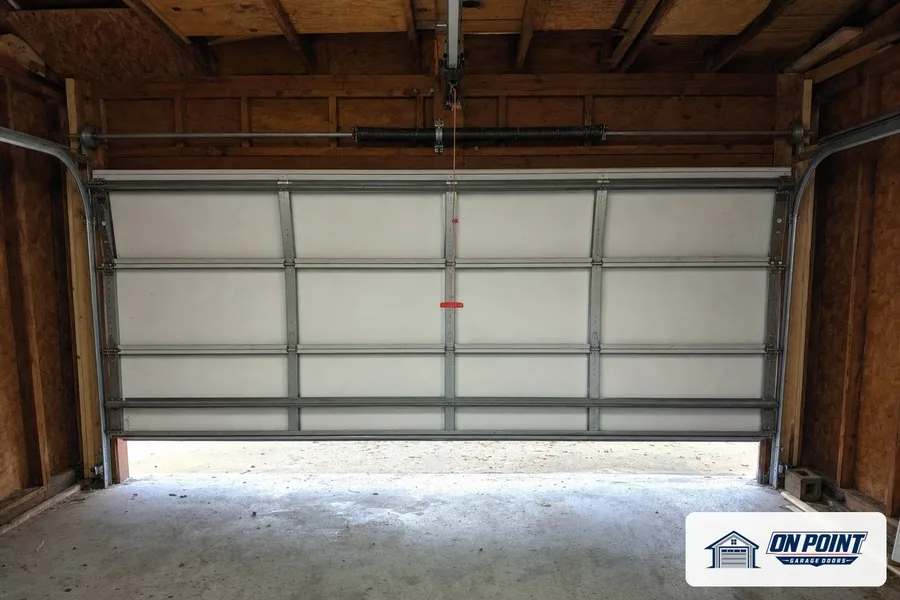
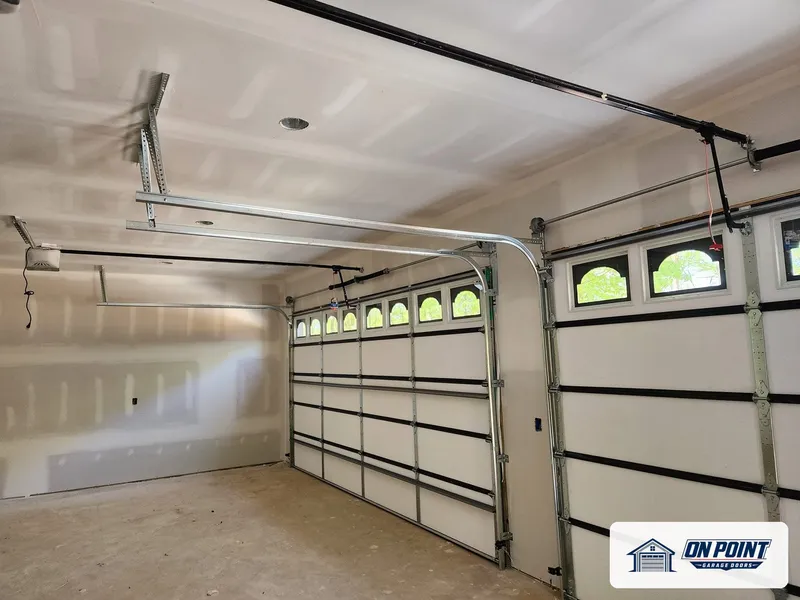
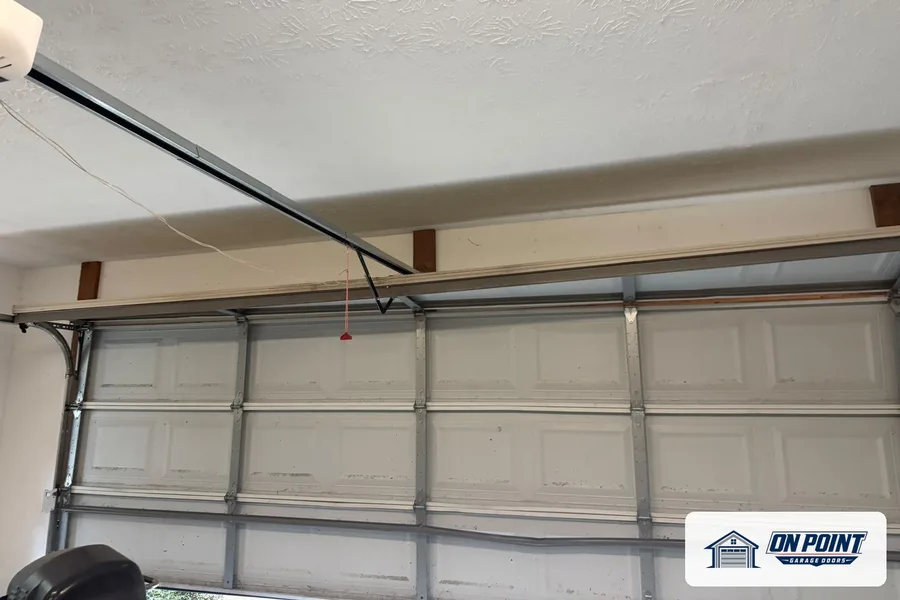
These photos are from our own jobs, with our logo on them.


Air always holds some water. Warm air holds more than cold air. When the warm, damp air inside a garage touches a surface colder than its dew point, it gives up water on that surface. A plain steel door on a winter morning is often the coldest thing in the garage, so it collects the water first. The door is not leaking. It is simply the place where the garage's own moisture shows up.
A single layer of steel passes the outside cold straight through. In winter it can be almost as cold as the air outside, while the garage air is several degrees warmer and damper. The bigger that gap, the more water forms. Wood doors and insulated doors stay closer to the garage temperature on their inside face, so they sweat far less.
A little condensation now and then does no harm. Daily dripping is another matter. Water runs down the inside of the panels and collects on the bottom section, where it rusts the steel from the inside and rots wood. It soaks the bottom seal and can freeze it to the floor. It rusts the bottom brackets, the lower hinges and the ends of the tracks. In a garage used for storage, it can also bring mold to boxes and walls nearby.
The most lasting fix is a door with insulation and a second steel skin on the inside. The inside skin stays close to the temperature of the garage, so the warm air never meets cold steel. A door with a thermal break, where the inside and outside skins do not touch at the joints, does even better. Our pages on insulated garage doors and on garage door insulation cover the types and how they compare.
Insulation panels can be added to the inside of many existing steel doors. They help, but how much depends on the fit. Gaps around the panels let damp air reach the steel behind them, where it can condense out of sight. Added panels also add weight, so the springs need to be checked and sometimes adjusted so the door stays balanced. We look at both before recommending this route.
Cold air blowing in around the edges of the door chills the inside of the panels and the air near the door, which makes condensation worse along the sides and the bottom. Worn bottom seals, side seals that no longer touch the door and a gap at the top all let that cold air in. New seals do not stop condensation on their own, but they reduce cold spots and keep outside rain and snow from adding to the water.
Single-pane windows in a garage door are often the first place condensation shows. Insulated glass and windows in insulated sections stay warmer and stay drier. When a door already has windows and they drip every morning, swapping the window inserts or the window section can help. Our page on garage door windows covers glass options.
A door company can change the door, but the moisture comes from the garage. Venting a dryer outside, letting a wet car drip off before closing the door for the night, running a small dehumidifier and keeping a little air moving all reduce how much water the door has to collect. A garage that shares air with a damp basement may need help from a contractor who deals with moisture.
Not every wet garage door is sweating. Water can blow in around worn seals, run in under the door from a driveway that slopes toward the garage, or drip from a leak in the wall or the roof above the header. Condensation appears on the inside face of the door evenly in cold weather. Water that comes in at one corner, or only during rain, usually has another cause. Our page on water coming in under a garage door covers those cases.
The technician looks at where the water appears and when, checks the door type, the seals, the windows and the bottom of the door, and looks for rust or rot already started. You get a written estimate for any new seals, sections, insulation or a new insulated door before any work starts.
Warm, damp air in the garage meets the cold steel of the door and leaves its water there. It is condensation, not a leak.
It reduces it a great deal, because the inside skin stays close to the garage temperature. A door with a thermal break does best.
Daily dripping rusts the bottom section, the bottom brackets and the track ends, and can rot wood doors.
Seals help by cutting cold drafts at the edges, but the bigger change comes from insulation and less moisture in the garage.
Yes. We look at the door and where the water appears before recommending anything.
Across Brooklyn, Queens and Long Island, tell us what the door is doing and we set a visit that fits your day.
Free estimate, call (929) 429-2429.
Tell us what the door is doing and we will give you an honest arrival time. The estimate is free.
Easier to explain by phone? Call (929) 429-2429.
Tell us what the door is doing. The estimate is free either way.