Booking today in New York(929) 429-2429Open six days a weekFree estimateGuaranteed work
On Point Garage Doors
Open 24 hours Sun-Thu, Fri 7-5 Free estimate Springs, openers, cables We come to you
Emergency?Call nowBook free estimate
New York, NY - open six days a week

Garage door sensor not working? Here is what it means

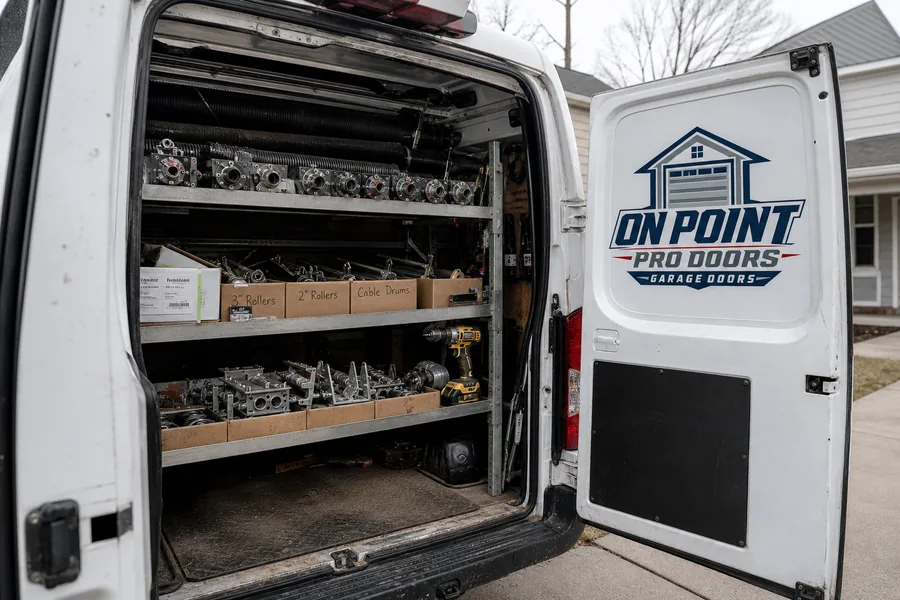
Free estimateSame day whenever possibleCommon parts on board
  • Free estimate
  • Same day whenever possible
  • Common parts on board
Emergency garage door repair★★★★★ 5.0 on Google · 32 reviews

Book your free estimate

Takes 30 seconds. We call you back to set a time.

Or just call (929) 429-2429 and talk it through.

Home › Garage Door Sensor Not Working

Real jobs. Real photos.

Every photo here is from our own work, with our logo on it.

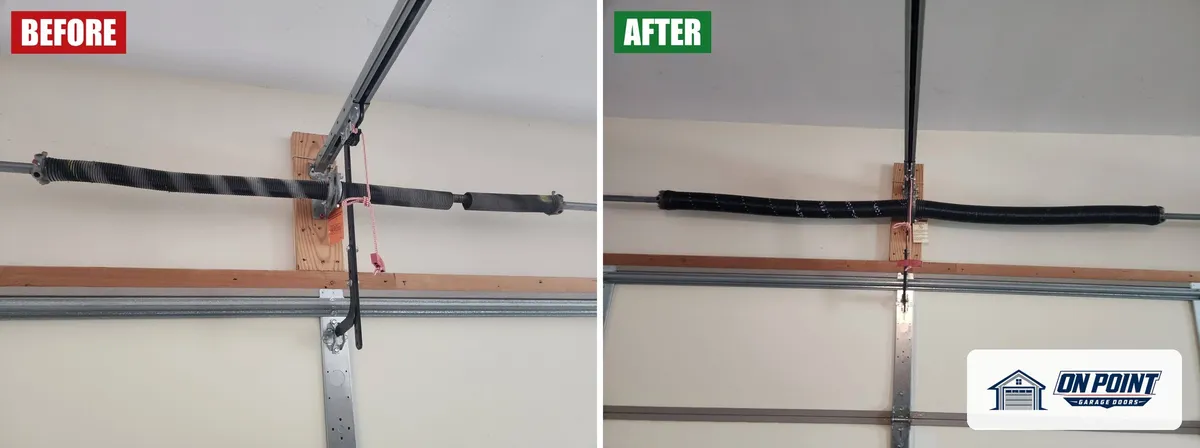
Broken spring, then fixed: before and after photo from one of our jobs
Broken spring, then fixed
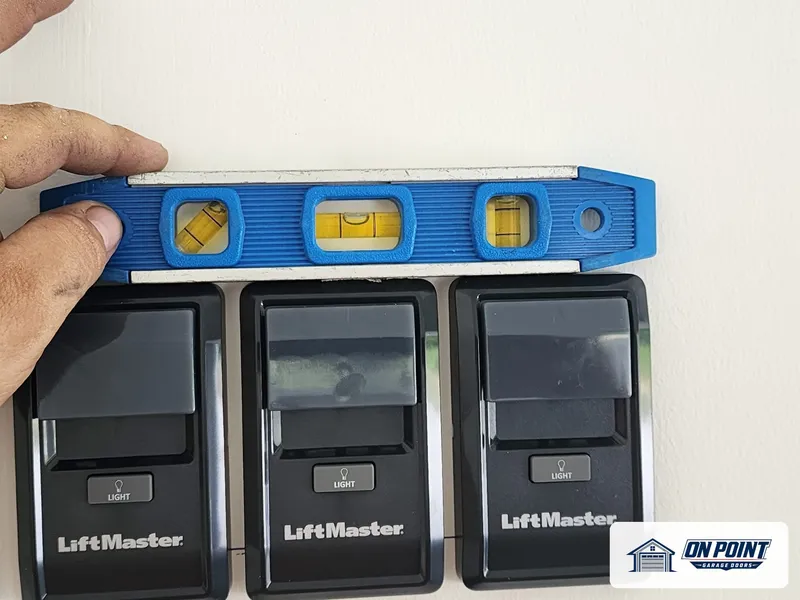
New remotes, set up on site, photo from one of our jobs
New remotes, set up on site
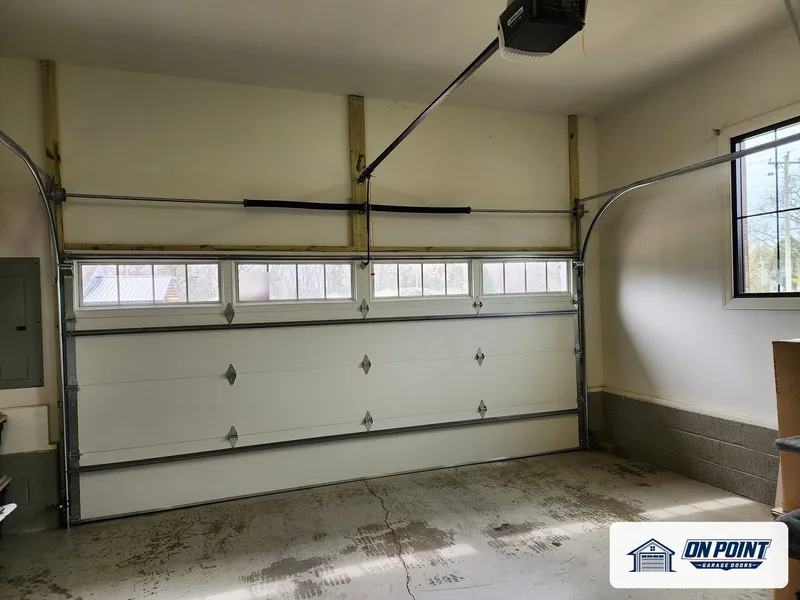
New door and opener, photo from one of our jobs
New door and opener

Down, stop, back up, flashing light. That's the sensors talking, and around New York the cause is usually something in the beam, an eye knocked out of line, or a wire. Free estimate.

What the sensors are for

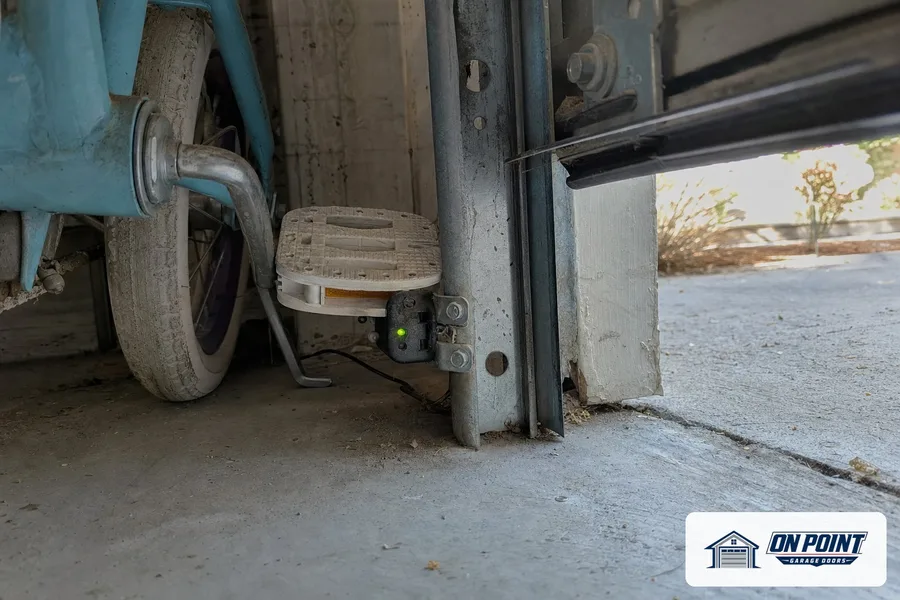
Since 1993 every opener has shipped with two small eyes near the floor, one on each side of the opening. One sends a beam, the other watches for it, and the moment the beam breaks during a close the door reverses. That reflex is what keeps a door off a child or a car bumper, so it's tuned to be jumpy.

A door that won't close with a flashing light is therefore an opener doing its job on bad information, not a broken opener. The work is finding out why the eyes can't see each other, and it is a short visit.

Safety sensor mounted low on the door track next to the bottom roller

What the lights are telling you

  • Each sensor has a small LED. On most units one is green (the sending eye) and one is amber or red (the receiving eye).
  • Both lit steadily: the eyes see each other. The problem is elsewhere, usually the travel or force setting on the opener, or the spring.
  • One flickering or dark: the eyes are out of line, something is between them, or a wire has come loose.
  • Both dark: no power reaching them. A loose wire at the opener, or a staple through the cable somewhere along the wall.

You do not have to do anything with this. Say which lights you see when you call, and the right parts ride along.

A garage door roller in its track in New York, NY
Tools On Point Garage Doors carries for garage door repair in New York, NY
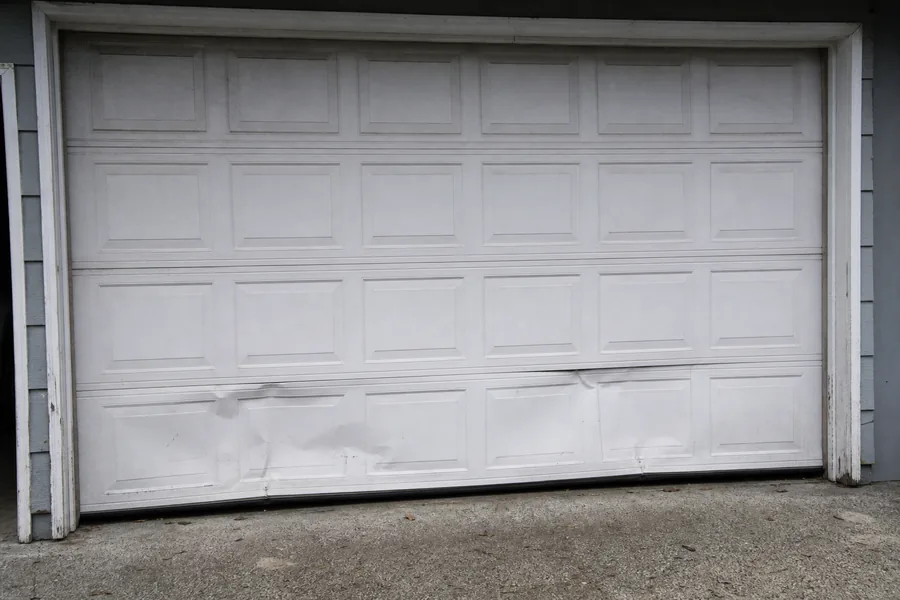
Dented panel sections on an older garage door in New York, NY

Why the beam breaks, most common first

The order the faults come in, which is the order the technician checks them.

  1. Something in the beamA trash can, a bike wheel, a cobweb, a leaf. Anything in the six inches above the floor between the two eyes trips them, and the door will not close until it is gone.
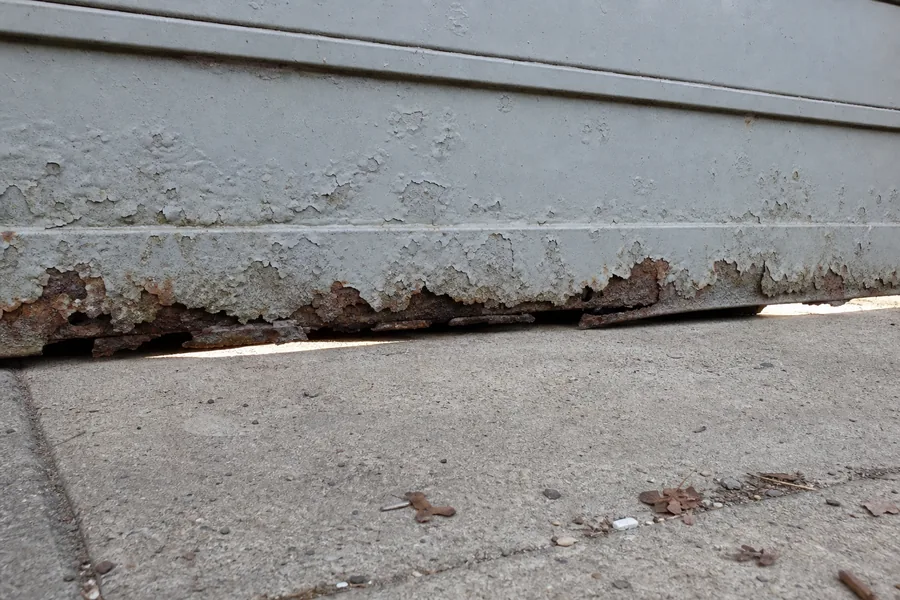
  2. A dull lensSalt air off the water rusts cables leaves a film on the lenses, and a dull lens loses the beam at dusk first.
  3. A bent bracketEach eye sits in a bracket that bends easily. A bumper, a bin or a bike knocks one out of line, and an eye that keeps drifting out of line every few weeks is a bracket that never holds, not an eye that needs setting a fourth time.
  4. Sun in the receiverLate afternoon sun straight into the receiving eye blinds it. A door that only misbehaves at one time of day is nearly always this.
  5. A damaged wireA staple through the thin sensor wire, a splice that has come apart, or the terminals at the opener working loose. Both eyes dark is usually a wire.
The wall control on a garage door opener in New York, NY

A door stuck open tonight

An open garage at night is the reason sensor calls get priority. Call, say what the lights are doing, and the technician arrives with the pair that fits your opener. Most are same-day.

Don't tape the eyes together on a shelf. It fools the opener and removes the only thing stopping the door landing on someone.

When it isn't the sensors

Steady LEDs and a clear beam but the door still reverses means the opener has a different complaint. Reversing right at the floor is the down-limit set a touch too far. Reversing part-way, with a door that is heavy, is a spring that has lost tension tripping the force setting. The first is adjusted on the visit; stop using the opener until the second is fixed.

Cold-weather-only reversing is the same thing: Salt air, nor'easters and hard winter freezes, the door stiffens, the force setting trips.

Replacing the sensors

Eyes do die: water in the lens, a mower strike, a board that gives up. A matched pair for Chamberlain, LiftMaster or Genie is stock on the truck and takes about twenty minutes to install and align. They don't cross brands or generations; the label on the motor unit tells us which pair.

Damaged wiring gets rerun with clips instead of staples, which is why it doesn't come back.

The brackets matter as much as the eyes. Both sensors should sit at the same height, a few inches off the floor, and a bent bracket keeps drifting however often it's reset. If the same eye needs attention every few weeks, the bracket is the fault, and it's replaced on the visit.

How the visit goes

Beam, lenses, alignment, wiring, in that order. A cloudy or dead eye gets a new pair. Before leaving, the technician disconnects the opener and lifts the door by hand, because reversing doors often have a spring problem hiding behind the sensor one. Free estimate across Brooklyn, Queens and Long Island.

Short visit, usually. The long ones are the doors that were out of balance for a year.

What people are told, and what's real

The opener is broken. The opener is fine; it's refusing to close on what looks like an obstruction. Fix what the sensors see and the opener behaves.

Just bypass the sensors. Don't. A door without working sensors is the door that comes down on something. Call, and the eyes are working the same day.

New sensors mean a new opener. No. Sensors are a matched pair that plugs into the existing unit. Twenty minutes.

Questions we get asked

One sensor light is off and the other is on. Which one is bad?

Usually neither. The dark one is the receiver and it goes dark when it can't see the sender: alignment, dirt or something in the way. The technician checks those before replacing anything.

The door closes fine with the wall button but not the remote.

That's not the sensors. The remote has a battery or pairing problem, which is a different and shorter visit.

Do I need new sensors or a new opener?

Almost always sensors, or a wire, or a bracket. Sensors are a matched pair that plugs into the opener you have. A new opener is only the answer when the unit itself has failed, and you hear that on site.

The door reverses only in the afternoon.

Sun in the receiving eye. The technician shades it or swaps the pair so the receiver faces away from the sun, and it stops.

Is the estimate really free?

Free, across Kings County. If the sensors need replacing you hear it before anything is done.

Can you come out today?

Usually, yes. A door stuck open gets priority on the schedule.

Booking takes a minute

Around Brooklyn, Queens and Long Island, one call gets you a two-hour slot and a heads-up call before the technician sets off. Nobody on a phone judges a door they can't see.

Free estimate, across Brooklyn, Queens and Long Island.

Sensors won't let the door close? We'll come and look

Describe the fault and we'll give you an honest arrival time. The visit and the estimate is free, anywhere in Kings County.

Easier to explain by phone? Call (929) 429-2429.

Two minutes to a free estimate on any opener problem

Tell us what the door is doing. The estimate is free either way.

Or just call (929) 429-2429 and talk it through.

The other six things that go wrong