Takes 30 seconds. We call you back to set a time.
When you buy a house, the garage door is one of the things that changes hands without much thought. You get a remote or two at the closing, maybe a keypad code on a sticky note, and the door seems to work. But the old owner, their family, a dog walker or a contractor may still have a way in, and nobody may have looked at the springs in years. This checklist covers what is worth having checked in the first weeks after you move in, so the door is safe, secure and truly yours. We look over doors and openers for new owners across Brooklyn, Queens and Long Island. Free estimate at (929) 429-2429.
By Sean Cohen, owner, On Point Garage Doors · Updated
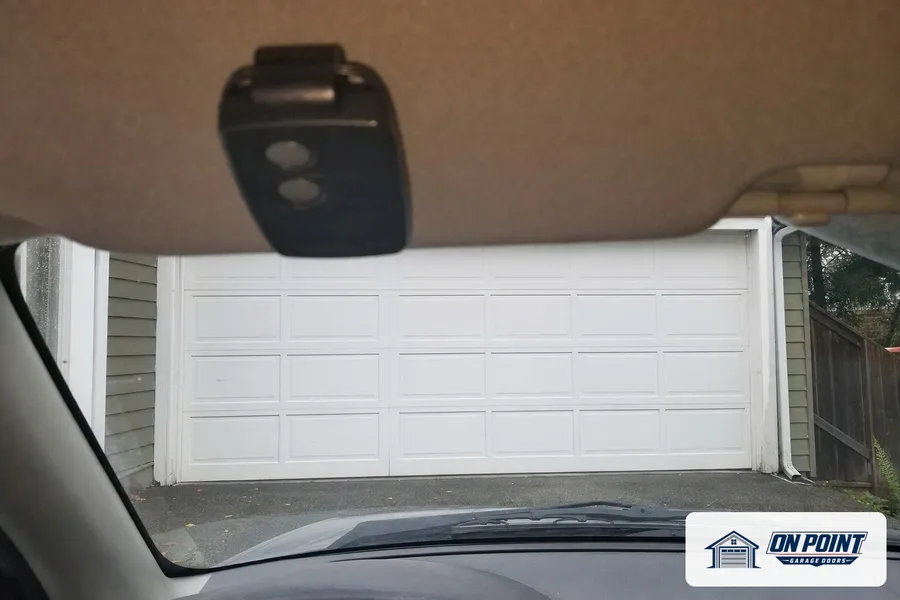
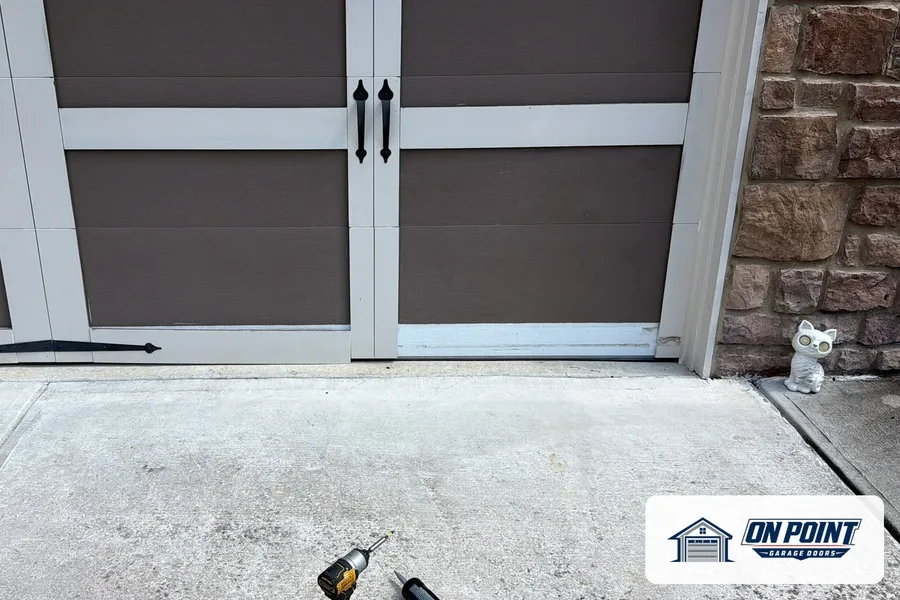
These photos are from our own jobs, with our logo on them.


Most openers remember every remote, keypad and car button that has ever been paired with them. That means the previous owner, their relatives or a past contractor may still be able to open your garage. The fix is to clear the opener's memory and pair only the remotes you have. On a smart opener, the old owner's app account also needs to be removed. We do this at a visit and set up every remote, keypad and car button you want to keep.
A keypad on the outside of the garage is only as safe as its code, and a code that has been shared for years is not much of a lock. We set a new code and show you how to change it again later, and we look at the keypad itself for worn numbers that give the code away.
An opener that is very old may lack the safety sensors, rolling codes and soft start that current models have. The label on the motor usually shows the maker and model, and that tells us roughly how old it is. If it is near the end of its life, it is better to know now than when it stops on a cold morning. Our page on how long openers last explains what to look for.
Every modern opener has two safety systems: photo eyes near the floor and a reversing system that sends the door back up if it meets something. Both need to work. The technician tests the photo eyes and the reverse with the door closing on a solid object, and adjusts them if the door does not respond. This is the most important check on the list, especially in a home with children or pets.
The springs carry the weight of the door and are under strong tension. Look for a gap in a torsion spring above the door, or a stretched or sagging spring along the tracks on older doors. If you see one, keep the door closed and call. Springs are a job for a technician only. We check the springs, the cables and the drums on every visit and tell you how much life they have left.
A door that is out of balance makes the opener work harder and wears it out early. The technician disconnects the opener and checks whether the door holds its place when raised partway. A door that drops or shoots up needs its springs adjusted. This one check often explains a noisy opener or a door that struggles.
Every opener has a release handle, usually a red cord hanging from the trolley, that lets the door be moved by hand during a power cut. It is worth knowing where it is and what it does before you need it. Our page on the emergency release explains when it is safe to use and when it is not, especially when a spring is broken.
Light under the door, leaves blowing in or a puddle after rain point to a worn bottom seal or side seals. In a garage that connects to the house, a good seal keeps drafts, water and pests out. Seals are small parts, and renewing them heads off much bigger trouble.
The main door is not the only way into a garage. Check the side door, any windows and the door from the garage into the house. The door into the house should lock like any other outside door. If the garage door has an old manual lock, we can tell you whether it still works or whether it should be disabled so it does not jam the opener.
If you had a home inspection, the report may mention the garage door: missing sensors, a loose track, a worn spring or an opener with no reverse. Bring the report to the visit. We go through each item, tell you which ones matter now and which can wait, and give a written estimate for any work.
If their remotes, car button or keypad code are still stored in the opener, yes. Clearing the opener's memory and pairing only your remotes closes that door.
The label on the motor shows the maker and model, which tells a technician roughly when it was made and whether it has current safety features.
It depends on the item. A missing sensor or a broken spring is urgent; a worn seal can wait. We go through the report with you and explain each item.
Not unless the old one is unsafe or failing. Many openers only need clearing, adjusting and new remotes.
Yes. We look over the door and the opener and tell you what, if anything, needs attention.
Across Brooklyn, Queens and Long Island, tell us what the door is doing and we set a visit that fits your day.
Free estimate, call (929) 429-2429.
Tell us what the door is doing and we will give you an honest arrival time. The estimate is free.
Easier to explain by phone? Call (929) 429-2429.
Tell us what the door is doing. The estimate is free either way.