Takes 30 seconds. We call you back to set a time.
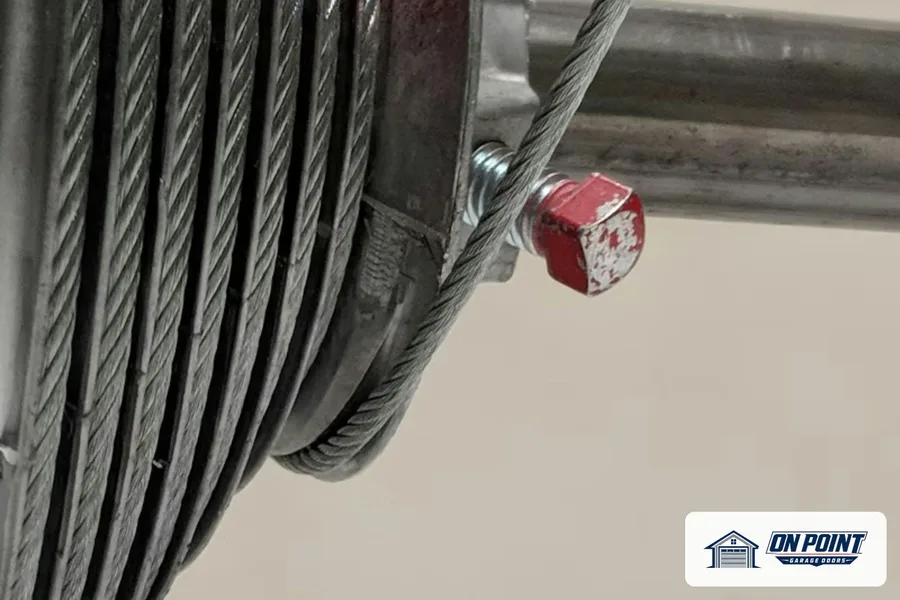
Rust usually starts where water sits: the bottom edge of the door, the bottom brackets where the lift cables attach, the lowest rollers and the bottom of the tracks. Near the water in Brooklyn, Queens and on Long Island, salt air speeds it up. Some rust is cosmetic; rust on the bottom bracket or the cables is a safety problem, because those parts hold the spring's full tension. Free estimate at (929) 429-2429.
By Sean Cohen, owner, On Point Garage Doors · Updated
These photos are from our own jobs, with our logo on them.


Light surface rust on the face of a steel door is mostly a looks problem. Rust that has eaten through the bottom of a panel, the bottom brackets or the cable ends is a safety problem.
The bottom brackets and cables hold the spring's full tension. If one lets go, a corner of the door can drop suddenly and the cable can whip. That is why rusted brackets are replaced, not painted over.
Salt air reaches every metal part of the door, and storm water that gets into a garage leaves salt behind as it dries. Doors in canal-side and bay-side neighborhoods often rust from the bottom up within a few years.
Rust-resistant brackets, coated springs, stainless fasteners and a good bottom seal slow it down a lot.
The technician tells you plainly which applies, with a free estimate for each option.
A bottom seal that meets the floor keeps standing water off the door. Clearing snow and slush away from the door helps, and so does a yearly check of the bottom hardware.
On a new door, galvanized steel with a good factory finish and rust-resistant hardware lasts far longer near the water.
The bottom section, the seal and its retainer, both bottom brackets and cable ends, the lowest rollers and track, and the springs. Anything structural that has rusted is replaced before the door runs again.
The door is then balanced, the seal checked against the floor and the safety reverse tested.
A door that sat in water may look fine and still have rust starting inside the bottom bracket and the cable ends. The sensors and opener wiring near the floor can corrode too.
After water gets into a garage, the bottom hardware is worth checking even if the door still works.
The rubber seal along the bottom of the door sits in a metal retainer. When the retainer rusts, the seal pulls loose, water gets under the door and the bottom section rusts faster.
Replacing the retainer and the seal together closes the gap and protects the new bottom section.
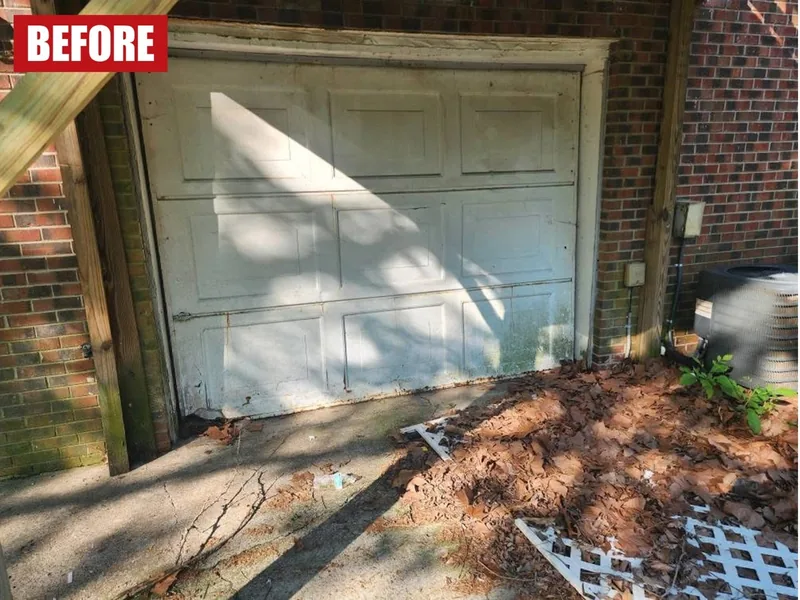
Older detached garages often sit in shade at the back of a lot, with a damp floor and leaves piled against the door. Their doors rust from the bottom up, and their springs and tracks rust too.
Clearing leaves and snow from the door and keeping the floor seal in good shape slow it down a lot.
Springs with orange surface rust have lost some of their strength and tend to break sooner. They also make a door noisier as the coils rub.
When rusted springs are replaced, coated springs are an option in damp and coastal garages, and both springs are always replaced together.
For homes close to the bay or the canals, a new door with galvanized steel, a durable factory finish and rust-resistant hardware holds up far longer. Ask about it if the old door is rusting through in several places.
Surface rust on the panels is mostly cosmetic. Rust on the bottom brackets, cables or springs is dangerous, because those parts hold the spring tension.
Often, yes, if the rest of the door is in good shape and the section is still available.
Water, snow and salt sit against the bottom edge and the lowest hardware, especially near the water or a sloped driveway.
Track that has rusted through at the base is cut out and replaced so the rollers run smoothly.
Yes. You hear what has rusted, what is dangerous and what it takes to fix it before any work starts.
Across Brooklyn, Queens and Long Island, tell us what the door is doing and we set a visit that fits your day.
Free estimate, call (929) 429-2429.
Tell us what the door is doing and we will give you an honest arrival time. The estimate is free.
Easier to explain by phone? Call (929) 429-2429.
Tell us what the door is doing. The estimate is free either way.