Both cables replaced, drums set evenly, and nylon rollers installed where plastic ones were. Quieter, and several times the life.
Tell us what the door is doing. The estimate is free and you can say no.
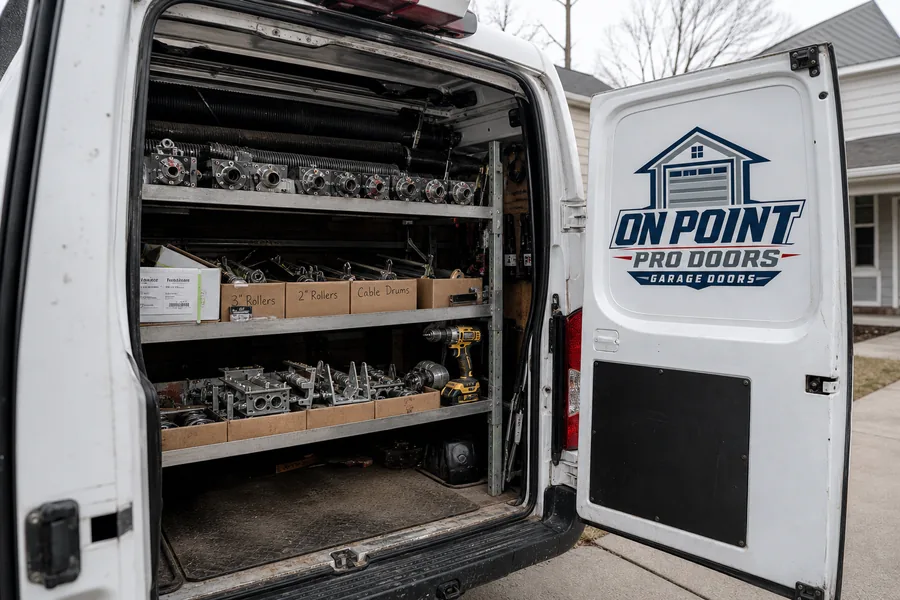
Most garage door cable and roller repair calls we take start the same way. The door moved fine yesterday. That is normal. The failing parts are structural. Structural parts give way in a moment, not over weeks. Salt air off the water rusts cables and bottom brackets, and a hard freeze stiffens springs and old lubricant, so we carry the parts for it on the van rather than ordering them in.
Two cables run from the bottom brackets up the sides of the door and wind onto drums at either end of the torsion shaft. The cables are the link that carries the door's weight to the spring. If a cable snaps, the door falls on that side, jams and comes off its track. A cable failure and a derailment are usually one call, for that reason.
New York, Nassau County, Jersey City, Hoboken, Yonkers, Westchester, Hudson County and the rest of Kings County are all inside the normal radius. The visit asks nothing of you, and no work starts without your say.

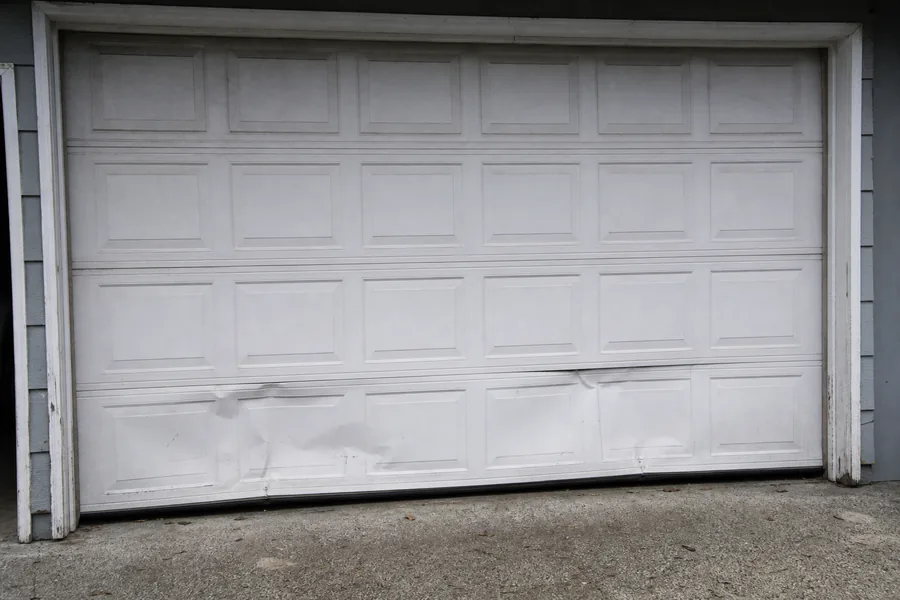
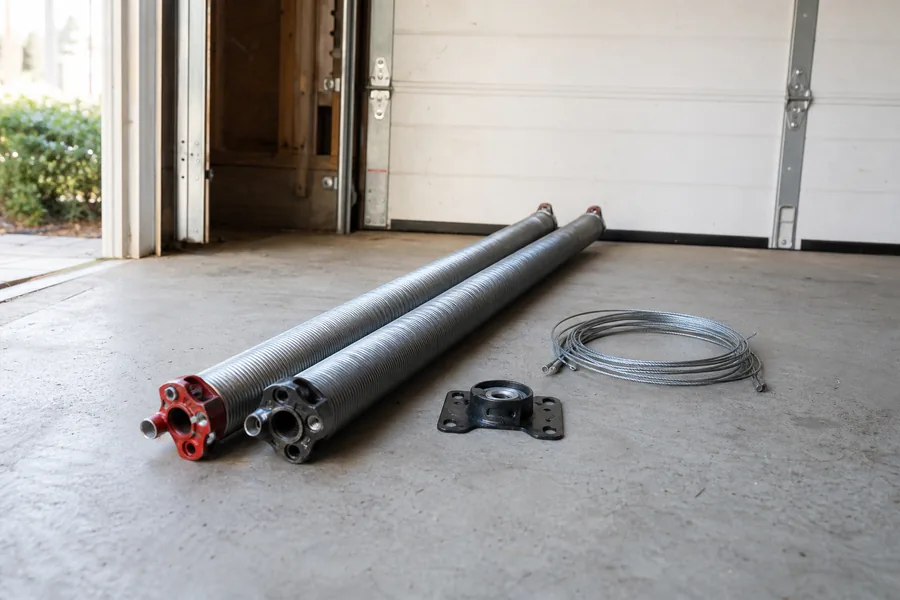
A cable warns you before it goes. Run your eye along it: broken strands stick out of the wire like whiskers, usually near the bottom. Compare the two sides. If one is loose and one is taut, the cable has left its drum. And if the door has started closing crooked, it's past the warning stage.
Recognize one of those? On site, it takes a technician roughly ten minutes to pin it down. We will not guess from a description, and the visit to look is free.
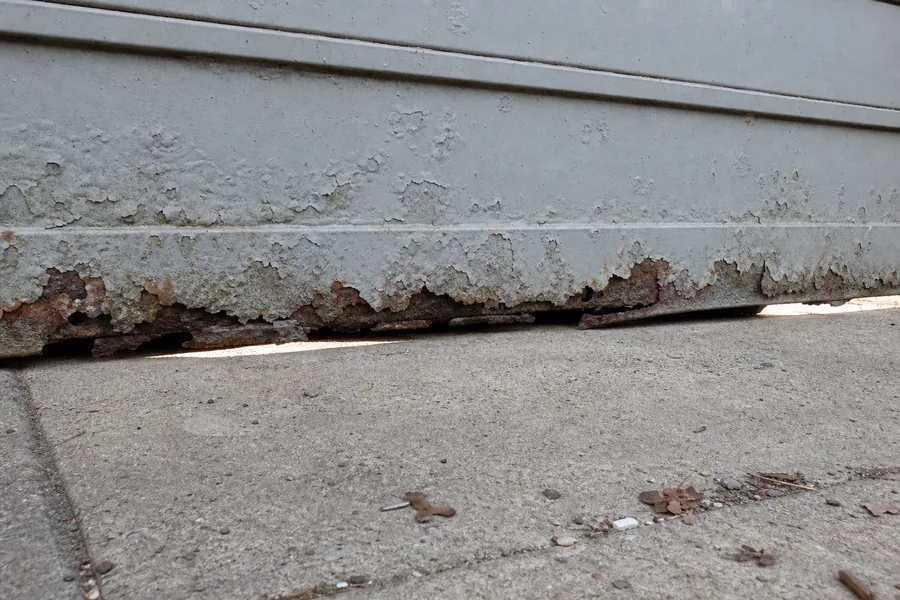
Once the coating goes, so does the cable. The bottom-bracket end lives near a damp floor, so the zinc coating fails there and the fraying starts there. Rollers are simpler: builder-installed plastic rollers have nothing you'd call a bearing and last under seven years.
We replace cables in pairs. They've aged together, and the drums need equal setting for a level door. If you upgrade one thing, make it sealed-bearing nylon rollers. Quiet, and good for several times the life of plastic.
A seized roller becomes somebody else's problem fast: the track's. It drags, and what it drags along is the track, so a small part left too long turns into a track section and a realignment. With the technician there for a cable, rollers are parts and a few minutes.


Most people wait. This is what waiting looks like. None of the following is unusual. Around Queens and Hudson County, it's the ordinary sequence, and we see it every week.
It's a free estimate. Finding out asks nothing of you. Call early and you avoid all of that.
The bottom bracket the cable attaches to carries the full spring load. That bolt is the most dangerous on the whole door, so it usually carries a warning. Undo it before the spring is unloaded and everything lets go together.
It can't be used safely, and trying earns you nothing. The counterbalance's share of the weight gets dumped onto other parts. Hinges, brackets, the opener's gear. Every one of those is a larger job than the part that originally broke.
Getting the car out is fine with the door all the way down and the opener released. A door left half up with no spring will come the rest of the way down on its own.

The plastic rollers builders install have no bearings and are worn out in five to seven years. Nylon on sealed bearings: quieter, easier on the track, and several times the life of the builder's rollers.
It can, and the cable is not the only thing it breaks. With that side dropped the door jams and usually derails, which turns a cable replacement into track and hinge repairs. A fraying cable is giving you advance warning, which is more than a spring ever does.
Cables are replaced in pairs. The two cables have the same wear, and unless the drums are set equally the door will always hang out of level.
None of that is unusual. It is the natural result of diagnosing a door by phone, and the reason we hold our answer until someone has actually looked at it.
A garage door cable and roller repair call is usually an hour and a half on site, and the door is back in use when we leave.
Corrosion starts at the bottom bracket, near the wet floor, and the strands go one by one. By the time it snaps it's been failing for a month.
Yes - Nassau County, Jersey City, Hoboken, Yonkers, Westchester, Hudson County and the wider Kings County area are all inside our normal service radius.
The pair. They have identical mileage, and a door only hangs level when both drums are set as one.
We do. LiftMaster and Chamberlain are the same opener with different names on them, and Genie, Craftsman, Clopay, Amarr and Wayne Dalton are all standard work here.
Yes, all night and every weekend. A 2 a.m. call is dispatched like a 2 p.m. call, and a door that won't close gets a technician out before morning.
Tell us what the door is doing, what noise it makes, and roughly how old it is. That much usually identifies the failure and the parts to bring.
The estimate is free, and a no is a no. New York, Nassau County, Jersey City, Hoboken, Yonkers, Westchester, Hudson County and the rest of Kings County.
You don't need to know what's broken. Say what the door does when you press the button, what it sounds like, and whether anything looks loose or snapped. The technician takes it from there and brings the parts that match.
Say what's wrong and we'll commit to an arrival window you can plan around. The visit and the estimate is free, anywhere in Kings County.
Easier to explain by phone? Call (929) 429-2429.
Tell us what the door is doing. The estimate is free and you can say no.