Takes 30 seconds. We call you back to set a time.
Homes near the bay, the ocean and the canals breathe salt air every day, and salt is hard on steel. On a garage door, it works on the parts you see, like the bottom section and the hinges, and on the ones you do not, like the springs, cables and bottom brackets that hold the door's weight. Doors by the water need better parts and more regular checks to stay safe and working. Free estimate at (929) 429-2429.
By Sean Cohen, owner, On Point Garage Doors · Updated
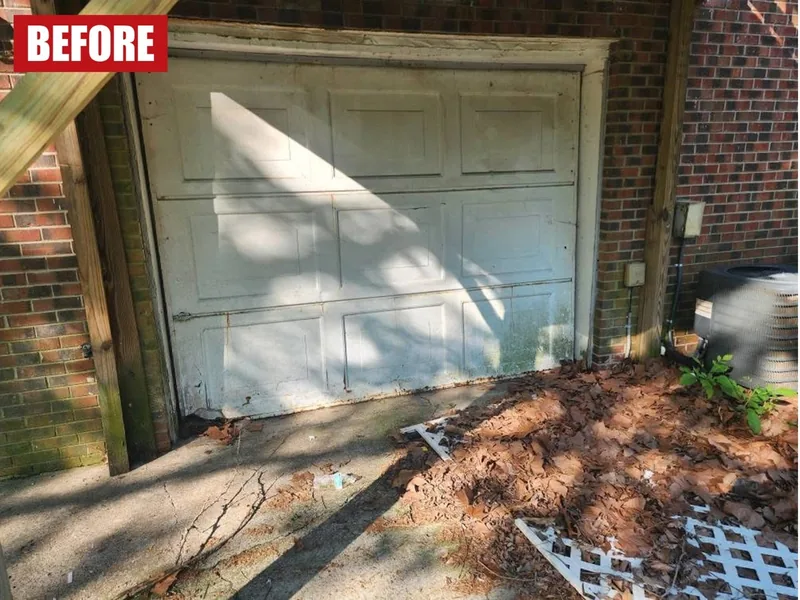
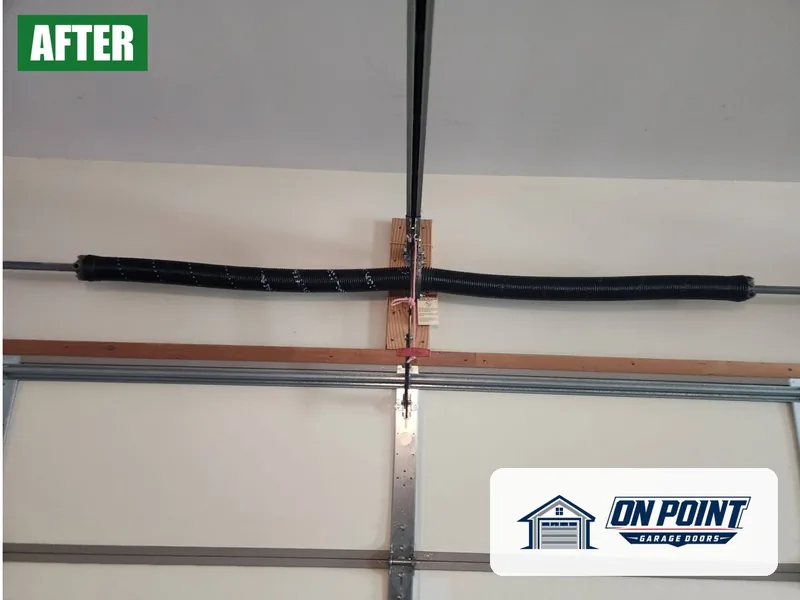
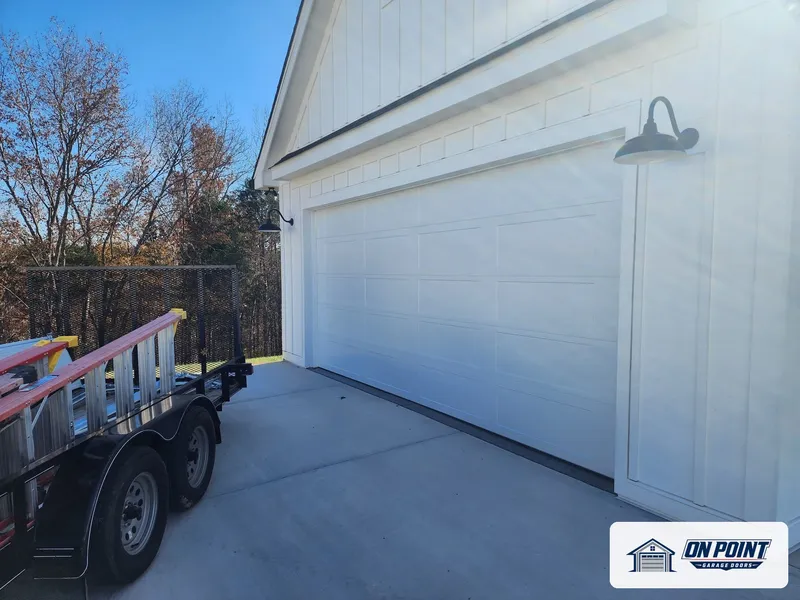
These photos are from our own jobs, with our logo on them.


The bottom brackets and cables carry the full force of the springs. When rust eats into them, they can fail suddenly, dropping one side of the door or letting a cable whip loose. Rusted springs break sooner. These parts are worth checking every year on homes near the water, and they must only be handled by a trained technician.
Galvanized steel doors with a quality factory finish, aluminum frames, and composite or wood-look doors on a protected core all handle salt air better than thin bare steel. Real wood swells and rots in the damp. The right choice depends on the house and how exposed it is.
After past storms, many homes near the water were raised, and the garage now sits underneath with walls built to let floodwater through. Those garages are damp and salty, and the door and its hardware need rust-resistant parts. Flood vents in the walls are left clear.
Rinsing salt off the bottom section of the door with plain water a few times a year, and especially after winter storms, slows rust. Keeping the bottom seal in good shape stops water pooling at the corners. A yearly tune-up catches rusting springs, cables and brackets before they fail.
Salt and damp also corrode the opener's board, wiring and sensors. Openers mounted solidly in a dry spot, with sensors placed above where water collects, last longer. Battery backup is useful where storms bring outages.
Rust that has eaten through the bottom section, panels that are flaking, or a door whose hardware has to be replaced all at once often mean a new door makes more sense. A door built for the coast will last much longer than another round of repairs on a rusted one.
The technician checks the springs, cables, bottom brackets, tracks, hinges, rollers, seals and opener for rust and wear, replaces what is unsafe with rust-resistant parts, balances the door and tests the safety reverse. You get a free estimate on repairs and, if it makes sense, on a new door.
Marinas, boat yards, seafood businesses and shops near the water use roll-up and sectional doors that face the same salt. Coated slats, stainless fasteners and regular checks keep them working.
Springs above the door and the brackets at the bottom corners can rust badly while the outside of the door still looks fine. That is why a door near the water should be checked from inside the garage every year, not just judged from the driveway.
Garages on summer houses and boat sheds may sit closed for months. Salt air keeps working on the hardware the whole time, and a spring that has rusted while idle can break the first time the door is used again. A check before the season starts is worth it.
If seawater or storm water has reached the garage, the opener's outlet, the wall control wiring and the safety sensors are checked before the opener runs again. Salt water left in connectors corrodes them quickly, and a sensor that fails can stop the door from reversing.
When we replace parts on a canal-front or bayfront home, we choose galvanized springs and cables, coated bottom brackets and stainless fasteners. They take nothing away from the look of the door and add years before rust becomes a problem again.
Salt air near the water speeds up rust on steel, especially at the bottom of the door and on the hardware.
It can be. Rust weakens springs, cables and brackets, which can fail suddenly. Have them checked.
Galvanized steel with a quality finish, aluminum, or composite on a protected core, with rust-resistant hardware.
Rinse salt off the bottom with plain water, keep the bottom seal in good shape and have a yearly tune-up.
Yes. You see what needs to be replaced before any work starts.
Across Brooklyn, Queens and Long Island, tell us what the door is doing and we set a visit that fits your day.
Free estimate, call (929) 429-2429.
Tell us what the door is doing and we will give you an honest arrival time. The estimate is free.
Easier to explain by phone? Call (929) 429-2429.
Tell us what the door is doing. The estimate is free either way.