Takes 30 seconds. We call you back to set a time.
A carport keeps the rain and snow off a car, but it leaves the car open to the wind, the street and anyone walking by. Many owners eventually want to close it in and add a real garage door. It can be done, but a carport is built very differently from a garage, so the door is usually the last step of the job. The posts, roof and walls have to be ready to carry a door first. This page explains what that means and how we fit a door once the structure is ready. Free estimate at (929) 429-2429.
By Sean Cohen, owner, On Point Garage Doors · Updated
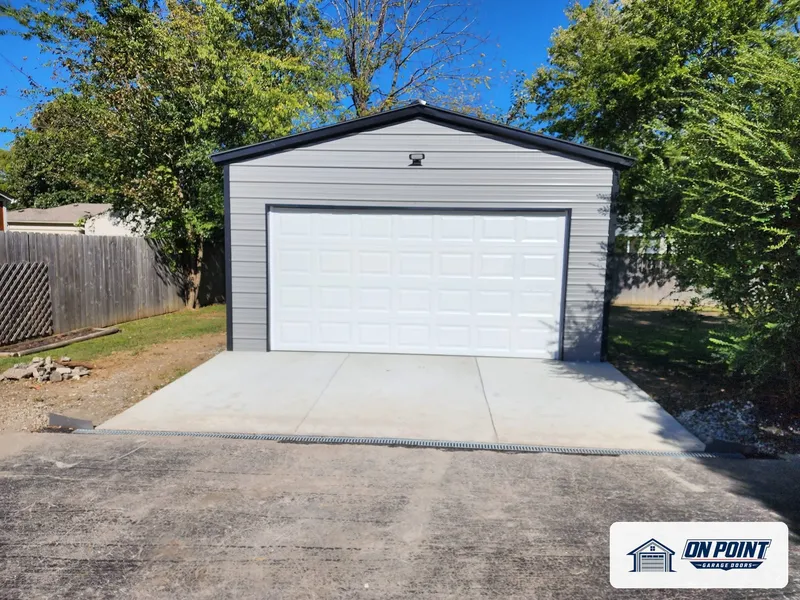
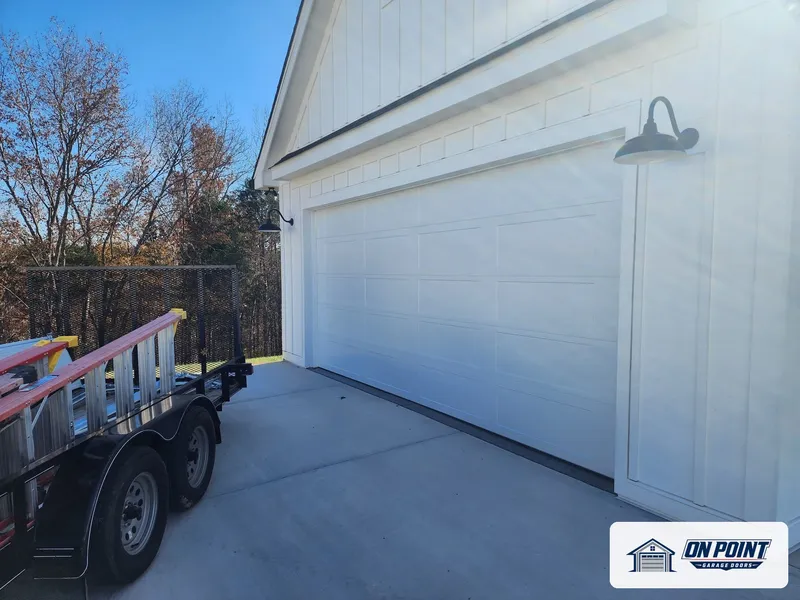
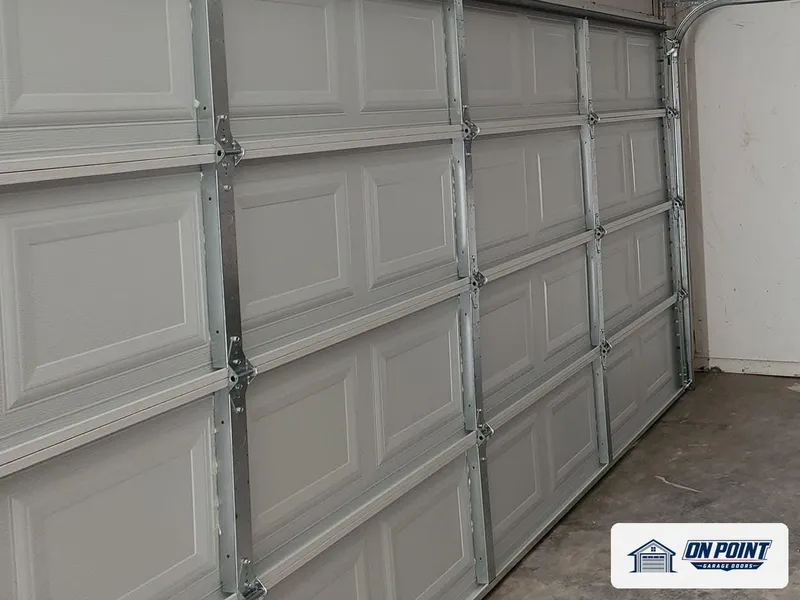
These photos are from our own jobs, with our logo on them.


A garage door needs solid framing on both sides of the opening and across the top. The tracks are fastened to the side jambs, the spring hardware hangs from a header above the door, and the opener hangs from the ceiling. Most carports have thin posts and an open roof frame, with nothing to hold that weight or keep the opening square.
To add a door, a builder closes in the sides and back, frames a proper opening at the front with a strong header, and makes sure the slab is level across the width. We do not do the framing, but we are happy to talk with the owner or the builder early so the opening is framed to fit a real door.
A sectional door rolls up into the garage on tracks, so it needs room above the opening for the spring and enough ceiling depth for the tracks to run back. A carport with a low or sloped roof may not have it. Low headroom tracks or a roll-up door can work where space is tight, and our page on low headroom garage doors goes into those options.
A carport is often in full view from the street, so the new door becomes part of the front of the house. Owners usually match the color of the trim or the existing doors, and many choose a door with a row of windows to keep the new garage from looking like a blank wall.
Most owners who go to the trouble of closing in a carport want an opener too. That needs an outlet on the ceiling near where the motor will hang. Carports often have only a light or nothing at all, so an electrician may need to run power while the walls are still open.
Carport slabs are often sloped so rain runs off in every direction. Once a door is added, water can run under the bottom seal if the slab tips toward the opening the wrong way. A good bottom seal, and in some cases a threshold seal on the floor, keeps the inside dry.
Carports at the end of a driveway often catch strong wind. A door on a big, open lot benefits from reinforcing struts and solid track mounting so it does not flex or rattle during storms. Our page on wind resistant garage doors explains what to look for.
On a carport conversion there are usually three trades. The builder closes in the walls and frames the opening, an electrician runs power for the opener and lights, and we measure, supply and hang the door, springs, tracks and opener. When everyone talks before the framing starts, the opening comes out the right size and the door goes in cleanly at the end. We are glad to walk the site with your builder and point out what the door will need.
Some homes have a carport that was closed in years ago with a door that never fit right. We repair and adjust those doors, and replace them when the opening has been fixed. A door that sticks or rubs is usually telling you something about the frame around it.
The technician measures the opening or the planned opening, checks headroom, side room and the floor, and explains which door will fit. You get a free estimate before anything is ordered.
Yes, once the carport is closed in and framed with a proper opening and header. The door is usually the last step.
No. A builder does the walls and framing. We fit the door, tracks, springs and opener.
Low headroom tracks or a roll-up door are the usual options when there is little room above the opening.
Yes. An outlet on the ceiling near the motor. An electrician can add one while the walls are open.
Yes. We measure and explain the options before anything is ordered.
Across Brooklyn, Queens and Long Island, tell us what the door is doing and we set a visit that fits your day.
Free estimate, call (929) 429-2429.
Tell us what the door is doing and we will give you an honest arrival time. The estimate is free.
Easier to explain by phone? Call (929) 429-2429.
Tell us what the door is doing. The estimate is free either way.