Takes 30 seconds. We call you back to set a time.
A garage door is the largest opening in most houses, and in a strong gust it catches air like a sail. On homes near the bay, the ocean and the canals, and on open lots where wind sweeps across, a door that bows, rattles or blows in during a storm can let wind and rain into the garage and put pressure on the whole house. Wind-resistant doors and proper reinforcement help keep the opening closed. Free estimate at (929) 429-2429.
By Sean Cohen, owner, On Point Garage Doors · Updated
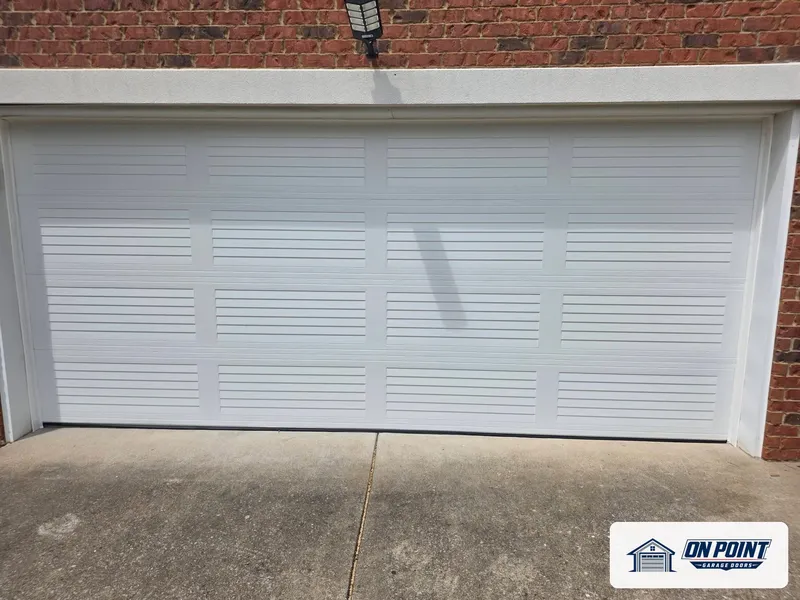
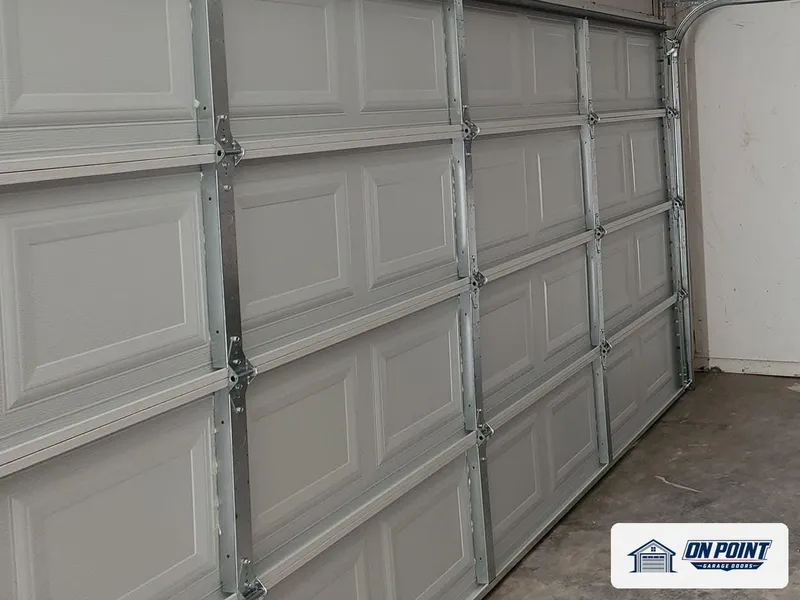
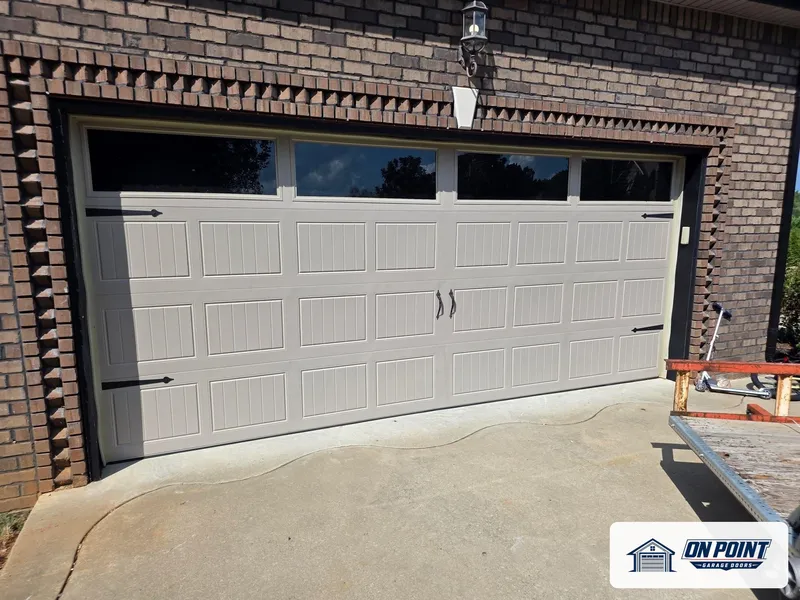
These photos are from our own jobs, with our logo on them.


Wind pressure grows with the size of the surface it pushes on. A wide two-car door has a lot of surface and spans a long distance between its tracks. Without reinforcement, it bows in the middle under strong gusts, the rollers can be pulled from the tracks and the door can buckle.
Many existing doors can be made stronger by adding struts to the sections, upgrading hinges and track brackets, and anchoring the tracks into solid framing. This is often worthwhile on wide doors near the water that already bow in strong winds.
Thin single-layer doors, doors with cracked sections or rust through the bottom, and doors that have already been bent in a storm are better replaced. A new insulated door with reinforcement built in is far stiffer, quieter and more secure.
Glass in a garage door adds a point where wind and debris can break through. On homes most exposed to storms, solid doors or doors with impact-resistant glass are the safer choice. Top-row windows can still be used with the right glass.
A balanced door with good springs and a solid opener mount stays put when closed. Battery backup lets the door work during storm outages, which matters when you need to get the car in before the weather arrives or out after it passes.
A door that was pushed by wind may have bent sections, cracked hinges, a twisted track or rollers out of place, even if it still closes. Running it can make the damage worse. Have it checked before using it, especially if it looks bowed or makes new noises.
Salt air rusts the very parts that hold a door in the wind: hinges, track brackets, fasteners and bottom brackets. Galvanized and coated hardware keeps those parts strong for longer on homes near the bay and the canals.
The technician checks the door, the tracks, the framing and the hardware, explains whether reinforcing the current door or replacing it makes more sense, and gives you a free estimate. After any work, the door is balanced and the safety reverse is tested.
Strong wind drives rain under a door with a worn bottom seal, and water then runs across the garage floor. A good seal, and on exposed doors a threshold strip, keeps wind-driven rain out. Side and top seals stop drafts and keep the door from rattling in its frame.
Two single doors are naturally stiffer than one wide door, because each spans a shorter distance. On the most exposed homes, owners replacing a wide door sometimes choose two singles for that reason. The framing between the doors must be strong enough, and that is checked first.
Houses with the garage facing the bay or an open field take the wind straight on, while houses with the garage on the sheltered side take much less. The technician looks at which way your door faces and how open the lot is before recommending reinforcement, so the door gets the reinforcement it needs and no more.
A door that rattles or bangs in gusts usually has loose hinges, worn rollers, gaps in its seals or a track bracket that has worked loose. Securing the hardware and renewing the seals makes the door quieter and more secure in bad weather.
Large doors on warehouses and shops near the water face the most force of all, and are reinforced to match.
Wide doors without reinforcement flex under wind pressure. Struts and stronger hardware stiffen them.
Often yes, with struts, heavier hinges and brackets and tracks anchored into solid framing.
Yes. Layered insulated doors are naturally stiffer than thin single-layer doors.
Yes. Wind can bend sections or tracks even when the door still closes.
Yes. You see the options before any work starts.
Across Brooklyn, Queens and Long Island, tell us what the door is doing and we set a visit that fits your day.
Free estimate, call (929) 429-2429.
Tell us what the door is doing and we will give you an honest arrival time. The estimate is free.
Easier to explain by phone? Call (929) 429-2429.
Tell us what the door is doing. The estimate is free either way.