Takes 30 seconds. We call you back to set a time.
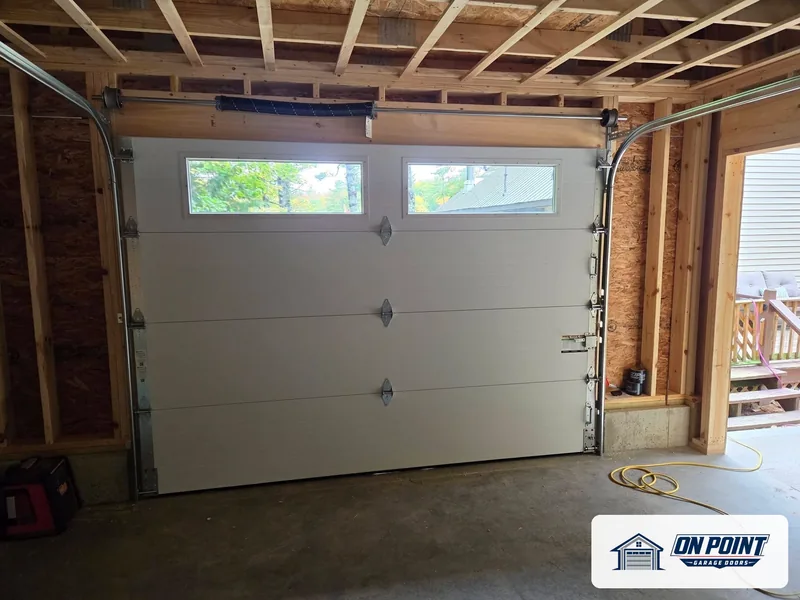
These photos are from our own jobs, with our logo on them.


A door that starts down, stops and goes back up is the most common call we get, and most of the causes are small. One of them isn't.
By Sean Cohen, owner, On Point Garage Doors · Updated
Watch what the door does when you use the remote or the wall control, because each way of failing points somewhere different. It starts down and goes back up before it reaches the floor, with the opener light flashing: the opener thinks something is in the doorway, which is the sensors in most cases. It touches the floor and pops straight back up: the close limit or the force setting no longer matches the door. It stops at the same spot every time and the motor strains: something is binding in the track. It will not move at all, from the remote or the wall: look at lock mode and power before anything else. And if there was a loud bang from the garage earlier, stop pressing the button altogether, because that is the spring.
Across Brooklyn, Queens and Long Island, a door that will not close is a security problem before it is a repair problem. A garage standing open lets anyone walk in, and in many homes the garage leads straight into the house. That is why these calls go ahead of routine work.

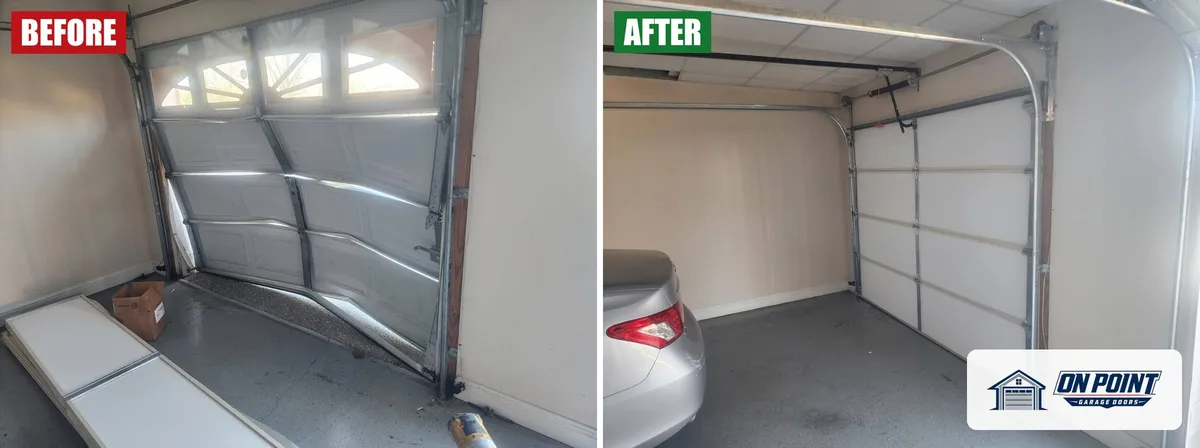
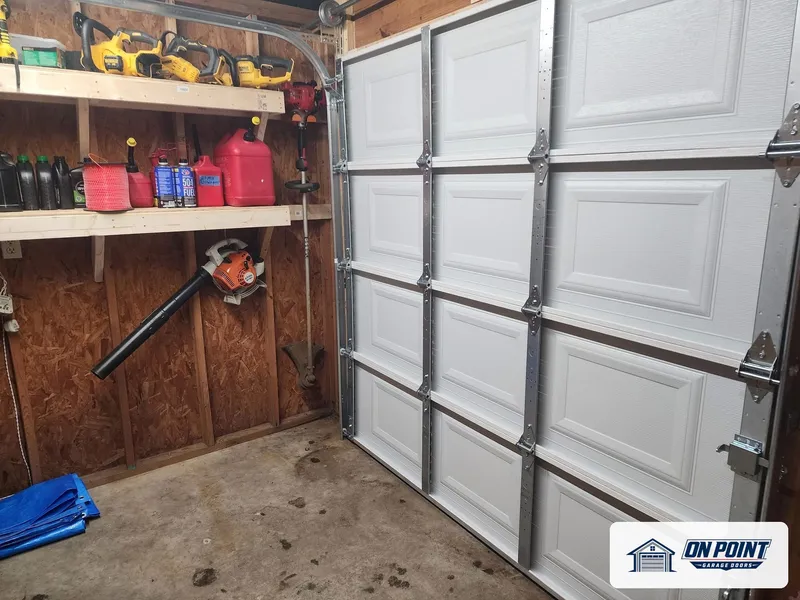
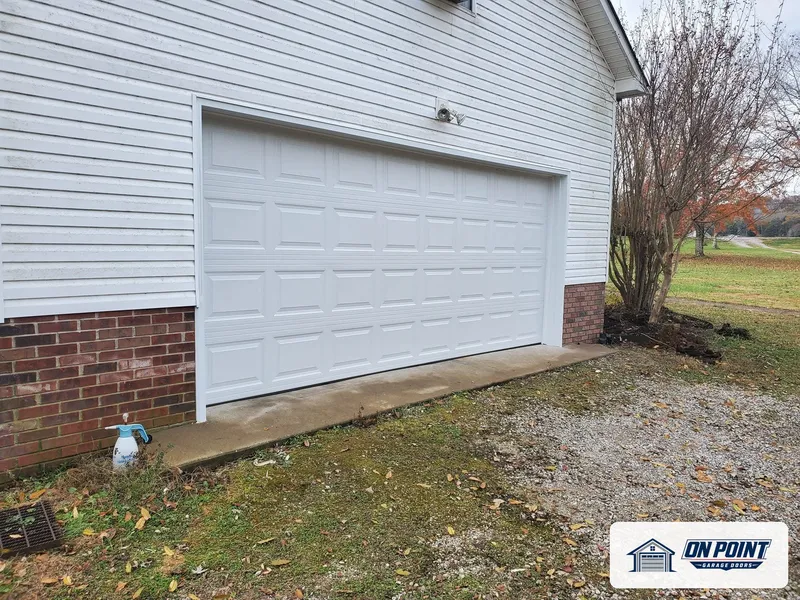
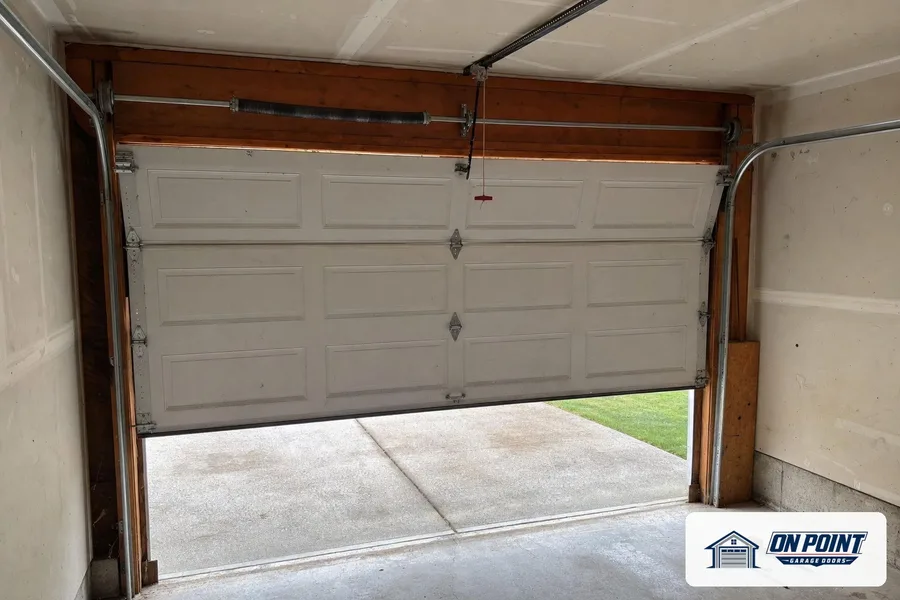
Most won't-close calls end with a cause the owner never thought of. These are the ones that come up again and again:
The technician starts with the simplest answer and works up. First the sensors: both lights steady, both lenses clean, both brackets solid and aimed at each other, the wire intact along its run. Then the close limit and the force, so the door seals against the floor without reversing. Then the door itself: he disconnects it from the opener and feels the balance, because a heavy door will keep tripping the opener no matter how it is set. Last come the tracks, rollers and hinges, checked for the one spot where the door binds.
If the door closes from the wall control but not from the remotes, the problem is on the remote side instead, and lock mode or the receiver is next on the list.
A door rarely goes from fine to stuck open with no warning. Looking back, most owners remember a few small signs:
Any of these is worth mentioning when you call. They tell the technician where to look first and which parts to bring.

A door that comes most of the way down and then jams at the same spot is usually a roller with a worn bearing or a track that has been knocked inward. Narrow garages, where a mirror or a bumper grazes the track on the way in, see this more than any other kind.
It is worth a visit sooner rather than later. A door that binds keeps loading the opener and the cables, and what starts as one bad roller can end with a cable off its drum. Our page on garage door track repair covers what the fix involves.
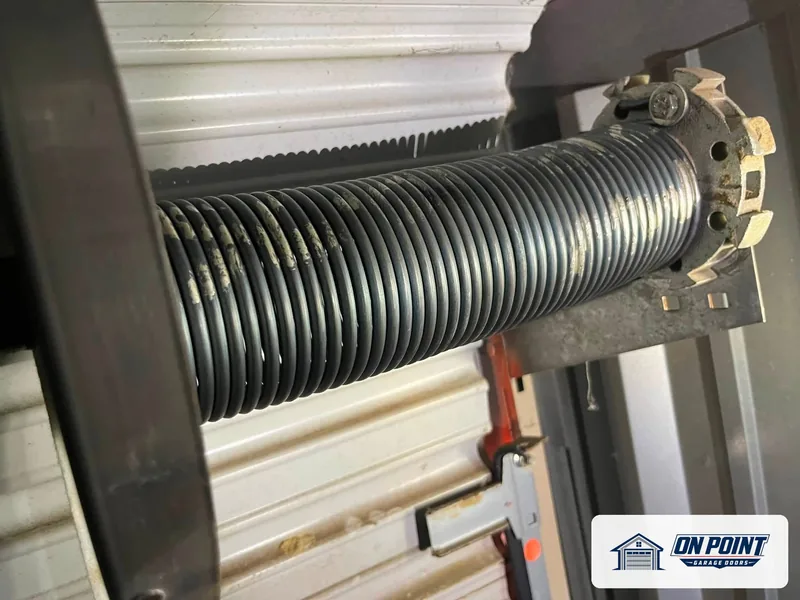
A broken torsion spring is still a loaded spring. The piece that did not break keeps its tension, and very little is holding it in place. If the door is suddenly heavy, or you can see a gap in the coil above the opening, do not lift the door, do not run the opener, and keep everyone out from under it. Everything else on this page is usually a small job; this one is a job for a technician with the right tools.
Won't-close calls climb every winter, and the openers are rarely to blame. Cold makes the whole door stiffer: grease thickens in the rollers and hinges, the rubber bottom seal freezes to the slab, and a door that was slightly out of balance in the fall is now heavy enough that the force setting trips and sends it back up. Snow, salt and grit packed into the bottom of the tracks do the rest.
The repair is usually small: clear the tracks, free the seal, and have the balance and force checked. A door left to struggle through a whole winter that way is the door most likely to break a spring before spring arrives.
The opener is broken. Usually the opener is doing its job: refusing to close on something it thinks is in the way. Fix the sensor or the setting and the opener is fine. If it truly is the opener, our opener repair page explains the usual faults.
You need a new door. Almost never for a door that will not close. Doors are replaced for rot and impact damage, not for a sensor.
It can wait until morning. On most openers, holding the wall control down closes the door even when the sensors are out. If the door will not close that way either, call; an open garage overnight is worth an urgent visit. A door that goes down and then comes right back up has its own page: garage door keeps reversing, and one that will not move down at all is covered on garage door won't go down.
That is the safety sensors, almost every time. If nothing is in front of them and it still reverses, one has been knocked out of line or its wire is damaged, and it is a short visit.
On most openers, holding the wall control down until the door is shut works even when the sensors are out. If it will not close that way, leave it and call. A door that is heavy means the spring, and that stays where it is.
The opener is reversing on contact with the floor. The close limit or the force setting needs adjusting, which is done on the visit and is not a sign the opener is finished.
A roller or a section of track. Stop using it and call; it gets worse the longer it binds.
Low sun shining into one sensor lens can blind it, so the opener thinks the beam is blocked. It is common on garages that face west, and a sensor shade or remounting the sensor on the shaded side usually ends it.
Yes, across Brooklyn, Queens and Long Island. No is a complete answer.
Yes. A garage that cannot be closed is one of the calls we move ahead of routine work. Call and we will tell you when the technician can get there.
Around Brooklyn, Queens and Long Island, one call gets you a two-hour slot and a heads-up call before the technician sets off. We don't buy leads and nobody on a phone judges a door they can't see.
Free estimate, across Brooklyn, Queens and Long Island.
Describe the fault and we'll give you an honest arrival time. The visit and the estimate is free, anywhere in Brooklyn, Queens and Long Island.
Easier to explain by phone? Call (929) 429-2429.
Tell us what the door is doing. The estimate is free either way.