Takes 30 seconds. We call you back to set a time.
Every photo here is from our own work, with our logo on it.


Most calls start the same way: the door stopped working, and the question is whether to fix it or buy a new one. Most of the time the answer is fix it. A garage door is a set of parts, and the parts that wear out are made to be replaced. Here is how a technician decides, for the door and for the opener.
Repair when the problem is a part. Replace when the door itself is failing.
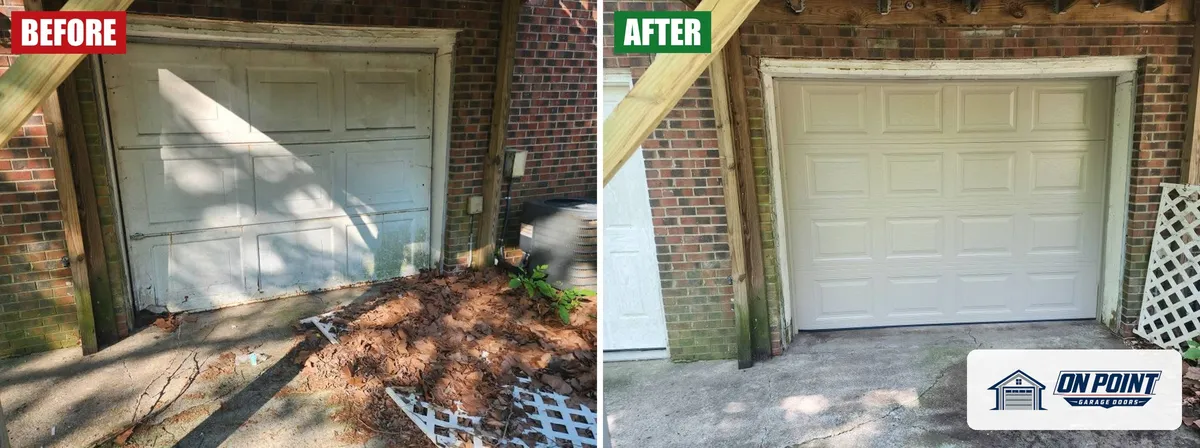
Springs, cables, rollers, hinges, the track and the opener are all parts. Each one can be swapped and the door keeps going for years. The door itself, the sections you see from the street, is what decides replacement. When those are rotted, rusted through, cracked or bent in several places, no part will make the door right again.

If that's your door, see new garage door installation. We measure, remove the old door, install, balance and test the new one in one visit.

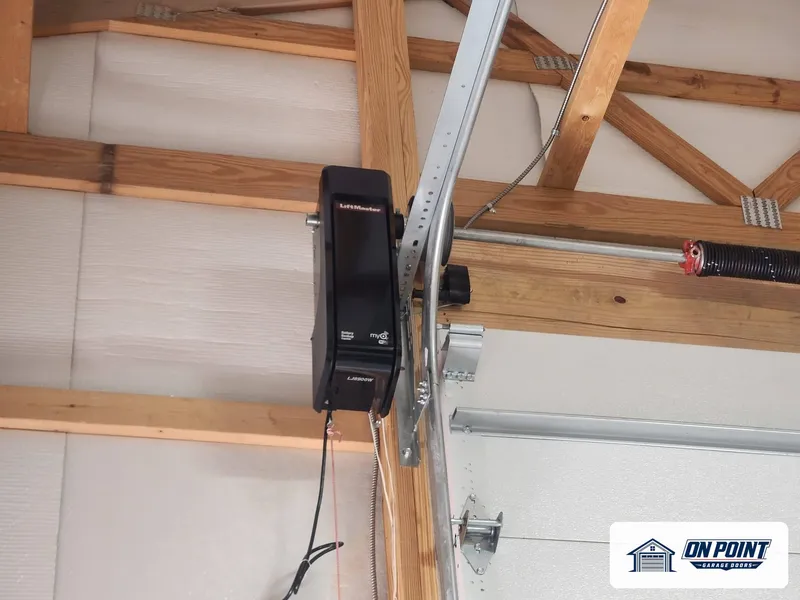
Most opener problems are one part: a drive gear, a sensor that is knocked out of line, a remote that lost its code, a limit that drifted so the door reverses at the floor. Those are repairs, and they take about an hour.
Replacement makes sense in three cases:
The same order every time.
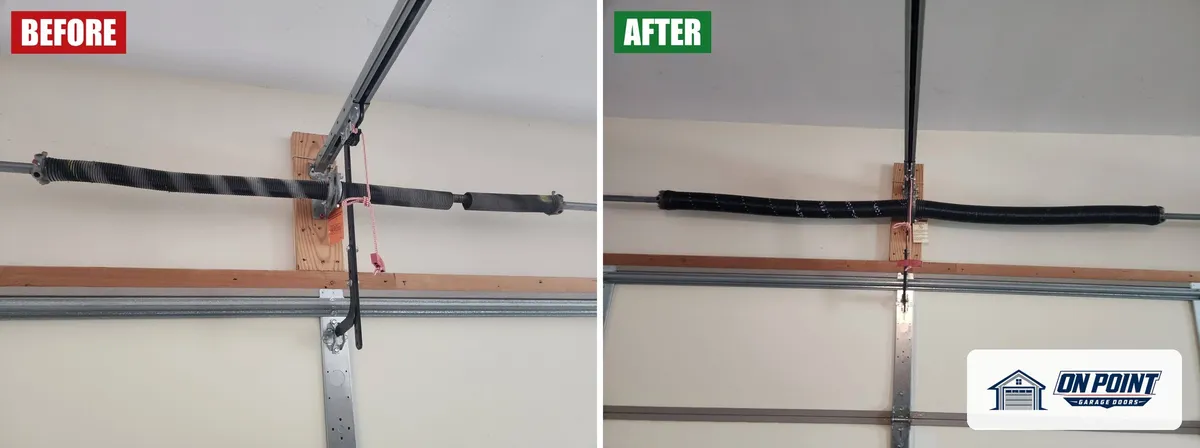
A broken spring means a new door. No. Springs are a wear part, made to be replaced.
A loud door is a worn-out door. Usually it's rollers and hinges. New rollers and a balanced door are quiet.
A new opener will fix a heavy door. No. A heavy door has a spring problem. A new opener on an unbalanced door wears out fast.
Any dent means replacement. One dent is cosmetic. It matters when the sections bend and bind in the track.
Repair it when the problem is a part: a spring, a cable, rollers, the opener. Replace it when the sections themselves are failing: rot, rust-through, cracked panels or several dented sections, or when parts for that door are no longer made.
No. A broken spring is the most common repair there is. The springs are replaced, the door is balanced, and it runs like before.
Most opener faults are a gear, a sensor or a board, and those are repairs. An opener past about fifteen years with a dead board, or one without the safety photo eyes, is the case for a new unit.
Sometimes. If the same model and color is still made, one section can be swapped. If it isn't, a mismatched panel usually looks worse than a new door.
Not by itself. Noise is usually worn rollers, dry hinges or an unbalanced door. Those get fixed first, and often the noise is gone.
Yes. The technician checks the door and the opener, tells you what is worth repairing and what isn't, and you decide. No charge for the visit or the estimate.

One call, a two-hour window, and a call ahead from the technician. That's the routine across New York, Queens and Nassau County.
Free estimate, across Brooklyn, Queens and Long Island.
Describe the fault and we'll give you an honest arrival time. The visit and the estimate is free, anywhere in Kings County.
Easier to explain by phone? Call (929) 429-2429.
Tell us what the door is doing. The estimate is free either way.