Takes 30 seconds. We call you back to set a time.
A garage that floods a little every time it rains is more than a nuisance. Water ruins stored things, makes the floor slippery, rusts the bottom of the door, the tracks and the cables, and in winter freezes the door to the ground. Most garage leaks come in at the door, and most can be stopped once you know where the water is getting in. Free estimate at (929) 429-2429.
By Sean Cohen, owner, On Point Garage Doors · Updated
These photos are from our own jobs, with our logo on them.


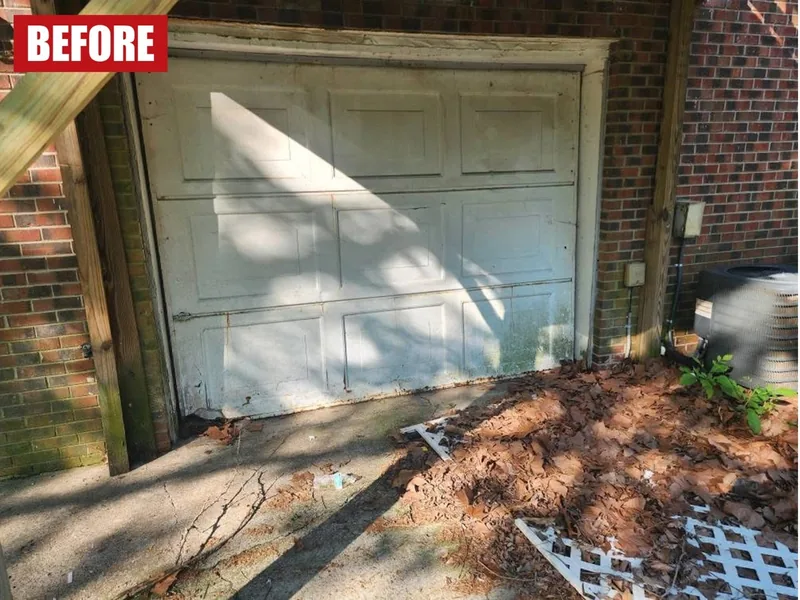
The bottom seal is the main barrier. Rubber hardens, cracks and flattens over the years, and sun, cold and the door's weight wear it out. A new seal of the right type and size for your door stops most leaks. If the metal retainer that holds it has rusted, it is replaced too.
Older slabs settle and crack, often lower in the middle or at one side. A standard seal cannot reach the low spots. A taller or softer seal, sometimes with a threshold strip fastened to the floor, closes the gap and holds back water.
Garages below the street, common in attached brick homes, high ranches and hillside houses, get water running straight down the driveway at the door. A good seal and a threshold help, and a drain at the bottom of the driveway may be needed for heavy storms.
Wind drives rain in at the sides and top of the door when the weather stripping is worn or the trim has pulled away. New side and top seals, and new trim where the old has rotted, close those gaps.
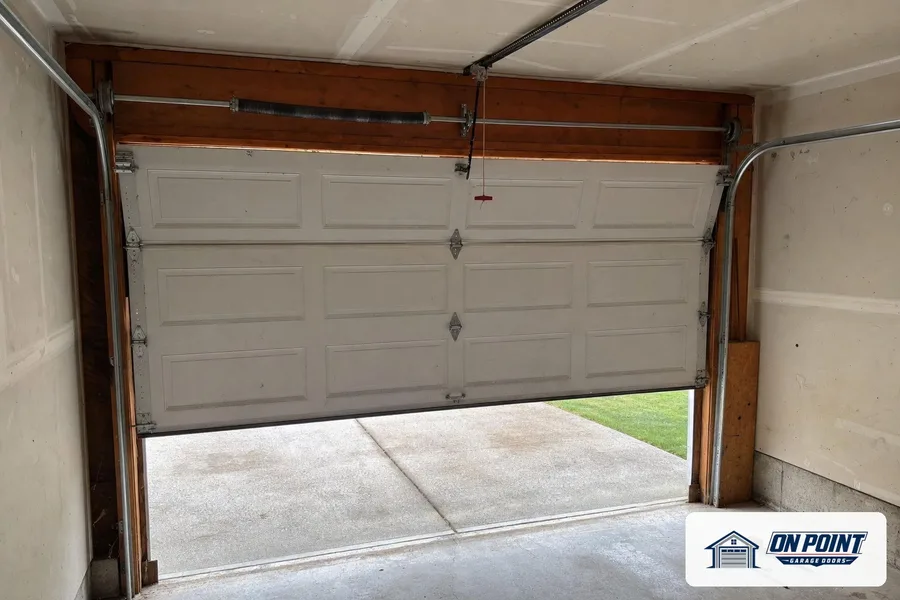
If the door is higher on one side, water gets in at the low corner of the gap. The cause may be a cable or spring problem, not the seal. That is fixed first so the door sits level and the seal meets the floor evenly.
Water sitting against the bottom of the door rusts the bottom section, the seal retainer, the cables, the bottom fixtures and the lower track. Stopping the leak protects all of them and keeps the door from freezing to the floor in winter.
Homes by the bay and the canals face salt water at high tides and in storms. Seals help with rain, but storm surges need more. Rust-resistant hardware and a check after every flood keep the door safe.
Sometimes the door is not the main problem: gutters dumping water in front of the garage, a driveway pitched toward the door or a blocked drain. The technician points out drainage problems that a seal alone cannot fix.
The technician watches the door close, checks where daylight and water get in, checks the seals, trim, floor and door level, and explains the fix with a free estimate. After the work, the seal is checked along the whole door.
Melting snow piled against the door or pushed up the driveway finds every gap. Keeping a clear strip in front of the door and a good seal stop most winter leaks.
On older doors, water can get in through cracked panels, around window inserts or through gaps between sections. Section joints that no longer close tightly, and window seals that have dried out, are checked along with the bottom seal.
When the garage is under the house, water in the garage means damp in the rooms above too. Stopping the water at the door is the first step; good ventilation helps the garage dry out afterward.
Loading doors and service doors let in water when their bottom seals tear or their bottom bars bend. Heavy-duty seals and straight bottom bars keep warehouses and shops dry.
A threshold is a rubber strip fastened to the garage floor that the door closes onto. It raises a small barrier against water and fills the gap on uneven floors. It is low enough to drive over and works together with the bottom seal on the door.
Rust at the bottom of the tracks, stains on the floor near the door, a musty smell and a bottom panel that keeps rusting all point to water getting in, even if you have never seen it happen during a storm.
Basement-level garages at the foot of a ramp catch every drop of runoff and need the tightest seal of all.
Usually a worn bottom seal, an uneven floor or a driveway that slopes toward the door.
Often yes. On uneven floors, a taller seal or a threshold may be needed.
A good seal and threshold help; heavy runoff may need a drain.
Yes. It rusts the bottom section, cables, brackets and tracks.
Yes. You see where water is getting in and the fix before any work starts.
Across Brooklyn, Queens and Long Island, tell us what the door is doing and we set a visit that fits your day.
Free estimate, call (929) 429-2429.
Tell us what the door is doing and we will give you an honest arrival time. The estimate is free.
Easier to explain by phone? Call (929) 429-2429.
Tell us what the door is doing. The estimate is free either way.