Takes 30 seconds. We call you back to set a time.
A new garage floor is a big improvement, but the door does not know the floor has changed. Pour a new slab, grind and level the old one, or roll on a thick epoxy or polyurea coat, and the floor at the door line is no longer where the door was set to stop. The result can be a door that reverses as it touches down, a door that stops above the floor and leaves a gap, sensors that no longer see each other, or water that now runs under the seal. This page explains what changes and what a technician adjusts so the door and the new floor work together. Free estimate at (929) 429-2429.
By Sean Cohen, owner, On Point Garage Doors · Updated
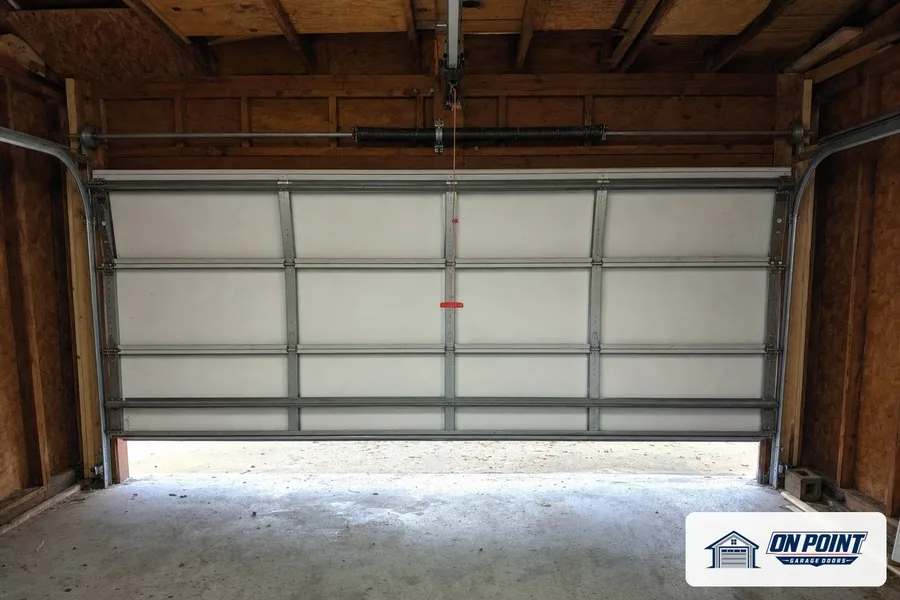
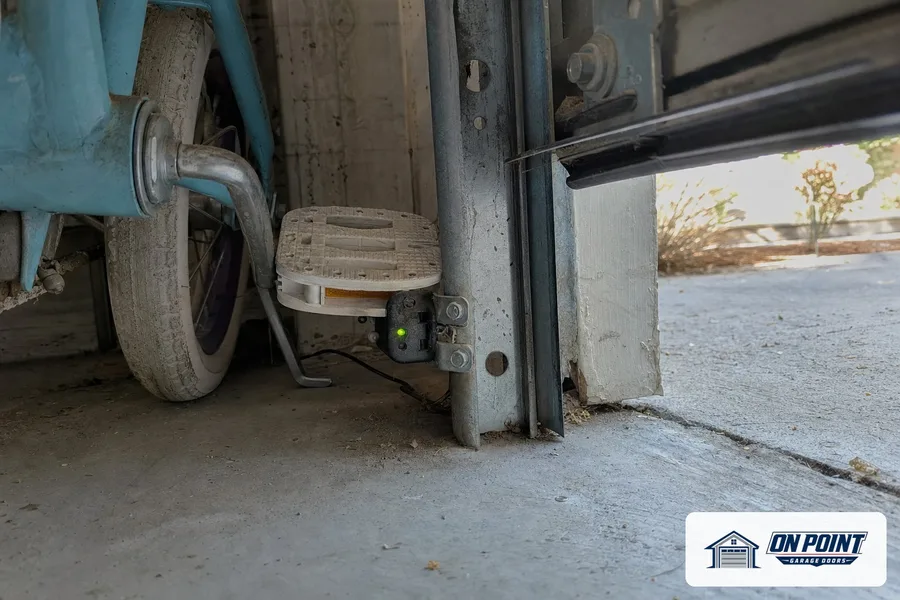
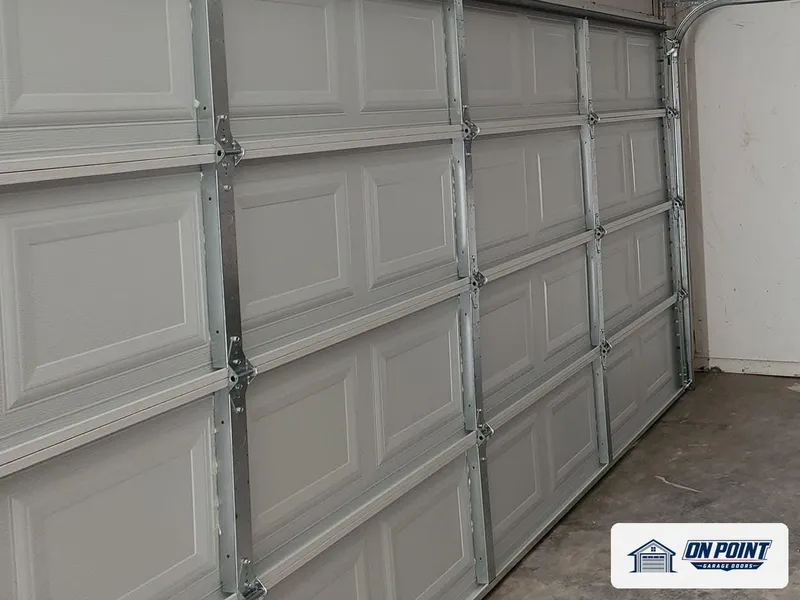
These photos are from our own jobs, with our logo on them.


The opener is set to drive the door down to a certain point and stop. That point was chosen for the old floor. The bottom seal was sized for the old floor too, and the bottom of each track was set at a height that matched it. Change the height or the shape of the floor at the door line, and all three are now off. Even a coating that seems thin can be enough to change how the door lands.
This is the most common call after a floor job. The new floor is higher than the old one, so the door touches down earlier than the opener expects. The opener feels the resistance, thinks something is in the way and sends the door back up. The fix is to reset the down travel and check the force setting, not to turn the force up until the door stops reversing. A door with too much force is a safety hazard.
If the old floor was ground down or the new slab sits a little lower at the door, the door now stops short of the floor. Light, leaves, water and mice come in under the seal. Resetting the travel often closes the gap. If the floor is uneven across the opening, a thicker or softer bottom seal may be needed so it can follow the dips. Our page on the gap under a garage door covers seal choices in more detail.
A new slab is usually flat, but it is not always level from one side of the door to the other, and old floors that were patched can be worse. A door is built straight. When the floor slopes across the opening, one corner of the door lands first and the other hangs above the floor. A bottom seal with more give can take up a small slope. A bigger slope may call for a threshold strip or a word with the floor contractor.
The safety sensors sit low on the tracks, close to the floor. Floor crews often knock them out of line, cover them with tape, or unplug them to get the work done. Grinding dust and coating spatter can also coat the lenses. When the door will not close after a floor job, the sensors are among the first things we check. Our guide to garage door sensors explains what their lights mean.
When a slab is replaced, the tracks are sometimes unbolted or the bottom of the track ends up buried in the new concrete. A track that is too low can drag on the floor or trap the bottom roller. A track that was moved and put back may no longer be straight with the door. We check that each track sits at the right height, is plumb, and lets the bottom roller travel freely.
The edge of the floor at the door line is where outside water decides whether to come in. A new slab may slope toward the garage instead of away from it, or it may meet the driveway at a different height. A good bottom seal helps, and a threshold strip glued to the floor can turn water away. Bigger drainage problems are a job for the concrete contractor, and it is better to raise them before the coating goes down.
Epoxy and polyurea floors are smooth and hard, and a rubber seal sitting on them can stick in cold weather or squeal as the door lifts. A seal of the right material and shape lands cleanly and lets go cleanly. Coating crews also sometimes run the coat right up to the door and under the seal while it is still soft, which can glue the seal to the floor. Keeping the door raised or covered while the coat cures avoids that.
If you can, have the door looked at before the floor work and again after. Before, we can note how the door sits, take off the bottom seal if it would be in the way, and move or protect the sensors. After, we reset the travel and force, put the sensors back in line and choose the right seal for the new floor. If the floor is already done, one visit afterward sorts out most problems.
The technician runs the door, watches how it lands on the new floor, checks the gap from side to side, looks at the tracks, the rollers and the sensors, and tests the force and reversing on the new floor. You get a written estimate before any parts are added, and the door is tested open and closed after every adjustment.
The floor is higher than before, so the door touches down early and the opener reads it as something in the way. The travel needs to be reset.
Yes. A rubber seal can stick to a hard coating in cold weather, or be glued down if the coat was not cured before the door closed on it.
The floor is now lower or uneven at the door line. Resetting the travel and choosing the right bottom seal usually closes it.
Usually not. The door can stay, but the bottom seal, the sensors and the track ends may need attention before and after.
Yes. We check how the door sits on the new floor before any work starts.
Across Brooklyn, Queens and Long Island, tell us what the door is doing and we set a visit that fits your day.
Free estimate, call (929) 429-2429.
Tell us what the door is doing and we will give you an honest arrival time. The estimate is free.
Easier to explain by phone? Call (929) 429-2429.
Tell us what the door is doing. The estimate is free either way.