Serving Brooklyn, Queens and Long Island(929) 429-2429Open six days a weekFree estimateGuaranteed work
On Point Garage Doors
Open 24 hours Sun-Thu, Fri until 5 pm Free estimate Springs, openers, cables We come to you
Emergency?Call nowBook free estimate
New York, NY - open six days a week

Gap under the garage door: causes and fixes

Free estimateSame-day serviceCommon parts on board
  • Free estimate
  • Same-day service
  • Common parts on board
Emergency garage door repair★★★★★ 5.0 on Google · 42 reviews

Book your free estimate

Takes 30 seconds. We call you back to set a time.

Or just call (929) 429-2429 and talk it through.

Home › Gap Under the Garage Door

A garage door should meet the floor along its whole width. When you see daylight under it, or water, leaves, snow or mice get in, there is a gap. Sometimes the cause is just a worn rubber seal. Other times it is an uneven floor, a door that sits crooked or an opener that stops the door short. Each has its own fix, and finding the right one keeps the garage dry and tight. Free estimate at (929) 429-2429.

By Sean Cohen, owner, On Point Garage Doors · Updated

Real jobs. Real photos.

These photos are from our own jobs, with our logo on them.

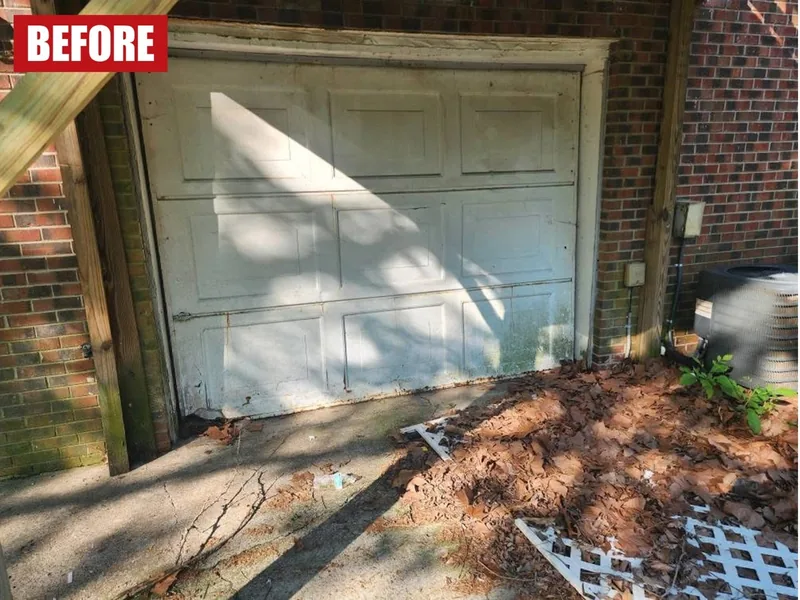
Old worn garage door before On Point Garage Doors replaced it
Bottom of a worn door
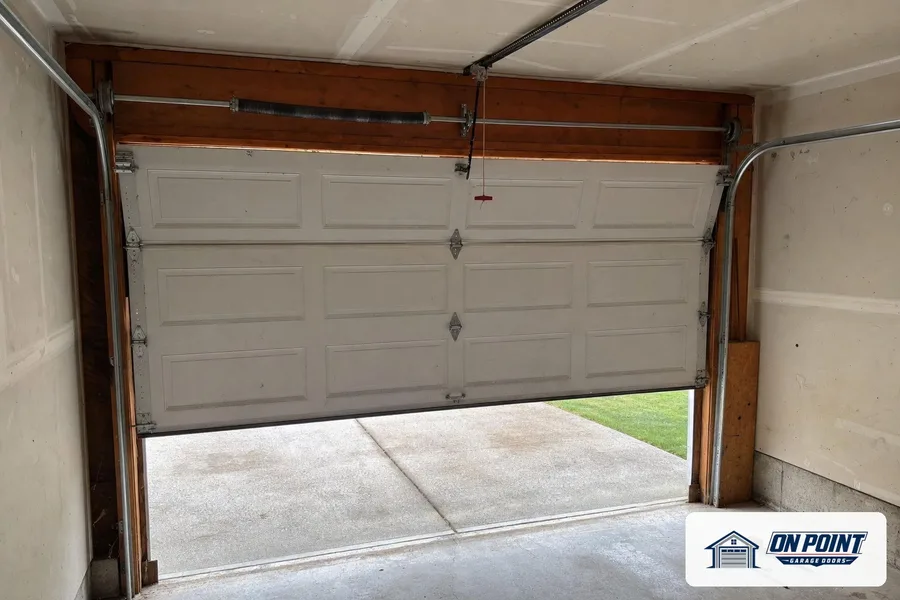
Door partly open, from one of our jobs
Door partly open
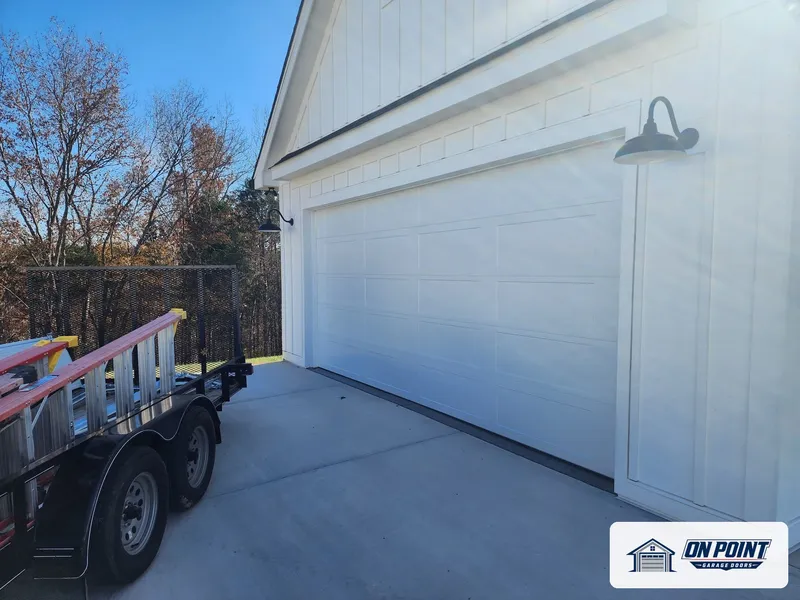
New door closed tight, from one of our jobs
New door closed tight

The usual causes

  1. Worn or torn bottom sealRubber hardens, cracks and flattens with sun, cold and years of use.
  2. Uneven or sloped floorSettled slabs leave a gap at one corner even when the door is level.
  3. Door sitting crookedA cable or spring problem tilts the door so one side does not touch down.
  4. Close limit set shortThe opener stops the door before it reaches the floor.
  5. Rusted bottom retainerThe metal channel that holds the seal rusts and lets the seal fall out.

Look at the gap

A gap that is the same across the whole door usually means the seal is worn or the opener stops short. A gap at one corner usually means the floor is uneven or the door is crooked. Watching the door close tells a lot: if it touches down on one side first, the cables or springs may be the cause.

Bottom seals

The rubber seal at the bottom of the door slides into a metal or vinyl retainer. There are several shapes and sizes, and the right one depends on the door. A new seal of the right type closes small gaps and keeps out water, leaves and drafts.

On doors where the retainer has rusted, the retainer is replaced too, because a new seal will not stay in a rotten channel.

Uneven floors

Many older garages have slabs that settled or cracked over the years, often lower in the middle or at one side. A taller or softer seal, sometimes with a threshold strip on the floor, closes gaps a standard seal cannot. Where the floor is badly broken, it is better to know that before ordering a new door.

Water and the slope

Garages below a sloped driveway, common in attached brick homes and hillside houses, get water running straight at the door. A good bottom seal, sometimes paired with a threshold, keeps it out. Water sitting against the door also rusts the bottom section and the cable brackets, so a tight seal protects the whole door.

Mice and pests

Mice need only a tiny gap. Torn corners of the seal and gaps at the sides of the door are favorite entry points. A new bottom seal plus side and top weather stripping closes the perimeter, which also keeps out drafts and dust.

When the door is crooked

If the gap is at one corner and the floor is flat, the door may be crooked from a frayed cable, a slipped drum or a broken spring on a two-spring door. That needs to be fixed first, because a crooked door strains the rollers, hinges and opener. A new seal will not fix a door that does not sit level.

Opener limits

If the opener stops the door just above the floor, the close limit needs adjusting. That is done carefully, together with the force setting and the safety reverse test, so the door seals without pressing too hard on the floor.

What a visit includes

The technician watches the door close, checks the seal, the retainer, the floor, the cables and springs, and the opener's limits. The fix is explained with a free estimate: a new seal and retainer, a threshold, a cable or spring repair, or a limit adjustment. Afterward the door is closed and checked along its whole width.

Side and top seals

The bottom is not the only gap. Weather stripping along the sides and top of the opening keeps out drafts, water and pests too. It wears and pulls away from the trim over time. Replacing it together with the bottom seal seals the door all the way around.

Gaps on new doors

A brand-new door should close tight. If a gap appears right after a new door or a new opener went in, the close limit or the track height was not set for your floor. That is a quick adjustment, and the door is then checked along its whole width with the opener and by hand.

On very uneven slabs, a new door may need a taller seal than the one it came with, and the technician swaps it on the spot so the door closes tight from end to end.

Questions we get asked

Why is there a gap under my garage door?

Usually a worn bottom seal, an uneven floor, a crooked door or an opener that stops the door short.

Can a new bottom seal fix a gap at one corner?

Often, if the floor is uneven. If the door is crooked, the cables or springs must be fixed first.

How do I keep water from coming under the garage door?

A good bottom seal, sometimes with a threshold on the floor, keeps water out on sloped driveways.

Can mice get in under a garage door?

Yes. Torn seal corners and side gaps are common entry points. New seals close them.

Is the estimate free?

Yes. You see the cause and the fix before any work starts.

Booking takes a minute

Across Brooklyn, Queens and Long Island, tell us what the door is doing and we set a visit that fits your day.

Free estimate, call (929) 429-2429.

Not sure what is wrong? We will come and look

Tell us what the door is doing and we will give you an honest arrival time. The estimate is free.

Easier to explain by phone? Call (929) 429-2429.

Two minutes to a free estimate

Tell us what the door is doing. The estimate is free either way.

Or just call (929) 429-2429 and talk it through.

The other six things that go wrong