
Leave your name and number and we’ll call you back to set a time.
The bottom bar is the heavy angle across the foot of a roll-up door. It stiffens the last slat, holds the rubber seal that meets the floor, and on a lot of doors it carries the slide locks too. It also sits lower than anything else on the door, so a truck bumper or a forklift fork usually finds it first. Once the bar bends, the door can stop short, land crooked or leave a gap the wind gets under. Some doors won't lock at closing time. Below we go through how the bar is built, what a bend does to the rest of the door, and how our techs decide between straightening it and putting on a new one. Free estimate at (929) 429-2429.
By Sean Cohen, owner, On Point Garage Doors · Updated
These photos are from our own jobs, with our logo on them.
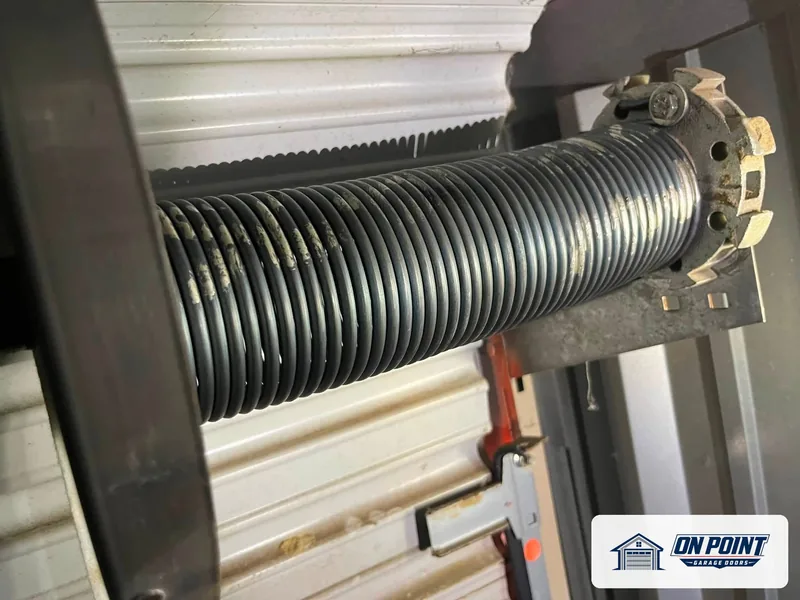
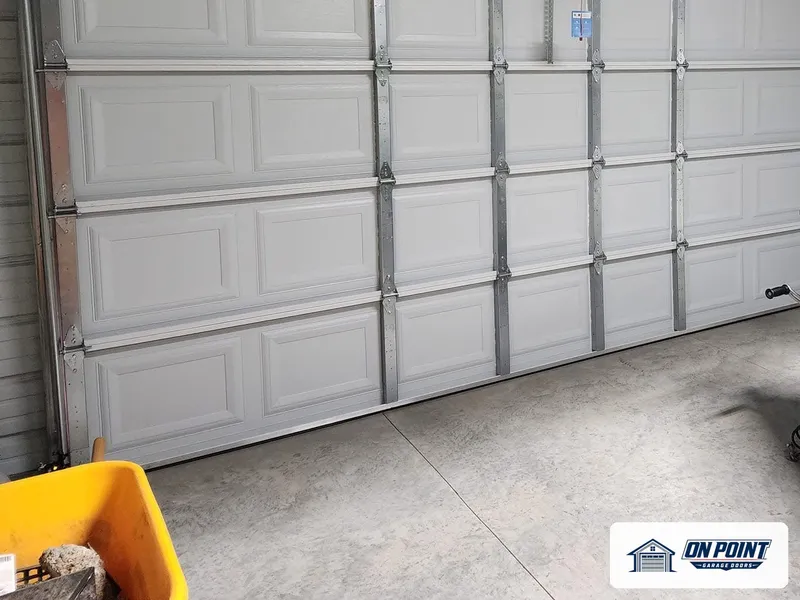
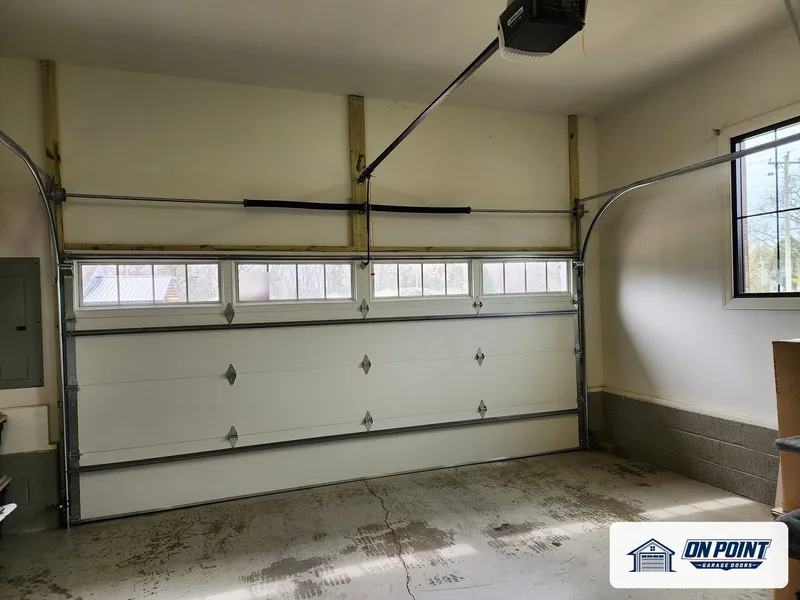
On most rolling steel doors the bar is a pair of steel angles bolted back to back, with the bottom slat clamped between them. Lighter doors and many storefront gates use a single aluminum extrusion with a slot for the seal. Wide doors and doors that face wind get a bigger bar, since the bar keeps the bottom edge of the curtain straight across the opening. On a door with an operator, a sensing edge often rides along the bottom of the bar as well.
A bar bowed upward in the middle leaves daylight along the floor, and rain and leaves come in under it. A bar bent at one end can drag that end of the curtain out of its guide, so the door climbs crooked and may bind. On a door with an operator, the edge may touch down early and send the door back up. The hit also puts a twist into the lowest slats. Each time the curtain winds onto the barrel, that twist works a little higher.
Many roll-up doors lock with a slide bolt on the inside of the bar that shoots into a slot in the guide. Others have a padlock hasp at the end of the bar or a cylinder lock in the middle. Bend the bar even a little and the bolt misses its slot. Owners often find out at closing time, when the lock won't go home and the building can't be secured. Our tech checks the lock hardware along with the bar, because a new bar may need new holes for the lock or a new keeper plate.
A shallow bow in a steel angle can often be brought back on site. A sharp kink, a crack at a bolt hole or a creased aluminum bar usually calls for a new bar, since aluminum tends to split when someone bends it back. The tech also looks at the slat above the bar. The hit that bent the bar often creased that slat too, and a straight bar clamped to a bent slat won't stay straight for long. Damaged slats come out with the bar.
The astragal is the rubber or vinyl strip under the bar. It closes the gap at the floor and softens the landing. A bent bar usually tears the seal or pulls it out of its slot at the bend. We put on a new seal with the bar, matched to the slot the bar takes. Our rolling door seals page covers astragals, guide seals and the hood baffle in more detail.
On a door run by an operator, a sensing edge along the bottom bar signals the operator to stop and reverse when it touches something. A hit that bends the bar often crushes that edge or tears its coil cord. After a new bar goes on, the edge is mounted, wired and tested so the door reverses on contact. Running a power door with a crushed edge leaves anyone under it unprotected, so keep it closed until the edge works.
Sometimes the bar is straight and the slab is the trouble. An old floor that has sunk at one side, a patched threshold or a drain trench across the opening can make a good bar look bent and leave a gap the seal can't close. Before ordering parts, our tech puts a level on the floor at the door line. A taller seal or a bar with a deeper seal channel can follow a floor that falls away at one end.
Where trucks and lift trucks pass all day, a standard bar may get hit again and again. A heavier angle, a reinforced bar or a bottom section built to give on a light knock can hold up better. Bollards and guide protectors at the jambs keep vehicles off the edges of the opening. Our page on commercial door impact damage covers those.
A bent bar that keeps the door from closing leaves the building open. Call and tell us that when you book. Our tech's first job is to get the door down and locked, even if the new bar comes on a second visit. We're open around the clock Sunday to Thursday, until five on Friday, and closed Saturday.
We run the door down and watch where it touches the floor first. Then we check the bar, the lowest slats, the seal, the lock, the guides and the spring tension, because a door that lands crooked can also be out of balance. Common seals and bar parts ride on the On Point truck. A heavy or unusual bar may have to be ordered. You get a free written estimate before any work starts.
A shallow bow in a steel bar often can. A sharp kink, a crack or a bent aluminum bar usually means a new one.
The bent bar has pulled the slide lock out of line with its slot in the guide. The bar is fixed or replaced and the lock lined up again.
Usually the bar, the seal and any creased lower slats are replaced on their own. The rest of the curtain stays.
A bar bowed upward, a torn seal or a floor that sank at one side. Our tech checks the bar, the seal and the slab.
Yes. We look at the bar, the slats, the lock and the seal and write up what the job needs before anything starts.
Across Brooklyn, Queens and Long Island, tell us what the door is doing and we set a visit that fits your day.
Free estimate, call (929) 429-2429.
Tell us what the door is doing and we’ll tell you when we can get there. The estimate is free.
Easier to explain by phone? Call (929) 429-2429.
Tell us what the door is doing. The estimate is free either way.
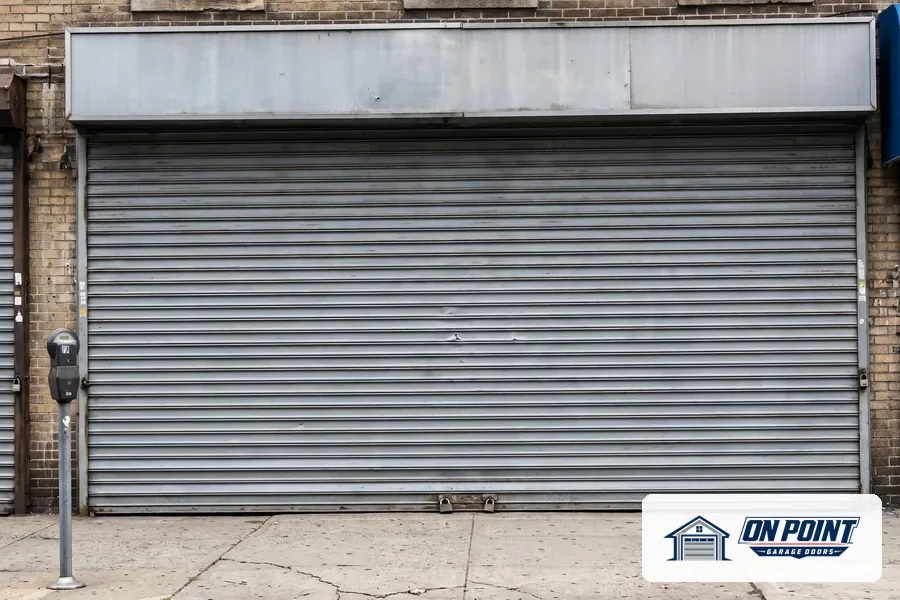
Where we work
Brooklyn, Queens and Long Island. Tap your town.
 Bay RidgeBrooklyn
 AstoriaQueens
 Valley StreamNassau County
 HuntingtonSuffolk County
 Sheepshead BayBrooklyn
 BaysideQueens
 Garden CityNassau County
 BabylonSuffolk County
 Marine ParkBrooklyn
 FlushingQueens
 MassapequaNassau County
 SmithtownSuffolk County
 CanarsieBrooklyn
 Howard BeachQueens
 LevittownNassau County
 Mill BasinBrooklyn
 Forest HillsQueens
 FreeportNassau County
 BensonhurstBrooklyn
 Long BeachNassau County
 Park SlopeBrooklyn
 HicksvilleNassau County
 WantaghNassau County
 SeafordNassau County