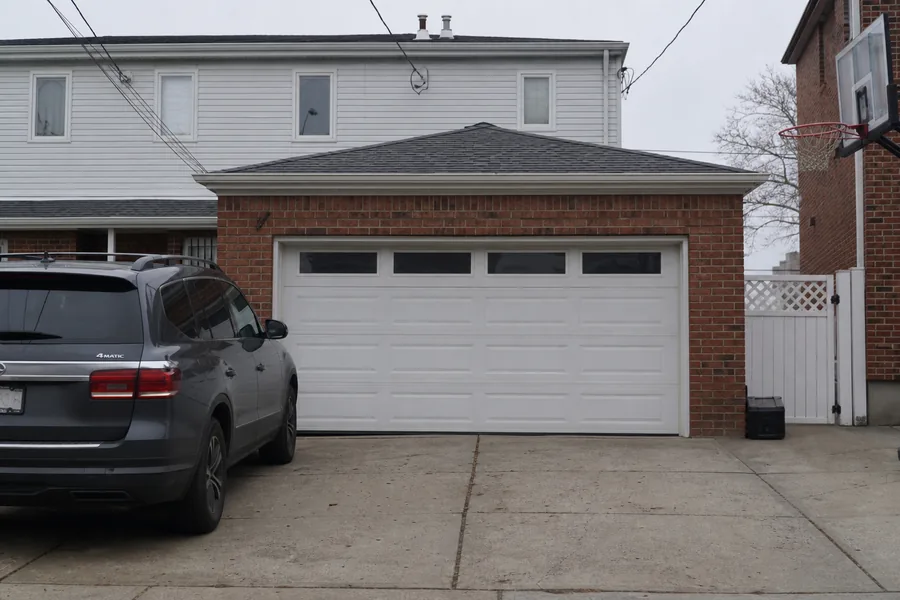
From the capes north of Sunrise Highway to the canal blocks off Merrick Road, we fix garage doors all over Wantagh: springs, cables, rollers, openers, doors that jumped the track, and bottom sections the salt air ate through. A technician comes to you with the common parts on the truck, and the estimate is free.
Tell us what the door is doing. The estimate is free either way.

Six jobs, the same on every street here. The parts for the doors common on this side of the county ride along on the truck, so most calls are finished on the first visit.
North of Sunrise Highway it's capes and ranches. Most went up in the years after the war, and a lot of them still have the original detached garage at the end of the driveway, or a one-car garage that was added on later. Those doors don't run twenty times a day. They sit. And a door that sits is how you get a spring that snaps the first cold week of November, rollers that have seized in place, and an opener nobody has looked at since the previous owner.
South of Merrick Road, it's the water. The blocks down toward the bay and the canals are splits, high ranches and newer colonials, and the garage is usually built into the house under a bedroom. Salt air gets to everything metal. The bottom rail rusts, the cables fray at the bottom bracket where they sit in the damp, and the springs pit and lose their temper years before they should. The photo eyes sit low, right where the wet collects.
The high ranches have a problem of their own. The garage is under the living space, the headroom above the door is tight, and that door is the biggest opening in the front of the house. When it stops halfway, the whole house is blocked. That's why we ask what kind of house it is before we leave: a low-headroom track kit and the right spring size ride along when the house is a split or a high ranch.

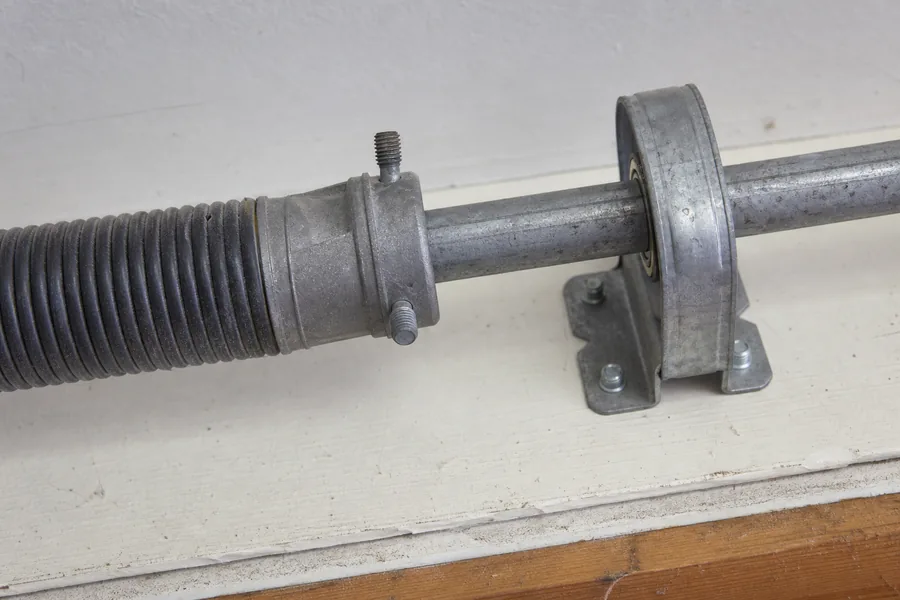
A torsion spring on a door that's been sitting lets go with a bang, and after that the opener can't lift the door at all, or lifts it a foot and gives up. The motor gets the blame. It's almost never the motor. The technician lifts the door by hand first; if it's dead weight, the spring is the job, and the opener is fine once the door balances again.
New springs are sized to the actual weight of the door, not to the size printed on the old one, because the old one was sometimes wrong from day one. On a two-spring door both go on. The cables, drums and end bearings get checked while everything is apart, and the door is set so it stays put at halfway before the opener is reconnected.
You tell us what the door's doing and what kind of house it's on. That's the whole call. We give you a window, and the technician calls when on the way, so you're not sitting home waiting.
On the visit the technician looks at the whole door, not just the part that made the noise: springs, cables, rollers, hinges, the track, the opener's force setting and the safety eyes. Then you get the estimate, in writing, before anything is touched. It's free, and no is a fine answer.
If you say yes, the repair is usually finished on that same visit, because the parts these doors need are already on the truck. Before we leave, the door gets run through its full travel on the opener and the reverse gets tested with something in the way. A door that closes on an obstruction and keeps going isn't fixed.
The same truck covers the whole South Shore and the towns just north of it. These are the closest calls:
Town pages: Seaford, Massapequa, Levittown, the rest of Nassau County, Suffolk.
Yes, every day. It's the Belt to the Southern State and down the parkway, and the truck is already out this way most mornings. Say where you are when you call and you'll get an honest arrival window, not a guess.
Almost certainly not. A bang followed by a door the opener can't lift is a broken spring. Leave the door where it is, don't pull the red release cord, and keep the car out until someone has looked. It's a same-visit repair nearly every time.
Salt air. It settles on the bottom rail, the cables and the springs, and it doesn't rinse off. Near the canals we see cables fraying and bottom sections rusting through years earlier than inland. Galvanized cables and a new bottom section with a fresh seal usually put it right. If the rust has climbed into the panel, you'll hear that honestly, with the estimate for a new door next to the one for the repair.
Yes. Low headroom is the usual complication on those, so the technician measures the space above the door before choosing the track and the spring setup. Tell us it's a high ranch or a split when you call and the low-headroom parts ride along.
No, both, when the door has two. They've done the same number of cycles and the second one is on borrowed time. One new spring against one tired one also pulls the door unevenly and wears the new one out early.
Yes. The visit is free, the estimate is free, and if you decide to leave it, you owe nothing. Nothing gets replaced until you've seen the number and said yes.
Open 24 hours Sunday to Thursday, Friday 7 am to 5 pm, closed Saturday. Outside those hours the form still reaches us and we call back when we open.
Yes. We measure the opening, help you pick a door that suits the house and the salt air, install it, and set the balance and the safety reverse before we go. Openers the same: LiftMaster, Chamberlain, Genie and the rest.
Describe the fault and we'll give you an honest arrival time. The visit and the estimate is free, anywhere on the South Shore.
Easier to explain by phone? Call (929) 429-2429.
Tell us what the door is doing. The estimate is free either way.