Takes 30 seconds. We call you back to set a time.
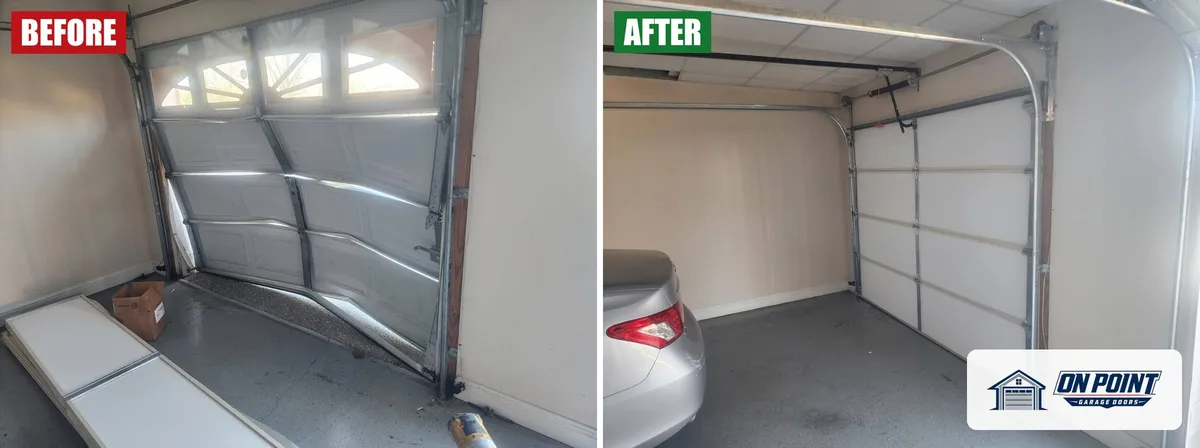
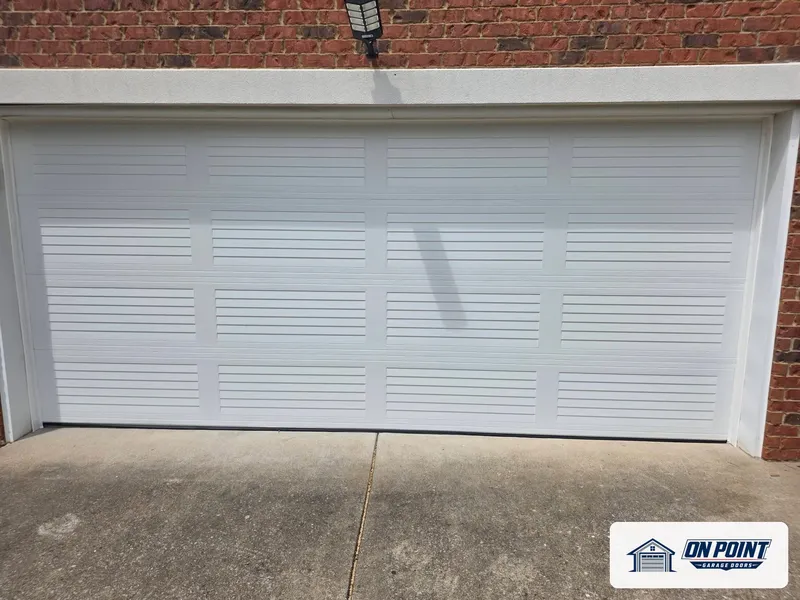
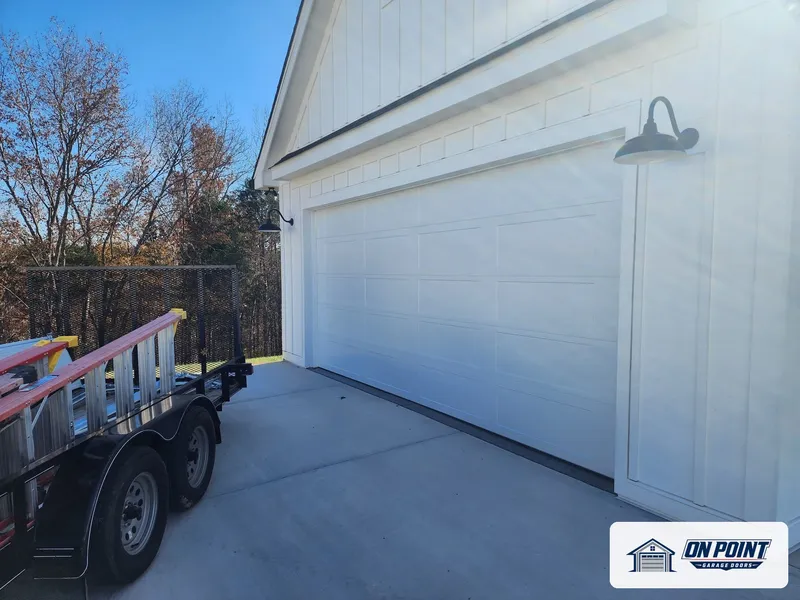
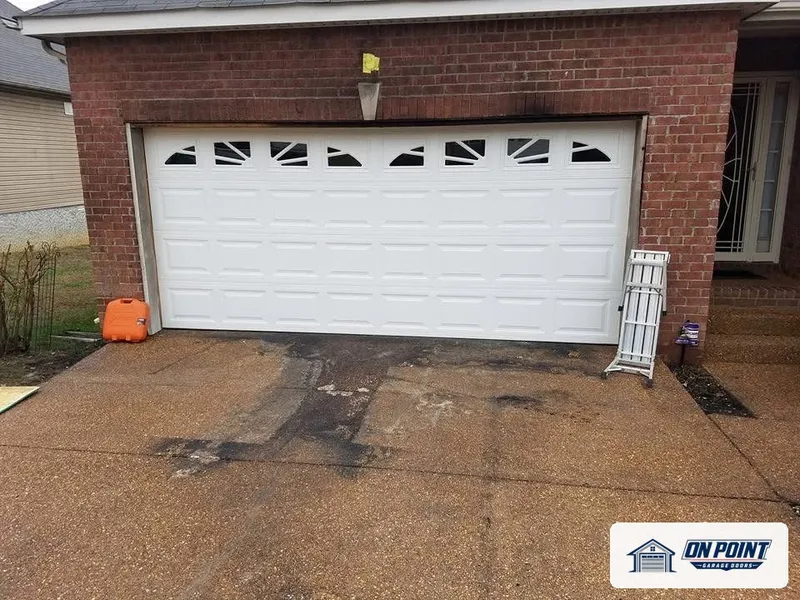
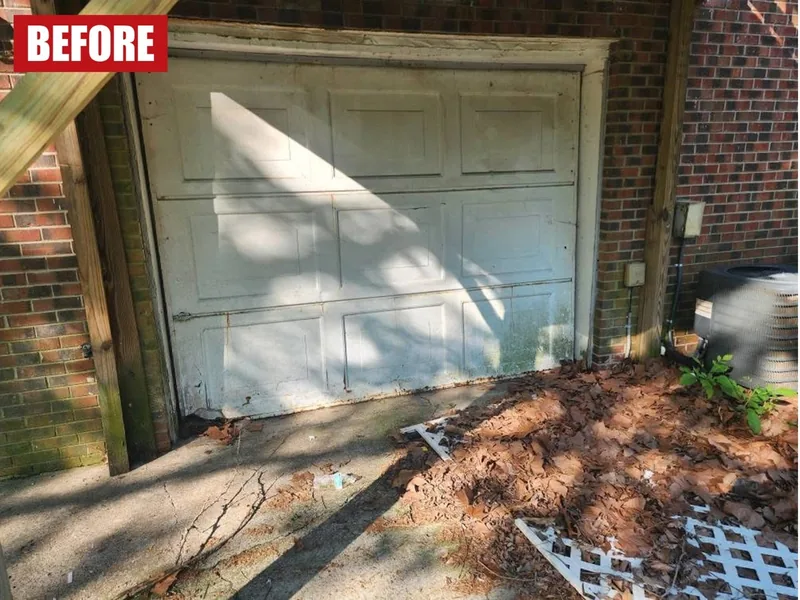
These photos are from our own jobs, with our logo on them.


Seaford runs from the capes up by the expressway down to the canal streets of the harbor, and we work the whole of it: broken springs, frayed cables, openers that hum and do nothing, doors knocked off the track, and bottom sections the salt has eaten. The technician brings the common parts, and the estimate is free.

The same six jobs we do across the Island, with the parts these doors need most, cables, bottom seals, springs and rollers, loaded before the truck leaves. Doors on the canal streets and doors up by the expressway wear out in different ways, so the parts list changes with where the house sits.
Up by the expressway it's the 1950s. Capes and ranches on small lots, a good number with the original one-car garage, some with a detached garage at the back that's older than the house's second owner. Those doors run a few times a week and that's the trouble: a door that mostly sits seizes up. The rollers stop turning and start dragging, the spring loses its temper over a long winter, and the day it finally breaks the opener can't move a thing.
Down by the water it's the harbor streets. Splits and high ranches with the garage under the house, waterfront colonials, and a number of houses that were raised after Sandy, with the garage now at street level under the living space. Salt air and the odd flood tide get into the bottom of the door first. The bottom rail rusts, the seal splits, the photo eyes corrode at their brackets, and the cables fray where they sit in the wet at the bottom bracket.
Openers are the last thing to fail and the first thing to get blamed. A motor that strains or hums is nearly always telling you the door is heavy. The technician lifts it by hand before anyone talks about a new opener. If it won't come up easily, that's a spring, and the opener will be fine once the door balances again.

The bottom section takes the salt, the rain and the runoff, and on the harbor side it's the part of the door we replace most. If the rust is in the bottom rail and the seal, a new bottom section and a fresh seal put the door right, and it matches the rest of the door closely enough that you stop noticing in a week. If the rust has climbed into the panel skin or the hinge stiles, a new section gets you most of the way to what a new door takes, and you'll get both numbers side by side.
Cables get the same look. A frayed strand at the bottom bracket means the pair comes off and galvanized cables go on, both sides, wound to the same tension, with the drums checked for the grooves that grit wears into them. Near the canals the end bearings and the bottom brackets are looked at on the same visit, since the salt works on them at the same pace.
Right down to the water, and the towns on either side on the same truck, from the bay up to the parkway:
Town pages: Wantagh, Massapequa, Levittown, the rest of Nassau County, Suffolk.
Yes, all the way to the water, along with the streets up by the expressway and the towns on either side. Give us the cross street when you call, and the technician arrives knowing whether it is a garage under a raised house or a detached garage behind a cape.
On these doors a click with no movement nearly always means the opener is trying to lift a door whose spring has broken; less often it is a stripped gear or a failed part inside the opener. The technician unhooks the opener and feels the weight first: heavy points to the spring, light points to the opener.
Both cables are the same age and have sat in the same salty damp at the bottom of the door. A new cable on one side and a frayed one on the other pulls the door unevenly, and it ends up crooked in the opening. Galvanized cables go on as a pair, wound to the same tension.
Somewhat. The door is often taller than the one it replaced, the opener is usually newer, and the salt exposure is unchanged. He measures the opening and the headroom, checks how the track is anchored to the new framing, and writes the estimate on what is really there.
Salt water sits in the bottom section, the seal, the lowest rollers and the photo eyes. After a flood tide he checks those parts, the opener wiring near the floor, and the bottom brackets where the cables attach, since brackets weakened by rust can fail weeks after the water has gone down.
Yes. The visit and the estimate are free, and you decide with every part and repair written out in front of you. If the door can safely wait, he will say so, and nothing is replaced until you have said yes.
LiftMaster, Chamberlain, Genie, Craftsman, Wayne Dalton, Clopay, Amarr and the rest, doors and openers alike. On older capes the label is often gone, but the motor housing and the springs usually tell the technician what he is looking at.
Yes. On splits and high ranches near the water the garage is under the house, and an old chain drive shakes the floor above. A belt-drive or wall-mounted opener, new rollers and solid hangers make the door much quieter, and he can show you the options on the visit.

Describe the fault and the nearest cross street, and you will get a window you can plan around. Nothing is billed for the visit or the estimate, anywhere in Nassau County, and nothing is replaced until you say yes.
Rather explain it out loud? Call (929) 429-2429.
A sentence about the door is all it takes to start; a photo of the bottom section helps on the harbor side.