Takes 30 seconds. We call you back to set a time.
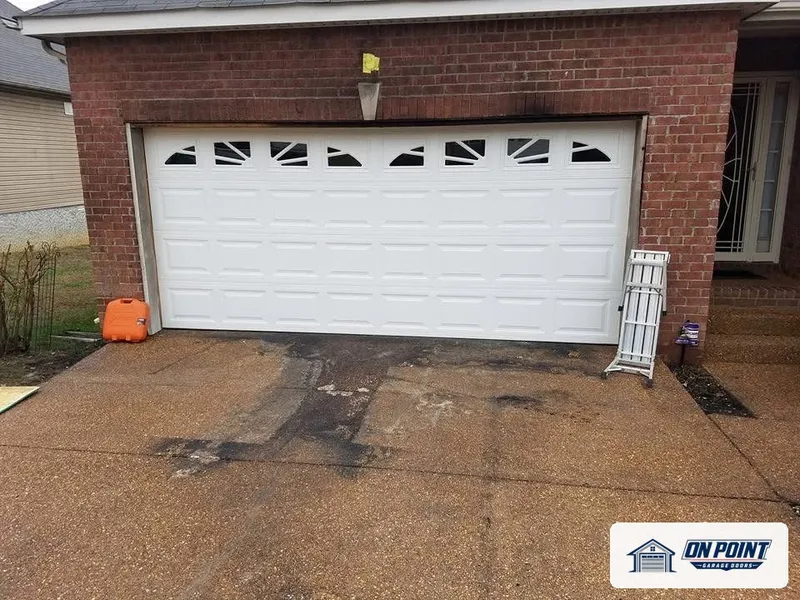
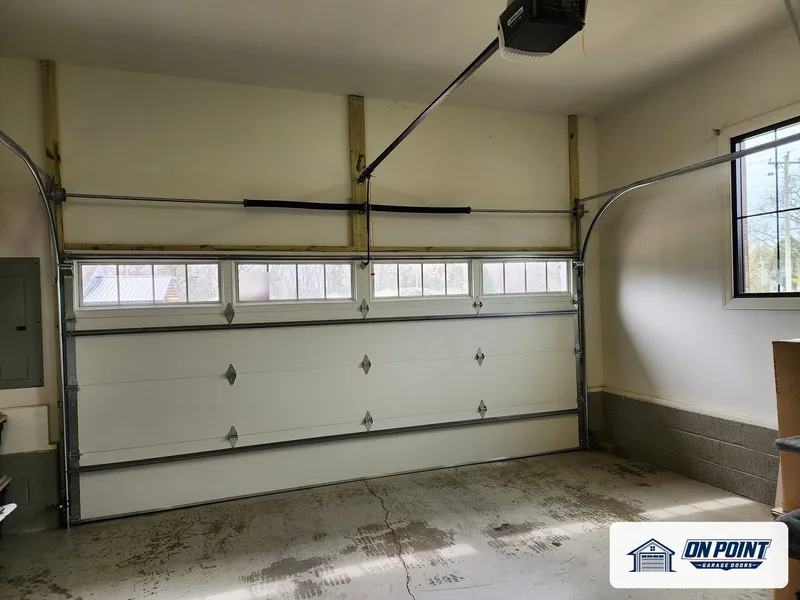
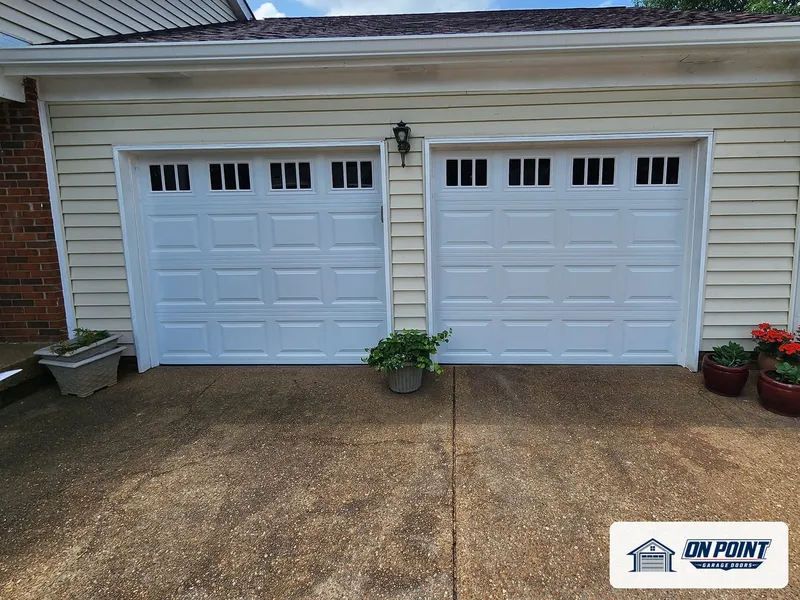
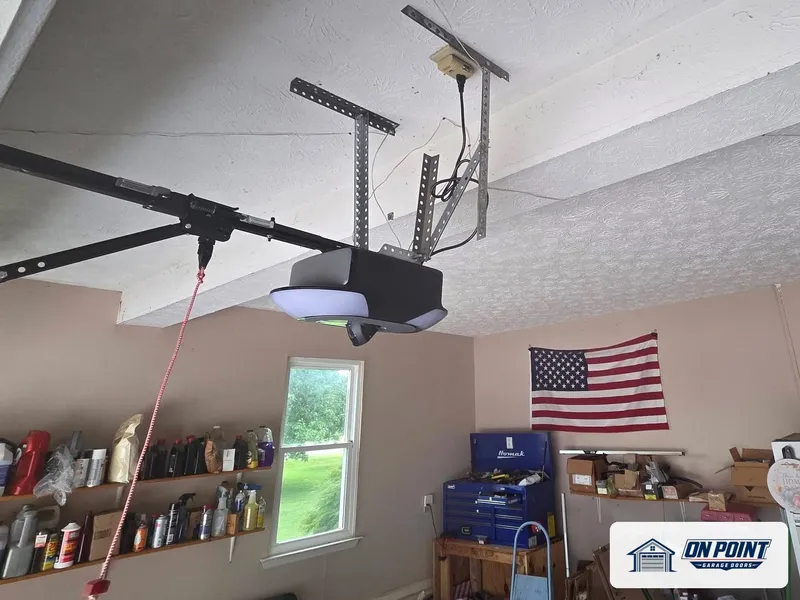
These photos are from our own jobs, with our logo on them.


Garage door repair in Marine Park for the detached and semi-detached brick homes, the attached rows with garages off a shared driveway in back, the houses on the low blocks near the creek, and the shops along the main avenues. Free estimate first.
Most houses are brick: detached homes on the wider blocks, semi-detached pairs, and attached rows built between the wars and after.
Many of the attached rows have a common driveway running behind them, with a small garage tucked under the back of each house.
Front garages mostly carry plain or raised-panel steel doors, while the back driveway garages carry smaller single doors.
Detached homes often have a garage at the front below the living room, or a separate garage at the end of a side drive.
With no subway inside the neighborhood, nearly every household drives, so the garage door gets used every day.
The park the neighborhood is named for is the largest in the borough, with ball fields, tracks and a wide salt marsh around a tidal creek.
A nature center on the marsh runs trails and boardwalks through the reeds, and herons and egrets fish in the shallows.
Traffic toward the mall and the beaches fills the main avenue on weekends, so the truck comes in on side streets.
Some back driveways are barely wide enough for one car, so the truck parks on the street and parts are walked in.
Shopping runs along the main avenues, and a big indoor mall with a marina sits just to the east by the water.
Buses carry riders to the nearest train stations, and most families keep a car and a parking spot they guard closely.
Many of the homes have been in the same families for generations.
Gerritsen Beach and the bay lie just to the south across the creek.

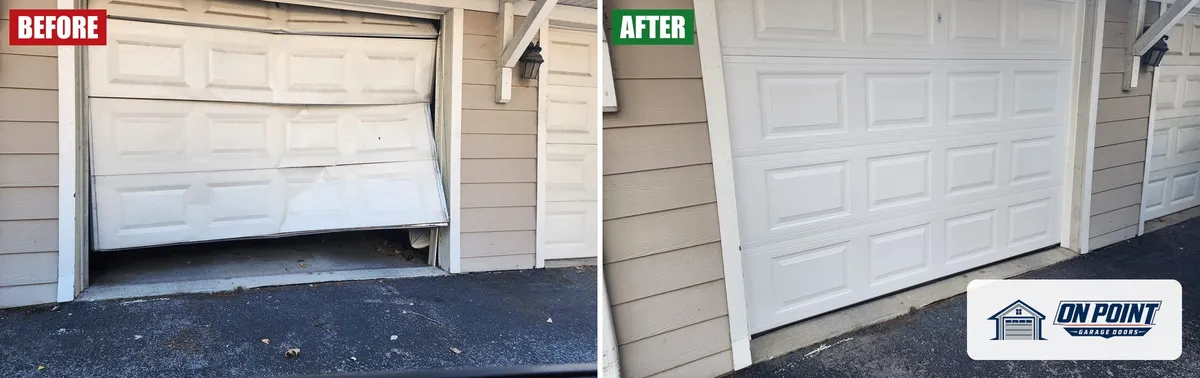
Front garage under a brick home, a garage off the shared back driveway or a shop door on the avenue, the door is seen before any figure is named.
Owners redoing the front of a brick home often want the garage door changed with the windows.
Families whose garage flooded in a past storm often call to have the bottom section and cables checked.


Attached rows on a shared driveway. Small garages under the house, doors that open onto a tight lane behind a whole row.
He keeps the lane clear while he works and lets the neighbors pass when they need to.
A door that slams the last stretch or will not stay put halfway has springs that no longer match its weight.
On homes from the fifties the springs may be the second set, now worn just as thin as the first.
Detached brick homes. Front garages below the main floor, often with an older opener under a bedroom.
A quiet belt drive and firm hangers settle the noise upstairs.
Homes on the low blocks near the creek. Doors and bottom brackets that took water in past storm surges.
Galvanized parts and a good bottom seal hold up better that close to the marsh.
A keypad helps teenagers coming home from the ball fields without a remote.
Shops on the avenues. Roll-down gates and rear doors that open every morning.
Strong locks and tough bottom bars suit those doors.
An insulated door keeps the room above a front garage warmer through the winter.
Many owners who turned part of the garage into a workroom want a door that keeps the cold out.
If a garage door on the back driveway has jumped its track, leave it closed so the lane stays safe, and call.
Cars turning into a garage off a narrow back driveway clip the jamb and bend the end hinge.
A trash can rolled against the door in a windstorm dents the bottom section more often than people expect.
Marine Park is one of the southern Brooklyn neighborhoods our crews drive through every week, and our crews also cover Queens and Long Island.
Whatever you tell us about the house, the back lane or the shop reaches the technician.
A door stuck open on a shared driveway, or a car trapped behind a dead opener, goes to the front of the list.
If the door on the back driveway blocks the lane for the neighbors, say so when you book.
Winter. Plows bank snow at the mouth of the shared driveways, and doors freeze to the slab behind the rows.
Salt in the air near the marsh pits the bottom brackets and the cables of nearby garages.
Spring. High tides and heavy rain flood the low corners near the creek, and water reaches the bottom of garage doors.
Summer. Ball games, cookouts and beach trips keep the doors moving all weekend.
Fall. Leaves from the big street trees fill the bottom track and the back lanes.
He watches the door make a full trip, then unhooks the opener and lifts the door to feel how the springs balance it.
On a garage off the back driveway he checks how the slab meets the door, since many of those slabs have settled.
You see each worn spring, roller, hinge or cable, and each one goes on a free estimate.
Springs are wound for the door you have, including any insulation added over the years.
On garages that flooded he checks the bottom section, the cables and the brackets for rust first.
He closes the door on a short board to show the reverse works.
Broken springs and old cables are carried out to his truck, not left in the lane.
Last, you run the door from the wall and the car while he watches it seat on the slab.
If your garage is on the back driveway, tell us which end of the block to come in from.
He calls as he turns off the avenue.
No spring, cable or opener is touched until you sign off on the estimate.
When new springs and rollers will carry a solid old door for years, the rest stays as it is.
Doors used every day by families who drive everywhere, tight back driveways and salt water near the creek are behind most calls here.
A spring that snaps leaves the door far too heavy to lift, so keep it down and give us a call.
Longer-life springs suit a door that opens for every trip a busy family makes.
Cables that sat in floodwater rust at the bottom corners, so both sides are changed together.
The drums and the center bearing are checked at the same time.
Photo eyes are fastened firm and aimed clear of the bikes, coolers and bins stored by the door.
Track bent when a car swung too wide into a garage off the back lane is trued or replaced.
Hinges and brackets worked free by years of daily trips are set back into solid wood or brick.
The opener is run on its own first, so a good motor is not swapped for a stiff door.
Battery backup keeps the door working when storms knock the power out near the water.
Tell us whether the garage is at the front of the house or off the back driveway.
The estimate is free.
He keeps the lane as open as he can and moves his ladder and parts aside when a neighbor needs to pass. Most spring, cable and opener jobs on these small garages need only what he can carry back from the street, so the truck stays out of the lane.
Yes, it is worth a look. Salt water rusts the bottom brackets, cables and the lower section from the inside, and the damage often shows up years later when a cable snaps. He checks those parts first and tells you plainly whether they are sound.
Worn metal rollers, an old chain drive and loose ceiling hangers carry the noise into the room above. Nylon rollers, firm hangers and a belt drive opener usually make the biggest difference, and he can tell you which of those your door needs.
Often it can. Many older steel doors on these brick homes are still solid, and new springs, rollers and cables can give them years more. If panels are rusted through or cracked, he will say plainly that a new door makes more sense.
A door that opens many times a day wears out standard springs sooner. Longer-life springs are made for heavy use, and on a busy family garage they are often worth it. He looks at how often the door runs and suggests what fits.
Say what the door at the front or on the back lane is doing, choose a slot, and the estimate is free.
Call us at (929) 429-2429.
Describe the grind, the slam or the rust, and a free estimate follows.