Takes 30 seconds. We call you back to set a time.
Clopay and Wayne Dalton both make the full spread of residential doors, from plain single-skin steel to thick insulated carriage designs, and from the street a raised panel door from either can look nearly the same. The real differences sit in how each one reaches you, how the lines are named, which spring system hangs above the door and how easy it is to find a matching section years later. This page walks through those points so the choice rests on your house and not on a logo. Free estimate at (929) 429-2429.
By Sean Cohen, owner, On Point Garage Doors · Updated
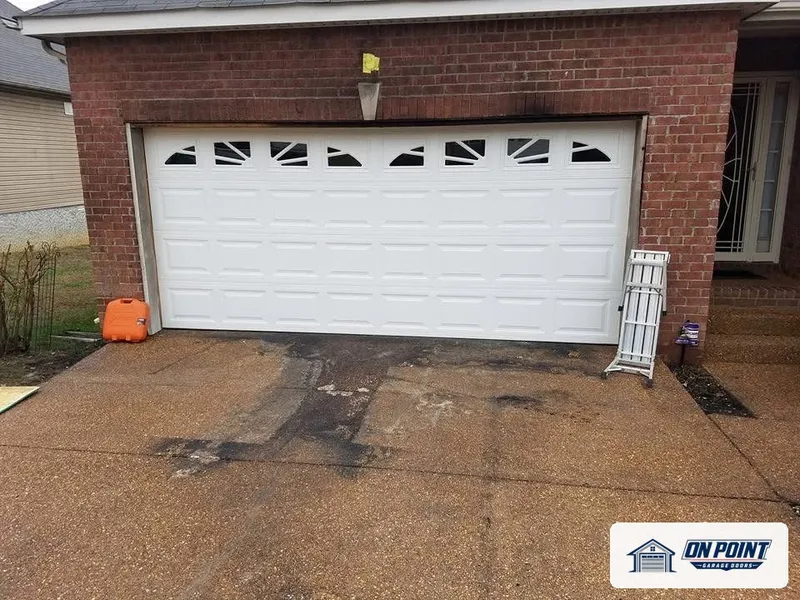
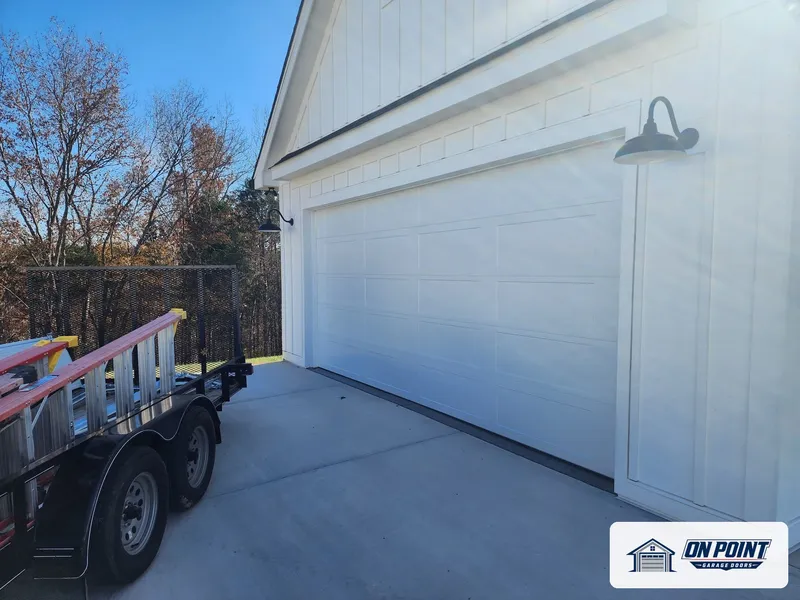
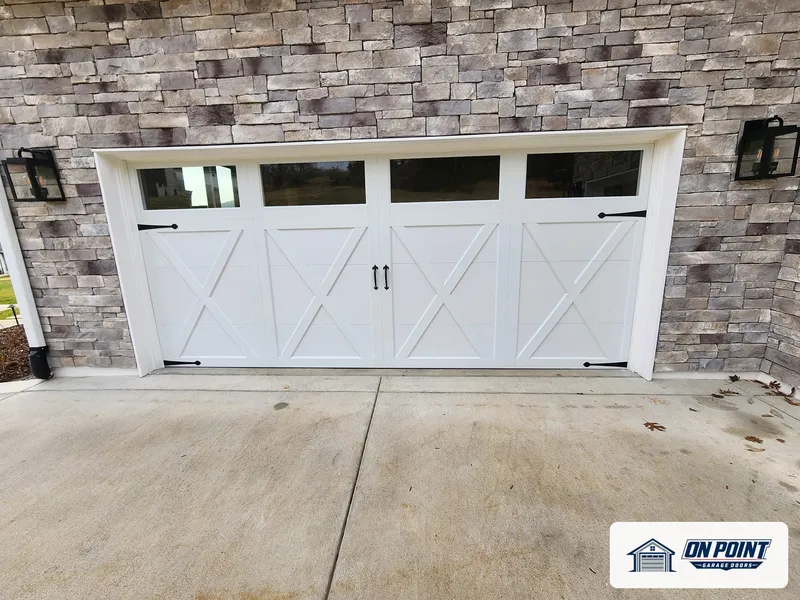
These photos are from our own jobs, with our logo on them.


Clopay is an Ohio company owned by Griffon Corporation, and it is one of the largest makers of residential garage doors in North America. Wayne Dalton also has its roots in Ohio and today belongs to the Overhead Door Corporation, which in turn is owned by the Japanese company Sanwa. Both have been building doors for generations, so parts and know-how for their common lines are easy to come by.
Clopay sells through garage door dealers and also has a large presence in home improvement stores, which is why its name is familiar even to people who have never shopped for a door. Wayne Dalton works through its network of dealers. Either way, what decides how the door behaves is whether someone measured the opening and sized the springs and track for that exact garage.
Clopay gives its families names: Classic for traditional panels, Gallery and Coachman for carriage looks, Canyon Ridge for composite wood looks, Modern Steel and Avante for contemporary faces. Wayne Dalton leans on model numbers alongside its collection names. When you compare, write down the full model or line on each proposal, because two doors with the same face can differ a great deal in steel, insulation and hardware.
This is the clearest practical difference. Many Wayne Dalton doors use the TorqueMaster system, where the springs sit inside a steel tube above the door and are wound from the end. Dealer-installed Clopay doors normally use standard torsion springs that any technician can measure and match, while some Clopay doors sold for home installation use the company's EZ-SET system. Knowing which one you have saves a second trip when a spring breaks.
TorqueMaster parts are specific to that system, so a repair calls for the right components or a conversion to standard torsion springs. A conversion replaces the tube, drums and springs with a conventional setup that is easy to service for the life of the door. We do both, and we say which makes more sense once we have seen the condition of the door and its hardware.
Both makers offer a single steel skin, steel backed with insulation, and sandwich sections with steel on both faces and foam between. Clopay calls its polyurethane foam Intellicore. Compare like with like: a foam-filled door from one brand will always feel stiffer and quieter than a single skin from the other, and that difference comes from the build, not from the badge.
Clopay's Canyon Ridge uses composite cladding on a steel base for a deep wood grain, and its Coachman and Gallery lines carry carriage stamps and overlays. Wayne Dalton offers woodgrain finishes on steel and its own carriage designs. Printed wood tones vary a lot between makers, so hold real samples against your brick or siding in daylight rather than choosing from a screen.
A two-car door on an open lot or a street near the water catches a lot of wind. Both companies make reinforced configurations with heavier struts and hardware. If the house is exposed, ask for the wind rating of the exact door being offered, since the same style can be built light or heavy.
When one of two doors is being replaced, or a single section was hit, the maker is decided for you. Panel stamps, section heights and edge profiles differ between the brands, and a Clopay section will not sit in a Wayne Dalton door or the other way round. A label on the end stile or the top section usually names the maker, and a photo of it shortens the search.
Neither brand is the wrong choice. Lean toward Clopay when one of its named lines has the exact look you want or you are matching a Clopay door already on the house. Lean toward Wayne Dalton when a particular model suits the opening or you are matching one of theirs, and consider standard torsion springs if you prefer simpler service later. We show options from both and write down the one you pick.
Not across the board. Both make light doors and very solid ones. Compare the same construction and insulation from each, and the install will matter more than the name.
No. Many do, and others use standard torsion springs. A closed tube across the top of the door is the usual sign of a TorqueMaster system.
Yes. The tube, drums and springs are replaced with a standard torsion setup sized to the door, which makes later spring service simpler.
Look for a sticker or stamp inside the garage on the end stiles or the top section. A photo of it and of the panel face is usually enough for us to tell.
Yes. We measure the opening and write up options from both brands, including springs and track, before anything is ordered.
Across Brooklyn, Queens and Long Island, tell us what the door is doing and we set a visit that fits your day.
Free estimate, call (929) 429-2429.
Tell us what the door is doing and we will give you an honest arrival time. The estimate is free.
Easier to explain by phone? Call (929) 429-2429.
Tell us what the door is doing. The estimate is free either way.