Takes 30 seconds. We call you back to set a time.
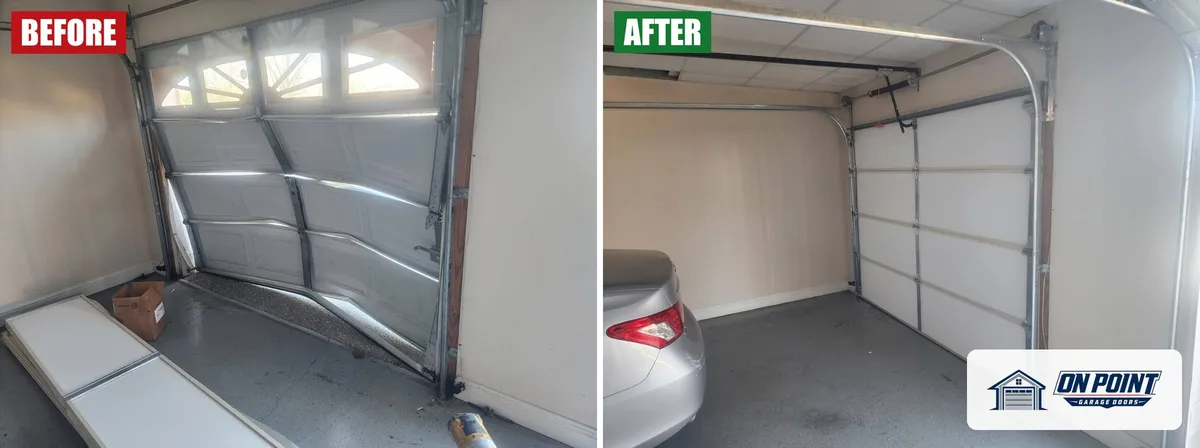
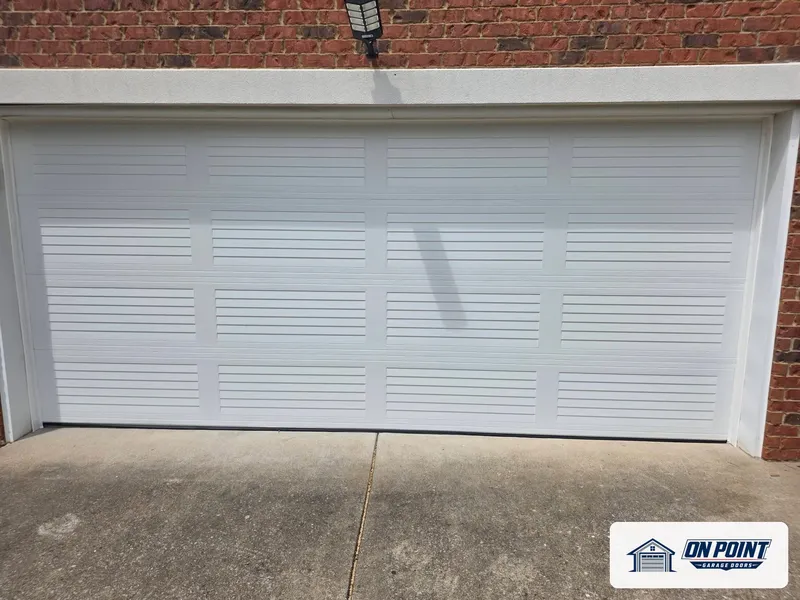
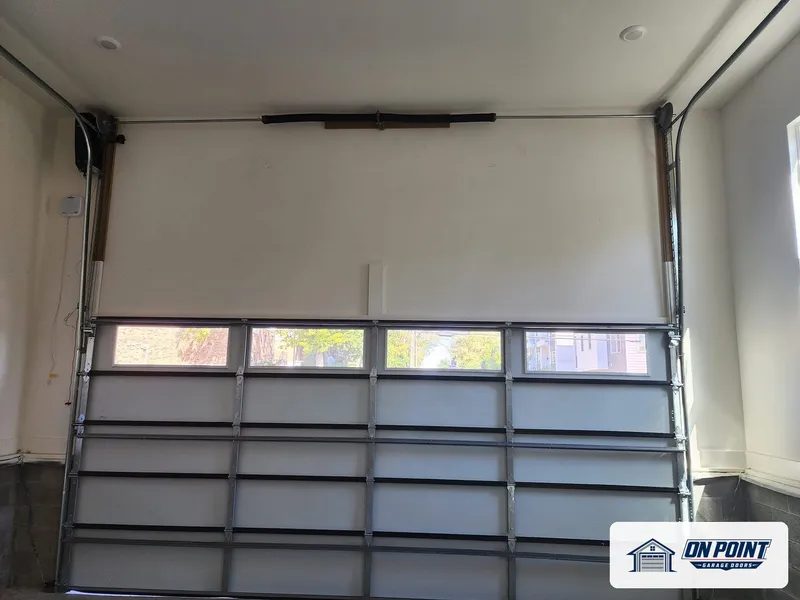
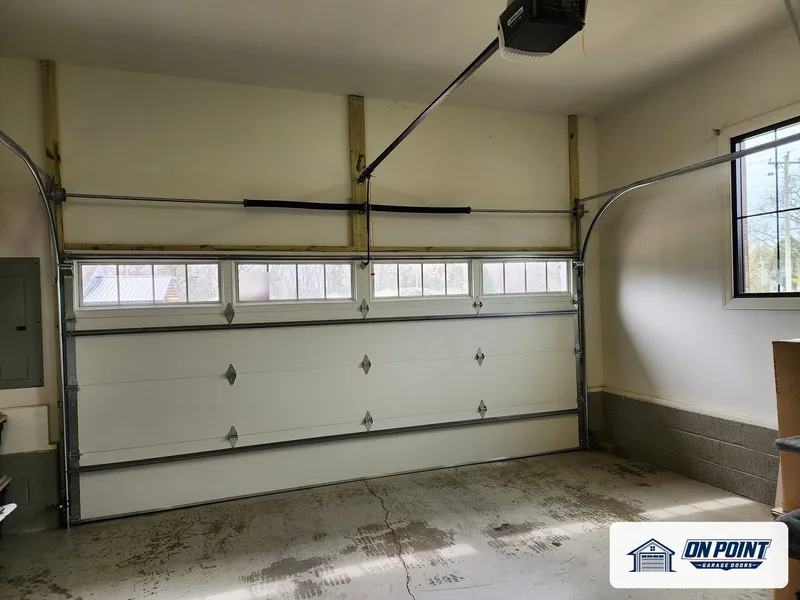
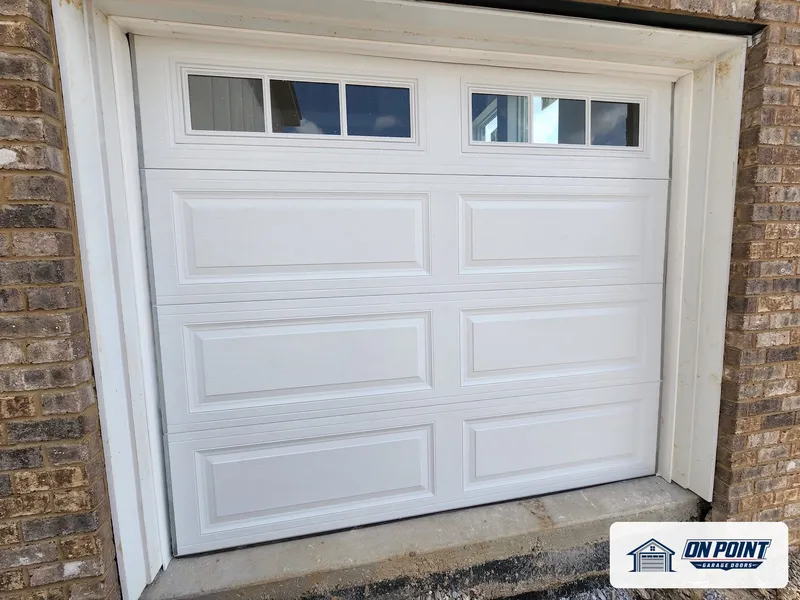
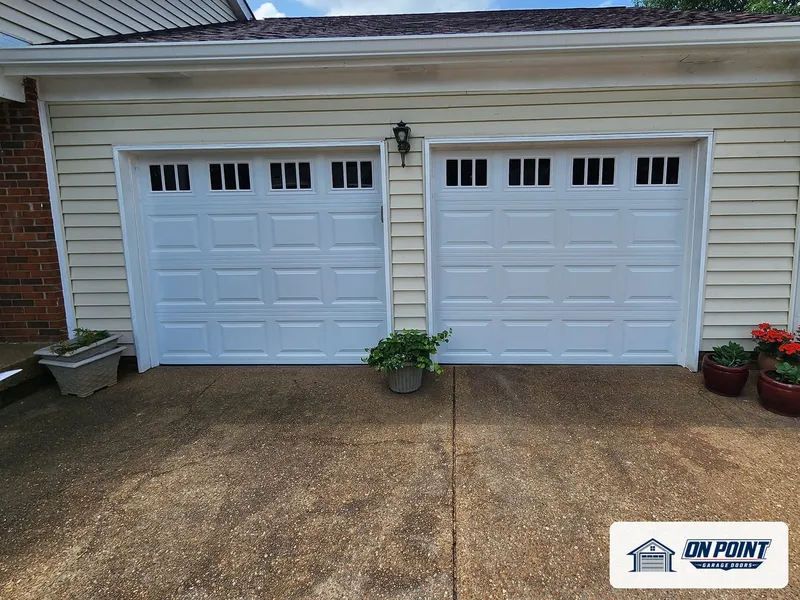
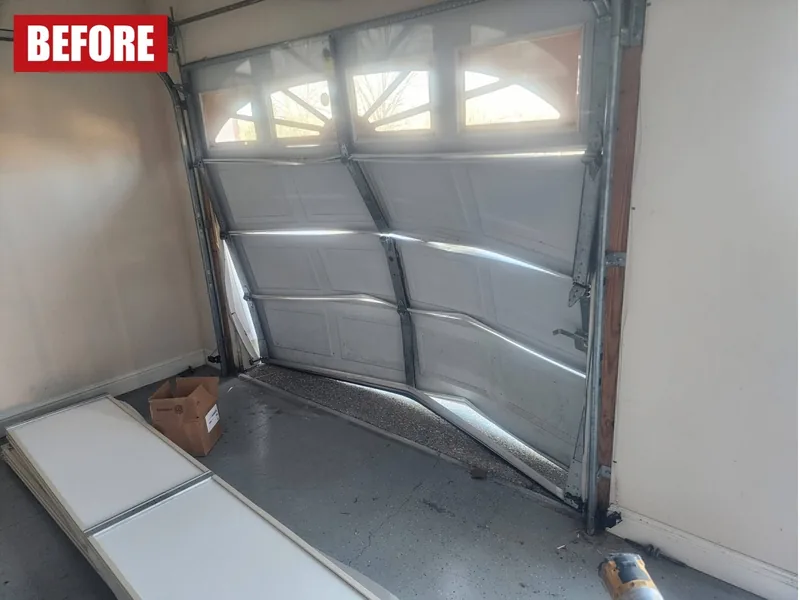
These photos are from our own jobs, with our logo on them.


Garage door repair in Bensonhurst for the garages these blocks actually have: single bays at the end of shared driveways, garages tucked under the front room, and steel roll-up doors facing the alley. A free estimate comes before any work.
A garage at the end of a narrow driveway, or below the house with the front room overhead, gives a technician very little room to work, and it gives the door very little room for error. A car coming in at an angle scrapes the bottom panel; a bin left by the sensors knocks them out of line; water from a heavy rain collects at the lowest point, which is often the garage.
None of that needs guesswork. The technician looks at the door, the track, the springs and the opener together, tells you what has happened, and gives you a free estimate before anything is replaced.
A small door still carries real weight. A single-bay door hangs on springs and cables that wear out like those on any other door, and when one lets go in a cramped garage there is little room to work around it, so the door is made safe before anything else.
Springs on a small door are sized for that door, not borrowed from a bigger one. When a spring is replaced, the technician matches it to the door's weight and height, so the door stays balanced and the opener is not left doing the springs' job.

These are the repairs we do here, in garages of every size, from a single bay behind the house to a roll-up door on the alley.


Any street in the neighborhood is covered, from the main corridors to the side blocks:
Key streets and corridors: the shopping street under the elevated train, Bay Parkway, and the avenue lined with Italian bakeries, butchers and cafes.
The elevated train runs over New Utrecht Avenue and along the main shopping street, and the stores below it roll up steel gates every morning; those gates get the same spring, slat and guide work as an alley door.
Toward the water, the blocks near Cropsey Avenue and the parkway along Gravesend Bay take wind and salt air off the bay, and the bottom hardware on those doors rusts sooner than it does inland.
We also work throughout the rest of Brooklyn, in Queens and on Long Island, and the details you give when you book go with the technician, so nothing has to be explained twice. Wherever you are, the visit runs the same way: the door is looked at first, and the estimate comes before any work.
When a door is stuck open, a car is trapped or a spring has snapped, tell us on the call; those visits are treated as emergencies. A door that cannot be closed leaves the garage, and often the house, open, so it is made secure first and repaired after.
The houses here are rows of semi-attached and two-family brick homes, and their garages were squeezed in afterwards: a single bay at the end of a narrow shared driveway, a below-grade garage under the front room, or a steel roll-up door on the alley side. The doors are narrow, the approach is tight, and a scraped or bent bottom panel from a car coming in at an angle is a familiar sight. On the roll-up steel doors the barrel spring and the slats bind in the guides after years of salt and grit off the street.
Some of the low apartment buildings on the avenues keep a row of garages behind them, all hung at the same time, so when one door's springs give out, the doors beside it are often close behind.
Working in Bensonhurst means working in the space there is. The technician parks where the door can still be reached, brings the tools in by hand, and does the spring or cable job inside a garage a car barely fits in. Shared driveways mean a neighbor's car is often in the way, so we call ahead. Every visit starts with a look at the whole door, the track and the opener, and a free estimate before anything is replaced, from 86th Street to Bath Beach.
The openers here are their own story. A garage under the front room has no headroom, so the opener is often a side-mounted unit or an old chain drive squeezed against the ceiling joists, and the safety sensors sit where a bin or a bicycle can knock them. Below-grade garages take water in a heavy rain, and the bottom brackets, the lowest rollers and the cable ends rust before anything else on the door. A visit here checks those first, then the spring and the opener's force settings, and if the door is a roll-up steel curtain the technician looks at the guides and the barrel spring rather than a sectional's track. Whatever it turns out to be, you hear it in plain words at the door, with a free estimate, and the door is left secure before we go.

A garage below the front room changes how a door is repaired. The opener may sit on the wall beside the door instead of the ceiling, the springs may be mounted low over a short opening, and the track may turn sharply to fit under the joists. The technician works with that layout rather than against it, and parts are chosen to fit the headroom you actually have.
Low-headroom doors use track that bends sooner and runs closer to the ceiling, and that track is less forgiving of a bent section or a loose bracket. A door that has started to bind near the top usually has a track problem rather than an opener problem, and the technician checks the track before touching the opener.
Water is the other issue. A garage at the bottom of a sloped driveway collects runoff, and the bottom seal, brackets and rollers sit in it. A seal that has split or flattened lets water in under the door, and rusted bottom brackets are replaced before they give way under the cable's pull.
If water has been standing at the door, the technician also looks at the opener's sensors and wiring near the floor, since damp connections can make a door stop or reverse for no visible reason.
Look first. The technician checks the door with the opener disconnected, then the springs, cables, rollers, track and opener, before naming a repair.
Estimate next. The fault is explained without jargon, and the estimate is written down and free. No part goes in until you say yes.
Repair with matched parts. Springs are sized to the door, cables and rollers are replaced in pairs or sets, and common opener parts travel with the technician.
Test and tidy. The door is balanced, the opener's safety reverse is tested, and old springs, cables and packaging leave with the technician.
Often, yes. Where the ceiling has no room, a wall-mounted opener beside the door can turn the spring bar directly on a door with torsion springs, which frees the space overhead. Many of these can also be run from a phone app. The technician checks the door's springs and size first, because a wall-mounted opener only suits certain doors.
Most often one of the safety eyes near the floor has been knocked out of line or something is blocking the beam, which happens easily in a tight garage. If the eyes are fine, the next suspect is the opener's close-force setting. The technician checks both and tests the reverse afterwards. Where bins and bikes live next to the door, a sturdier bracket or a slightly different sensor position can keep the problem from coming back.
Yes. Steel roll-up doors on alley garages are repaired as well as sectional doors: the barrel spring, the slats, the guides and any motor on them. Roll-up doors have their own parts and their own weak points, so it helps to mention the door type when you call, and the technician brings what that door needs.
Winter. Freezing mornings are hard on springs that are already tired, and road salt carried in on tires settles at the bottom of the door, eating at the brackets and rollers.
Spring. Springs that struggled through the cold are close to their limit, and a door that has started to feel heavy or to sound rough is telling you so.
Summer. Humid weather makes wooden doors swell and stick, and the sun hardens rubber seals until they crack and let light in at the bottom.
Fall. A check before winter catches a fraying cable or a tired spring while there is still time to plan the repair.
Sun–Thu 24 hours | Fri until 5pm | Sat ClosedTorsion springs do the lifting, and they wear a little with every trip. A door that runs many times a day gets through its springs sooner, and a spring that breaks leaves the door too heavy for the opener.
Photo-eye sensors sit low on each side of the opening, and in a narrow garage they are easy to bump. One knocked out of line is enough to stop the door from closing.
Off-track doors come from a car nudging the track in a narrow driveway, a cable that snapped, or one side lifting harder than the other. A door out of its track can come down, so it stays shut until it has been set back in.
Opener motors wear out eventually, and older chain drives usually warn you first with grinding from a worn gear. When a new opener makes more sense, a quieter belt drive or a wall-mounted unit can be matched to the garage.
Call (929) 429-2429 and the estimate comes with the visit, free.
Call and tell us what the door is doing, what kind of door it is, and whether the driveway is shared. We arrange a visit at a time that suits you, and we do not buy leads. If a neighbor's car usually sits in the shared driveway, mention it, so the visit can be timed for when the door can be reached.
In late summer the street feast on the main Italian shopping avenue closes blocks to cars; if your garage is inside it, say so when you book and the visit is set for a day the street is open.
The estimate is free throughout Brooklyn, Queens and Long Island.
When you book, tell us the driveway is shared and when it is usually clear. The visit is set for that window, and the technician calls ahead so you can ask your neighbor to move the car. Tools come in by hand, so the work itself needs only enough room to stand in front of the door.
Most likely. Store gates are balanced by a spring inside the barrel at the top, and as it loses tension the gate feels heavier each day. Grit and soot from the tracks above also pack the guides and make the curtain drag. The technician checks the spring, the slats, the guides and the lock together before anything is changed.
Often they will. Doors hung together and used about as much as each other wear their springs at a similar pace, so when one breaks the rest are usually not far behind. The technician can look at the doors beside yours on the same visit if the owners agree, and tells each one plainly how worn their springs are.
It can. Salt air off the bay rusts bottom brackets, cable ends and hinges sooner than it does inland, so galvanized hardware and stainless cable ends are used where they fit. Wind pushing on the door from the water side is another reason to check the track brackets and the struts on every visit there.
Yes. A chain drive bolted straight to the ceiling joists sends every rattle into the room above. Swapping it for a belt drive, adding rubber-isolated hanger straps and putting nylon rollers on the door take most of the noise away, and where the door has torsion springs a wall-mounted opener beside the door can move the motor off the ceiling.
Describe the problem and we will find a visit that works around your driveway and your day. The estimate is free, and nothing is done until you have heard what is wrong and agreed to the work.
Easier to explain out loud? Call (929) 429-2429.
Tell us what the door does when you run it, and a free estimate comes back whatever you decide.