
Leave your name and number and we’ll call you back to set a time.
Inside most heavy commercial door operators are two parts that rarely get a thought until they fail: a brake that holds the door the moment the motor stops, and a clutch that lets the drive slip instead of breaking when something goes wrong. On a rolling steel door, a large sectional door or a parking garage door, these two parts decide whether the door stops where it should, stays there, and survives a jam. When the brake wears, the door drifts or overshoots. When the clutch slips too easily, the motor runs and the door barely moves. This page explains what each part does, the signs that one is wearing out and how a technician deals with it. Free estimate at (929) 429-2429.
By Sean Cohen, owner, On Point Garage Doors · Updated
Photos from our own jobs.
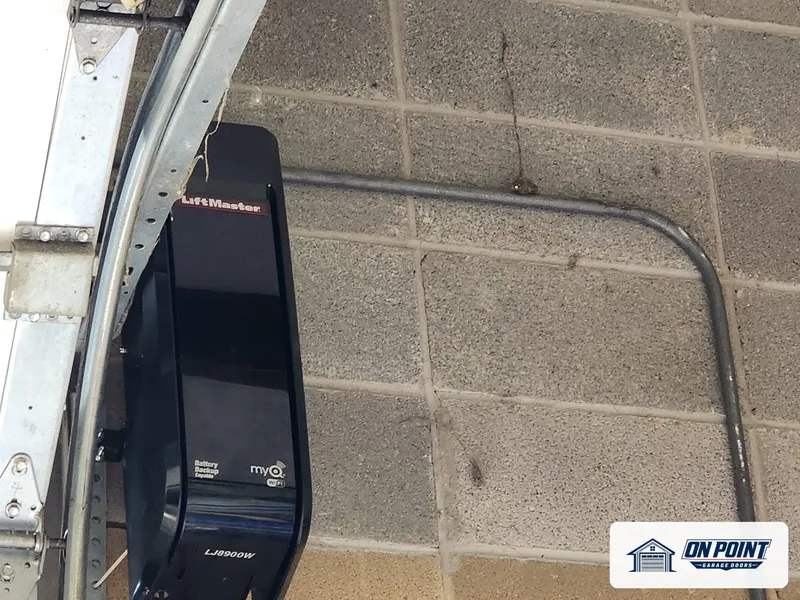
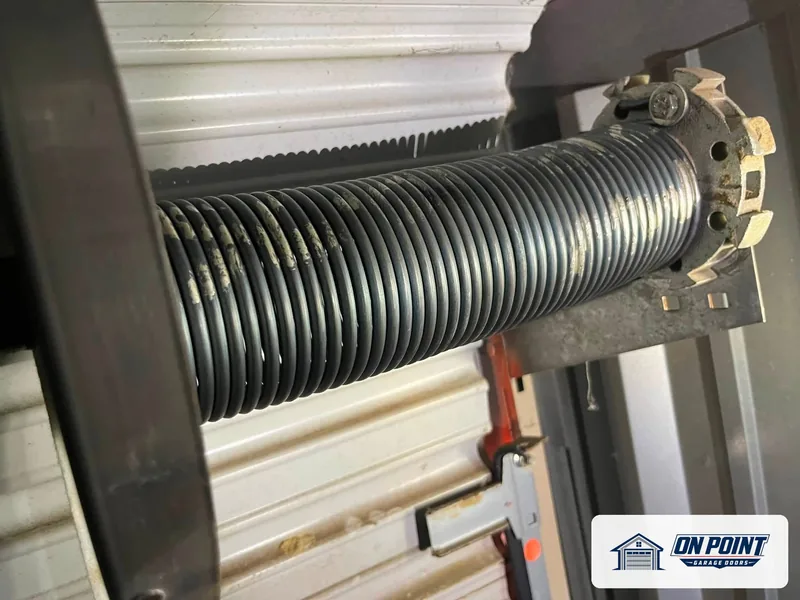
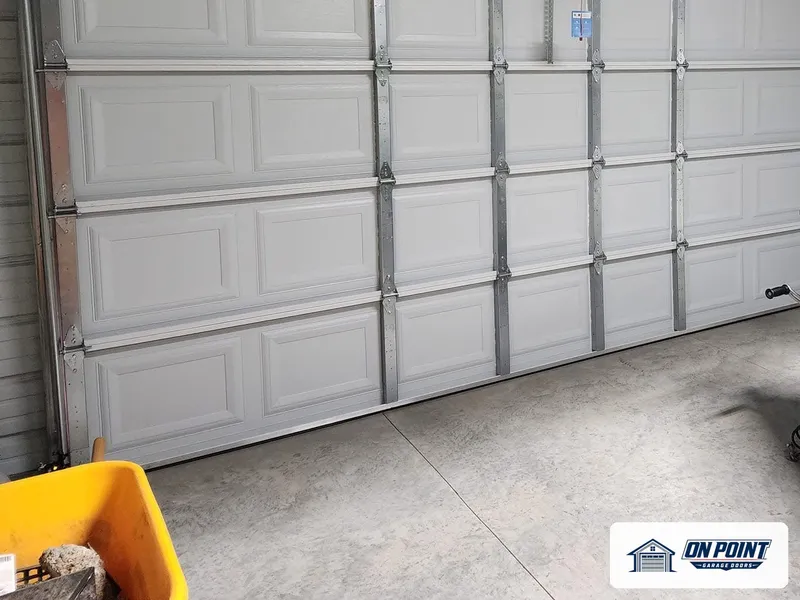
A heavy door keeps moving for a moment after the motor shuts off, and a rolling curtain wants to unwind under its own weight. The brake stops that. On many commercial operators it is a solenoid brake: a spring holds a pad against a disc on the motor shaft, and when the motor is powered a coil pulls the pad away so the shaft can turn. When power drops, the spring snaps the brake back on. The door stops at its limit and stays there instead of coasting or creeping.
The clutch sits in the drive between the motor and the door. It is set to pass the force needed to move a balanced door and to slip if the door meets far more resistance, such as a jammed curtain, an ice-bound bottom bar or a truck backed against the door. That slip protects the gears, chain and door from being torn apart. Many operators use a friction clutch with discs pressed together by a spring, and its setting is a matter of judgment for a trained technician.
When the clutch slips during normal travel, the motor runs and the door hesitates, stalls partway or barely moves. Sometimes the door rises but stops short of the top, or it opens on a mild day and struggles in the cold. A chattering or squealing sound from the drive can come with it. A clutch that slips is often a symptom: a door that has become heavy or tight is asking more of the clutch than it should.
Brakes and clutches wear fastest on doors that are out of balance or binding. Weak springs make the operator lift dead weight, so the clutch slips and the brake works harder at every stop. Bent guides, a dragging bottom bar or a damaged curtain do the same. Replacing a brake or resetting a clutch without fixing the door underneath just starts the wear again, so the door is checked before the operator is blamed.
A door that drifts down after it stops can come down on a person, a cart or a vehicle that assumed it was fully open. In a parking garage or a loading bay, that is a real risk. If a commercial door creeps after it stops, keep people and vehicles clear, close it fully and leave it closed until it is looked at. Photo eyes and reversing edges protect a closing door, but they are not designed to stop a door falling on a failed brake.
Depending on the operator, a worn brake may need new pads or a disc, a fresh solenoid, a new spring, or a correction to the gap between pad and disc. A brake coil that has burned out can leave the brake dragging, which overheats the motor. Some operators use a different style of brake, and the parts and setup follow that maker's design. After any brake work, the limits are set again and the door is run through full cycles.
A worn clutch can have glazed or thin friction discs, a tired spring or contamination from oil and dust. Depending on the design, it is serviced, its discs are replaced or the setting is corrected. The setting is a balance: too loose and the door struggles, too tight and the clutch no longer protects the door and drive in a jam. That balance is set to the specific door and checked with the door running.
A loud clunk when the door stops can be a brake that engages harshly or a loose mounting. A squeal on start can be a brake that is slow to release or a dry bearing. A rattle in the drive can be a loose sprocket or a worn chain. Listening to when the sound happens, at start, during travel or at the stop, points toward the brake, the clutch or the drive.
Brakes and clutches on most commercial operators can be serviced or rebuilt, and that is often the sensible choice for a sound unit. Where the operator is old, its parts are hard to find, the motor is also failing, or it was undersized for how often the door now runs, a new operator sized to the door can make more sense. You see both options before anything is decided.
We watch the door run and stop, look for drift and overshoot, and listen to the operator. We check the springs, guides and door first, then the brake, its solenoid and gap, the clutch and the drive. We explain what we found in plain words and give you a written estimate before any work starts. After the work, limits, force and safety devices are tested.
Usually a worn brake in the operator, or springs weak enough that the door is too heavy to hold. Keep people clear until it is checked.
It can be a slipping clutch, but a broken spring, a jammed door or a failed drive part can look the same. The door is checked first.
A worn brake lets the door coast past its limit. The brake is serviced and the limits are set again.
Often, yes. Pads, discs, solenoids and springs can be replaced on many operators, depending on the make and its condition.
Yes. We run the door, find the cause and give you a written estimate before any work starts.
Tell us what the door is doing and we’ll set a time that works for you.
Free estimate, call (929) 429-2429.
Tell us what the door is doing and we’ll tell you when we can get there. The estimate is free.
Easier to explain by phone? Call (929) 429-2429.
Tell us what the door is doing. The estimate is free either way.
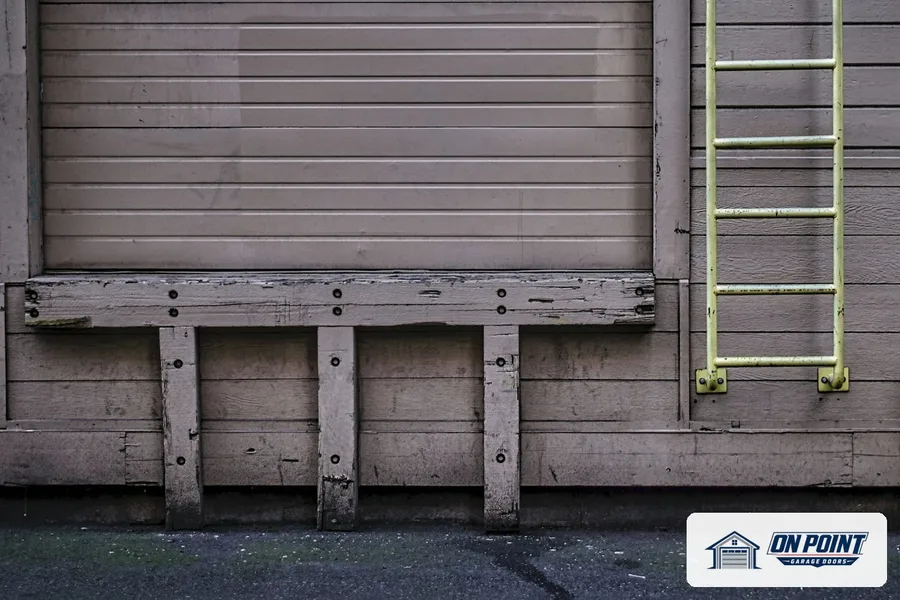
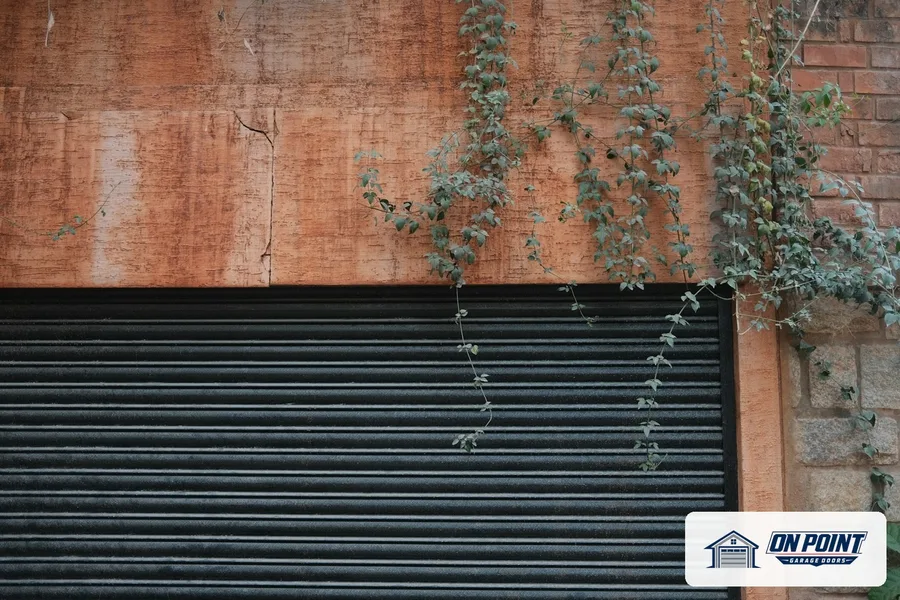
Where we work
Brooklyn, Queens and Long Island. Tap your town.
 Bay RidgeBrooklyn
 AstoriaQueens
 Valley StreamNassau County
 HuntingtonSuffolk County
 Sheepshead BayBrooklyn
 BaysideQueens
 Garden CityNassau County
 BabylonSuffolk County
 Marine ParkBrooklyn
 FlushingQueens
 MassapequaNassau County
 SmithtownSuffolk County
 CanarsieBrooklyn
 Howard BeachQueens
 LevittownNassau County
 Mill BasinBrooklyn
 Forest HillsQueens
 FreeportNassau County
 BensonhurstBrooklyn
 Long BeachNassau County
 Park SlopeBrooklyn
 HicksvilleNassau County
 WantaghNassau County
 SeafordNassau County