Takes 30 seconds. We call you back to set a time.
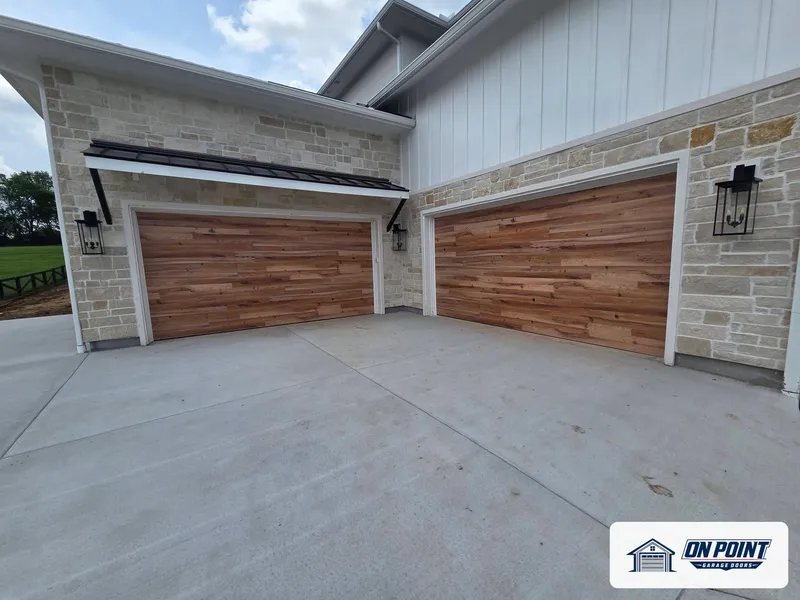
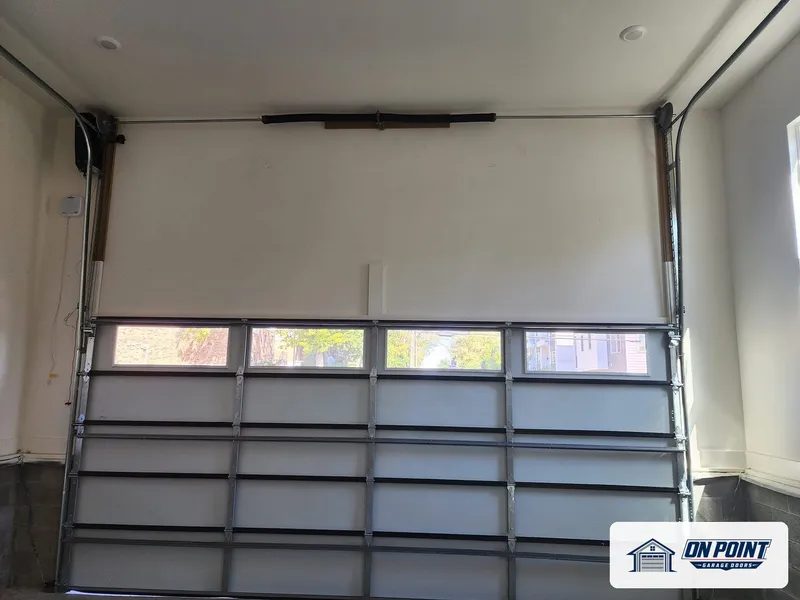
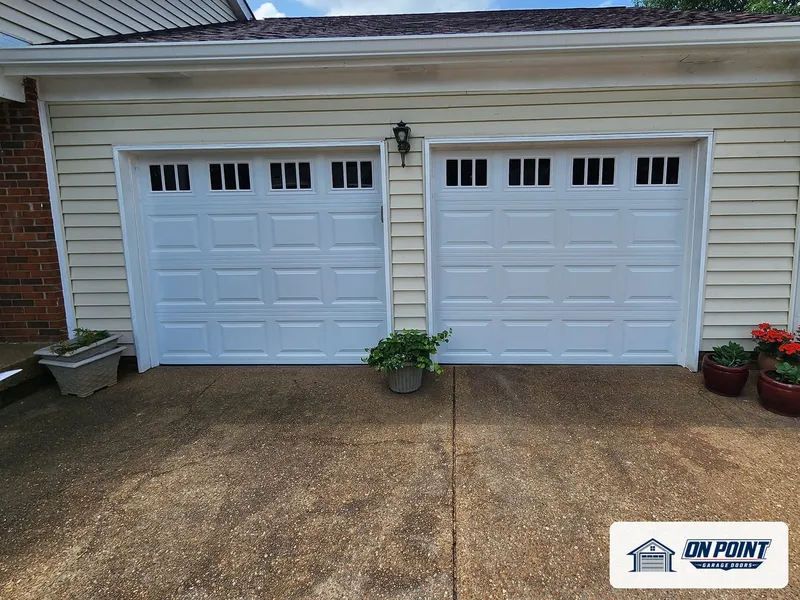
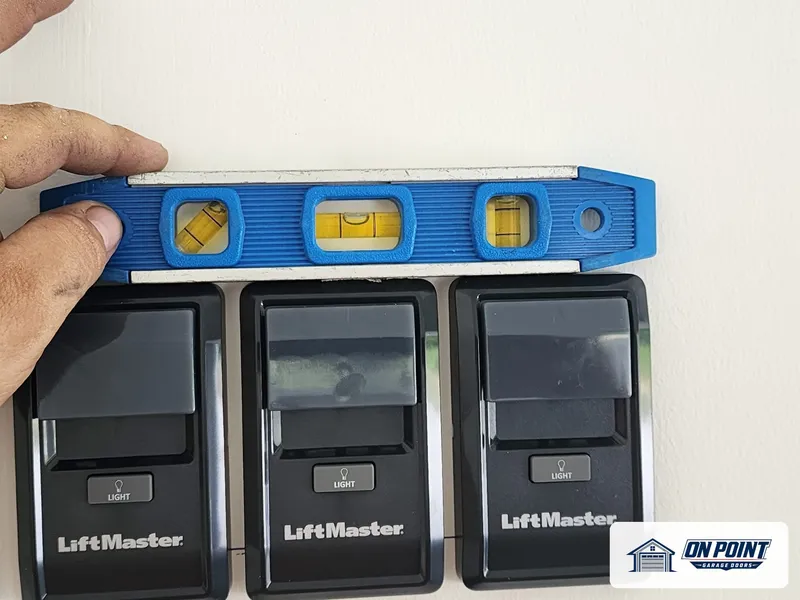
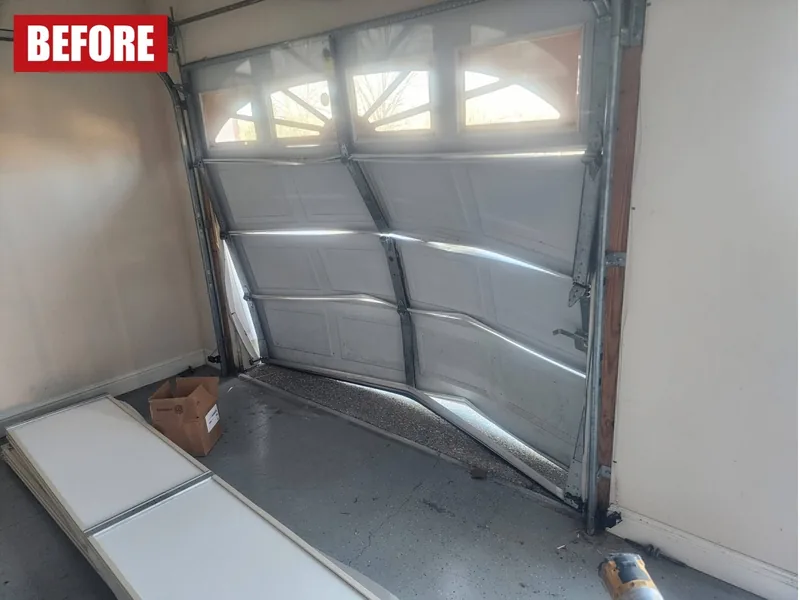
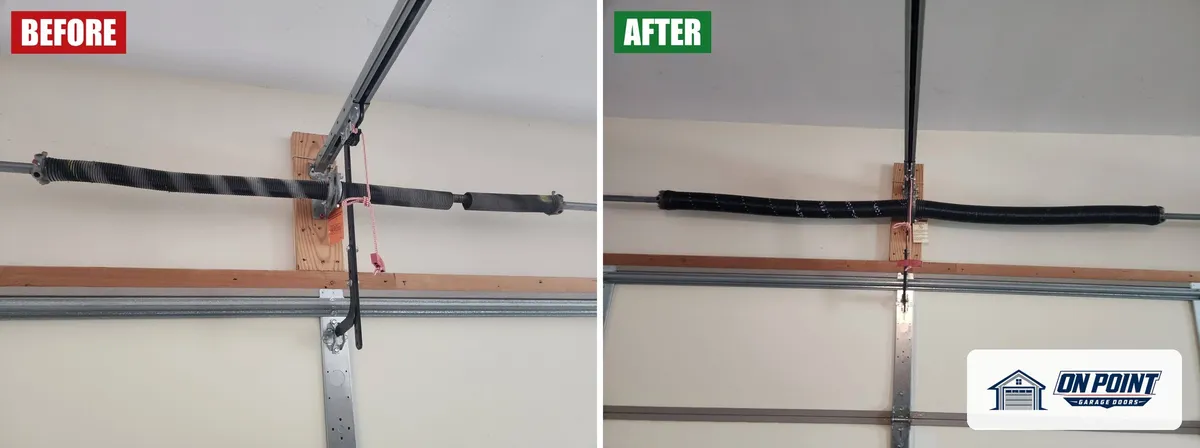
These photos are from our own jobs, with our logo on them.


Garage door repair in Hicksville for the post-war capes and ranches on the grid of side streets, the raised ranches and colonials that replaced them, and the stores, restaurants and warehouses along the main roads. Free estimate first.
Much of the hamlet was built in the years right after the war, when farm fields turned into streets of small capes and ranches.
Plenty of those houses have since been raised, widened or torn down for larger homes, so one block can hold three generations of garage.
Original capes carry plain flat or raised panels, while the rebuilt homes lean toward carriage-look steel with windows.
Many original capes never had a garage, and the ones added later are often single doors squeezed beside the house.
Newer two-story homes on the same lots carry two-car garages with steel doors and wall buttons by the kitchen door.
The train station is one of the busiest on the Island, where two branches meet, with garages and lots full of commuter cars.
Broadway runs north and south through the center, lined with Indian groceries, sari shops and restaurants that draw people from all over.
Commuter parking and buses near the station tie up the center on weekday mornings.
The shopping mall on the main road and the big stores near the parkway fill the south end with traffic and delivery trucks.
Industrial streets close to the tracks hold suppliers, auto shops and warehouses with roll-up and loading doors.
Some garages added to the original capes were built by owners, with framing that needs a close look.

Original cape, rebuilt colonial or warehouse door near the tracks, we see the door before naming any number.
Owners who rebuild a cape into a two-story house usually change the garage door at the same time.


Capes and ranches. Single doors on garages added decades ago, often on their original springs.
If new rollers and springs keep it going, that is all he writes up.
When the door turns heavy around waist height on the way up, the spring has usually lost tension.
Rebuilt homes. Two-car doors that are newer but run hard every day by a big household.
A smart opener or a keypad cuts down on lost remotes.
Raised ranches. Garages under the living room, with the opener shaking the floor above.
A belt drive and solid hangers quiet the house.
A keypad helps large households where everyone needs a way in.
Shops and warehouses. Doors hit by hand trucks and run from opening to closing.
Heavier springs and sturdy bottom bars suit that pace.
An insulated door keeps the room above a raised ranch garage warmer in January.
If a warehouse roll-up drops unevenly or stops halfway, leave it and call before the next delivery.
Hand trucks and pallets bang the bottom of warehouse doors and bend the lowest section.
The hamlet sits right in the middle of our Nassau work, between the parkways, and Brooklyn and Queens are on our routes too.
Notes about the cape, the rebuild or the warehouse by the tracks are handed to the technician before he leaves.
A door stuck open, or a car or a delivery locked in, is seen before routine work.
If a store's back door is stuck open at the end of the day, say so when you book.
Winter. Plows pile snow at the end of short driveways, right where the door meets the slab.
Grit and salt from the busy main roads ride into the shops and settle in the door track.
Spring. Rain off the flat commercial roofs runs into the loading areas and the bottom track.
Summer. Garages double as storage for family gatherings and stay open most of the day.
Fall. Leaves from the street trees on the older blocks blow straight into the track.
He opens and closes the door with the button, then by itself, listening for the springs and the rollers.
On garages squeezed beside a cape he checks the side room before choosing track.
You are shown every worn part, and each one goes on the free estimate in plain words.
Springs are matched to the door's weight as it stands now.
On garages added to a cape, he checks that the framing will hold new hardware.
A block of wood under the closing door shows the safety reverse still works.
Old springs and cables go out with him.
Last, the remote goes back to you and he follows the door through one more trip from beside the track.
If cars are parked tight in the driveway, let us know so he can plan around them.
He calls once he is off the parkway.
Nothing is changed until you agree to it.
If fresh springs and rollers are enough, the old door keeps its place on the house.
Old single doors and hard-working new ones make up most of the calls here.
A broken spring leaves the opener trying to haul the full weight; keep the door shut and call.
Longer-cycle springs fit a busy two-car door that a whole extended family uses through the day.
Frayed cables at the bottom corners are renewed in pairs.
He looks at the drums and the center bearing while the door is apart.
Photo eyes are mounted solid and kept clear of the bins, coolers and boxes stored by the door.
A track kinked by a bumper in a narrow garage is trued up or swapped for new.
Wall brackets that shook loose are set back into the studs.
He runs the opener with the door unhooked, so the failed part shows itself before anything is swapped.
A backup battery lets the door run through a summer outage when the lines go down.
Mention whether the home is an original cape, a raised ranch or a rebuild.
Nothing is owed for the estimate.
Explain what the door is doing, pick a slot that works around the train, and the estimate is on us.
Call us at (929) 429-2429.
Describe the grind, the jerk or the stall, and a free estimate comes back to you.