Garage door repair in Massapequa for the post-war capes, ranches and split-levels near the bay: springs, cables, openers, off-track doors and new doors, with a free estimate before any work.
Tell us what the door is doing. The estimate is free either way.
Most houses in the area went up in the decades after the war, and nearly all of them have an attached garage. Being close to the Great South Bay matters for the door: salt in the air rusts springs, cables and bottom brackets sooner than at houses farther inland, so galvanized springs and new cables come up more often here than in the middle of the county. Many of the doors are second or third replacements, and the springs on them were not always sized to the door that is there now.
ZIP codes we cover: 11758, 11762.

Here is the work we do on every kind of residential door, with the usual parts for doors near the water brought along.


Cables carry the door's weight between the springs and the bottom corners, winding on and off a drum at each side. Salt air and damp make them rust and fray, and a cable that frays on one side lets the door hang crooked. The pair is always changed together; a door with one new cable and one old one tends to come back with the old one broken.
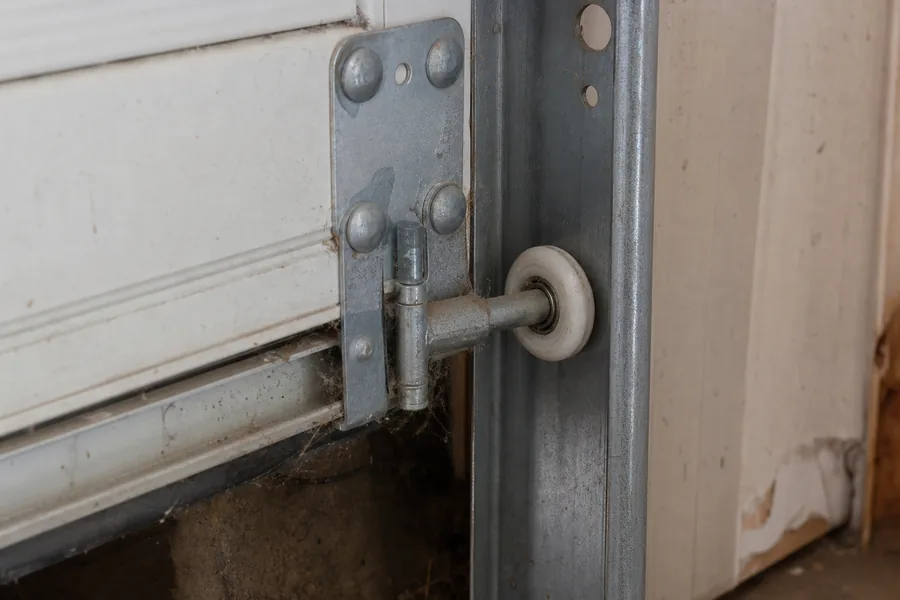
Off-track doors start with a roller leaving its track, after a bump from a car, a snapped cable or uneven lift. Running the opener on a door in that state can drop it or pull the track off the wall, so the door is left where it is until it has been reset and the track checked for hidden bends.
Opener motors wear out in time, and an older chain drive usually grinds for a while first, which is the main drive gear going. A worn gear can be replaced; an opener at the end of its life is better swapped for a quiet belt drive, especially with bedrooms over the garage.
A technician who knows these houses expects what the bay does to a garage door. Damp air keeps the bottom of the door wet for days after rain, ice builds in the tracks during cold snaps, and the steel along the bottom edge rusts first. Summer humidity swells wood doors and frames until they rub, and winter stiffens springs that were already tired. Knowing that shapes what gets checked before anything else, and it is why a rusted bracket or a stiff spring is pointed out even when it is not what you called about.
Whether the house is on a canal street or near the parkway, every visit starts with the whole door being looked at before anything is replaced.
Spring. Rain and pollen settle in the tracks and on the photo eyes, and the bottom seal shows where winter salt got in. A spring check now catches the ones that struggled through the cold.
Fall. Leaves blow into the tracks and pack around the rollers, and storm season tests every seal and hinge facing the water. A door that rubs or groans in the fall usually gets worse once it is cold.
Late winter. Springs that have been working against the cold for months are near the end, and many of them break at this time of year. A door that suddenly feels much heavier is the warning.
Deep winter. Plastic opener gears turn brittle and springs stiffen in the cold, so the first run on a frozen morning is the hardest moment of a door's day. That is when grinding and breakage calls pick up.
Cleanup. Old springs, cables, opener heads and packaging leave with the technician, and the garage is left the way it was found or better.
Visits cover every part of the area: the village of Massapequa Park, the east and north sides, and the canal streets south of Merrick Road down to the water.
Town pages: Wantagh, Seaford, Levittown.
Garage doors near the water age differently from doors inland, and the houses here have their own mix of original and replaced doors. We are a Long Island crew, not a franchise booking from somewhere else, and the parts we carry are chosen for the salt air and the seasons on this shore. That means galvanized springs, sealed rollers and bottom seals that stand up to standing water.
LiftMaster, Chamberlain, Genie, Craftsman and Linear openers; Clopay, Amarr, Wayne Dalton and other doors. If the name on yours is missing from that list, it is still worth a call, because springs, cables, rollers and gears wear the same way across brands.
Springs first. When a spring has snapped, the door should stay where it is and the opener should not be run, because the opener ends up lifting the full weight of the door on its own.
Doors with springs in a tube. Some Wayne Dalton doors keep their springs inside a tube above the opening. They take their own matching spring assembly rather than a standard torsion spring.
Openers you run from a phone. Smart openers and add-on controllers can be set up with the maker's app, so the door can be checked and closed while you are away.
Remotes and keypads. New remotes, outside keypads and the opener buttons in many cars can be paired with most openers on a visit.
Stop using the opener and leave the door alone. Without the spring, the opener is lifting dead weight and can strip its gears or bend its rail. Lifting the door by hand is risky too, because the cables are no longer guiding it. If a car is shut in, say so on the call and the visit is booked ahead of routine work.
Yes. Those doors use a spring system sealed inside a tube above the door, and it takes the matching spring assembly for that door rather than a standard torsion spring. The right assembly is identified on the visit.
Yes. LiftMaster and Chamberlain openers run on the myQ app and Genie openers on Aladdin Connect. A new smart opener can be installed, or a controller added to many existing openers, and the app is set up with you before the technician leaves.
Yes. Remotes, keypads and car-mounted buttons can be matched to most openers. The estimate is free, and what the visit involves depends on the opener and how many remotes need setting up.

Property managers and homeowner associations can book visits for the houses and garages they look after. The estimate is made out to whoever approves the work, and repairs on several doors can be grouped into one visit.
Most Massapequa calls that start as "we need a new door" end as a repair, because a door that will not lift is a spring problem and the panels are fine. The honest exceptions are the doors we see on the older splits and ranches south of Sunrise Highway: steel sections rusted through at the bottom from years of salt spray off the bay, wood doors with rot in the bottom rail, and hail-dented tops where the dents have worked the hinges loose. For those, a new insulated sectional is the right call, and we measure it, install it and balance it in one visit. Either way you hear which it is on the driveway, with a free estimate, before anything is decided.
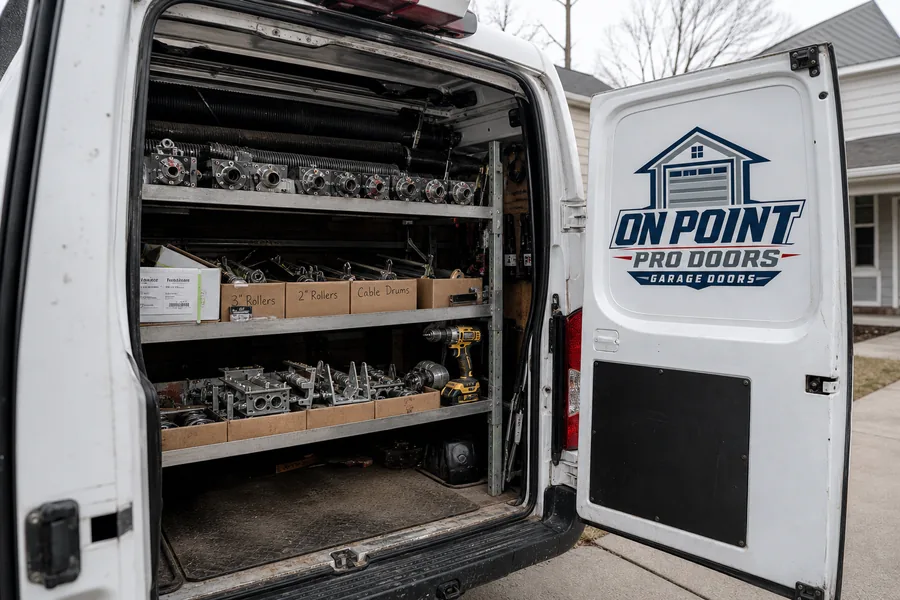
From a single garage door to the doors on a small apartment building, the same work is done the same way. The technician carries springs, cables, rollers, hinges and common opener parts, so most repairs here are finished on the first visit instead of waiting on an order.
A snapped torsion or extension spring is replaced with galvanized springs sized to the door. Both springs are changed together so the door stays balanced and the older one does not fail soon after. More on spring repair
Boards, belts, gears, photo eyes, capacitors and limit settings: the opener is tested piece by piece until the fault is found, on any common brand. More on opener repair
Clopay, Amarr, Wayne Dalton and other doors, chosen on the visit from styles that suit the house, then installed with new tracks, springs and seals. New door installation →
Like a gunshot or a heavy board hitting the floor: one loud bang that carries through the house, often at night or first thing in the morning. Afterwards the door is very heavy, because the spring was carrying most of its weight. Leave it closed, keep the opener off and call for a spring replacement. Both springs are usually replaced together.
Several things can cause it: a weak remote battery, a receiver that has lost the remote's code, a photo eye out of line, or a fault in the opener itself. If the wall button does nothing either, the trouble is inside the opener, such as its board or drive gear. The technician works through each possibility on the visit.
Yes. New doors from Clopay, Amarr, Wayne Dalton and other makers are measured for, installed with new tracks, springs, cables and rollers, and connected to your opener or to a new LiftMaster, Chamberlain or Genie. The old door is taken away, and choosing the style happens on the free estimate visit.
Yes. Roll-up steel doors, commercial sectional doors and heavy-duty openers on shops, garages under apartment buildings and other businesses. Work can be scheduled around opening times, and the estimate is written up before anything starts. A door that will not lock is treated as urgent.
On openers: LiftMaster, Chamberlain, Genie, Craftsman, Linear, Sommer, Marantec and Wayne Dalton. On doors: Clopay, Amarr, Wayne Dalton, CHI, Haas, Raynor and Garaga. If a door or opener has a maker's name on it, it can almost certainly be serviced.
Every spring is made for a set number of trips up and down, so a door used many times a day reaches that number sooner. Cold, salt air, damp and springs that were the wrong size from the start all shorten that life further. Both springs are replaced together, because an old spring left beside a new one usually breaks next.
Spring. A door that sounds rougher or runs slower than it did in the fall is showing what the winter did to its rollers and springs.
Fall. Cracked bottom seals and gaps along the sides let in leaves, water and cold air. They are easy to renew before the weather turns.
Early spring. Tune-up season. A visit to check the springs, balance the door and test the safety reverse finds the parts that are close to failing.
Midwinter. A door frozen to the ground can strain the opener and pull a cable off its drum when the button is pressed, so a door that will not move in the cold should not be forced.
The cable that lets go. The door starts up, one cable snaps and the door tilts in the opening. It stays where it is until the technician arrives, then both cables are replaced and the door is set level.
The wood-door tune-up. An older wood-overlay door gets its springs checked, its hinges secured and its photo eyes tested. A fraying cable found on a visit like this is replaced before it breaks.
The opener at a crossroads. An opener that has run for years starts skipping. The board, motor and rail are each checked, and you choose between repairing the weak part and a new opener, with the estimate for both.
The heavy carriage-house door. A real-wood door that is heavier than its springs were sized for makes the opener labor and burn out. Springs sized to the door's true weight take the strain off the opener.
The opener that hums and does nothing. The motor runs but the door stays put, which usually means a stripped drive gear. The gear is rebuilt, the opener is run through several cycles, and the door is working again.
Usually, yes. Worn steel rollers, dry hinges and a loose chain cause most of the noise. Nylon rollers and a belt-drive opener make the biggest difference, which matters when a bedroom sits above the garage.
Often. A dented or cracked section can usually be replaced on its own, and bent tracks can be straightened or replaced. The door should not be run until it has been checked, because a bent track can let it fall. If several sections are damaged, a new door can be the better answer, and you hear both options.
Yes. A wireless keypad mounted beside the door lets family members get in without a remote, and it is matched to the opener on the visit.
Often they do better with galvanized springs, stainless or galvanized hardware and good bottom seals, because salt air eats plain steel faster. The technician suggests what makes sense for the door.
Your call is taken by our own team, who ask what the door is doing and pass that on to the technician, so the visit starts with the right parts and nobody has to explain the problem twice. You also get a call before the technician heads over, and the estimate is free whether or not you go ahead.
Property managers and associations get the same free estimate as owners, written up for the person who approves the work, with repairs on several doors planned as a single visit where that helps.
The springs, cables, rollers, hinges and tracks are checked, moving parts are greased, the door is balanced and the safety reverse is tested. Anything close to failing is pointed out with a free estimate, and you decide what gets done.
It can be. Insulated steel doors keep an attached garage warmer in winter and cooler in summer and run more quietly. Whether insulation is worth it depends on how the garage is used, and that is talked through at the estimate. For garages used as a workshop or a gym, or with a room above, it usually is.
Sometimes. If the opener is in good condition and suits the weight of the new door, it can stay. If it is near the end of its life or too weak for the new door, a new opener is suggested at the same visit.
Yes. Wind can bend tracks and dent sections, and flooding can rust the bottom of a door and damage the opener's electrics. The door is checked from top to bottom and you get a free estimate for what it needs.
Often, yes, if the maker still supplies sections for that door. When a matching section is not available, the options are explained, including a new door.
A door that feels heavier than it used to, a gap between the coils of a torsion spring, a door that will not stay put when half open, or an opener that strains and slows. Any of those is worth a look before the spring breaks.
A short call books the visit. You hear the arrival window, the technician calls before heading over, and nobody guesses at the fault without seeing the door.
The estimate is free on every visit, everywhere on Long Island.
Say what the door is doing and you will be given an arrival window to plan around. Both the visit and the estimate are free.
Easier to explain by phone? Call (929) 429-2429.
Tell us what the door is doing. The estimate is free either way.