Takes 30 seconds. We call you back to set a time.
On a warehouse, a loading dock or a shop with a rolling steel door, the motor gets the attention, but the control that staff touch every day is a small box on the wall: three buttons marked open, close and stop, or a key switch beside the door. When that box fails, the operator is fine and the door still cannot be used. This page explains the common kinds of stations, how they tie into the operator and the safety devices, why they break, and what a technician checks when the door stops answering. Free estimate at (929) 429-2429.
By Sean Cohen, owner, On Point Garage Doors · Updated
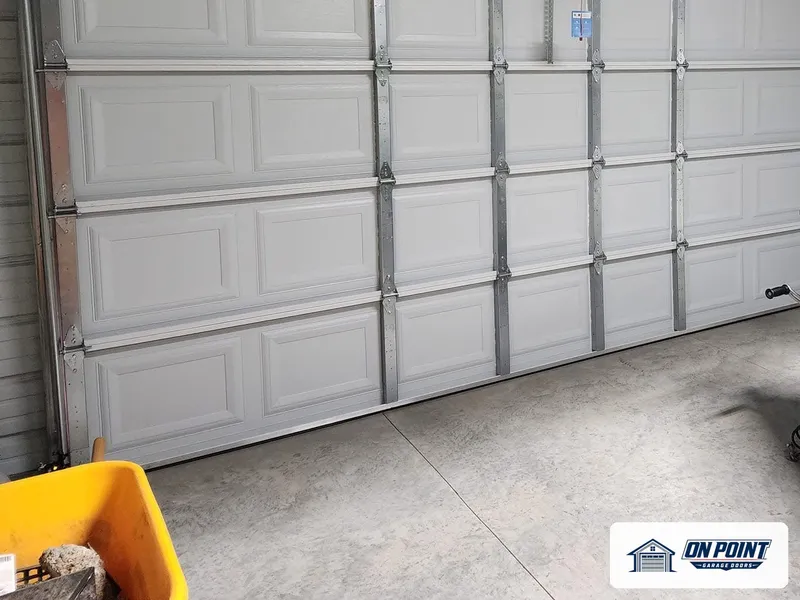
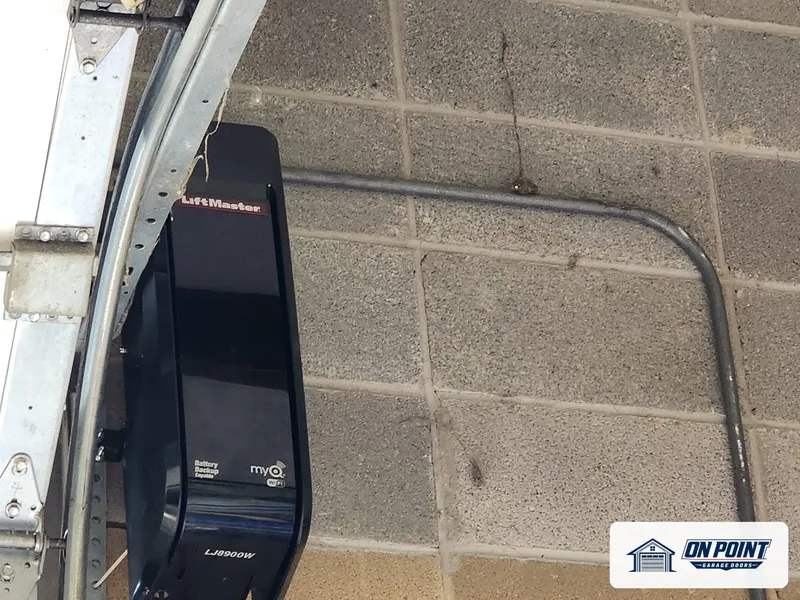
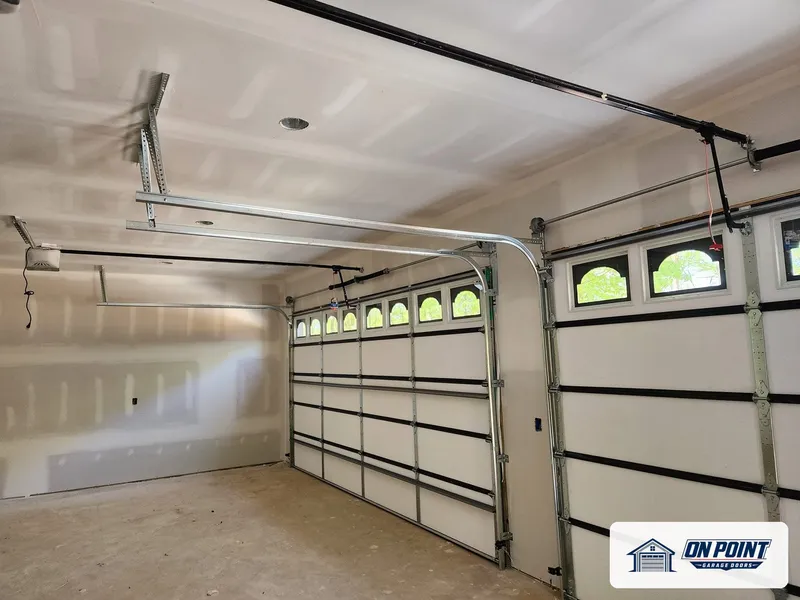
These photos are from our own jobs, with our logo on them.


Most stations are simple switches wired back to the operator's control board with low-voltage wire, often run through conduit down the wall. The open and close buttons make contact when pushed. The stop button is normally wired the other way, so the circuit is closed until someone pushes it. That means a cut wire or a loose terminal on the stop circuit stops the door as well, which is safer than a door that keeps moving when the control is damaged.
Operators can be set so the close button starts the door and it travels on its own, or so the door only closes while someone keeps a finger on the button. The held setting is common where no monitored safety device guards the opening, because a person has to watch the door all the way down. If a door that used to close on one push now closes only while the button is held, the operator may be reacting to a fault in a photo eye or an edge sensor.
A key switch limits the door to people who carry the key. Some run the door open and closed with a turn each way. Others are a lockout that cuts the button station when the business is closed, so a passerby cannot open a loading door. Exterior key switches face weather, grit and tampering, so a worn or frozen cylinder is one of the first things to go.
A station works best mounted within sight of the whole door, at a height staff can reach, and far enough from the opening that a person is not standing under the door as it moves. It should sit where trucks and forklifts are not passing inches away. Stations bolted to the guide or the jamb are easy to reach and also easy to crush.
A door that ignores every button, while the operator still has power, often has an open stop circuit: a stuck stop button, a broken wire or a tripped safety input. A door that opens but will not close points toward the close circuit or a safety device. A door that starts and stops on its own can mean a button sticking in or a short in damaged wire. None of these is solved by banging on the box, and an open cover on a live station is not a place for fingers.
Stations mounted outdoors or in wash bays need enclosures rated for water and dust, with gaskets that seal and buttons with rubber boots. A standard indoor box on an exterior wall fills with water in the first hard rain. In cold weather, condensation inside the housing can freeze around the contacts, which is one reason a door can work all summer and fail on a winter morning.
Many sites add other ways to run the door alongside the wall station: remote transmitters for drivers, a vehicle loop cut into the slab, a pull cord, or a timer that closes the door after it has stood open. Each of these ties into the same control board. When the wall station seems to misbehave, it is worth knowing every other input on the door, because any one of them can hold the door open or stop it.
A loose terminal or a single damaged wire can be dealt with on the spot. A cracked housing, worn buttons or a corroded interior usually means a new station, and stations are fairly simple parts. When the box keeps getting hit, moving it or adding a steel guard is often smarter than replacing it again. We match the station to the operator's control board so the stop circuit and the safety settings still work as they should.
We test each button and key position, open the station and look at the contacts and terminals, trace the wiring back to the operator, and check the photo eyes, edge sensors and any other inputs on the door. Then the door is run through full cycles from the station, the stop button is tested while the door moves, and the reversing safety is checked. You get the findings and the estimate in writing.
Either the operator is set to close only while the button is held, or it has switched to that mode because a photo eye or edge sensor is reporting a fault.
Yes. The stop button is wired so the circuit is closed until pushed. A stuck button or a cut wire on that circuit can stop every command.
Usually, yes. Most commercial operators have inputs for a key switch, either to run the door or to lock out the button station when the business is closed.
It can be moved out of the traffic path, set in a steel guard, or both. Repeated hits also damage the wiring in the conduit.
Yes. We test the station, the wiring and the safety devices and tell you what is wrong before any work starts.
Across Brooklyn, Queens and Long Island, tell us what the door is doing and we set a visit that fits your day.
Free estimate, call (929) 429-2429.
Tell us what the door is doing and we will give you an honest arrival time. The estimate is free.
Easier to explain by phone? Call (929) 429-2429.
Tell us what the door is doing. The estimate is free either way.