Serving Brooklyn, Queens and Long Island(929) 429-2429Open six days a weekFree estimateGuaranteed work
On Point Garage Doors
Open 24 hours Sun-Thu, Fri until 5 pm Free estimate Springs, openers, cables We come to you
Emergency?Call nowBook free estimate
Attached garages on quiet streets

Bayside Garage Door Repair

Free estimateSame-day serviceCommon parts on board
  • Free estimate
  • Same-day service
  • Common parts on board
Emergency garage door repair★★★★★ 5.0 on Google · 42 reviews

Book your free estimate

Takes 30 seconds. We call you back to set a time.

Or just call (929) 429-2429 and talk it through.

Home › Bayside Garage Door Repair

Real jobs. Real photos.

These photos are from our own jobs, with our logo on them.

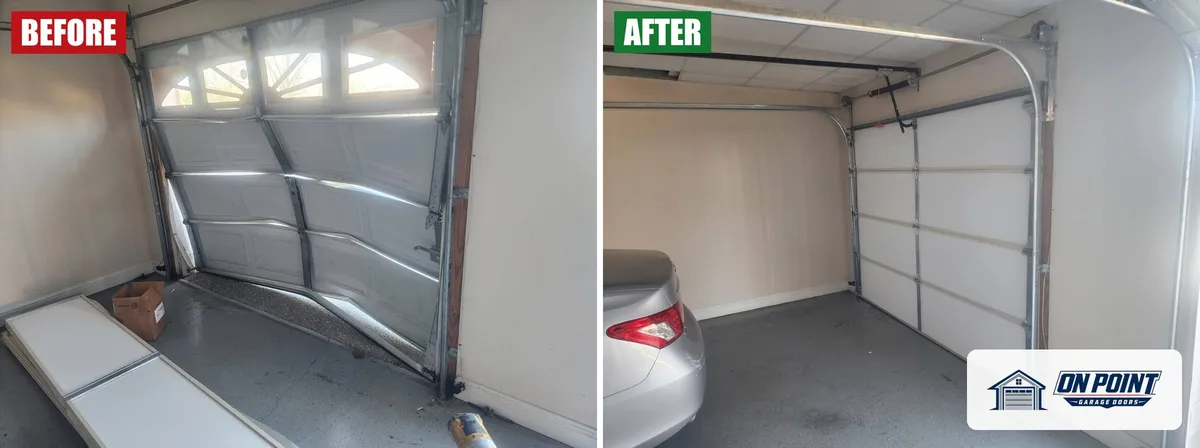
Caved-in door, made new: before and after photo from one of our jobs
Caved-in door, made new
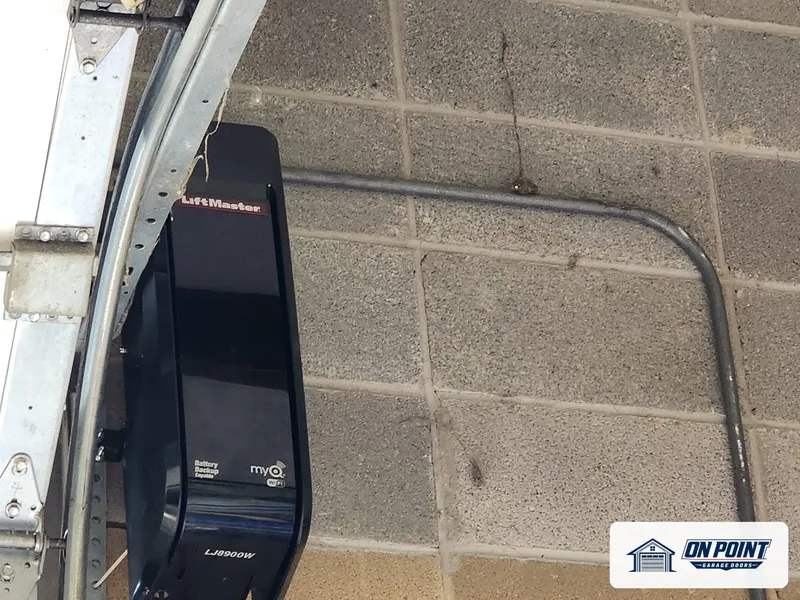
Wall-mount opener installed, photo from one of our jobs
Wall-mount opener installed
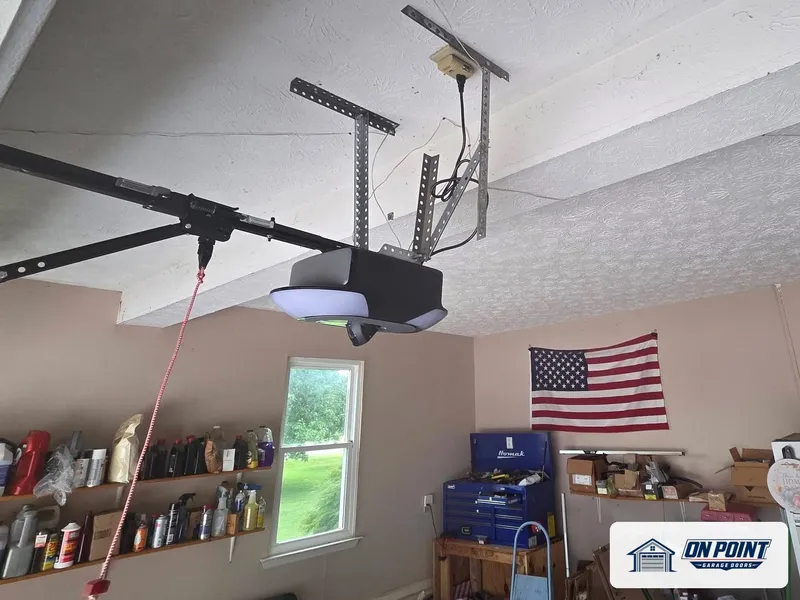
New opener installed, photo from one of our jobs
New opener installed

Garage door repair in Bayside for the attached and detached garages on these residential streets: springs, cables, openers and new doors. The estimate is free.

A garage on almost every house

Most homes here have a garage, attached to the house or set back at the end of the driveway, and most of those doors run on an opener every day. That daily use is what wears springs, rollers and opener gears.

Detached garages at the end of a long driveway are often older than the house's attached garage, and their doors may still be manual. Adding an opener to a manual door is a common request, and the door is balanced first so the opener is not fighting it.

Many doors here went in when the houses were redone, and they have now reached the age when springs and openers wear out. A door that has turned slow, loud or heavy is usually showing it.

Tudor homes in the hills south of Northern Boulevard often have a garage under the house or at the back, with a short, steep drive down to the door.

A door that has been repaired many times may be worth replacing instead. When that is the case, you hear the reasons plainly, and the choice stays with you.

Blocks near Little Neck Bay, Fort Totten and the marina get damp air off the water, and it rusts the bottom of the door first: the brackets, the cable ends and the lowest rollers.

On streets farther from the bay the bigger issue is everyday wear, and the rollers, hinges and opener chain are where it shows.

Garages that are used as workshops or storage often have shelves and bikes near the tracks. The technician checks that nothing is pressing on the track or blocking the safety eyes.

A garage full of storage can also hide a problem until the door is used, so the door is run through its full travel during the visit to see how it behaves.

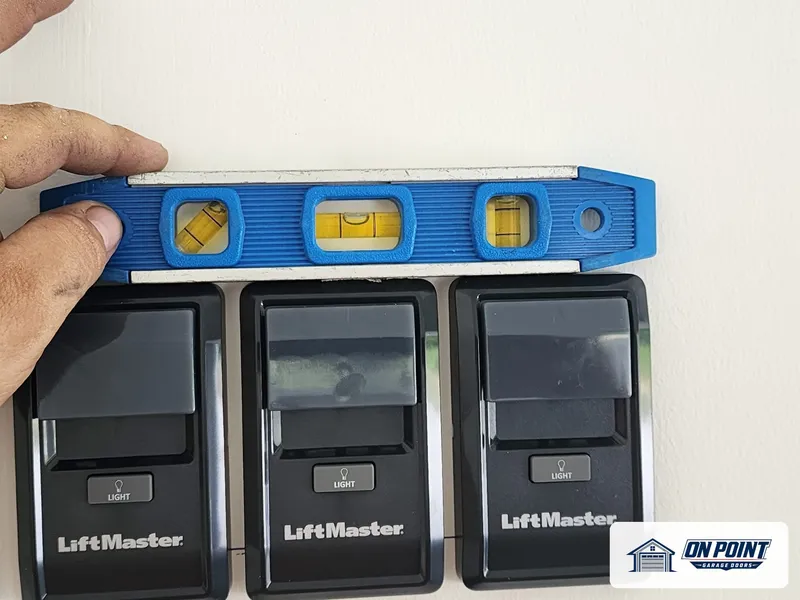
New LiftMaster remotes programmed by On Point Garage Doors

Work we do on these streets

These are the repairs we are called for most on the side streets and in the hills, and each one starts with the door being looked over before anything goes on an estimate.

Bell Boulevard and the shops around the train station keep the center busy, and the attached homes and two-family houses on the side streets have their own row of garages behind them.

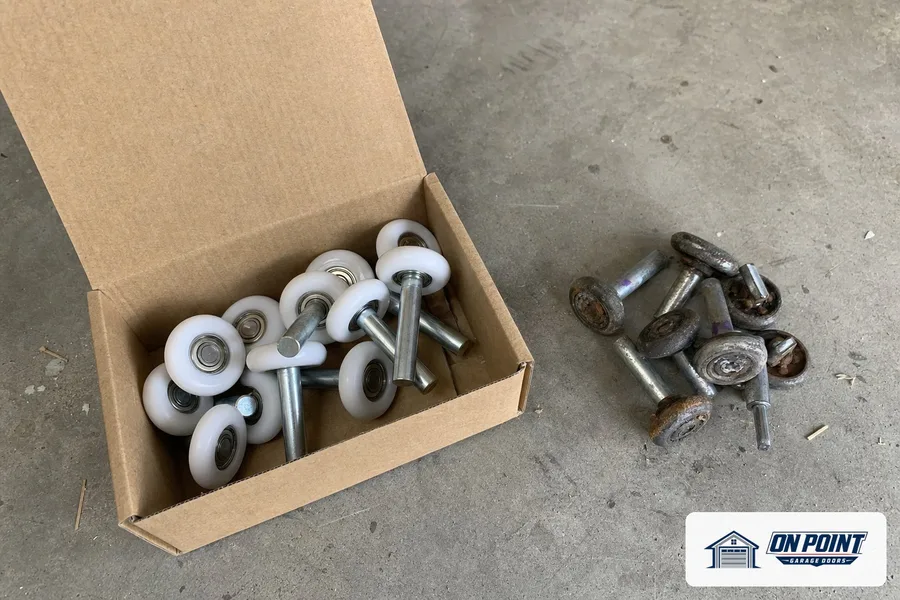
New garage door rollers next to the worn ones they replaced
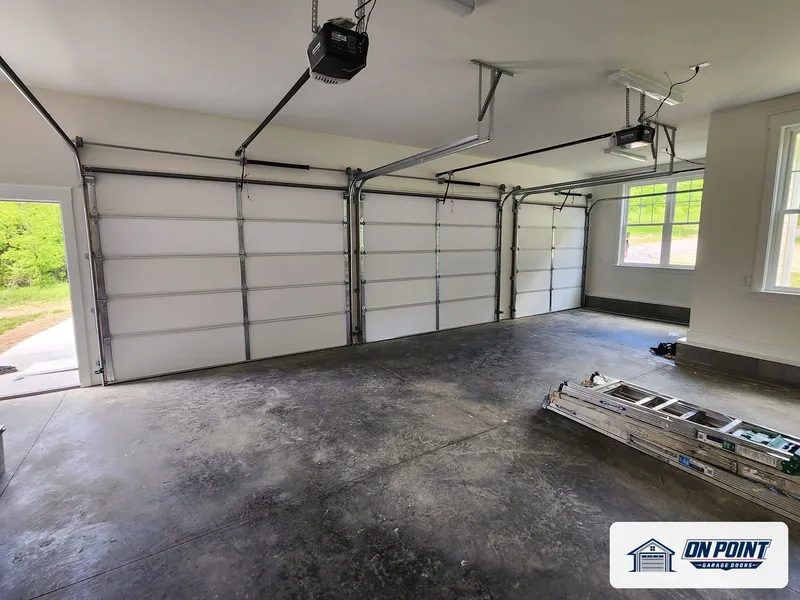
Two new garage doors and openers seen from inside, an On Point Garage Doors job
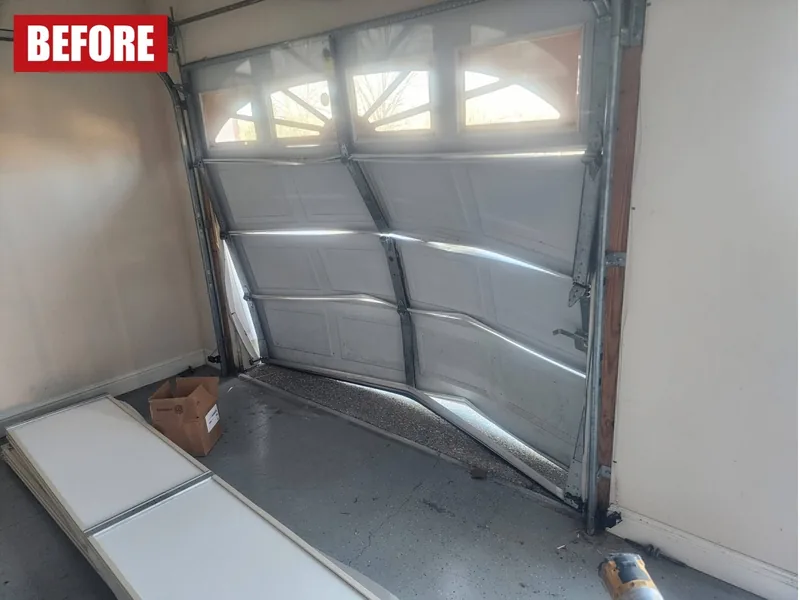
Caved-in garage door panels before On Point Garage Doors replaced the door

What fails on each kind of door

Broken springs. A loud bang in the garage, then a door that will not lift, almost always means a torsion spring has snapped. Keep the door shut and call us.

The second spring on a two-spring door is usually close to failing too, and replacing both keeps the door balanced.

Openers. An opener that hums but does not move, runs and stops, or reverses for no reason has a worn gear, a failing board or a safety-eye problem, and the technician finds which.

Keypads and remotes that stop working are often an opener issue rather than a battery issue, and the technician tests the opener's receiver and logic board.

Cables and rollers. Frayed cables and cracked or noisy rollers make a door jerk and squeal. Both are replaced before they fail.

Sealed-bearing nylon rollers run quieter and outlast the bare steel rollers that many of the older doors on these blocks still carry.

Off-track doors. A door that has come out of its track should stay where it is. Running it can bend panels and drop it.

A door can come off its track after a car bumps it or after a cable gives way. Either way the door is secured before it is moved.

New doors. When a door is worn out or badly damaged, you see the options: insulated steel, carriage styles and full-view glass.

A new door is measured on site, ordered to fit, and hung with fresh springs, track and seals, so every part starts out together.

Brooklyn, Queens and the Island

Our crews cover the north shore of Queens, the rest of the borough, Brooklyn and Long Island, for homes and businesses alike.

Anything you mention on the call, the steep drive, the detached garage or what the door did, goes to the technician before he heads out.

A car shut inside the garage, or a door that will not come down for the night, moves ahead of routine work; mention it when you call.

The year near the bay

Winter. Cold stiffens springs and is when tired springs break. A door that strains in the cold should be checked.

Spring. Wet weather off the bay rusts the bottom brackets and cable ends, and that is checked after a wet winter.

Summer. Heat dries out the bottom seal and the rollers, and a door that squeals or rubs is asking for attention.

Fall. Before the first hard freeze is a good point to have the springs, cables and safety reverse looked at.

Once the technician is at the garage

He runs the door on the opener, disconnects it to feel the springs, and goes over cables, rollers, track and opener before he says a word about the repair.

What broke is put in everyday words, with a free estimate that lists each part, and nothing starts until you agree.

Springs, cables and rollers are matched to your door, and the parts these doors usually need travel with him.

Rollers, hinges and seals that are worn but not yet failing are pointed out, so you can decide whether to do them now.

On every door with an opener, the safety reverse is tested before he leaves.

The old springs and cables leave in his truck, and the garage is left the way he found it.

Why a nearby crew makes a difference

A garage that doubles as a workshop or storage room is worked around carefully, and the visit fits your day.

Visits are set around the household's day, with a call before he arrives.

The estimate comes first; what happens next is your call.

The parts that give out first

On any door, a handful of parts carry the load. Knowing which one is wearing out turns a breakdown into a planned repair.

Springs carry the weight of the door, and once one breaks the door is far too heavy to lift safely.

A door that has started to lift unevenly, or that slams shut, is usually telling you about its springs.

Cables fray and stretch, and on doors near the water the ends rust. They are replaced in pairs.

Cables are checked along their full length, because fraying often starts where the cable wraps the drum at the top.

Bikes, bins and garden tools knock the photo eyes out of line, and a door that refuses to close is often just a bumped sensor.

A track that has bent or pulled off its brackets can jam the door or let it fall out. The door stays put until the track is set back.

Track bolts and brackets are checked for wear, since a track that shifts even slightly can make a door rub and shudder.

Opener gears and circuit boards wear out. When an opener is past saving, you hear the choices, including quiet belt drives and smart models.

If the opener is old but working, the technician tells you plainly whether it is worth keeping, and why.

Setting up a visit

Tell us what the door does and whether the garage is under the house or at the end of the drive; that is enough to load the right parts.

Every estimate is free, on the side streets, in the hills and across the rest of our area.

Questions from homes near the bay

Our Tudor has a steep drive down to a garage under the house. Does rain running down the drive hurt the door?

It wears the bottom of the door faster. Water runs down the slope and sits against the bottom seal, so the seal splits, the bottom brackets rust and the lowest rollers seize. The technician checks those parts first and fits a heavier bottom seal that meets the slab tightly; the drain at the foot of the drive is a job for a plumber.

Why does the bottom of our door rust first on blocks close to the water?

Damp air and fog off the bay settle on the lowest part of the door, where cable ends, bottom brackets and rollers sit closest to wet concrete. Those parts are checked on every visit here, rusted ones are renewed in pairs, and galvanized hardware goes on where it fits, so the door lasts longer between repairs.

The detached garage at the end of our driveway still has a manual door. Can an opener go on it?

Usually yes. The door is balanced first, because an opener should never be fighting a heavy door, and worn rollers or tired springs are dealt with before the motor goes up. If there is no outlet near the ceiling, power for the opener is worked out with you before the install visit, and the photo eyes are mounted and tested.

We park on the street and the garage is mostly storage. Does a door that rarely moves still need attention?

It does. Springs stay under load whether the door moves or not, and rollers and hinges stiffen when a door sits still for months. Shelves and boxes stacked near the tracks can also press on them. The technician runs the door through its full travel, checks the balance and makes sure nothing is leaning on the track.

Can you work on the row of garages behind the attached houses on the side streets?

Yes. Those rows usually share one driveway or apron, so the visit is set for a time when the cars can be moved, and only your door is touched. Because the doors in a row were often hung together, if your springs are worn the technician may tell you the doors beside yours are likely close behind.

Back to a door that runs quietly

Tell us about the garage and pick a time that suits your day. The estimate is free.

Call us at (929) 429-2429.

A free estimate for Tudors, attached homes and detached garages

Say what the door does when you run it, and a free estimate comes back whatever you decide.

Or just call (929) 429-2429 and talk it through.

More repairs