Serving Brooklyn, Queens and Long Island(929) 429-2429Open six days a weekFree estimateGuaranteed work
On Point Garage Doors
Open 24 hours Sun-Thu, Fri until 5 pm Free estimate Springs, openers, cables We come to you
Emergency?Call nowBook free estimate
Row-house garages and shop gates

Astoria Garage Door Repair

Free estimateSame-day serviceCommon parts on board
  • Free estimate
  • Same-day service
  • Common parts on board
Emergency garage door repair★★★★★ 5.0 on Google · 42 reviews

Book your free estimate

Takes 30 seconds. We call you back to set a time.

Or just call (929) 429-2429 and talk it through.

Home › Astoria Garage Door Repair

Real jobs. Real photos.

These photos are from our own jobs, with our logo on them.

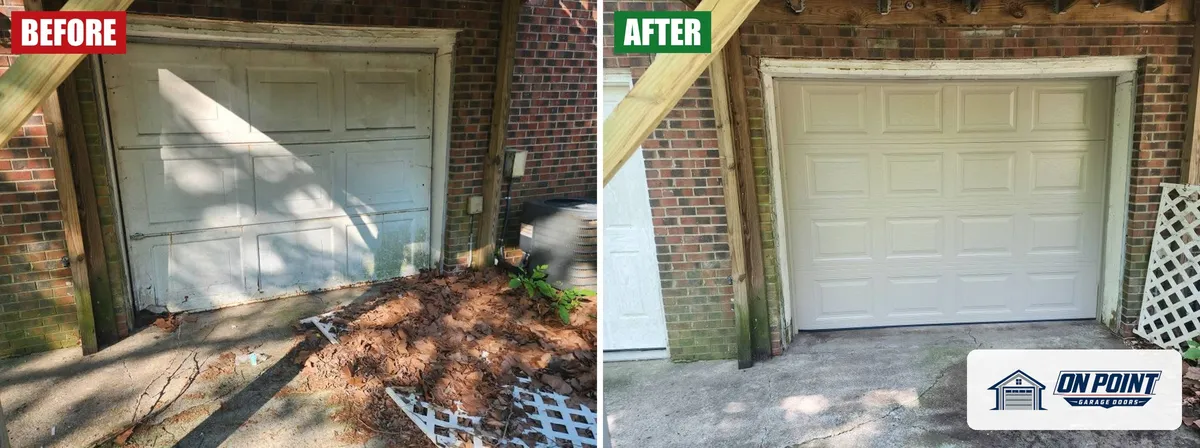
Old door out, new door in: before and after photo from one of our jobs
Old door out, new door in
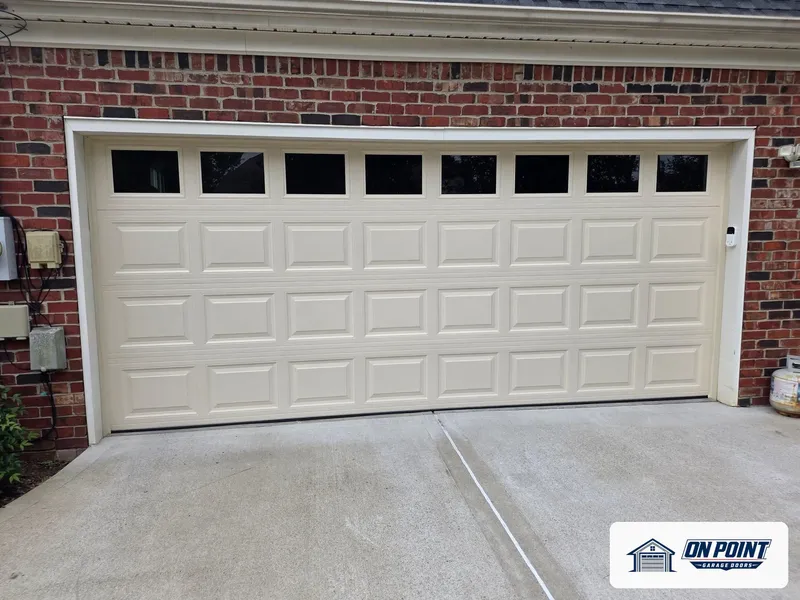
New door with a window row, photo from one of our jobs
New door with a window row
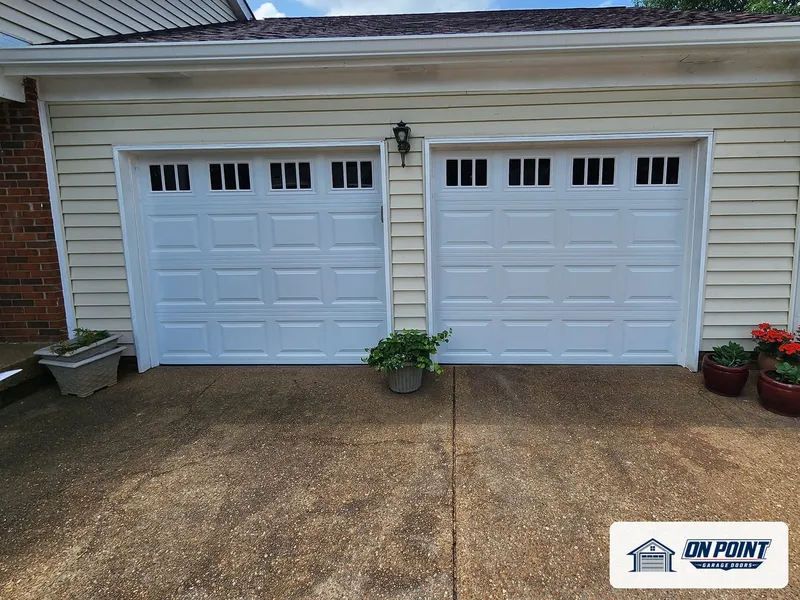
Two new doors, photo from one of our jobs
Two new doors

Garage door repair in Astoria for the row-house garages, the two-family homes with a door at sidewalk level, and the rolling gates on the busy avenues. The door is looked at before anything is estimated.

Doors on a crowded block

A garage is a prized thing in this part of Queens. It is usually tucked below or beside the stoop with a brief apron to the curb, and losing the use of it means circling for a space.

North toward the piano factory's old company village, some attached brick rows hide their garages behind the houses, reached by a driveway that the whole row shares.

Many of these doors are older steel or wood units that have been repaired several times, and the parts on them do not always match each other anymore.

In a two- or three-family house the garage may also be the landlord's storage, the boiler route and the bike room, so the door gets used by people who never park in it.

Along the avenues, nearly every storefront has a rolling gate that goes up in the morning and down at night. Those gates take far more cycles than a house door and wear their springs and slats accordingly.

Steinway Street, Broadway, Ditmars Boulevard and the blocks beneath the elevated line are thick with bakeries, cafes, grills and groceries, some opening at dawn and others closing long past dark.

When a cafe or phone shop cannot secure its gate at lockup, the stock sits behind glass alone, so that call is handled as urgent.

Older buildings near the river get damp air, and the bottom of a door rusts before the rest. On a curb-level garage, road salt splashed by passing cars adds to it.

The peninsula at the western tip has new towers beside old industrial lots, and doors facing the East River there take wind as well as moisture.

Sidewalk-level doors also take bumps from delivery carts and parked cars more than doors set back on a driveway.

Garages from the prewar years were sized for narrow cars, leaving a low lintel, a pipe or two along the ceiling and barely any shoulder for track.

Where torsion hardware allows it, a motor on the side wall does away with the center rail in those short, crowded rooms.

It also leaves the ceiling joists alone, which is welcome when a tenant lives directly above.

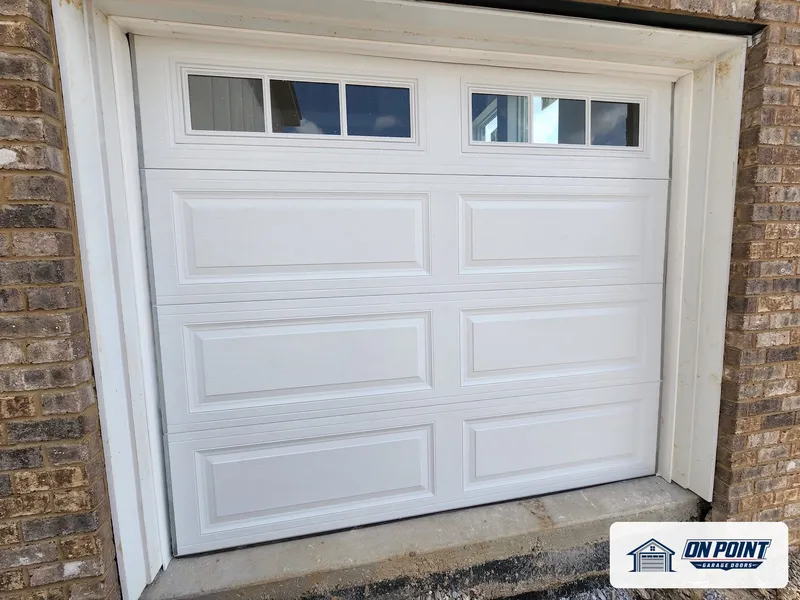
New garage door with windows on a brick house, installed by On Point Garage Doors

Work we do for houses and storefronts

Homes and storefronts are handled the same way: the door or gate is inspected, and then you get an estimate.

For a building with both, a shop in front and a garage around back, the two openings can be looked over on one visit and listed apart for owner and tenant.

Garage door opener installed on the garage ceiling by On Point Garage Doors
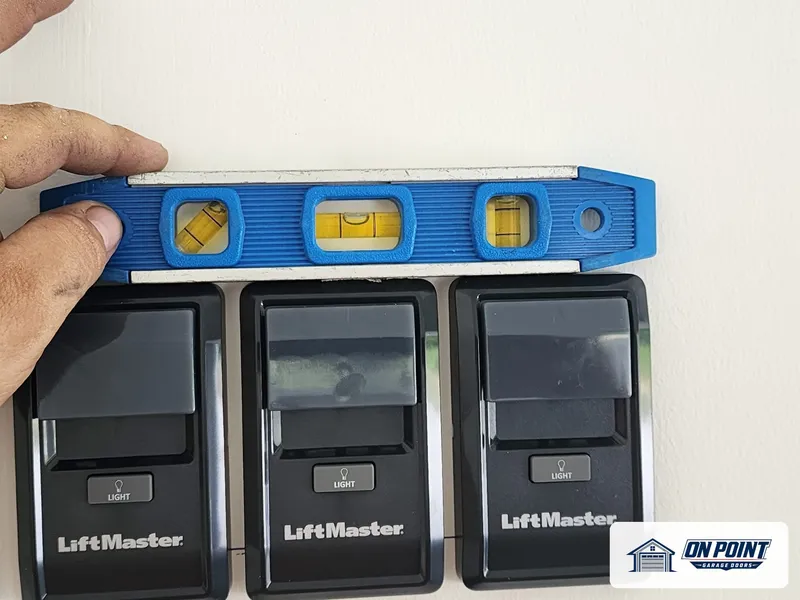
LiftMaster wall controls being leveled, from one of our jobs
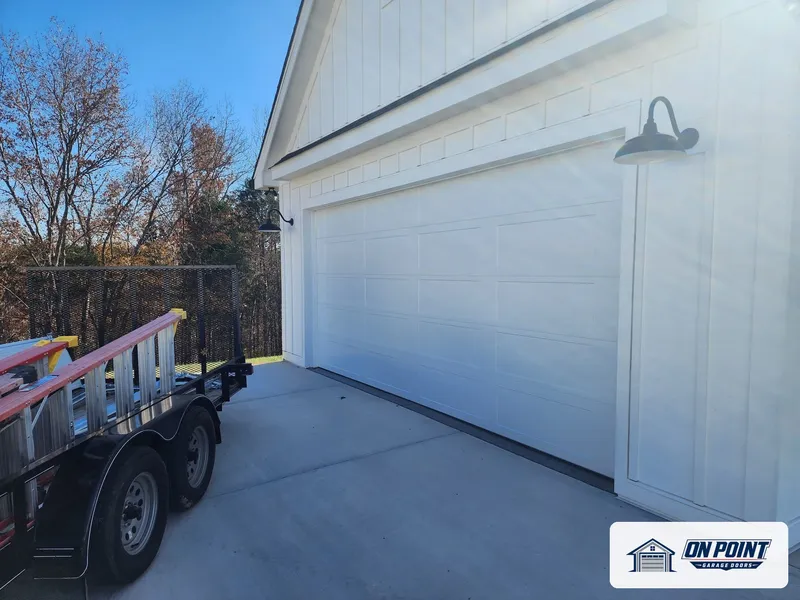
A white sectional door on a board-and-batten garage, from one of our jobs

Curb garages and avenue gates

Curb-level garages. Snapped springs, worn rollers and frayed cables are the usual causes of a door that jerks or will not lift.

A sidewalk that slopes along the block can also leave daylight under one corner, which calls for a seal cut to the slope, not a crooked door.

Where a door has been patched many times, you hear honestly whether another repair makes sense.

Storefront rolling gates. Sudden weight, a crooked climb or a curtain that will not stay up generally traces to the barrel springs, a kinked slat or packed guides.

The chain hoist, push controls and motor brake are tried while he is under the hood.

Openers in tight garages. Low headroom wears openers faster; a wall-mount model is often the cleaner answer.

Thick brick and the radio clutter of a dense block can shorten remote range as well, so a weak signal does not always mean a bad board.

Locks and bottom bars on gates. A bottom bar that no longer meets the lock is a common reason a gate will not secure at night.

A delivery bike, hand truck or parked car can knock steel out of its guide; leave such a door still and keep passersby from standing below it.

Brooklyn, Queens and the Island

From Astoria we also cover the neighboring parts of Queens, all of Brooklyn and Long Island.

Your description, including the cross street and any rear driveway, travels with the job to the technician.

An unsecured storefront or a car sealed under a row house goes ahead of routine work, so mention either when you reach us.

The year on a busy street

Winter. Slush thrown from the bus routes reaches curb-side panels, and hard frosts finish off coils that were already near their limit.

Spring. As the slush clears, check the bottom of the door for rust streaks; they point at brackets that need replacing.

Those corner brackets are under cable tension, so looking is fine and unbolting them is not.

Summer. Heat makes gate slats expand and bind in their guides, and a gate that drags in July is telling you something.

It is also the season of the pool in the big park under the bridges and of sidewalk tables, so there are more feet and chair legs right where a gate lands.

Fall. Before winter, a look at springs, cables and locks saves a breakdown on a frozen morning.

When the truck reaches a crowded block

The technician watches the door or gate cycle, then inspects the springs, cables, rollers or slats, guides and the motor.

You hear the findings in everyday words and get a free estimate broken out item by item.

If the owner and the person who met him are different people, the written version can be sent on before work begins.

Slat profile, spring size and roller stem are identified from what is installed, then drawn from truck stock or ordered if the old make is unusual.

Openers and gate motors are tested for safe stopping and reversing before the job is called done.

Cut cable, bent slats and spent coils go out with him, leaving nothing for shoppers or strollers to trip over on the pavement.

Working around a busy street

A cafe or salon can ask for a slot around its opening and lockup, so customers are not walking under an open hood.

On a block with no parking, the technician plans to carry everything in one trip.

Landlord or tenant, whoever is responsible approves the list before tools come out.

Hardware that works hardest here

Crowded sidewalks and long trading days fall hardest on a short list of steel parts, hidden in the hood or up by the header.

The spring is what lets a person lift a heavy door or gate. Once it breaks, the full weight comes back.

A shopkeeper who keeps heaving the curtain after that risks a hurt back and bent end locks, so stop there and call.

A gate that suddenly needs two hands, or a door that slams, is usually a spring getting ready to go.

Lift cables on house doors fray and rust at the bottom; both sides are replaced together.

Beside the sidewalk, photo eyes get nudged by strollers, scooters and trash cans, and one crooked lens alone can keep a door from coming down.

Tracks and gate guides bend when they are hit, and a bent guide can trap a gate halfway; it is not forced.

Openers and gate motors wear out with heavy use. If one is finished, you see what would replace it.

Vibration from the trains overhead near the elevated line is one more reason to inspect mounting bolts and wire connections.

Booking

Start with the kind of opening, home garage or storefront curtain, then the symptom and the nearest corner.

A small shop and a three-family house both receive the estimate free.

Questions from row-house and avenue blocks

Our garage is on a driveway shared by the whole row. Can you work there without blocking everyone?

Yes, with a little planning. Tell us where the driveway enters and whether neighbors need to pass. Tools and ladders can stay inside the garage for much of a repair, and the truck moves if someone has to get through. A delivery of new sections needs the most room, so warn the neighbors before that one.

We live under the elevated train. Could the vibration be shaking our door hardware free?

It can contribute, along with ordinary use and tired wood or crumbling masonry behind the bolts. During a visit the track anchors, hinge screws, opener hangers and low-voltage connections are examined. Where a fastener no longer holds, it is moved into sound material or given a proper masonry anchor instead of being run back into the same hole.

I rent a storefront and the gate broke. Should I call, or does the building owner?

Either of you can call for the estimate, but the lease usually decides who approves the repair, so let the owner know. We can secure an unsafe gate, write down what failed with photos and send that to the person responsible. Have the keys to every lock on the gate ready for the visit.

Our remote works in the car but only right in front of the garage. Is that the neighborhood?

Possibly. Brick, parked trucks, LED bulbs, wireless gadgets and other openers close by can all crowd the signal. A fading remote or a damaged antenna wire does the same thing. The technician tests from the curb and inside to separate interference from a failing receiver, and a newer radio or an outside keypad may be the simple answer.

The opening under our stoop is too low for an SUV. Can a different door gain us height?

A door cannot raise a masonry lintel, but the present one may hang below it or stop short of fully open. Low-headroom track, corrected travel and a slimmer opener layout sometimes recover usable clearance. Changing the brick opening itself is structural work for an engineer and a mason, with whatever approvals the city requires.

Get your door working

Give a line about the fault, choose a slot that works around tenants or trade, and the look is free.

For a garage or an avenue gate, call (929) 429-2429.

A free estimate for garages and gates on tight blocks

Say whether it is house or shop and what stopped working; the free estimate leaves the decision with you.

Or just call (929) 429-2429 and talk it through.

More repairs