Takes 30 seconds. We call you back to set a time.
At a loading dock, a warehouse or a service bay, doors get hit. A forklift mast catches the bottom bar, a box truck backs in while the door is still coming up, a driver misjudges the opening. Some hits only leave a dent, and some leave a door that cannot open or cannot close. Either way, the business usually needs the door back in service and secure at the end of the day. This page explains what to do first, where impact damage hides and how we decide between a repair and new parts. Free estimate at (929) 429-2429.
By Sean Cohen, owner, On Point Garage Doors · Updated
These photos are from our own jobs, with our logo on them.


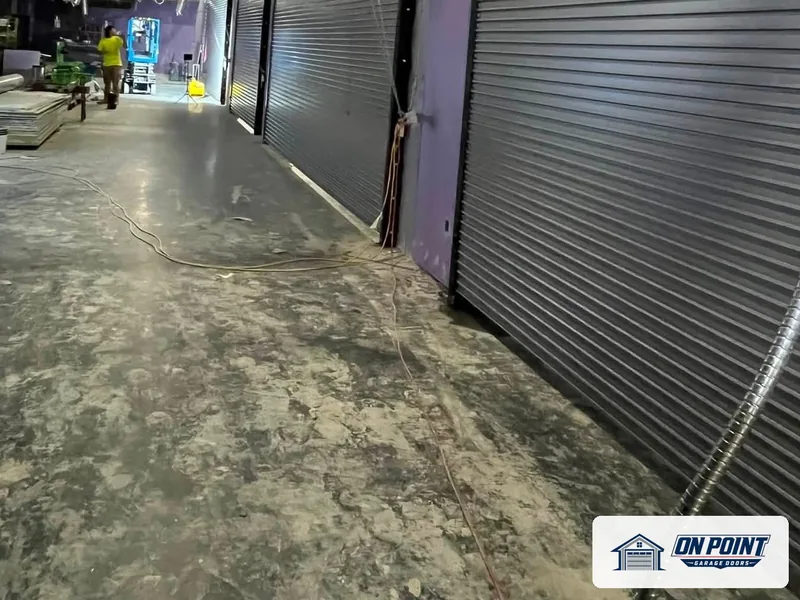
On a rolling door, a hit usually lands on the bottom bar or the lower slats. The bar bends, the slats crease and the ends of the slats pull out of the guides. A bent guide can trap the curtain so it will not roll up or come down. Damaged slats can often be replaced on their own, but a hard hit may also twist the barrel or the brackets at the top.
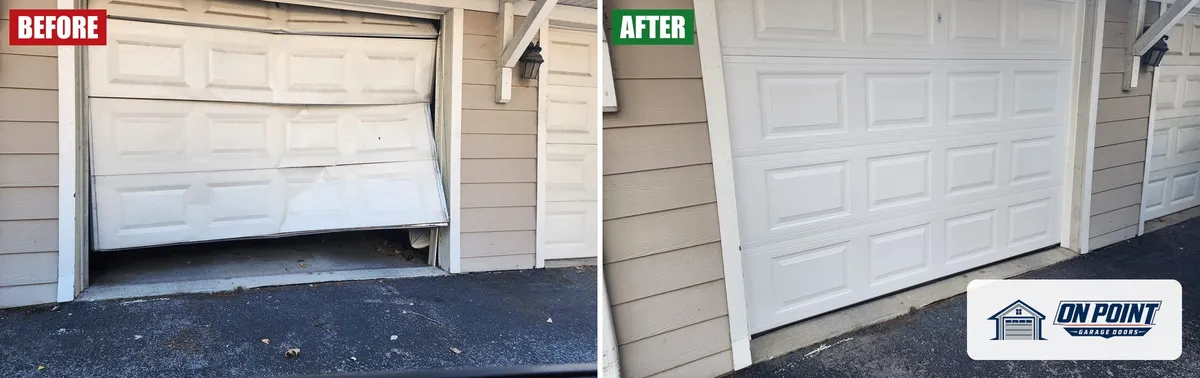
Sectional doors at docks take hits to the bottom section and the lower tracks. A cracked section, bent hinges and a kinked track are common. The cables and bottom brackets at the corners are often strained as well. One or two sections can usually be replaced if the maker still offers them.
A commercial operator that keeps trying to move a jammed door can strip its gear, stretch its chain or burn out. After an impact, we check the operator's drive, the clutch if it has one, the limits and the safety edge before the door runs on power again.
The first goal is a door that is safe and can be closed and locked. Sometimes that means a temporary fix that night and the full repair once parts arrive. We explain what can be done on the first visit and what has to wait.
When a delivery truck or a tenant's vehicle hit the door, you get a written estimate that lists each damaged part, with photos. We repair the door; we do not handle insurance claims.
Doors that get hit once tend to get hit again. Guide protectors and bollards in front of the guides take the blow instead of the door. Clear marks on the floor, a light that shows when the door is fully open and a door that opens faster all help drivers wait. Some docks use doors built to break away from the guides and be pushed back in, which saves the door on a minor hit.
Storefront gates and parking garage doors get hit too, by delivery trucks and cars. The same checks apply: guides, bottom bar, slats, the edge and the operator. Parking garage doors also need the photo eyes checked, since a hit can knock them out of line.
When a door has been hit more than once, it is worth asking whether the parts suit the job. Heavier slats, a stronger bottom bar and guides with protectors can take knocks that would bend lighter parts. On sectional dock doors, a reinforced bottom section and heavy hinges hold up better. We explain the options so the next hit keeps the dock out of service for less time.
The technician checks the curtain or sections, the guides or tracks, the bottom bar, the springs and barrel, the operator and the safety devices, then makes the door safe. You get a written estimate before the full repair starts, with photos for your records.
Stop using the door, keep people clear, take photos and call. Running the operator can make the damage worse.
Often yes. Slats, the bottom bar and the guides can usually be replaced without a whole new door.
We aim to make the door safe and closed on the first visit, with the full repair once parts are in.
Guide protectors, bollards, floor marks and a clear open signal for drivers all help.
Yes. We check the door and operator and put each damaged part in writing.
Across Brooklyn, Queens and Long Island, tell us what the door is doing and we set a visit that fits your day.
Free estimate, call (929) 429-2429.
Tell us what the door is doing and we will give you an honest arrival time. The estimate is free.
Easier to explain by phone? Call (929) 429-2429.
Tell us what the door is doing. The estimate is free either way.