
Leave your name and number and we’ll call you back to set a time.
Above every rolling door there's a long steel pipe called the barrel, with the curtain wrapped around it and a spring inside. A sheet-metal hood covers it to keep rain, dust and birds off the coil. Most owners never look up there until the door starts to grind, knock or scrape on the way up. A dented hood can rub the coil, and a worn bearing or a barrel that has started to bow makes noise and wears the slats. Here we cover what sits inside the hood, the sounds and signs that point to it, and what our techs do about each one. Free estimate at (929) 429-2429.
By Sean Cohen, owner, On Point Garage Doors · Updated
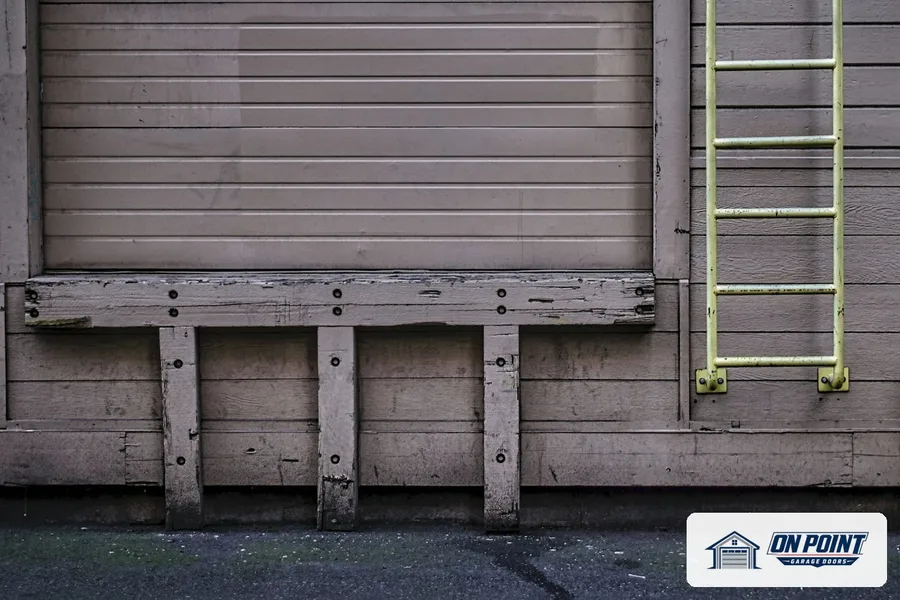
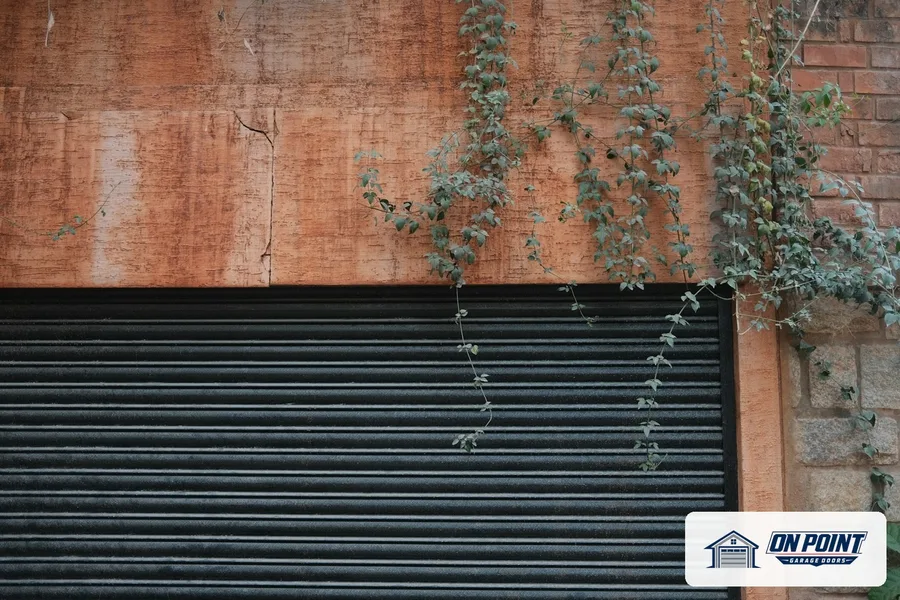
These photos are from our own jobs, with our logo on them.
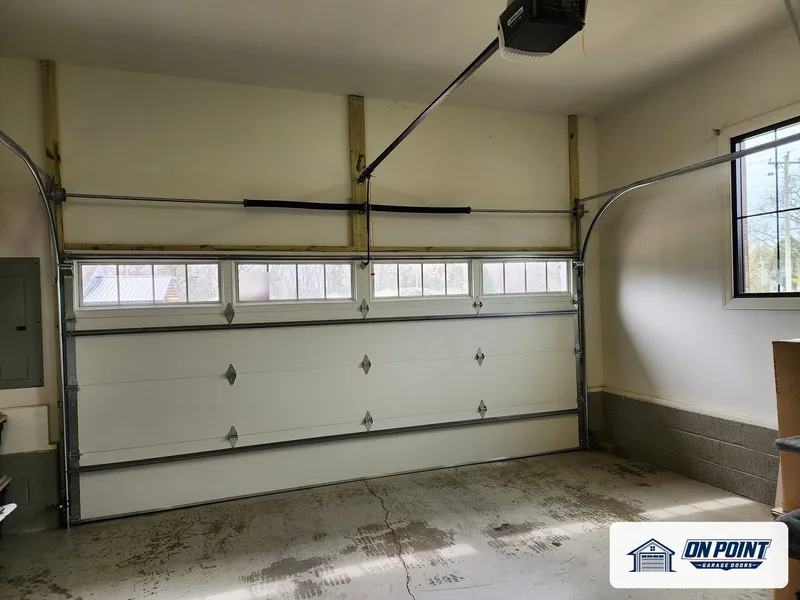
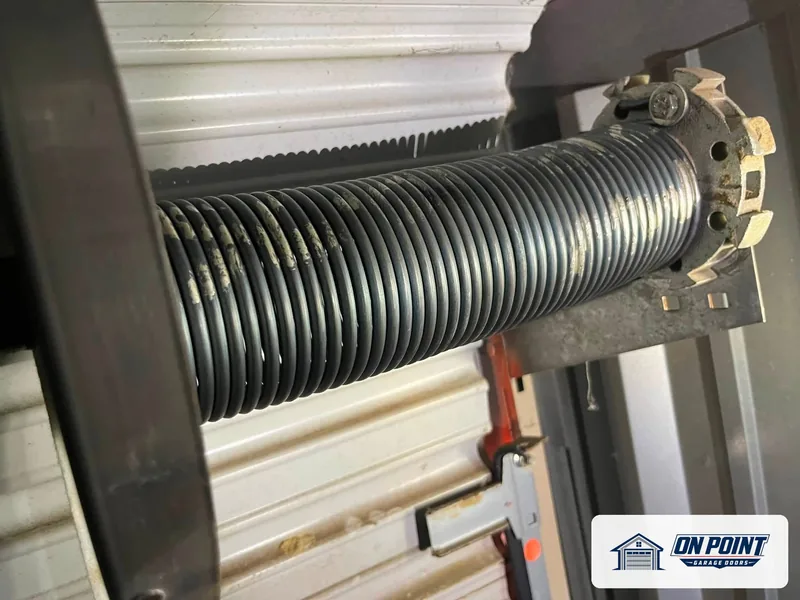
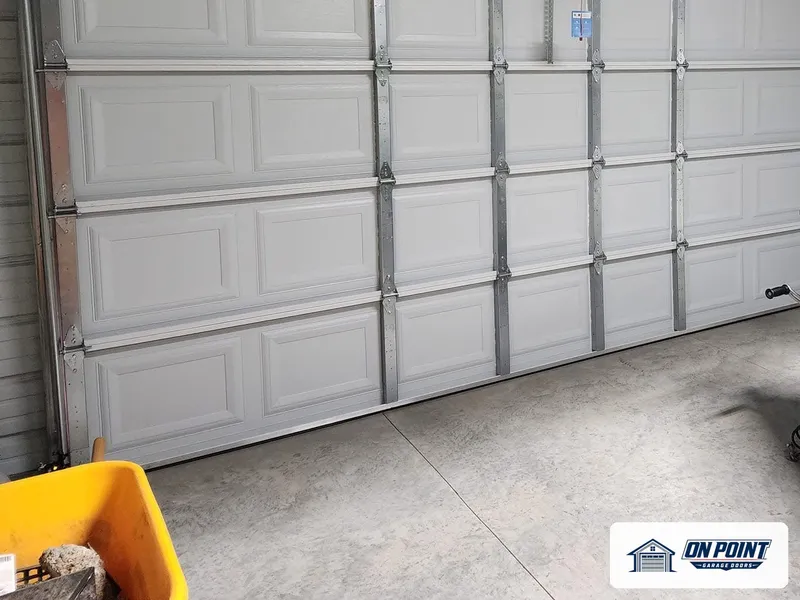
The barrel is a steel pipe that runs the width of the opening. Inside it, a torsion spring balances the weight of the curtain. Rings or straps on the barrel hold the top slat. The shaft ends ride in bearings set in brackets bolted to the wall or the jamb. One bracket usually carries a tension wheel, plus the gear for the hand hoist or the operator. The hood bolts to those brackets and wraps over the coil.
Hoods are thin sheet steel and they bend easily. A forklift mast raised too high, a ladder dropped against the wall, a tall truck backing in or a pallet stacked too high can each leave a dent. Outside hoods on storefronts take hits from box trucks and from people climbing on them. A small dent clear of the coil is only cosmetic. A dent that reaches the coil is a problem, because the roll gets fatter as the door opens.
If the noise only starts in the last part of the opening, the coil is probably reaching a dent or a hood that has dropped. As more slats wind on, the roll grows, and near the top it drags against the steel. You may see bright scrape marks on the slats or paint dust on the floor below. Left alone, the rubbing wears through the slat finish and rust starts there. Our tech can push out the dent, re-hang a hood that slipped on its brackets or put in a new hood section.
A dry or worn bearing at the end of the barrel squeals or grinds as the door moves, and you'll usually hear it louder from one side. Rust gets into these bearings fast on doors near the water and on doors that face a salted street. A failing bearing lets the shaft wobble, which wears the bracket and can pull the curtain off line. Bearings are a standard part, and common sizes ride on our truck.
On a wide door, a barrel that is too light for the curtain, or one bent by a hit, can bow in the middle. The curtain then winds thick in the center and thin at the ends, and the door may climb crooked or bind in the guides. Sometimes the brackets have shifted and squaring them up levels the barrel. If the pipe itself is bent, the barrel is replaced, and that job means working with the wound spring.
The spring that balances a rolling door is wound up tight inside the barrel, and a tension wheel or a set of pins at one end holds that wind. Opening a bracket or the barrel end without letting the tension off the right way can spin the barrel hard enough to injure someone. Leave the hood, the tension wheel and the brackets to a trained tech with the right bars and tools.
Some noise blamed on the barrel comes from the operator mounted beside it: a worn drive chain, a loose sprocket or a brake that drags. Our tech listens with the door running and checks each part in turn. He notes whether the sound follows the barrel or stays at the motor end. Our page on the brake and clutch inside commercial operators covers the motor side.
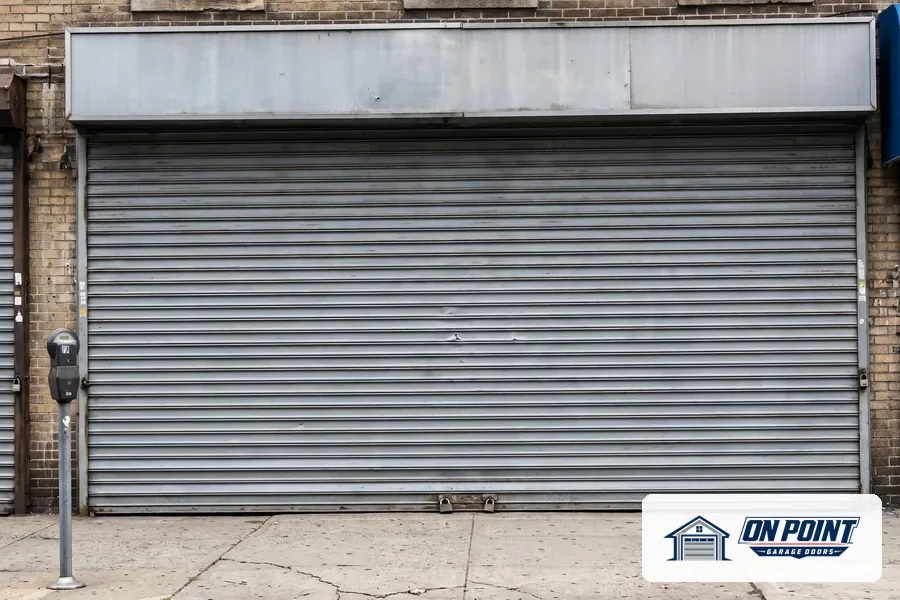
On many storefronts and loading doors the hood is mounted outside, where it faces weather and street traffic. On an inside mount, the hood sits within the building over the opening. An outside hood may also carry a baffle where the curtain comes in, to cut drafts and rain. Planning a sign, an awning or a light on the front of the building? Tell the installer where the hood is so nothing gets screwed into it.
Salt air along the bays, and road salt thrown up by trucks, goes after hoods, brackets and bearings first. Rust streaks running down from the hood ends are the usual early sign. Galvanized or painted hoods last longer, and a rusted bracket gets replaced before it lets the barrel drop. Near the water, we look at the hood and the bearings on every service visit.
We run the door the full way up and down and listen. Then we look at the hood for dents and loose bands, the brackets and their bolts, the bearings, how evenly the curtain winds on the barrel, and the spring tension. You hear what we found in plain words and get a free written estimate before anything is changed.
The coil may be rubbing a dented or dropped hood as the roll gets bigger. The dent is pushed out or the hood section is replaced.
Often a dry or worn bearing in the end bracket, and rust speeds that up. A bearing can be replaced without a new door.
A small dent clear of the coil can stay. A dent that touches the coil is pushed out, or that hood section is replaced.
The hood sits next to a wound spring and a heavy curtain. Leave it to a trained tech with the right tools.
Yes. We run the door, check the hood, the barrel and the spring, and tell you what it needs before any work.
Across Brooklyn, Queens and Long Island, tell us what the door is doing and we set a visit that fits your day.
Free estimate, call (929) 429-2429.
Tell us what the door is doing and we’ll tell you when we can get there. The estimate is free.
Easier to explain by phone? Call (929) 429-2429.
Tell us what the door is doing. The estimate is free either way.
Where we work
Brooklyn, Queens and Long Island. Tap your town.
 Bay RidgeBrooklyn
 AstoriaQueens
 Valley StreamNassau County
 HuntingtonSuffolk County
 Sheepshead BayBrooklyn
 BaysideQueens
 Garden CityNassau County
 BabylonSuffolk County
 Marine ParkBrooklyn
 FlushingQueens
 MassapequaNassau County
 SmithtownSuffolk County
 CanarsieBrooklyn
 Howard BeachQueens
 LevittownNassau County
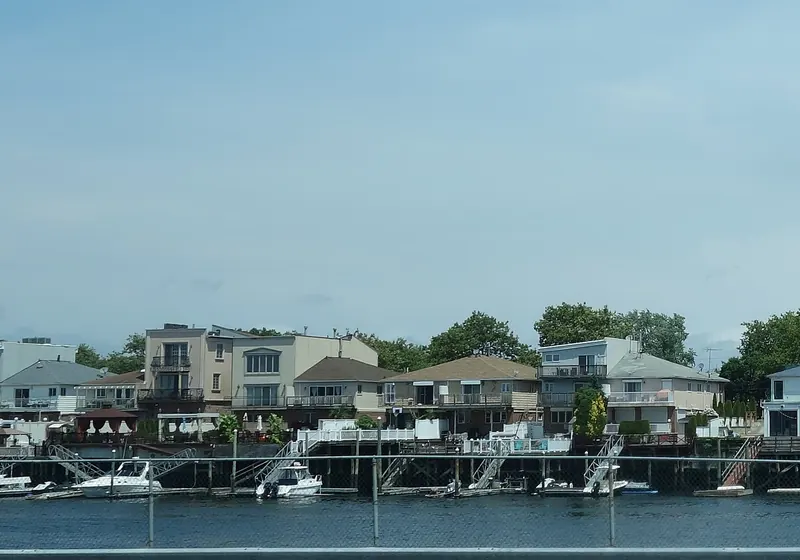 Mill BasinBrooklyn
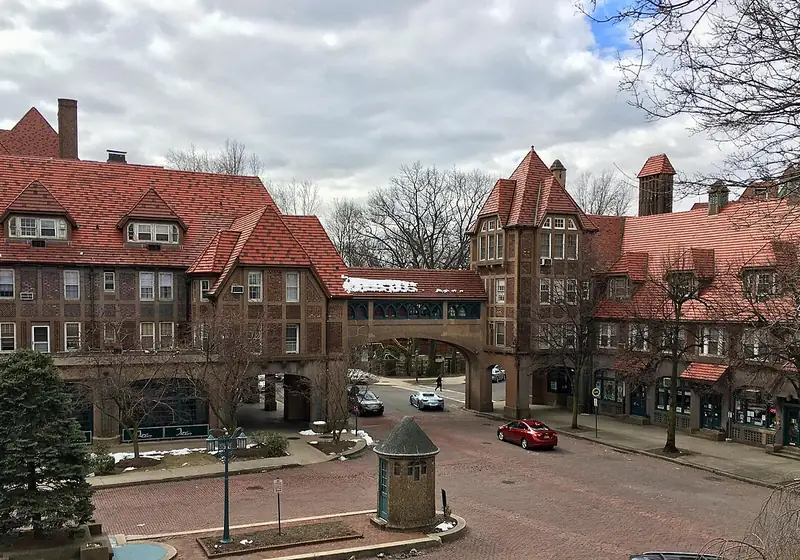 Forest HillsQueens
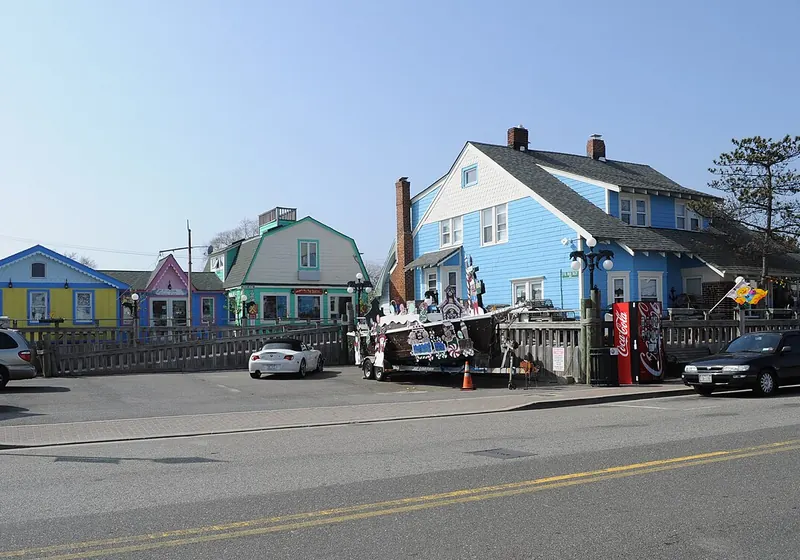 FreeportNassau County
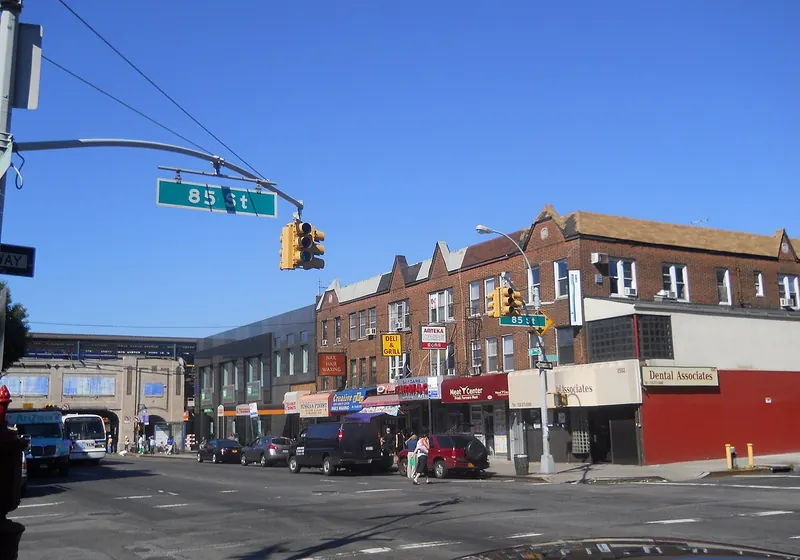 BensonhurstBrooklyn
 Long BeachNassau County
 Park SlopeBrooklyn
 HicksvilleNassau County
 WantaghNassau County
 SeafordNassau County