Serving Brooklyn, Queens and Long Island(929) 429-2429Open six days a weekFree estimateGuaranteed work
On Point Garage Doors
Open 24 hours Sun-Thu, Fri until 5 pm Free estimate Springs, openers, cables We come to you
Emergency?Call nowBook free estimate
New York, NY - open six days a week

One torsion spring or two on a garage door

Free estimateSame-day serviceCommon parts on board
  • Free estimate
  • Same-day service
  • Common parts on board
Emergency garage door repair★★★★★ 5.0 on Google · 42 reviews

Book your free estimate

Takes 30 seconds. We call you back to set a time.

Or just call (929) 429-2429 and talk it through.

Home › One Spring vs Two Springs

Look up at the bar above a garage door with torsion springs and you will see either one spring in the middle or two springs, one on each side of a center bracket. Both setups can lift the same door. The difference is in how the weight is shared, how the door behaves when a spring breaks, and how long the parts last. This page explains why a door has the number of springs it has, what we look at when one breaks, and when it makes sense to move from one spring to two. Free estimate at (929) 429-2429.

By Sean Cohen, owner, On Point Garage Doors · Updated

Real jobs. Real photos.

These photos are from our own jobs, with our logo on them.

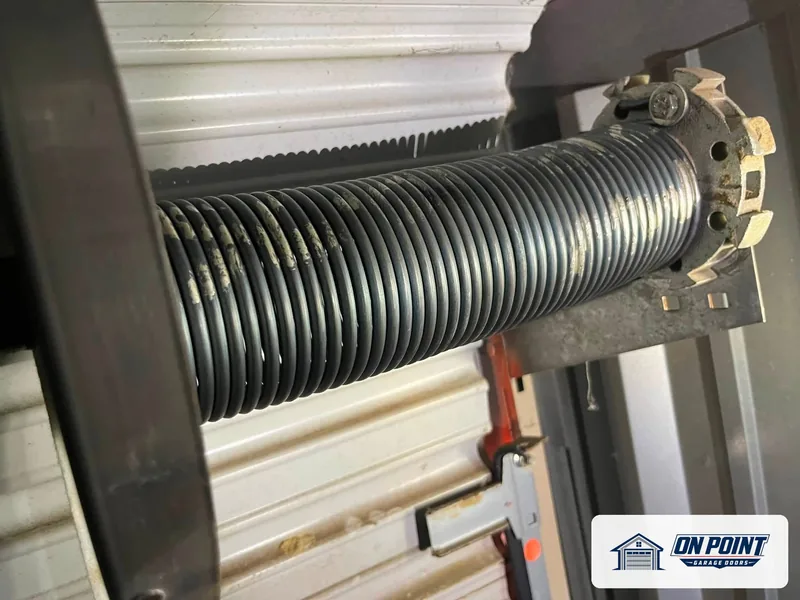
Close-up of a door spring and its end bracket, an On Point Garage Doors job
Torsion spring above a door
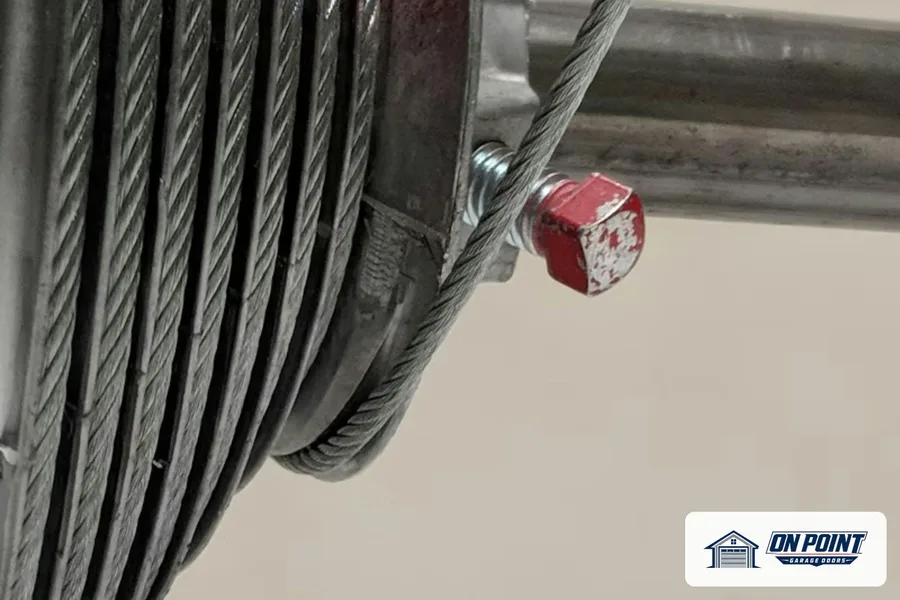
Spring and cable drum up close, from one of our jobs
Spring and cable drum up close
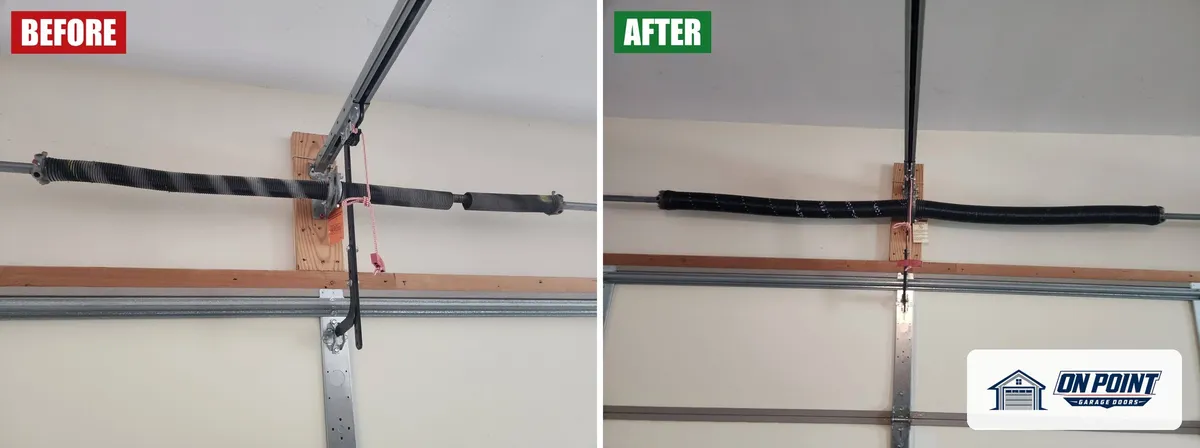
Broken spring before and after, from one of our jobs
Broken spring before and after

How to tell which setup you have

Stand inside the garage with the door closed and look at the steel bar across the top of the opening. A single spring sits in the middle, fixed to a bracket on the wall above the door. A pair sits on either side of that bracket, each one running out toward a cable drum. Some very light doors and many older builder doors came with one. Wide doors, heavy doors and most insulated doors usually came with two.

Why the weight decides it

A spring is chosen to balance the weight of the door so the door feels light in your hands and the opener only has to guide it. A heavier door needs more lifting force. One large spring can supply that force, but it has to be thicker and longer, and the bar has to be long enough to hold it. Splitting the work between two springs lets each one be smaller and carry less strain.

What happens when a single spring breaks

When the only spring on a door breaks, all of the lifting force is gone at once. The door becomes dead weight. The opener may hum, lift it a few inches or pull the door up crooked before it stops. Trying to lift it by hand is hard and risky, because nothing is holding the door up if your grip slips. Leave it down and call.

What happens when one of two breaks

With two springs, a break leaves one still working. The door is heavy, but not as heavy as a door with nothing holding it. That can fool people into using it for days, and that is exactly when the opener, the cables and the remaining spring wear fastest. The door may also lift unevenly, because the bar is now being turned from one side only.

Why both are changed together

Springs on the same door wear at about the same pace, because they have made the same number of trips. When one breaks, the other is close behind. Replacing only the broken one leaves the door with a new spring on one side and a tired spring on the other, so the balance is off and a second visit is usually not far away. That is why we put a matched pair on a two-spring door.

Moving from one spring to two

A one-spring door can often be set up with two springs. It makes sense when the door is heavy for its single spring, when the door has been insulated or had windows added, or when the owner wants the door to last longer between spring changes. The bar, the center bracket and the drums are checked first, since they have to suit the new setup.

When one spring is the right answer

Not every door needs two. A light single door that opens a few times a day can run well on one spring sized correctly. Adding a second spring there does not make the door safer by itself. What matters most is that the spring, or springs, match the real weight of the door.

Spring life and how often the door runs

Every spring is made for a certain number of trips up and down. A garage that is the main way in and out of the house uses those trips up much faster than a garage used for storage. Two springs, or longer-life springs, suit busy doors. We ask how the door is used before picking the springs, not after.

Signs the springs are no longer matched to the door

Why spring work is not a homeowner job

Torsion springs hold a great deal of stored force, even when the door is closed. Changing them takes the right tools, the right parts and training. A slip can injure a hand, a face or someone standing nearby. We change springs every week and still treat every one with care.

What a spring visit includes

The technician looks at the springs, the cables, the drums, the bearings and the bar, then weighs up the door so the new springs fit it. You get a written estimate first. After the work, the door is balanced, run with the opener and tested on its own, and the safety reverse is checked.

Questions we get asked

Is a garage door with two springs better than one?

Not always. Two springs share the load and suit heavy or busy doors, while a light door can run well on one correctly sized spring.

Why did only one of my two springs break?

One usually goes first. The other has made the same number of trips, so it is close to the end too.

Can a one-spring door be changed to two?

Often yes. The bar, center bracket and drums are checked first to make sure they suit two springs.

Can I use the door with one spring broken?

It is best not to. The opener, the cables and the remaining spring wear fast, and the door can fall.

Is the estimate free?

Yes. We look at the springs and the door before any work starts.

Booking takes a minute

Across Brooklyn, Queens and Long Island, tell us what the door is doing and we set a visit that fits your day.

Free estimate, call (929) 429-2429.

Not sure how many springs your door needs? We will look

Tell us what the door is doing and we will give you an honest arrival time. The estimate is free.

Easier to explain by phone? Call (929) 429-2429.

Two minutes to a free estimate

Tell us what the door is doing. The estimate is free either way.

Or just call (929) 429-2429 and talk it through.

The other six things that go wrong