Takes 30 seconds. We call you back to set a time.
The raised panel door is the one most people draw when asked to picture a garage door: rows of shapes standing slightly proud of a flat frame, in white, almond or a wood tone. It began as a woodworking method and survives today mainly as a pattern pressed into steel. It suits a wide range of houses, hides small knocks well and comes in short and long versions. Here is what the style is, how the steel and wood kinds differ, and what to weigh before ordering one. Free estimate at (929) 429-2429.
By Sean Cohen, owner, On Point Garage Doors · Updated
These photos are from our own jobs, with our logo on them.


On traditional wooden doors, a thin panel sits in grooves inside a frame of stiles and rails, and the center of the panel is thicker than its beveled edges. That raised center gives the look its name. Steel doors borrow the same outline by pressing the shape into the skin, so the face reads like frame-and-panel woodwork even though it is one continuous sheet.
Almost every raised panel door sold today is steel. The pattern is stamped during manufacture, either smooth or with an embossed woodgrain, and then the section is finished at the factory. The stamping adds a little stiffness to the skin, but the real strength comes from the steel thickness and whether there is insulation behind or between the skins.
Wood raised panel doors are still made, and on the right house they are handsome. Each panel is a real piece set in a real frame, so the door is heavy and moves with the seasons. Joints can open in dry months and swell in humid ones. That kind of door needs sturdy hardware, carefully sized springs and a finish that is renewed regularly to keep water out of the joints.
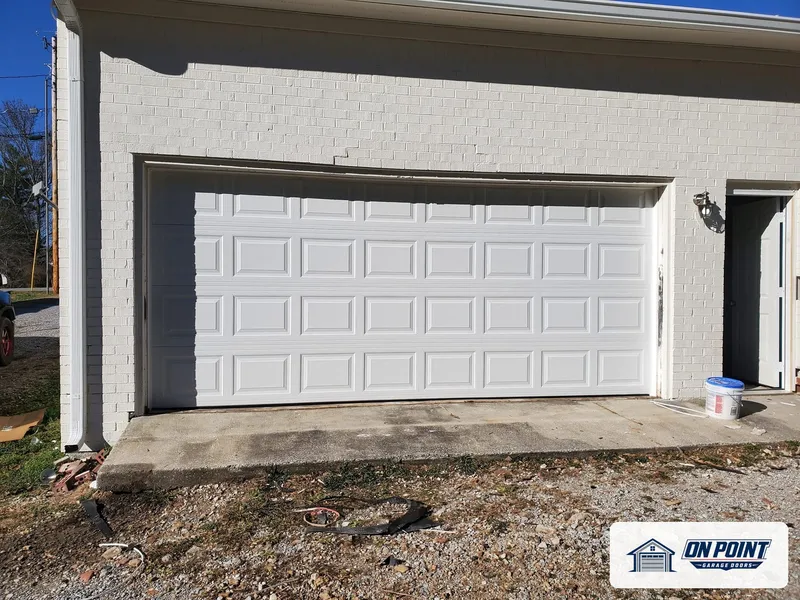
Raised panels come in two main proportions. Short panels are nearly square and line up in tight rows, while long panels stretch across the section in wide rectangles. Short panels suit taller, traditional fronts. Long panels flatter low, wide houses. The width of the door and the shape of the windows on the house usually settle it.
Raised panels fit colonials, capes, ranches, split levels and many brick and vinyl-sided homes, which is why the style is so common. It is the safe choice that rarely looks wrong. On a strongly modern house with flat roofs and minimal trim, it can feel out of step, and a flush face or a glass door is usually the better match.
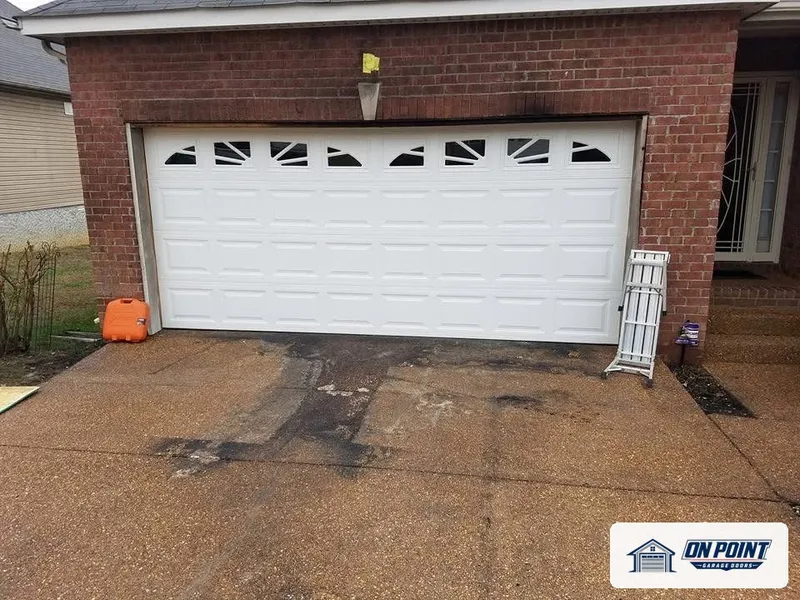
Window sections replace the top row of panels with glass, and the lites are sized to line up over the shapes below. Plain, divided and arched designs are common, and many lines offer insulated or frosted glass. Because the windows are tied to the panel layout, a design seen on a short panel door may not exist on the long panel version.
The lower edge of every raised shape forms a tiny shelf. Dust, pollen and road grime settle there, and on the bottom rows salt from winter slush collects too. An occasional rinse with a hose keeps the finish looking fresh and stops salty grime from sitting against the steel through the spring.
White and almond show the shadows of the pattern crisply. Darker colors make the panels quieter and more modern. Wood-tone finishes on raised panel steel suit stone, brick and older homes, though up close they read as printed steel rather than timber. Factory finishes last a long time, and repainting is possible with the right primer if the color ever needs to change.
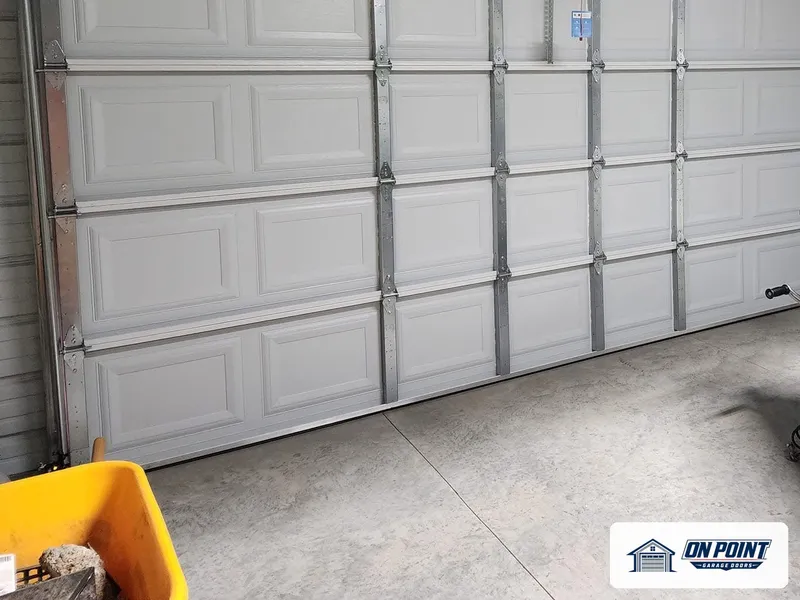
A raised panel face can sit on a single sheet of steel, on steel backed with polystyrene, or on a sandwich with foam between two skins. From the street they look the same. Inside, the insulated versions are quieter, stiffer and warmer, which matters if a bedroom sits over the garage or the space doubles as a workshop.
The pattern hides small dings, but a hard hit still creases the steel. A replacement section has to match the maker, line, panel length, texture and color of the door. Current lines can usually supply one. Older or discontinued doors may need more than one section or a new door, and the label inside the garage is the best starting point for finding a match.
We show these side by side at the house so the choice is made in daylight, not from a small photo.
It is a door whose face shows rows of shapes standing slightly forward of a flat frame. On steel doors the shapes are stamped into the skin, on wood doors they are separate panels set in a frame.
No. They remain one of the most widely chosen looks because they suit so many kinds of houses. Very modern homes are the main exception.
The pattern adds a little stiffness, but the steel thickness and insulation make the real difference in strength and dent resistance.
Yes. Many steel raised panel doors come in wood-tone finishes, and real wood versions are also made for houses where the genuine material matters.
Yes. We measure, bring samples in short and long panel versions and write up the door, springs and track before anything is ordered.
Across Brooklyn, Queens and Long Island, tell us what the door is doing and we set a visit that fits your day.
Free estimate, call (929) 429-2429.
Tell us what the door is doing and we will give you an honest arrival time. The estimate is free.
Easier to explain by phone? Call (929) 429-2429.
Tell us what the door is doing. The estimate is free either way.