Takes 30 seconds. We call you back to set a time.
A roll-down gate on a storefront, a garage or a warehouse door is not lifted by your arms or by the motor alone. Inside the barrel at the top, hidden in the hood, one or more coiled springs carry most of the weight of the curtain. When those springs are healthy, a hand-lifted gate goes up with a steady push and stays where you leave it. When they weaken or snap, the gate turns into dead weight. This page explains how the springs work, the signs that they are worn out, why the job belongs to a technician and what happens when we replace them. Free estimate at (929) 429-2429.
By Sean Cohen, owner, On Point Garage Doors · Updated
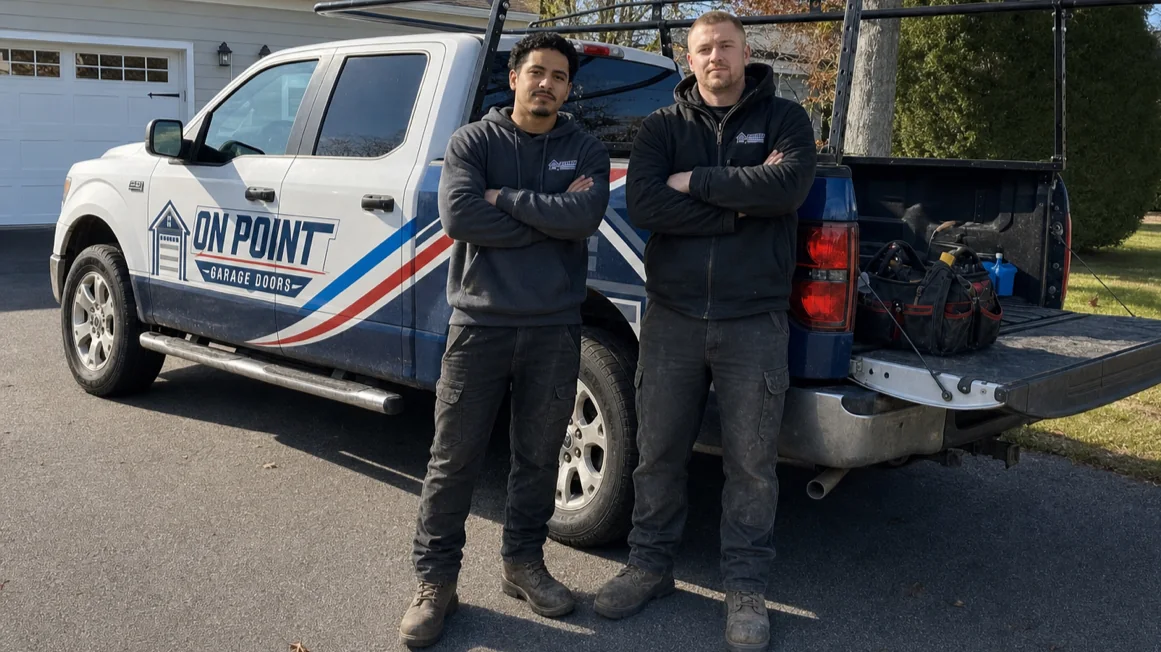
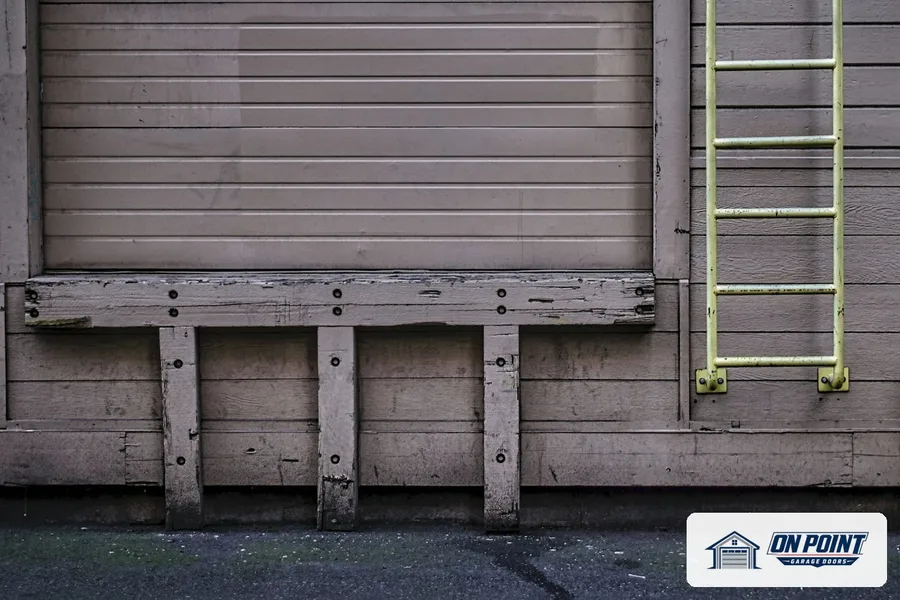
These photos are from our own jobs, with our logo on them.


A rolling gate wraps around a steel pipe, usually called the barrel, that runs across the top of the opening. The springs live inside that pipe. One end of each spring is fixed to a shaft that does not turn, and the other end is fixed to the barrel. As the gate comes down, the barrel turns and winds the springs tighter. As the gate goes up, the springs give that stored energy back and do most of the lifting.
Every trip up and down flexes the coils. Over many years the steel tires and the spring holds less tension, so the gate feels heavier each season. Rust speeds this up. The hood keeps rain off the curtain, but water still gets into the barrel, and springs on gates that face the street or the water tend to rust from the outside in. A gate that was never balanced properly when it went in wears its springs faster too.
When a spring snaps, it usually does so with a sharp crack inside the barrel. On a wide gate with several springs, the gate may still move, but it is heavy and uneven. On a gate with a single spring, it may not lift at all. Forcing a gate with a broken spring bends slats, wears the end locks and can tear the bottom bar. If you hear that bang, leave the gate where it is if you can and call for a look.
Rolling gate springs store a great deal of energy. Releasing or adding tension means holding the barrel against that force, and a slip can spin the parts with enough power to break bones. The gate also has to be supported while the springs are out. We do not give steps for this work, and we ask shop owners and building staff not to try it. The safe part for you is noticing the signs early.
On the visit the technician looks at the whole gate first: the curtain, the guides, the bottom bar, the hood, the end brackets and the bearings. Then the tension comes off in a controlled way, the gate is secured and the barrel is opened up so the old springs can come out. New springs are matched to the weight and height of the curtain, set to the right tension and tested with the gate in several positions. On most gates we change every spring on the barrel together so the load stays even.
A spring job is the right moment to look at what the springs hang from. Worn bearings at the end brackets make a gate grind and wobble. A bent barrel makes the curtain roll unevenly and can rub the hood. Loose brackets on the wall let the whole assembly shift. We point out anything that would shorten the life of the new springs and give you a written estimate before changing more than the springs.
Owners with a motor sometimes assume the springs matter less. The opposite is true. The motor is sized to help a balanced gate, not to lift the full weight of the curtain. Weak springs make it overheat, wear its gears and trip its overload. If your motor has started to labor, the springs are one of the first things we check. Our page on storefront gate motors covers the motor side of the visit.
Rolling gates are not only on stores. Some row houses have a roll-down door on a garage under the stoop, and some detached garages and sheds use one. The springs work the same way and fail the same way, and the same safety rules apply. We replace springs on home roll-up doors just as we do on commercial ones.
Springs last longer when the gate runs straight in its guides, the curtain is not dented and the bottom bar lands flat. Keep the guides clear of debris, do not let the gate free-fall, and have it looked at when it starts to feel different. Gates that run many times a day do better with a planned visit than with waiting for the bang.
The technician checks the springs, the curtain, the guides, the bottom bar, the locks, the hood and the motor if there is one. You get a written estimate for the springs and anything else that needs attention, and nothing is started without your approval.
Usually a spring inside the barrel has snapped or lost much of its tension. The gate is now carrying weight the springs used to carry.
Please do not. The springs hold a great deal of stored energy and the work needs the gate secured and the right tools. It is a job for a technician.
On most gates we replace every spring on the barrel together, so the load stays even and the new spring is not working against old ones.
Yes. The motor is meant to help a balanced gate. Weak springs make it strain, overheat and wear out early.
Yes. We look at the whole gate, not only the springs, before you decide anything.
Across Brooklyn, Queens and Long Island, tell us what the door is doing and we set a visit that fits your day.
Free estimate, call (929) 429-2429.
Tell us what the door is doing and we will give you an honest arrival time. The estimate is free.
Easier to explain by phone? Call (929) 429-2429.
Tell us what the door is doing. The estimate is free either way.