Takes 30 seconds. We call you back to set a time.
Two garage doors often end up with two remotes, two keypads and a visor that rattles. In many garages one remote can do the whole job, with a separate button for each door. Whether yours can depends on the radio system inside each opener, more than on the name printed on the housing. This page explains what combines, what refuses to, and what is going on when a single button suddenly moves both doors. Free estimate at (929) 429-2429.
By Sean Cohen, owner, On Point Garage Doors · Updated
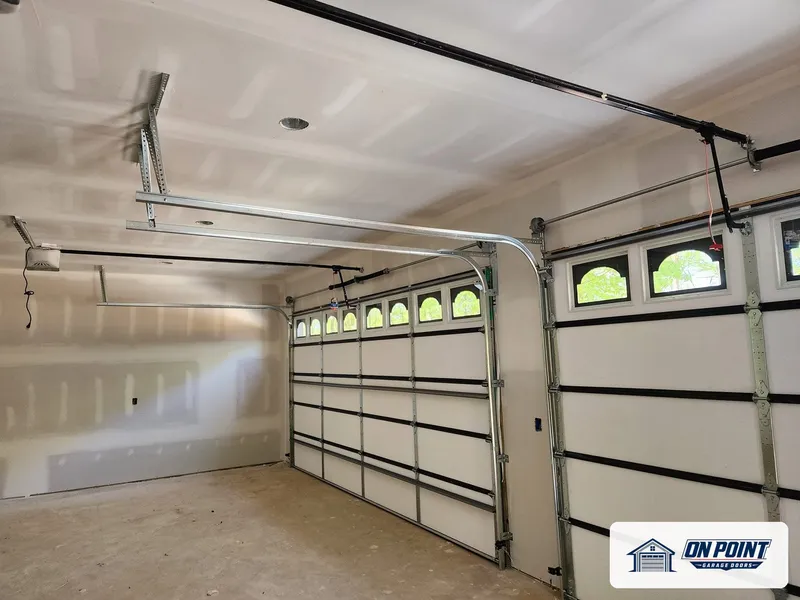
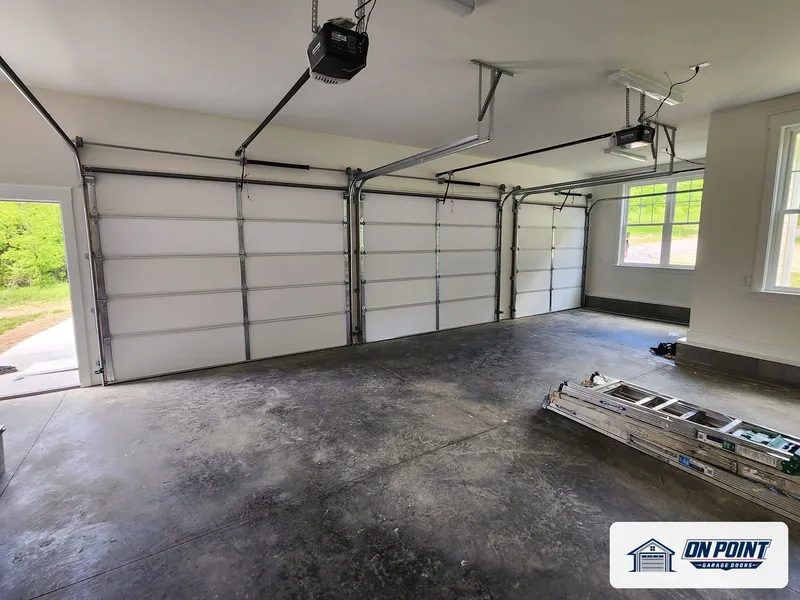
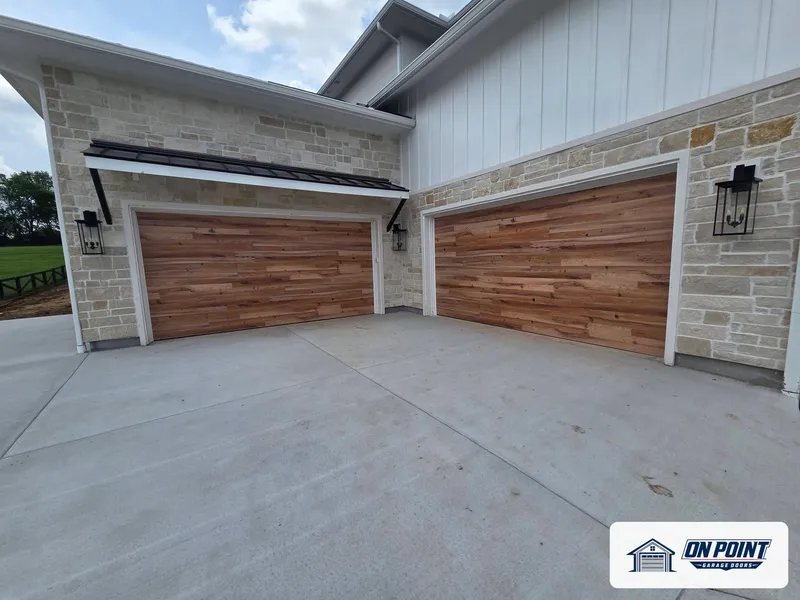
These photos are from our own jobs, with our logo on them.


A multi-button remote treats each button as a separate remote. The first can belong to the left opener and the second to the right, and neither opener knows about the other's button. That is the arrangement we aim for, because it is predictable. One thumb, two choices, no guessing from the street about which door is about to rise.
The easy case is two openers of the same brand and a similar age. LiftMaster and Chamberlain come from one company, which also built many Craftsman units, so these often share radio systems, so one remote from that family can frequently run both. Two Genie units of the same generation behave the same way. Age still matters, since each maker has changed its radio format over the years, and a remote for the newest format may ignore an opener from an earlier one.
When the openers come from different makers, their own remotes rarely cross over. The usual answer is a universal remote that speaks several formats and keeps a different one on each button. These work well with common openers and poorly with rare or very old ones. Before anyone buys a remote, the label on each motor unit should be read, because the brand on the rail, the remote and the motor do not always agree.
If one opener is too old or too unusual for any shared remote, a small external receiver can be wired to it. The receiver brings a modern radio with it, and the opener simply takes its signal as if the wall button had been used. This keeps a sound motor in service and lets both doors answer to matching remotes. It is also a tidy upgrade for openers with old fixed-code switches, which are easy to copy.
This is a common complaint, and it has a simple cause: both openers have memorized the same button. It tends to happen during setup, when both units were listening, or after someone tried to teach the car and taught everything. Some owners like it at first and then close a door on a trailer. The cure is to clear the affected memory and give every button a single owner. Afterward each remote, keypad and car has to be introduced again.
Built-in car buttons usually come as a set of three, which suits two doors and a gate. They can mix brands, because each button is trained separately. The limit is compatibility: some newer openers need a small repeater before an older car can talk to them, and some older cars will never manage it. When two drivers share both doors, put the buttons in the same order in both cars.
Many keypads can open more than one door, either with a second code or with a key that selects the door. Others are strictly one keypad to one opener. A keypad mounted between the doors is handier than one at each end, as long as it is within sight of both openings and high enough that a small child cannot play with it.
Wall buttons are wired, or paired, to their own opener and are not combined in the same way. Mount them side by side in the same order as the doors, with a clear view of both. Crossed wall wiring after a repair is a classic reason for the left button lifting the right door, and it has nothing to do with the remotes.
Connected openers can appear as two named doors in one app, which removes the remote question for anyone who prefers a phone. Two brands can mean two apps. An add-on controller is sometimes able to bring an older opener into the same app, though not every opener accepts one. Name the doors by what is behind them, such as workshop and car, so a tap from far away opens the right one.
A second door across the yard adds a range problem. A remote may reach the near opener every time and the far one only from the driveway. Antenna position, metal siding, brick and some LED bulbs in the opener all shorten the reach. If the far door is the unreliable one, the fix belongs at that opener and not in a new remote.
Often, with a universal remote that supports both formats, one per button. If one opener is not supported, an external receiver on that opener is the usual answer.
It is possible, and we advise against it. You cannot watch two openings at once, and a car, a child or a pet under the second door is easy to miss.
The button may have been taught to the first opener in place of the second, or the second opener's memory was cleared along the way. Each button needs to be paired with its own door and then tested.
Frequently. Gate operators use their own receivers, so it depends on that receiver's format. A universal remote or a matching receiver at the gate can put it on a third button.
Yes. Tell us the brands on the two motor units when you book, and you will know what the job involves before any work starts.

Across Brooklyn, Queens and Long Island, tell us what the door is doing and we set a visit that fits your day.
Free estimate, call (929) 429-2429.
Tell us what the door is doing and we will give you an honest arrival time. The estimate is free.
Easier to explain by phone? Call (929) 429-2429.
Tell us what the door is doing. The estimate is free either way.