Takes 30 seconds. We call you back to set a time.
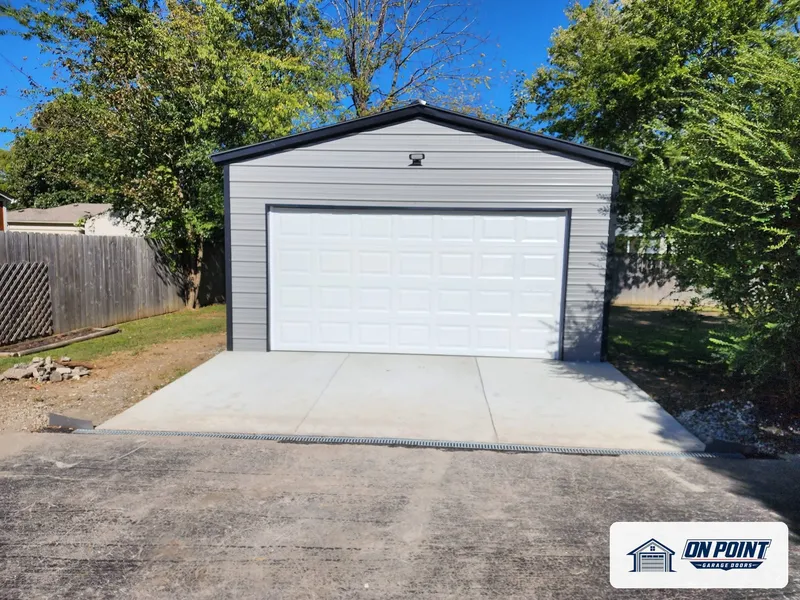
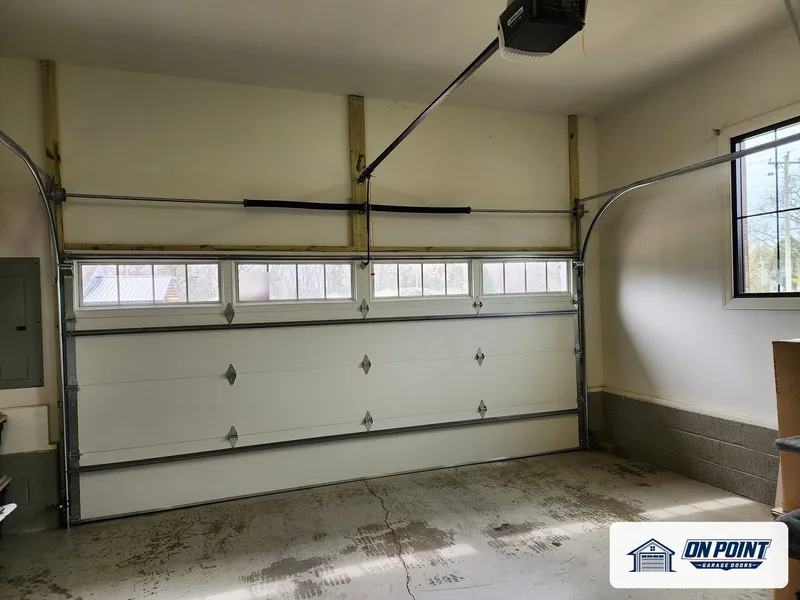
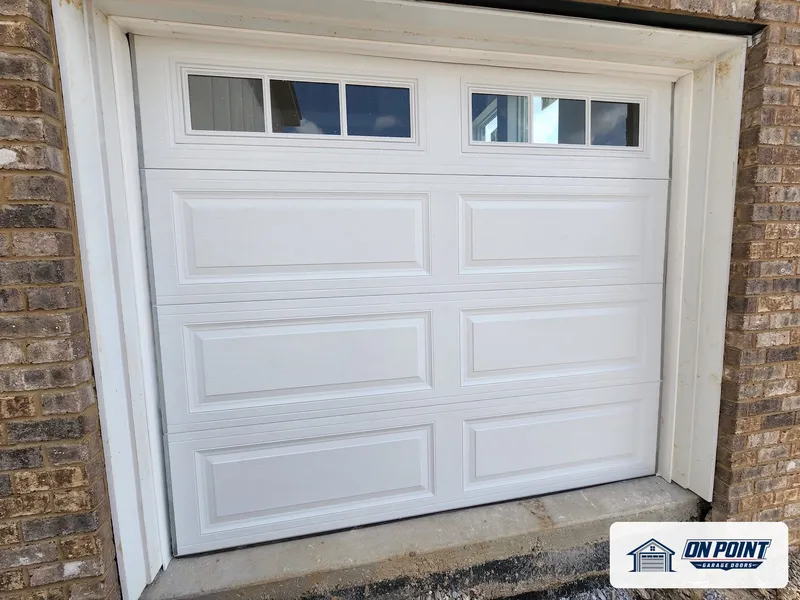
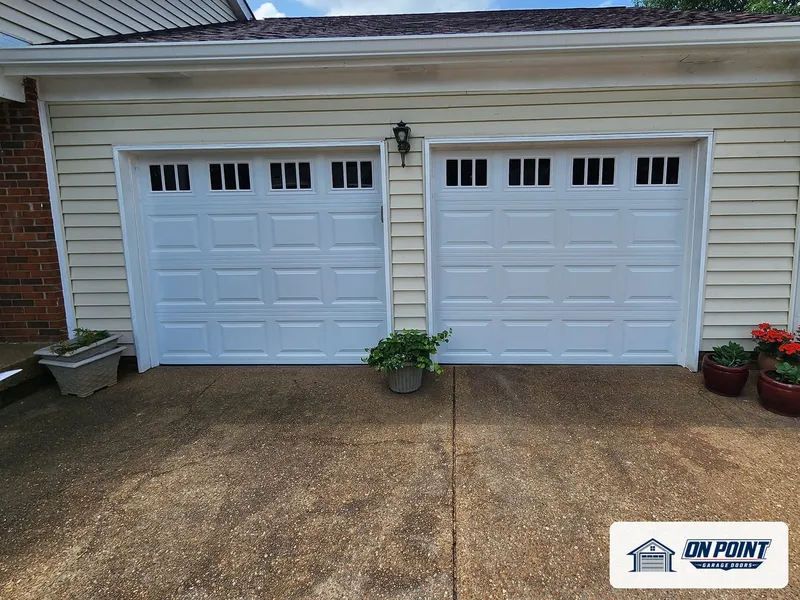
These photos are from our own jobs, with our logo on them.


Garage door repair in Middle Village for the brick row and semi-attached houses with garages behind them, the detached homes near the big park, and the shops along the avenue. Free estimate first.
On many blocks two neighbors share one narrow driveway between their houses, and it ends at a pair of garages tucked behind the back yards. Those rear garages were built with the houses and often still carry an older door that has been patched more than once.
When one door at the end of a shared driveway jams, the neighbor's car is often stuck behind it too.
Plenty of these rear doors still run on side springs stretched along the tracks, and those need safety cables threaded through them so a broken spring cannot whip loose.
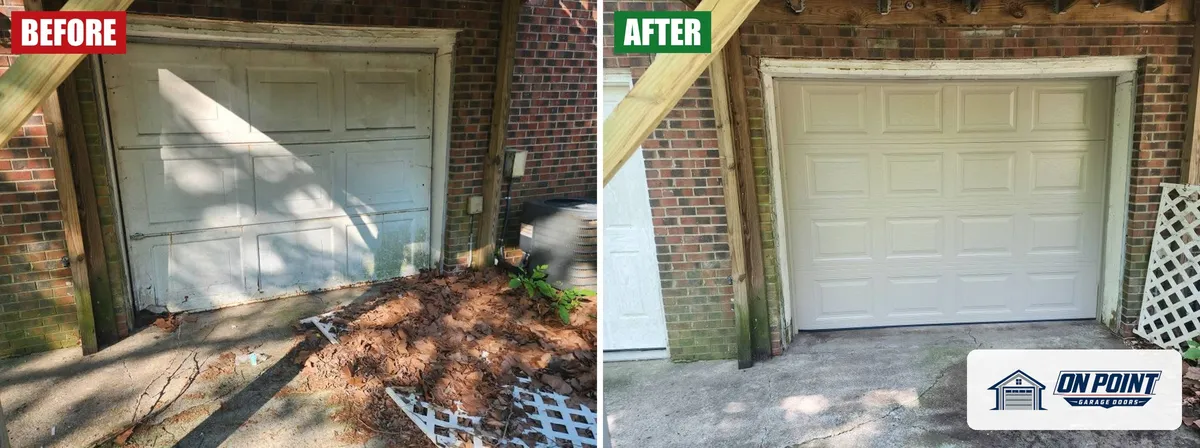
If the old door is solid, its springs, rollers and hinges are renewed. If the sections are rotted or cracked, you hear the choices for a new one.
The large park in the middle of the neighborhood and the old trees on the side streets drop a lot of leaves, and they end up in the tracks and along the bottom seal every fall.
Rear garages sit in the shadow of the house most of the day, so the slab stays damp and rust starts on the bottom brackets and cable ends.
With so little room to turn at the back of a shared driveway, a fender or a mirror often catches the door or the track.
A remote clipped to the visor may not reach a garage behind the house from the street, and owners often ask for a keypad on the side of the garage during a repair.

Every job starts the same way: the technician looks at the door first, then writes a free estimate.


Broken springs. A sharp bang from the garage and a door that will not rise usually means a spring has snapped; leave a heavy old door down rather than lifting it.
On doors with two springs, both are changed at once so the door stays even.
Side springs. The stretch springs on older rear doors lose their pull over the years, and safety cables keep a broken one in place.
Switching an old door to a torsion spring above the opening is offered where the header allows it.
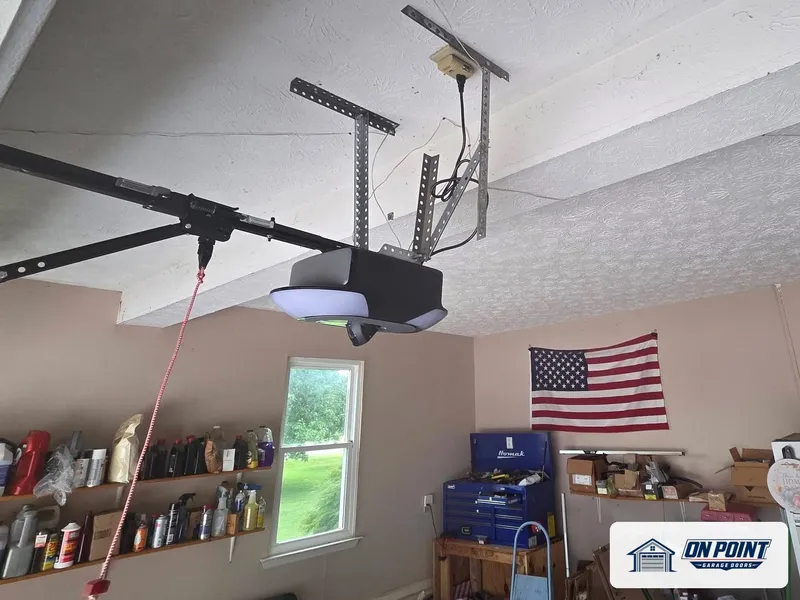
Openers. Noisy old chain units on rear garages are often swapped for a quiet belt drive with a keypad.
In a garage with a low or uneven ceiling, a wall-mounted opener beside the door can be the better fit.
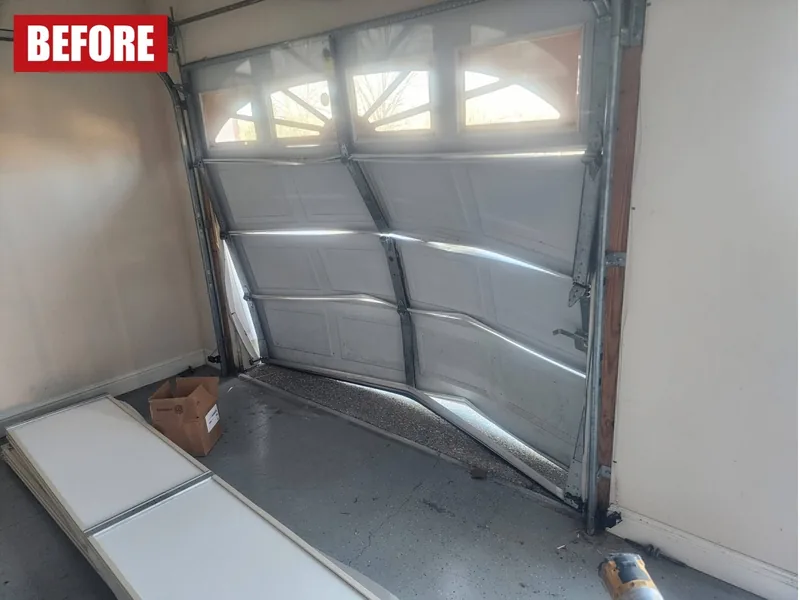
Damaged sections. A dent in one section can often be fixed by swapping that section alone.
On rear garages the lowest section usually rusts or rots first, and replacing it can buy the rest of the door years of use.
If a car has bumped the door at the end of a tight driveway, leave it alone until it has been checked.
Our crews work all over Queens and Brooklyn and across Long Island, and these streets are a regular part of the route.
Whatever you tell us on the call, the technician reads before he gets there.
A car shut inside a rear garage, or a door that will not close for the night, gets moved up. Say so when you call.
Winter. Old springs on rear doors break most often on the coldest mornings, and a door that has started to strain is worth a look before then.
Spring. Rain runs down the shared driveway and collects at the bottom of the rear garage, where the slab hardly ever dries in the shade.
Summer. Hot weather dries the rubber seals and the grease in old rollers, and a door that has begun to squeal is telling you something.
Old wood doors at the back of the lot also crack and peel in the summer sun, and their finish deserves attention before winter.
Fall. Leaves from the park and the street trees pack into the tracks, and it is a good season to have the springs and cables looked at as well.
He checks the garage, the frame and the door itself, then goes through the springs, cables, rollers, tracks and opener.
He tells you in plain words what is worn and writes up a free estimate line by line.
Parts are chosen for your door, old or new, and the common ones ride with him.
Before he leaves, the opener's safety reverse is tested on every door he works on.
The old parts leave with him, and the shared driveway is clear when he goes.
On a shared driveway, the visit is planned so the family next door can still get their car out.
He calls ahead so cars in the driveway can be moved before he pulls in.
The decision stays with you.
A handful of parts carry the whole load, and on old rear-garage doors they are often the originals.
The springs hold the weight of the door; once one snaps, the door is too heavy to lift safely.
Cables fray and rust where they hook to the bottom bracket, and both sides are replaced as a pair.
Leaves, a recycling bin or a bike pushed against the wall are the usual reasons the sensors stop a rear door from closing.
Cars squeezing past in narrow driveways bend the tracks, and a door on a bent track should never be forced.
When an old opener has had its day, you see quiet belt drives and smart openers you can check from your phone.
A bright light and a keypad make a garage at the back of the lot much easier to use after dark.
Let us know whether the garage is attached or out back, and what the door is doing.
The estimate is free, here and everywhere we work.
Describe the door and choose a time that works for you and the neighbor who shares the driveway. The estimate is free.
Call us at (929) 429-2429.
Say what the door is doing at the back of the driveway, and a free estimate follows.