Takes 30 seconds. We call you back to set a time.
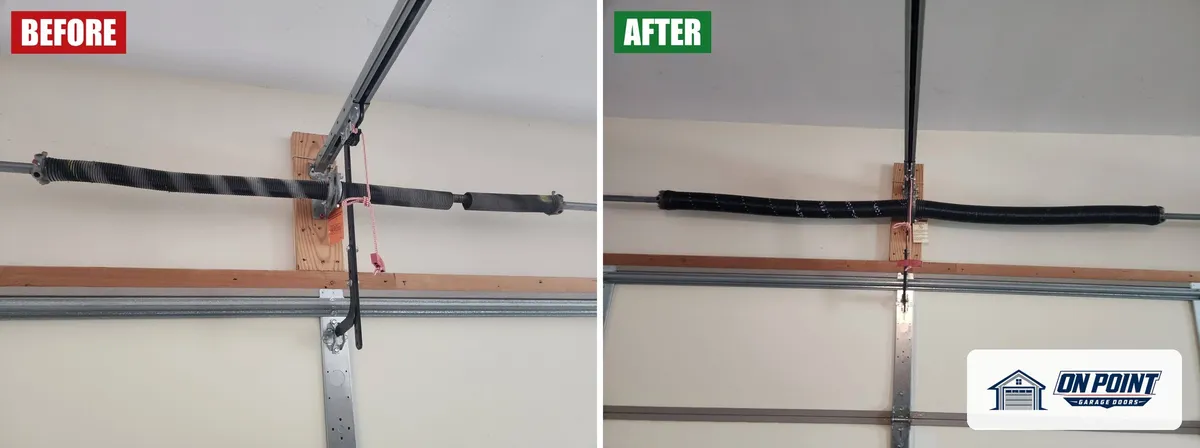
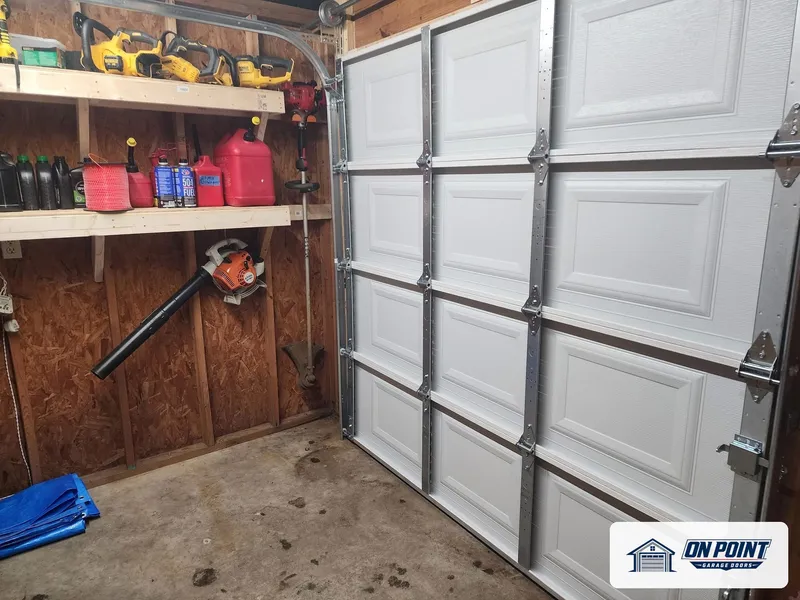
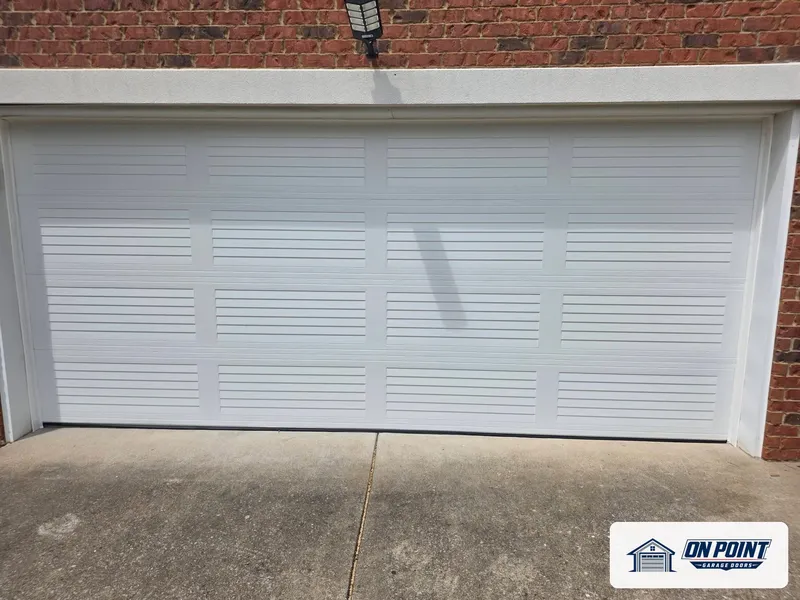
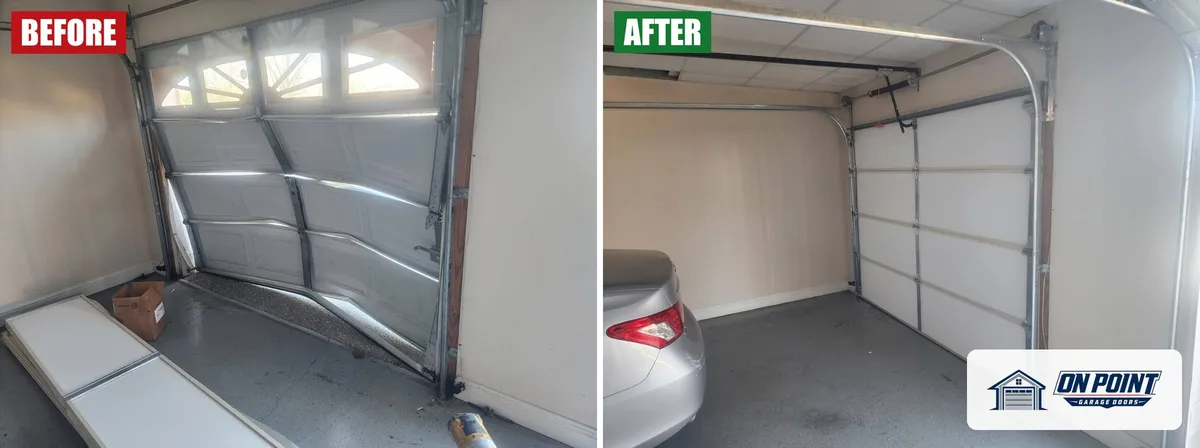
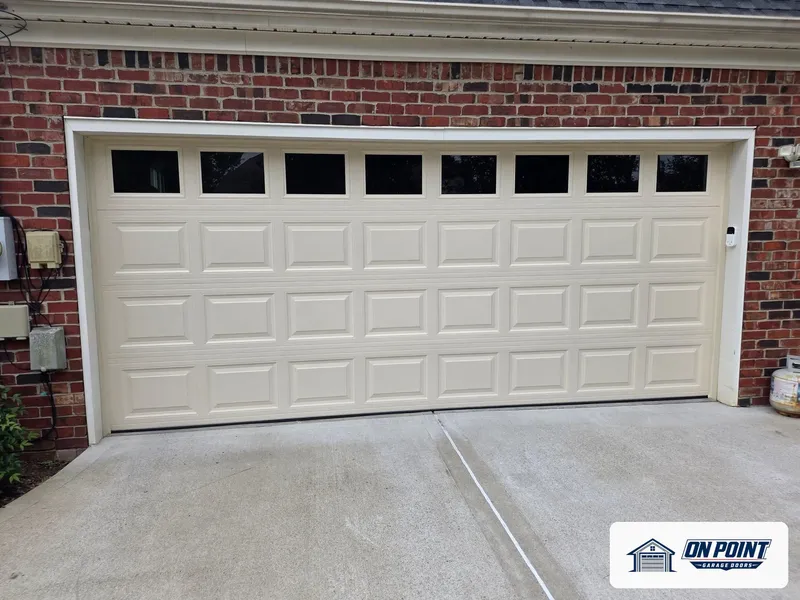
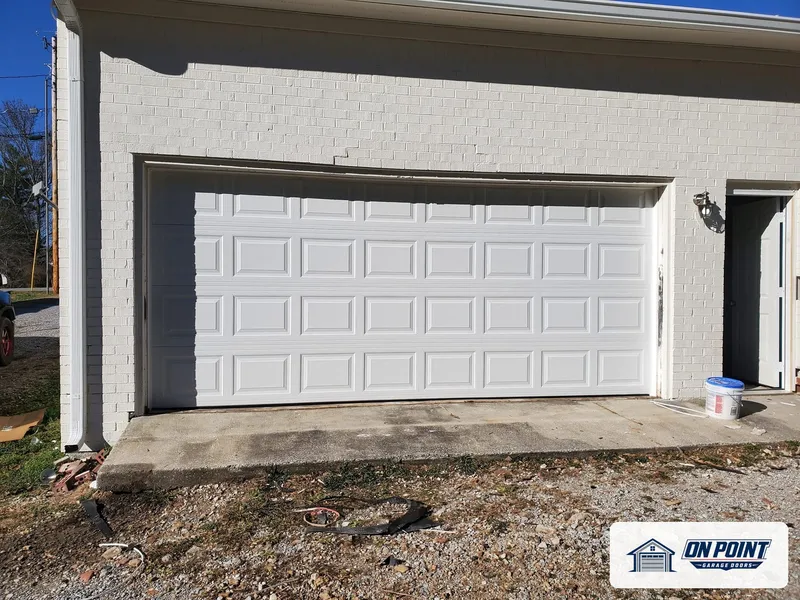
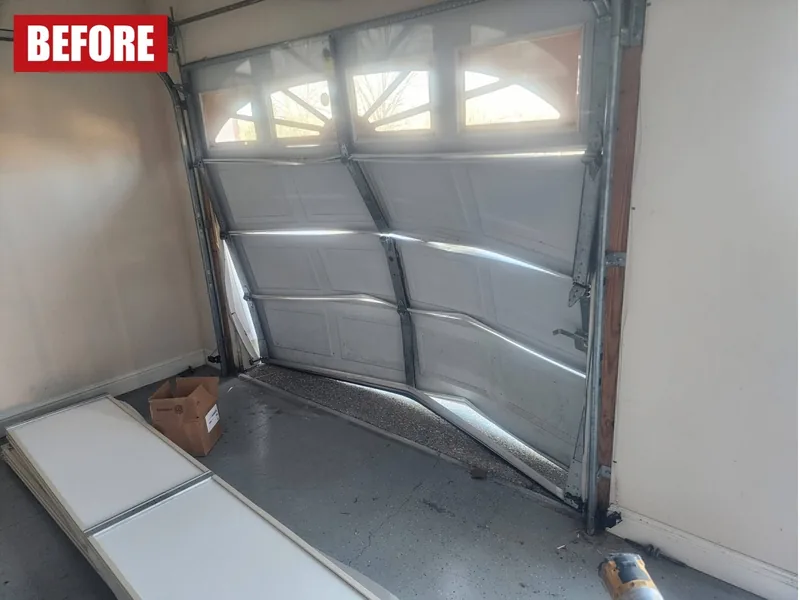
These photos are from our own jobs, with our logo on them.


We replace broken torsion and extension springs with the right size for the door, then balance the door and test it before we leave.
By Sean Cohen, owner, On Point Garage Doors · Updated
A garage door spring does the lifting. The opener only guides the door; the spring carries its weight. When a spring breaks, the opener is left with the full weight of the door, often well over a hundred pounds, and the fix is a new spring matched to that door, not just any spring that fits the shaft.

The same six jobs as everywhere else we work, with the parts for the doors common here already on board.


Most people hear it before they see it. A torsion spring lets go with a bang loud enough to sound like something fell over in the garage. After that the signs are hard to miss:
If that is your door, leave it closed and don't keep pressing the opener. The motor is not built to lift a door without its spring, and forcing it usually adds a stripped gear to the repair. Springs are wound under high tension, so this is not a job to try yourself. More on the signs: a loud bang from the garage, a door that suddenly feels heavy and an opener that hums but doesn't lift.
Spring life is counted in cycles, not years. One cycle is the door going up and coming back down. A standard spring is built for roughly 10,000 of them.
What that means in years depends on the household. A door that opens twice a day can go well past a decade on one set of springs. A door that works as the front door of the house, opening eight or ten times a day, can use up the same springs in around three years. Garages under Brooklyn and Queens rowhouses and shared building garages sit at the busy end of that range.
Cycles are not the only thing that wears a spring. Rust on the coils, long cold snaps and a door that has drifted out of balance all shorten its life. A yearly tune-up won't make a spring last forever, but it catches a tired one before it lets go with the car inside.
A high cycle spring does the same lifting as a standard one with less strain on the steel. It is made from heavier wire with a longer coil, so each trip up and down takes less out of it. The rating goes from about 10,000 cycles to 25,000 or more, depending on the spring.
It makes sense when the garage is the main way in and out of the house, when several drivers share one door, or when you plan to stay in the home for years and would rather not make this call again. It matters less on a door that opens once or twice a day, or on a house you expect to sell soon.
We put both options on the estimate with the cycle rating written next to each one, so you can decide with the numbers in front of you.
Torsion springs sit on a steel shaft above the closed door and twist to lift it. Most doors fitted in the last few decades use them, and they are the smoother, longer-lasting setup.
Extension springs run along the horizontal tracks on each side and stretch as the door closes. They are common on older and lighter doors and in garages with little room above the opening. Each one should have a safety cable running through it, so that a spring that snaps stays where it is instead of flying across the garage. If yours don't have them, we will point it out and can fit them.
We replace both types. On some doors it is worth converting from extension to torsion, and if yours is one of them we will say so on the estimate and leave the choice to you.
A spring is matched to one door: its weight, its height and the size of the drums the cables wind on. Copying the old spring is not enough, because the old one may have been wrong from the day it went in, or the door may have gained weight from new glass, added insulation or years of paint on wood.
A spring that is too weak leaves the opener doing the lifting, which wears out its gears. One that is too strong makes the door want to fly up and hard to keep shut. So once the new springs are on, we test the balance: with the opener disconnected, a balanced door stays put when it is stopped halfway. Then we reset the opener's force so it is working with the spring and not against it.
On a door with two springs we replace both. They were fitted together and have done the same number of cycles, so when one breaks the other is close behind. While the shaft is apart we also check the cables, drums and rollers, because a frayed cable on a new spring is the next breakdown waiting to happen. If the opener was damaged trying to lift the dead door, we look at that too: opener repair.

We replace garage door springs across Brooklyn, Queens, Nassau County and Suffolk County, on doors from Clopay, Amarr, Wayne Dalton and the other makes fitted around here. For what happens on the day a spring breaks, see broken spring repair.
In Brooklyn and Queens the spring call usually arrives together with the opener. A garage under a rowhouse or a shared building garage runs the door more times a day than a suburban house does in a week, so the spring reaches the end of its cycle count and the opener that has been straining against it strips its gear in the same season. We replace both in one visit when that is what the door needs, size the spring to the door's actual weight, and set the opener force afterwards so the new motor is not doing the spring's job. Same-day across Brooklyn and Queens, and the estimate is free.
We’ll inspect and recommend the safest option based on your setup.
If one spring broke, the other is the same age and will fail soon. Replacing both prevents another service call in weeks.
Around Brooklyn, one call gets you a two-hour slot and a heads-up call before the technician sets off. We don't buy leads and nobody on a phone judges a door they can't see.
Free estimate across Brooklyn, NY and the towns around it.
Describe the fault and we'll give you an honest arrival time. The visit and the estimate is free, anywhere in Brooklyn, Queens and Long Island.
Easier to explain by phone? Call (929) 429-2429.
Tell us what the door is doing. The estimate is free either way.